2026 Cost Breakdown: Best Waterproof Boat Cover Material
Compare 2026 costs for waterproof boat cover materials. Breakdown of acrylic, coated polyester, and vinyl prices, plus custom fabrication rates.

The True Cost Equation: Material vs. Lifecycle
Selecting the right waterproof boat cover material requires looking past the initial price per linear yard. A cheap polyethylene tarp might cost $40, but it will degrade under UV exposure and shred in highway winds within a single season, leaving your vessel exposed. Conversely, a premium custom-fitted cover built from marine-grade textiles can cost between $1,200 and $3,500 but will protect your gel coat, upholstery, and electronics for up to a decade. In 2026, the marine textile market has stabilized, but inflation in specialized hardware and custom canvas labor means boat owners must calculate the Total Cost of Ownership (TCO) rather than just the upfront material expense.
- Material Costs: $18 to $45 per linear yard (54" to 60" widths).
- Custom Fabrication Labor: $90 to $150 per hour.
- Average 20ft Center Console Cover: $1,400 to $2,600 fully fabricated.
- Crucial Hidden Cost: PTFE thread and UV-treated zippers (adds 15% to material costs but doubles lifespan).
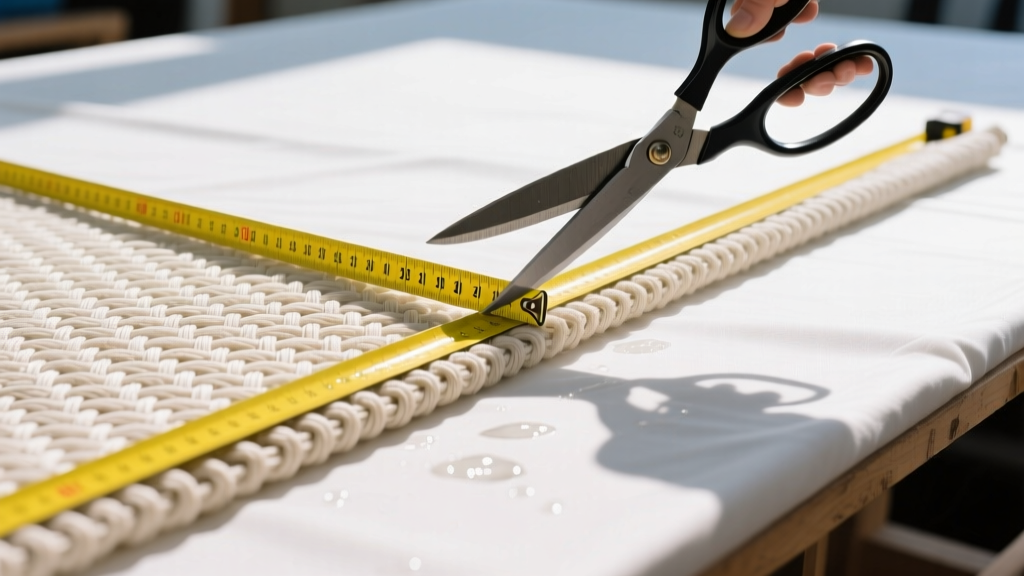
2026 Material Cost Matrix: Price Per Linear Yard
The table below breaks down the primary categories of waterproof boat cover material available on the market, comparing raw material costs against performance metrics. Pricing reflects 54-inch to 60-inch roll widths standard in the marine industry.
| Material Category | Brand Examples | Avg. Cost / Linear Yard | Waterproof Rating | Breathability | Expected Lifespan |
|---|---|---|---|---|---|
| Polyethylene (Tarp) | Generic Blue/Silver Tarps | $5 - $12 | 100% (until UV failure) | None | 6 - 12 Months |
| Coated Polyester | Top Gun 1S, Harbor Time | $22 - $32 | 95% - 100% | Low to Moderate | 5 - 7 Years |
| Laminated Vinyl | Stamoid, Weblon Coastline | $25 - $38 | 100% | None | 5 - 8 Years |
| Solution-Dyed Acrylic | Sunbrella Marine Grade | $35 - $48 | Water-Resistant (Treatable) | High | 7 - 10 Years |
Deep Dive: Marine Fabric Performance & Hidden Costs
According to Sailrite's marine fabric guide, the environment where your boat is stored dictates which material will yield the best return on investment. Here is how the top-tier materials perform in real-world conditions and the maintenance costs they carry.
1. Urethane-Coated Polyester (The Modern Standard)
Coated polyester, particularly 1S (coated on one side) variants like Top Gun, has become the default choice for full boat covers. The urethane coating provides exceptional waterproofing, while the polyester base offers high tear strength.
Hidden Cost: Because the coated side faces up, dirt and pollen can stick to the urethane if not cleaned regularly. Furthermore, if the cover is dragged across sharp cleats or radar arches, the coating can scratch, compromising the waterproof barrier. Expect to spend $25 every two years on specialized marine vinyl/urethane cleaners to maintain the coating's integrity.
2. Solution-Dyed Acrylic Canvas (The Breathable Premium)
Acrylic canvas is legendary for its UV resistance and breathability. Because the color is extruded into the fiber (solution-dyed), it will not fade like printed fabrics. However, acrylic is naturally water-resistant, not 100% waterproof. It relies on a tight weave and a factory-applied fluorocarbon finish to shed water.
Hidden Cost: To maintain true waterproofing, you must re-treat the fabric with a product like 303 High Tech Fabric Guard every 12 to 18 months. A 16oz bottle costs roughly $22, and a 20-foot boat cover will require 2 to 3 bottles per treatment, adding $45 to $65 in annual maintenance.
3. Laminated Vinyl (The Console & Mooring Specialist)
Materials like Stamoid are lightweight, 100% waterproof, and incredibly easy to wipe clean. They are the undisputed champions for console covers, T-top wraps, and mooring covers in high-rain environments.
Hidden Cost: Zero breathability. If you use laminated vinyl for a full boat cover, trapped ambient moisture will condense on the underside, leading to catastrophic mildew growth on your boat's upholstery. You must install marine cowl vents (approx. $22 each, minimum 2 to 4 required) to allow cross-ventilation, increasing your hardware budget.
Fabrication, Hardware, and Consumables
If you are commissioning a custom cover from a canvas shop, the raw fabric is only 30% to 40% of the final invoice. The West Marine Canvas Advisor notes that specialized marine hardware and labor dominate the final price tag. Here is the 2026 itemized breakdown for hardware and consumables:
- PTFE Thread (Gore Tenara / Profilen): $18 - $24 per 3oz spool. Standard polyester thread rots in 3 years under UV exposure. PTFE thread is guaranteed for the life of the fabric. Never accept a custom cover sewn with standard nylon or polyester thread.
- YKK #10 UV-Resistant Zippers: $4.50 - $6.00 per linear yard. Essential for access panels and console wraps.
- Common Sense Fasteners (Snaps): $0.85 - $1.25 per set (stud and socket). A full cover may require 40 to 60 snaps.
- Webbing and Tie-Downs: 1-inch UV-treated polyester webbing costs $0.60 per yard. Heavy-duty cam buckles or side-release clips add $2.50 each.
- Shock Cord (Bungee): 1/4-inch marine-grade shock cord for the hem perimeter costs $0.45 per foot.
- Custom Canvas Labor: $90 to $150 per hour. A 20-foot center console requires roughly 12 to 18 hours of patterning, cutting, sewing, and fitting.
The Thread Trap: Where $1,500 Covers Fail
5-Year Total Cost of Ownership (TCO) Analysis
To understand the true financial impact, we must project the costs over a 5-year period for a standard 20-foot center console boat, factoring in material, fabrication, maintenance, and potential replacement.
| Material Choice | Initial Cover Cost (Fabricated) | 5-Year Maintenance / Treatments | Expected Replacement within 5 Yrs? | 5-Year TCO |
|---|---|---|---|---|
| Polyethylene Tarp + Bungees | $120 | $0 | Yes (Replaced 3 times @ $120) | $480 |
| Coated Polyester (Top Gun) | $1,600 | $60 (Cleaners) | No | $1,660 |
| Acrylic Canvas (Sunbrella) | $1,900 | $180 (Waterproofing sprays) | No | $2,080 |
| Laminated Vinyl (Stamoid) | $1,500 | $40 (Vents/Cleaners) | No | $1,540 |
Purchase Decision Framework
Use this logic tree to select the exact waterproof boat cover material that matches your storage environment and budget constraints.
IF your boat is stored outdoors on a trailer in a high-UV, low-rain environment (e.g., Arizona, Southern California):
THEN choose Solution-Dyed Acrylic. The high breathability prevents interior heat buildup and moisture trapping, while the UV resistance is unmatched.
IF your boat is stored outdoors in a high-rain, high-humidity environment (e.g., Pacific Northwest, Florida summer):
THEN choose Urethane-Coated Polyester (1S). It sheds heavy rain instantly, dries quickly on the coated side, and offers a balance of water protection and durability without the constant re-treating required by acrylic.
IF you need a cover for a specific component (e.g., center console, outboard motor, T-top) or the boat is stored under a covered lift:
THEN choose Laminated Vinyl. It is lightweight, completely waterproof, and easy to stow, provided it is not used to seal an entire unvented cockpit.
IF you are trailering the boat on the highway frequently:
THEN avoid loose-fitting covers entirely. Invest in a custom-fitted Coated Polyester cover with heavy-duty 1-inch webbing tie-downs integrated every 3 feet to prevent wind whip, which will destroy zippers and seams at 70 MPH.
Written by
Marcus ChenMarcus Chen is a licensed structural engineer (PE) and building materials analyst with over 12 years of experience across residential, commercial, and industrial construction. He holds a Master of Science in Civil Engineering from UC Berkeley and spent six years at Thornton Tomasetti before transitioning to independent consulting and technical writing. Marcus specializes in material selection for seismic-prone regions, concrete reinforcement strategies, and lifecycle cost analysis. His work has been cited by the American Concrete Institute (ACI) and the Structural Engineers Association of California (SEAOC). When he is not on a job site or at his desk, you will find him hiking the Sierra Nevada or restoring a 1920s craftsman bungalow in Oakland, CA.
More from Marcus Chen
View all
Construction Cost
How Much Did the Eiffel Tower Cost to Build?
How much did the Eiffel Tower cost to build in 1889? We adjust for inflation and compare its budget to modern skyscraper construction.
Aug 4, 2026

Fire Resistance
What Is a Fire Resistant Material? Testing & Certification Guide
Discover what is a fire resistant material through ASTM and UL testing. Learn how fire ratings, certifications, and assemblies work in construction.
Aug 4, 2026

Construction Cost
How Much Did the Burj Khalifa Cost to Build?
How much did the Burj Khalifa cost to build? We break down the $1.5B project and extract 5 money-saving strategies for your next build.
Jul 30, 2026