Is Canvas Material Waterproof? IBC Code and ASTM Standards Guide
Discover if canvas material is waterproof under IBC building codes. Learn ASTM testing standards, fire ratings, and compliant architectural fabric specs.

The Short Answer: Raw Canvas vs. Architectural Membranes
To answer the core question directly: traditional, uncoated cotton canvas is water-resistant, not waterproof. When exposed to moisture, the natural cellulose fibers in cotton duck canvas absorb water and swell, temporarily closing the weave gaps. This creates a barrier against light rain, which is why it has been used for centuries in tents and tarps. However, under continuous hydrostatic pressure or prolonged exposure, raw canvas will inevitably leak, wick moisture, and succumb to biological degradation.
From a building code perspective, this distinction is critical. The International Building Code (IBC) does not recognize raw canvas as a compliant waterproofing membrane for building envelopes, permanent tensile structures, or weather-resistant barriers (WRBs). To meet the stringent waterproofing and structural requirements of modern construction, canvas must be heavily treated with synthetic coatings (such as PVC or polyurethane) or replaced entirely by advanced architectural fabrics like PTFE-coated fiberglass or ETFE foils.
Hydrostatic Head and ASTM Waterproofing Standards
Building codes rely on standardized testing to define 'waterproof.' For coated fabrics and membranes, the primary metric is the Hydrostatic Head Test, governed by standards such as ASTM D751 (Standard Test Methods for Coated Fabrics) and ISO 811. This test measures the height of a water column (in millimeters) the fabric can support before water penetrates the material.
According to ASTM textile testing protocols, a material must typically withstand a minimum hydrostatic head of 1,000mm to be classified as waterproof for light-duty outdoor use. For architectural and building envelope applications, the threshold is significantly higher to account for wind-driven rain and structural deflection.
| Material Type | Typical Hydrostatic Head | Water Column Rating | IBC Envelope Compliance |
|---|---|---|---|
| Raw Cotton Duck Canvas | 300mm - 500mm | Water-Resistant | Non-Compliant |
| Acrylic-Coated Canvas | 800mm - 1,200mm | Water-Repellent | Non-Compliant (Awnings only) |
| PU-Coated Polyester | 1,500mm - 3,000mm | Waterproof (Light Duty) | Conditional (Temporary enclosures) |
| PVC-Coated PES (Architectural) | 5,000mm - 10,000mm+ | Fully Waterproof | Compliant (IBC Chapter 31) |
| PTFE-Coated Fiberglass | 10,000mm+ | Impervious | Compliant (Permanent structures) |
IBC Chapter 31: Tensile Membranes and Temporary Enclosures
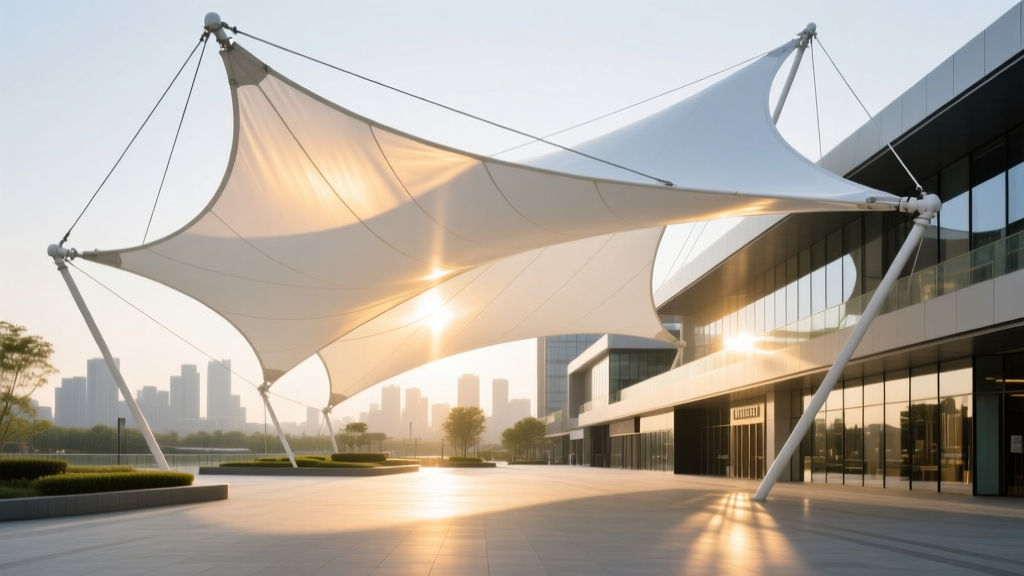
When architects and contractors specify fabric for structural canopies, stadium roofs, or temporary construction enclosures, they must adhere to IBC Chapter 31 (Special Construction), specifically Section 3102 regarding Membrane Structures. The International Code Council (ICC) mandates that any membrane used as a primary roof or wall enclosure must meet rigorous criteria for structural load, fire safety, and weather resistance.
The Structural Liability of Waterlogged Canvas
Beyond mere water intrusion, raw canvas poses a severe structural risk. When cotton canvas absorbs water, it can gain up to 30% of its dry weight. In a tensile membrane structure designed to specific ASCE 7 wind and snow load calculations, this unexpected dead load can cause catastrophic deflection or cable failure. Furthermore, constant moisture exposure leads to mildew and rot, degrading the tensile strength of the yarns by up to 50% within a single season, directly violating IBC requirements for long-term structural integrity.
⚠️ Fire Code Overlap: NFPA 701
Waterproofing treatments drastically alter the flame-spread characteristics of fabrics. Applying aftermarket silicone or wax waterproofing sprays to raw canvas will almost certainly cause it to fail NFPA 701 fire testing. IBC Section 3102.3 strictly requires all membrane materials to be inherently flame-resistant or durably treated to pass NFPA 701 Method 2. Always specify factory-coated membranes with integrated fire-retardant (FR) chemistries rather than field-treating raw canvas.
Acceptable Coated Canvas and Synthetic Alternatives
If a project requires the aesthetic or flexible properties of canvas but demands code-compliant waterproofing, specifiers must look to engineered architectural fabrics. These materials utilize a high-tenacity base cloth (the 'canvas' equivalent) encapsulated in waterproof polymers.
- PVC-Coated Polyester (PES): The industry workhorse for tensile architecture. Brands like Ferrari Précontraint or Sioen offer PVC-PES membranes with hydrostatic heads exceeding 6,000mm. The PVC coating provides total impermeability, while UV-inhibitors and PVDF (polyvinylidene fluoride) topcoats ensure a 15- to 20-year lifespan without chalking or plasticizer migration.
- PTFE-Coated Fiberglass: For permanent, monumental structures (e.g., airport terminals, stadium roofs). PTFE (Teflon) is completely impervious to water, chemically inert, and inherently non-combustible, easily satisfying both IBC waterproofing mandates and strict fire codes without additional chemical treatments.
- TPU (Thermoplastic Polyurethane) Laminates: Used heavily in temporary construction enclosures and inflatable structures. TPU offers superior cold-crack resistance compared to PVC, maintaining its waterproof seal at temperatures as low as -40°F, which is critical for winter construction hoarding in northern climates.
Common Code Violations with Canvas in Construction
Building inspectors and envelope consultants frequently flag the following violations when traditional canvas or substandard coated fabrics are used in commercial construction:
- Improper Weather-Resistive Barrier (WRB) Substitution: Attempting to use heavy-duty canvas tarps as a temporary WRB behind cladding. Canvas wicks moisture and traps it against the sheathing, violating IRC R703.2 and leading to mold and OSB delamination.
- Lack of Certified Flame Spread Data: Submitting generic 'waterproof canvas' for tensile canopies without providing an NFPA 701 certificate of compliance from the specific manufacturing batch. Inspectors will reject the material outright.
- Seam Failure Under Load: Sewn seams on coated canvas create needle holes that compromise the hydrostatic seal. Code-compliant architectural membranes must utilize high-frequency (RF) welding or hot-air thermal welding to ensure seams are as waterproof as the base material.
Specification Checklist for Architects and Contractors
Before approving a fabric membrane for any exterior building application, ensure the submittal package includes the following verified documentation:
Pre-Approval Documentation Checklist
- Hydrostatic Head Test Report: Verify ASTM D751 or ISO 811 results showing a minimum 3,000mm rating (5,000mm+ preferred for primary roofs).
- Fire Retardancy Certification: Current NFPA 701 Method 2 test results, explicitly matching the exact product SKU and coating weight specified.
- Tensile Strength & Elongation Data: ASTM D751 grab tensile and tear strength values to ensure the material can handle ASCE 7 calculated wind uplift and snow loads.
- Seam Integrity Protocol: Written confirmation of thermal or RF welding procedures, including peel-strength test results for the welded seams.
- Warranty & UV Degradation Data: Manufacturer warranty covering not just colorfastness, but structural integrity and waterproofing retention over a minimum 10-year period.
Ultimately, while traditional canvas holds a historical place in temporary shelter, modern building codes demand absolute certainty in moisture management and life safety. By transitioning from raw or lightly treated canvas to engineered, welded architectural membranes, construction professionals ensure compliance, longevity, and structural safety.
Written by
David NakamuraDavid Nakamura is a licensed architect (AIA) and construction technology writer focused on sustainable building methods, mass timber engineering, and high-performance building envelopes. He holds a Master of Architecture from the University of Washington and is a certified Passive House Consultant (CPHC). David spent eight years at the Seattle firm Mithun, where he led the design of three LEED Platinum projects, before founding his own practice specializing in net-zero residential design. He serves on the editorial advisory board of GreenBuilder Magazine and has authored peer-reviewed papers on cross-laminated timber (CLT) connections for the Journal of Structural Engineering. In his spare time, David teaches woodworking at Pratt Fine Arts Center and kayaks the Puget Sound.
More from David Nakamura
View all
Construction Cost
Labor Cost to Build a Deck Per Sq Ft: 2026 Installation Guide
Discover the exact labor cost to build a deck per sq ft in 2026. This installation guide breaks down contractor rates, complexity factors, and hidden fees.
Aug 4, 2026

Construction Cost
How Much Does It Cost to Build a 3 Bedroom House? Financing Guide
Learn exactly how much it costs to build a 3 bedroom house and explore 2026 financing options, construction loan types, and budget frameworks for your build.
Aug 4, 2026

Construction Cost
Cost to Build a Tennis Court: 2026 Guide
How much does it cost to build a tennis court in 2026? Breakdowns for asphalt, concrete, and synthetic surfaces plus fencing and lighting.
Jul 30, 2026