Building Code Requirements for Waterproof Ripstop Nylon Material
Navigate IBC, NFPA 701, and OSHA code requirements for using waterproof ripstop nylon material in temporary enclosures and tensioned structures.

The Role of Waterproof Ripstop Nylon Material in Construction
While traditional building envelopes rely on rigid membranes, bitumen, or synthetic rubber, waterproof ripstop nylon material occupies a highly specialized niche in the construction sector. Governed by a distinct subset of building codes, this high-tenacity, grid-woven fabric is primarily specified for temporary weather enclosures, scaffolding wraps, tensioned membrane architecture, and emergency disaster shelters. Its crosshatch reinforcement grid prevents catastrophic tear propagation under high wind loads, while polyurethane (PU) or silicone elastomer coatings provide critical hydrostatic resistance.
However, specifying this material requires strict adherence to fire, structural, and weather-resistive codes. Architects and site managers must navigate the International Building Code (IBC), NFPA flame propagation standards, and OSHA scaffolding regulations to ensure legal compliance and site safety.
Fire Safety and Flame Retardancy Codes (NFPA & ASTM)
The most critical regulatory hurdle for any fabric used on a construction site is fire safety. Standard nylon is a thermoplastic polymer that melts and drips when exposed to high heat, while standard waterproof PU coatings are highly combustible. To be legally deployed on commercial job sites or in public tensioned structures, the material must pass stringent flame propagation tests.
NFPA 701: Standard Methods of Fire Tests for Flame Propagation
The NFPA 701 standard is the universally adopted benchmark for textiles and films used in construction enclosures. The code divides testing into two distinct methods based on fabric density:
- Test Method 1 (Lightweight): Applies to ripstop nylons under 21 oz/yd² (typically 70D to 210D denier weights used for lightweight canopy covers and interior temporary partitions). The material must not exhibit flaming drips and must self-extinguish within 2.0 seconds after the ignition source is removed.
- Test Method 2 (Heavyweight): Required for heavy-duty scaffolding wraps and industrial enclosures (420D to 1000D Cordura-style ripstop). This test measures char length and requires that no single specimen exceeds a 41-inch char length, with zero flaming debris reaching the floor.
To achieve NFPA 701 compliance, manufacturers must integrate phosphorus-based or halogenated flame retardants directly into the PU coating or the nylon yarn melt. Procurement Note: Always require a third-party certificate of compliance (e.g., from Underwriters Laboratories or Intertek) for the specific production batch, as UV degradation and repeated washing can strip topical fire-retardant treatments over time.
Code Compliance Matrix: Fabric Enclosures & Tensioned Structures
The following matrix outlines the specific testing standards and minimum thresholds required for waterproof ripstop nylon material across various construction applications.
| Application Scenario | Governing Code / Standard | Minimum Material Requirement | Critical Failure Edge Case |
|---|---|---|---|
| Scaffolding Weather Enclosures | OSHA 1926.451 / NFPA 701 | Test Method 2 compliant; Min 420D denier | Wind-sail effect collapsing scaffolding ties |
| Temporary Tensioned Canopies | IBC Chapter 31 / ASCE 7-22 | ASTM E84 Class A; 3000mm Hydrostatic Head | UV degradation of PU coating causing seam leaks |
| Emergency Disaster Shelters | FEMA P-361 / CPAI-84 | CPAI-84 Tent Flammability; ASTM D1424 Tear | Zipper/tape seam failure under hydrostatic load |
| Concrete Curing Blankets | ACI 306R (Cold Weather) | Insulated ripstop composite; Water-resistant | Trapped moisture freezing against concrete surface |
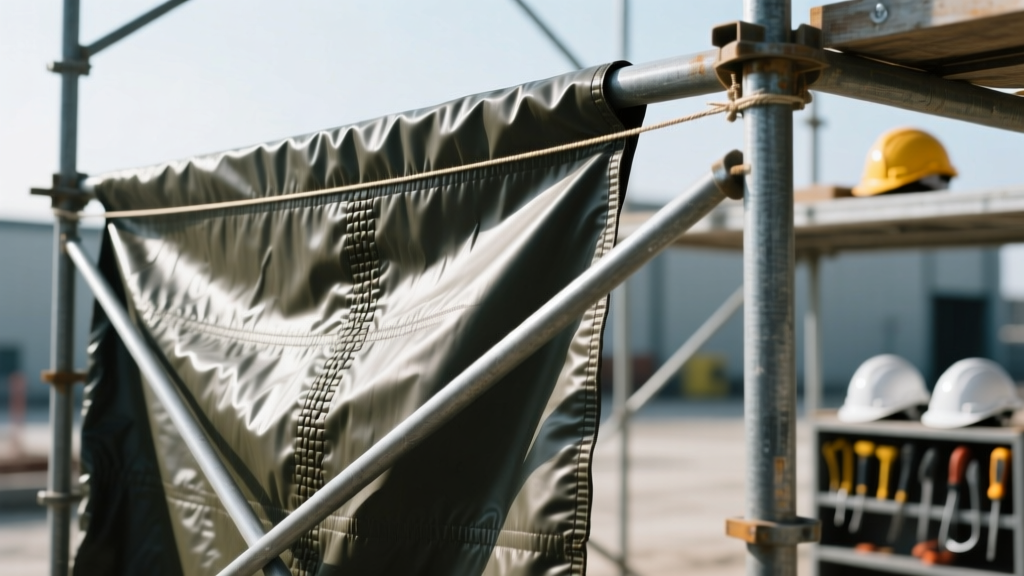
Wind Load, Structural Tension, and OSHA Scaffolding Rules
When waterproof ripstop nylon material is used to enclose scaffolding during high-rise construction or facade renovations, it transforms the scaffold into a massive sail. The OSHA scaffolding regulations (1926.451) mandate that any scaffold enclosed with weatherproofing material must be designed by a qualified person to withstand the increased wind loads.
ASCE 7-22 and Tear Propagation Resistance
Under ASCE 7-22 (Minimum Design Loads and Associated Criteria for Buildings and Other Structures), temporary enclosures must withstand localized wind pressures that can exceed 40 psf in coastal or high-wind zones. The defining characteristic of ripstop nylon—the reinforced grid woven at 5mm to 15mm intervals—is what makes it code-viable for these loads.
Engineers evaluate the material using ASTM D1424 (Standard Test Method for Tearing Strength of Fabrics by Falling Pendulum). For code-compliant scaffolding wraps, the material must demonstrate a minimum tear strength of 15 lbs (warp) and 12 lbs (fill). If a standard puncture occurs from flying debris, the ripstop grid ensures the tear halts at the next reinforced yarn intersection, preventing the entire enclosure from unzipping and exposing workers to the elements.
Hydrostatic Head and Waterproofing Standards
Building codes differentiate between "water-resistant" and "waterproof" materials. For temporary construction enclosures and tensioned membrane roofs, the material must meet specific hydrostatic pressure thresholds to be legally classified as waterproof.
Measuring Hydrostatic Resistance (AATCC 127 & ISO 811)
Waterproofing efficacy in ripstop nylon is measured via the Hydrostatic Head test (AATCC 127), which determines the water pressure (in millimeters) the fabric can withstand before leaking. Code requirements vary by application:
- 1,000mm - 1,500mm (Standard Temporary Wrap): Sufficient for vertical scaffolding enclosures where water runs off quickly. This is the baseline for general weather protection during construction phases.
- 3,000mm - 5,000mm (Heavy-Duty Tensioned Roofs): Required for temporary site offices, emergency medical tents, and tensioned canopies where water may pool in deflection valleys before draining.
- 10,000mm+ (Extreme Weather Shelters): Specified for FEMA-compliant disaster relief structures subject to driving rain and prolonged hydrostatic pooling.
The Seam Vulnerability: Code inspectors frequently fail temporary fabric structures not because the nylon failed, but because the seams leaked. Needle-punched stitching creates thousands of micro-holes. To meet IBC and FEMA waterproofing requirements for habitable temporary structures, all structural seams must be thermally welded or sealed with a heat-activated PU seam tape that matches the hydrostatic rating of the base fabric.
IBC Chapter 31: Special Construction and Membrane Structures
For projects utilizing waterproof ripstop nylon material as a semi-permanent or permanent architectural feature (such as tensile facade shading or temporary event pavilions), IBC Chapter 31 (Special Construction) dictates the legal framework. The code strictly categorizes these assemblies based on their intended lifespan and occupancy.
Temporary vs. Permanent Classification
- Temporary Membrane Structures (Under 180 Days): Governed by Section 3103. These structures are exempt from many permanent fire-resistance rating requirements but must still comply with NFPA 701 and local fire marshal egress requirements. Ripstop nylon is widely accepted here.
- Permanent Tensioned Membrane Roofs: Governed by Section 3102. The code demands a much higher threshold. Standard PU-coated ripstop nylon rarely meets the flame spread and smoke developed indices required for permanent roofs (ASTM E84 Class A). For permanent applications, the code typically forces a pivot to PTFE-coated fiberglass or heavy PVC architectural membranes. However, specialized silicone-coated high-tenacity ripstop nylons are emerging that can pass ASTM E84, allowing their use in permanent open-air tensioned canopies.
Practical Procurement and Inspection Checklist
To ensure your waterproof ripstop nylon material passes municipal inspections and OSHA site audits, require the following documentation from your supplier before material arrives on site:
- [ ] NFPA 701 Certificate: Must specify Test Method 1 or 2, matching the fabric weight.
- [ ] Hydrostatic Head Test Report (AATCC 127): Must show minimum 1500mm for vertical wraps, 3000mm for horizontal canopies.
- [ ] ASTM D1424 Tear Strength Data: Verifying the ripstop grid efficacy.
- [ ] UV Degradation Warranty: Documenting the expected lifespan of the PU coating's UV inhibitors (typically 12-24 months for temporary construction grades).
- [ ] Seam Tape Compatibility Spec Sheet: Ensuring thermal welding parameters match the coating chemistry.
Frequently Asked Questions (Code Specifics)
Can waterproof ripstop nylon be used as a house wrap (WRB) behind siding?
No. IBC Section 1403.2 requires weather-resistive barriers to meet ASTM E2556 or ASTM D226. Ripstop nylon lacks the required vapor permeability ratings and long-term UV degradation warranties mandated for permanent concealed wall assemblies.
Does the fire-retardant coating wash off in the rain?
High-quality, code-compliant architectural ripstop nylons utilize inherent flame-retardant yarns or chemically bonded PU coatings that do not leach. However, cheaper topically treated fabrics will lose their NFPA 701 compliance after prolonged exposure to heavy rain. Always specify "inherently flame retardant" (IFR) for exterior applications.
How do I repair a tear on-site without violating fire codes?
Standard duct tape or generic adhesive patches are highly flammable and will void the NFPA 701 compliance of the enclosure. Repairs must be executed using PU-coated, flame-retardant repair tape that matches the original fabric's fire-rating, applied with a heat gun to activate the adhesive and seal the ripstop grid.
Written by
Priya KapoorPriya Kapoor is a real estate market analyst and construction economics researcher with expertise in housing affordability, development feasibility, and infrastructure investment. She holds a Master of Regional Planning from Cornell University and previously worked as a senior analyst at CBRE's Investment Properties group, where she modeled returns for $4B in mixed-use development pipelines. Priya now runs an independent research practice advising developers, municipalities, and REITs on construction cost forecasting and market timing. She publishes the quarterly "BuildMat Market Pulse" report tracking material price indices across 12 commodity categories. Based in Austin, TX, Priya serves on the board of Habitat for Humanity Austin and is a marathon runner.
More from Priya Kapoor
View all
Construction Cost
Cost to Build a 1600 Sq Ft Home in 2026: Full Breakdown
Accurate 2026 cost to build a 1600 sq ft home—material, labor, and regional pricing breakdowns included. Plan your budget with real-time estimates.
Aug 11, 2026

Wood & Lumber
Name the Types of Wood for Pressure Treatment and Preservation
Learn how to name the types of wood best suited for pressure treatment. Compare species treatability, chemical retention levels, and 2026 preservation costs.
Aug 4, 2026

Stone & Masonry
Stone Veneer Suppliers Lindenhurst: 2026 Cost Analysis
Analyze 2026 stone veneer costs in Lindenhurst, NY. Compare local supplier pricing, delivery fees, and Suffolk County installation labor rates.
Aug 4, 2026