Best Bathroom Waterproofing Materials Reviewed for 2026
Expert review of top 2026 bathroom waterproofing materials. Compare liquid vs. sheet membranes, costs, and ANSI A118.10 compliance for leak-proof showers.

Water intrusion in wet areas remains the leading cause of structural degradation and mold litigation in residential construction. Selecting the right bathroom waterproofing materials is not merely a code compliance exercise; it is a critical defense against thousands of dollars in remediation costs. Modern systems must meet the stringent ANSI A118.10 standard for load-bearing, bonded, waterproof membranes. This review evaluates the top liquid-applied and sheet membrane systems available in 2026, analyzing their chemical properties, installation nuances, and real-world failure modes.
Liquid vs. Sheet Membranes: The Fundamental Divide
Before evaluating specific brands, it is essential to understand the mechanical differences between the two primary categories of bathroom waterproofing materials. Liquid-applied membranes rely on chemical curing to form a seamless, monolithic barrier. Sheet membranes utilize a pre-manufactured core (usually polyethylene or elastomeric foam) faced with a bonding fleece.
| Feature | Liquid-Applied Membranes | Sheet Membranes |
|---|---|---|
| Thickness Control | Variable (requires wet mil gauge) | Uniform (factory controlled) |
| Seam Vulnerability | None (seamless application) | High (requires precise overlapping) |
| Substrate Adaptability | Excellent (conforms to complex shapes) | Moderate (requires folding/cutting at corners) |
| Immediate Flood Testing | Rare (usually 24+ hours cure time) | Possible immediately after thinset cure |
In-Depth Product Reviews: Top 5 Systems for 2026
1. Schluter Kerdi (Sheet Membrane)
Schluter Kerdi remains the benchmark for sheet membrane systems. It consists of an 8-mil polyethylene core with a specialized non-woven fleece webbing on both sides to anchor into thinset mortar. The primary advantage of Kerdi is its uniform thickness; installers do not need to worry about achieving a specific mil thickness during application. However, the system demands strict adherence to thinset protocols. While Schluter historically mandated unmodified thinset (ANSI A118.1), they now permit the use of their proprietary modified thinsets (Schluter All-Set) to accelerate curing times in cooler environments.
2. Custom Building Products RedGard (Liquid-Applied)
RedGard is an elastomeric, water-based liquid membrane that cures to a highly flexible, monolithic sheet. It is widely favored for its visual curing indicator, transitioning from bright pink to dark red when dry. To meet ANSI A118.10, RedGard must be applied at a wet film thickness of 125 mils, which dries to approximately 20 mils. This requires two coats applied with a 3/4-inch nap roller. A major limitation of RedGard is its relatively long cure time, typically requiring 24 to 72 hours before a 24-hour flood test can be conducted, depending on ambient humidity.
3. Mapei AquaDefense (Liquid-Applied)
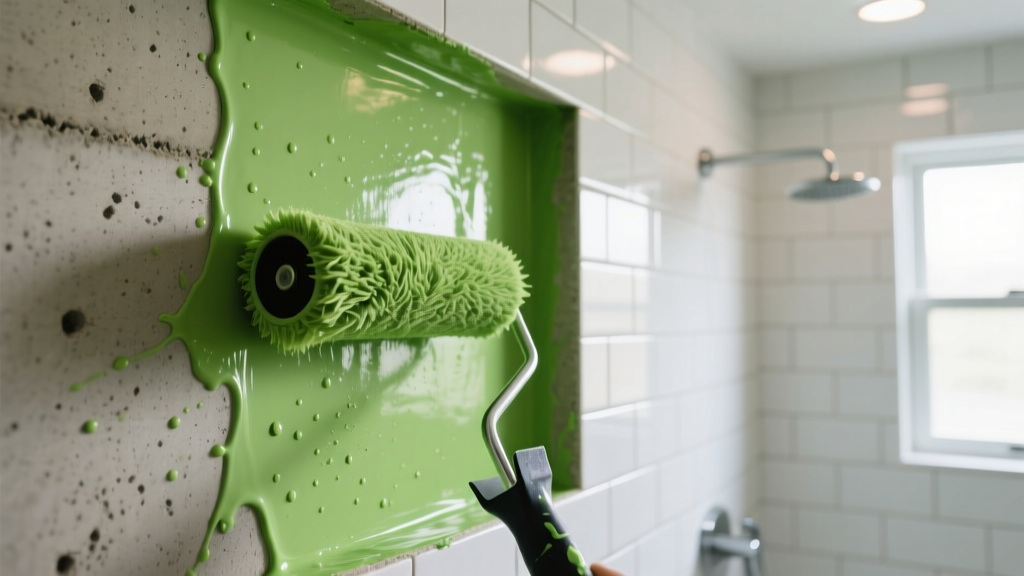
Mapei AquaDefense is a ready-to-use, fast-drying liquid membrane that cures to a vibrant green color. Its standout feature in 2026 is its rapid drying time—often touch-dry in just one hour under optimal conditions (73°F and 50% relative humidity). This allows for same-day tiling in many climates. AquaDefense exhibits exceptional elongation properties (over 1,000% per ASTM C627), making it highly resistant to substrate cracking. It is applied using a roller or airless sprayer, though spraying requires strict respiratory protection and overspray management.
4. Laticrete Hydro Ban (Liquid-Applied)
Hydro Ban is a single-component, self-curing liquid rubber polymer that changes from a light tan to an olive green upon curing. Its most significant competitive advantage is its compatibility with modified thinsets without voiding the warranty, a pain point with some competing brands. Furthermore, Hydro Ban allows for flood testing in as little as two hours under standard conditions, drastically compressing the construction schedule for commercial and high-volume residential projects. It also contains an integrated antimicrobial agent that inhibits mold growth on the membrane surface itself.
5. Wedi Subliner Dry (Sheet Membrane)
Wedi Subliner Dry is a 0.5mm thick sheet membrane featuring a specialized fleece backing. Unlike Kerdi, which relies on thinset for both bonding and seam sealing, Subliner Dry utilizes Wedi 620 sealant (a specialized polyurethane sealant) for all seams, corners, and penetrations. This eliminates the risk of thinset shrinking or cracking at the seams over time. The membrane is highly puncture-resistant and can be installed over a wider variety of substrates, including existing non-cushioned vinyl flooring, provided it is properly prepped.
Cost Breakdown and Material Yield Analysis
When budgeting bathroom waterproofing materials, contractors must calculate the true cost per square foot of finished coverage, accounting for waste, overlap, and multi-coat requirements.
| Product | Type | Unit Price (2026 Est.) | Coverage per Unit | Cost per Sq. Ft. |
|---|---|---|---|---|
| Schluter Kerdi | Sheet | $195.00 / 108 sq ft roll | 90 sq ft (after overlap) | $2.16 |
| RedGard | Liquid | $58.00 / 1 gallon | 50 sq ft (2 coats) | $1.16 |
| Mapei AquaDefense | Liquid | $62.00 / 1 gallon | 55 sq ft (2 coats) | $1.12 |
| Laticrete Hydro Ban | Liquid | $68.00 / 1 gallon | 55 sq ft (2 coats) | $1.23 |
| Wedi Subliner Dry | Sheet | $160.00 / 86 sq ft roll | 75 sq ft (after overlap) | $2.13 |
Note: Costs for liquid membranes do not include the mandatory reinforcing fabric required for changes of plane and corners, which adds approximately $0.15 to $0.25 per linear foot.
Critical Failure Modes and How to Avoid Them
Even the highest-rated bathroom waterproofing materials will fail if installation protocols are ignored. Based on forensic analysis of failed shower pans, these are the most prevalent failure modes:
- Pinholing in Liquid Membranes: Applying liquid membrane over a highly porous substrate (like unprimed cement backer board) causes the substrate to pull the moisture out of the coating too quickly, leaving microscopic pinholes. Solution: Always dampen the substrate with a sponge before applying the first coat of liquid membrane to control the absorption rate.
- Inadequate Mil Thickness: Relying on visual color change rather than measured thickness. A coat may look opaque but still be too thin to pass ANSI A118.10 hydrostatic pressure tests. Solution: Use a wet mil gauge immediately after rolling to verify the 125-mil requirement, and a dry mil gauge after curing.
- Thinset Starvation at Sheet Seams: When overlapping sheet membranes, failing to embed the overlap in a continuous bed of thinset creates a capillary channel for water migration. Solution: Use a 1/8-inch V-notched trowel or the flat side of a trowel to apply thinset under the entire 2-inch overlap zone, ensuring 100% coverage.
- Premature Flood Testing: Filling a shower pan with water before the liquid membrane has fully cross-linked. Even if the surface is dry to the touch, the core may still be curing. Solution: Adhere strictly to manufacturer cure times, adding 12-24 hours for high-humidity or low-temperature environments.
Code Compliance and Industry Standards
All specified bathroom waterproofing materials must comply with local building codes, which generally reference the International Plumbing Code (IPC) and the International Residential Code (IRC). According to the International Code Council (ICC), shower pans must be constructed of approved materials that slope to the drain and extend at least two inches above the finished curb height.
Furthermore, the Tile Council of North America (TCNA) Handbook outlines specific methods for waterproofing, such as Method B421 (bonded waterproofing membrane over a mortar bed) and Method B412 (membrane over a sloped substrate). The National Tile Contractors Association (NTCA) strongly recommends that all liquid-applied membranes be reinforced with an alkali-resistant mesh at all changes of plane, regardless of whether the specific manufacturer explicitly mandates it for every product line, to accommodate structural deflection.
Final Verdict: Which System Should You Specify?
The optimal choice among bathroom waterproofing materials depends entirely on the project constraints and the installer's skill level.
For Speed and Schedule Compression: Specify Laticrete Hydro Ban. The two-hour flood test capability and compatibility with modified thinsets allow tile installation to begin on the exact same day the waterproofing is completed, shaving days off a bathroom remodel timeline.
For Complex Geometry and Curbless Showers: Specify Mapei AquaDefense or RedGard. Liquid membranes seamlessly conform to the complex slopes, linear drain flanges, and custom niches inherent in modern curbless designs, eliminating the difficult folding and sealing required by sheet membranes.
For Multi-Unit Commercial or High-End Residential: Specify Schluter Kerdi or Wedi Subliner Dry. The uniform thickness of sheet membranes removes the human error associated with liquid application thickness. When installed by certified professionals, sheet systems offer the highest degree of long-term reliability and predictability for asset managers and custom home builders.
Written by
David NakamuraDavid Nakamura is a licensed architect (AIA) and construction technology writer focused on sustainable building methods, mass timber engineering, and high-performance building envelopes. He holds a Master of Architecture from the University of Washington and is a certified Passive House Consultant (CPHC). David spent eight years at the Seattle firm Mithun, where he led the design of three LEED Platinum projects, before founding his own practice specializing in net-zero residential design. He serves on the editorial advisory board of GreenBuilder Magazine and has authored peer-reviewed papers on cross-laminated timber (CLT) connections for the Journal of Structural Engineering. In his spare time, David teaches woodworking at Pratt Fine Arts Center and kayaks the Puget Sound.
More from David Nakamura
View all
Construction Cost
Labor Cost to Build a Deck Per Sq Ft: 2026 Installation Guide
Discover the exact labor cost to build a deck per sq ft in 2026. This installation guide breaks down contractor rates, complexity factors, and hidden fees.
Aug 4, 2026

Construction Cost
How Much Does It Cost to Build a 3 Bedroom House? Financing Guide
Learn exactly how much it costs to build a 3 bedroom house and explore 2026 financing options, construction loan types, and budget frameworks for your build.
Aug 4, 2026

Construction Cost
Cost to Build a Tennis Court: 2026 Guide
How much does it cost to build a tennis court in 2026? Breakdowns for asphalt, concrete, and synthetic surfaces plus fencing and lighting.
Jul 30, 2026