2026 Waterproof Fabric Material Cost Breakdown Guide
Comprehensive 2026 cost breakdown for waterproof fabric material. Compare PVC, PTFE, and TPU pricing, fabrication costs, and lifecycle ROI.

The True Cost of Waterproof Fabric Materials in 2026
Specifying a waterproof fabric material for architectural, industrial, or marine applications requires looking far beyond the base price per square yard. In 2026, the market for technical textiles has bifurcated into high-commodity polymer coatings and premium fluoropolymer laminates, each with drastically different fabrication, hardware, and lifecycle cost profiles. Whether you are designing a temporary event canopy, a permanent tensile roof, or industrial containment bladders, understanding the total installed cost is critical for accurate budgeting.
Base material costs for waterproof fabric material currently range from $4.00 per square yard for basic polyurethane-coated nylons to over $90.00 per square yard for architectural-grade expanded PTFE (ePTFE). However, the raw fabric typically accounts for only 30% to 45% of the total project budget. Fabrication methods, specialized welding equipment, edge finishing, and structural attachment hardware dictate the remaining financial outlay. This guide dissects the exact pricing tiers, hidden fabrication costs, and long-term ROI metrics for the primary waterproof fabrics used in modern construction and manufacturing.
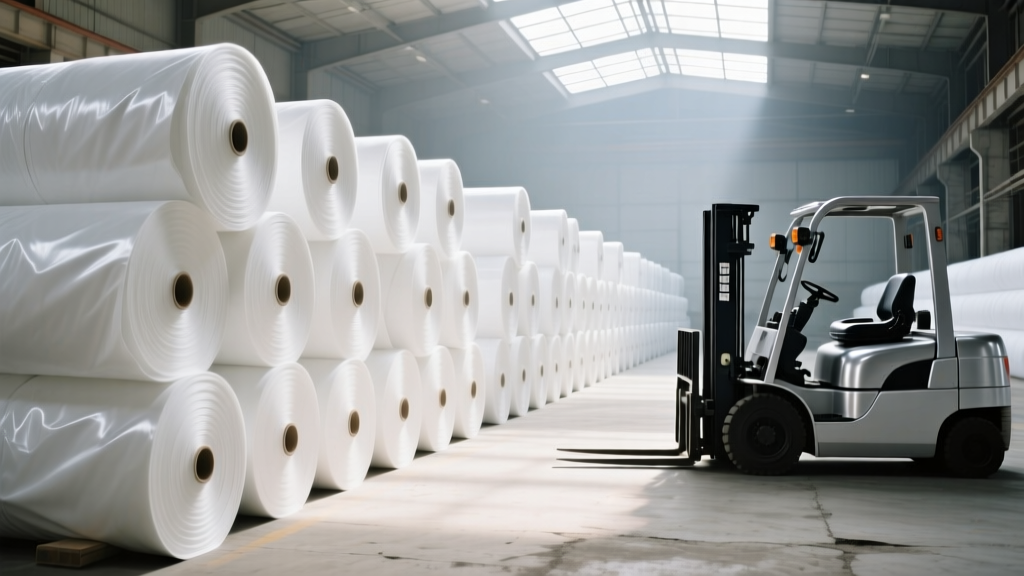
Material Cost Matrix: Price Per Square Yard by Fabric Type
The table below outlines the 2026 baseline material costs for the most prevalent waterproof architectural and industrial fabrics. Prices reflect standard wholesale rolls (typically 50 to 100 linear yards) before fabrication.
| Material Type | Base Cost (per sq yd) | Expected Lifespan | Primary Use Case | Weldability |
|---|---|---|---|---|
| PVC-Coated Polyester | $4.50 - $12.00 | 10 - 15 Years | Canopies, truck tarps, temporary structures | Excellent (High-Frequency / Hot Air) |
| TPU (Thermoplastic Polyurethane) | $8.00 - $18.00 | 7 - 12 Years | Inflatable structures, marine bladders, medical | Excellent (Hot Air / Wedge) |
| PTFE Fiberglass | $28.00 - $55.00 | 25 - 30+ Years | Permanent stadium roofs, airport terminals | Specialized (Iron / Heat Press) |
| ePTFE Laminates | $45.00 - $95.00 | 30+ Years | High-end tensile facades, extreme UV environments | Specialized (Thermal Impulse) |
| Silicone-Coated Fiberglass | $15.00 - $25.00 | 15 - 20 Years | Welding curtains, high-heat industrial enclosures | Poor (Requires Sewing + Taping) |
PVC-Coated Polyester: The Commercial Workhorse
Polyvinyl chloride (PVC) coated onto a high-tenacity polyester scrim remains the most widely specified waterproof fabric material globally. Standard calendered PVC sits at the lower end of the cost spectrum ($4.50 to $7.00/sq yd), but premium biaxially tensioned options, such as the Serge Ferrari Precontraint line, command $9.00 to $12.00/sq yd. The Precontraint manufacturing process stretches the polyester scrim in both directions before applying the PVC coating, eliminating the directional stretch that causes sagging and water pooling in cheaper alternatives.
Failure Mode & Edge Case: Standard PVC relies on liquid plasticizers to maintain flexibility. Over 10 to 12 years, these plasticizers migrate to the surface, causing the fabric to become brittle and the waterproof coating to micro-crack. For projects exceeding a 10-year requirement, specify PVC formulations with UV-stabilized, polymeric plasticizers, which add approximately $1.50 per square yard but double the functional lifespan.
PTFE Fiberglass: The Architectural Premium
For permanent tensile architecture, Polytetrafluoroethylene (PTFE) coated fiberglass is the undisputed standard. Products like Saint-Gobain Sheerfill cost between $28.00 and $55.00 per square yard. Unlike PVC, PTFE is a fluoropolymer that is chemically inert, completely impervious to UV degradation, and self-cleaning due to its extremely low surface energy.
The "Burn-In" Phase: A critical real-world insight for PTFE is its initial aesthetic. Fresh off the manufacturing line, PTFE fiberglass is a mottled brown or tan color. It requires 6 to 12 months of direct sunlight exposure to bleach into its signature brilliant white. If a project demands immediate visual perfection, architects must either budget for temporary aesthetic covers or switch to an ePTFE laminate, which is white upon installation but costs upwards of $60.00/sq yd.
Hidden Costs: Fabrication, Welding, and Edge Finishing
The raw roll of waterproof fabric material is rarely installed as-is. Transforming 2D fabric rolls into 3D structural membranes introduces significant fabrication costs that frequently derail preliminary budgets.
When calculating square footage, inexperienced estimators only measure the visible surface area. Fabrication requires seam overlaps (typically 2 to 4 inches for hot-air welding, and up to 6 inches for structural PTFE seams). Always add a minimum of 12% to 15% to your total square yardage to account for seam overlaps, edge hems, and cutting waste. Failing to do so will result in material shortages and expensive rush-order freight charges.
Welding vs. Sewing: A Cost and Performance Comparison
To maintain the waterproof integrity of the membrane, seams must be joined without compromising the coating.
- Hot-Air / High-Frequency Welding (PVC & TPU): This melts the coatings together, creating a monolithic, 100% waterproof seam. Fabricators typically charge $2.50 to $5.00 per linear foot for structural welding. High-frequency (RF) welding requires expensive custom die tooling ($500 to $2,000 per die shape) but is cost-effective for high-volume, repetitive panel production.
- Sewing and Taping (Silicone & Heavy Canvas): Sewing punctures thousands of holes in the waterproof coating. To restore waterproofing, a TPU or silicone seam-sealing tape must be hot-melt applied over the stitch line. Sewing costs $1.50 to $3.00 per linear foot, but the subsequent taping adds another $1.00 to $2.50 per linear foot, often making it more expensive and less reliable than direct thermal welding.
- PTFE Sintering: PTFE fiberglass cannot be hot-air welded. It requires specialized heated irons and PTFE-coated fiberglass thread, followed by a secondary heat-press sintering process to fuse the seam. Fabrication rates for PTFE are notoriously high, often exceeding $12.00 to $18.00 per linear foot, and must be performed in climate-controlled, clean-room environments to prevent soiling the white membrane.
Hardware and Attachment Systems
A waterproof membrane is only as secure as its perimeter attachment. The hardware required to tension and seal the fabric represents a major line item in the cost breakdown.
| Hardware Type | Material Specification | Estimated Cost (per linear foot / unit) | Application |
|---|---|---|---|
| Keder Rail System | Marine-grade Anodized Aluminum (6061-T6) | $8.50 - $14.00 / linear ft | Securing fabric edges into rigid structural frames |
| Keder Beading | Extruded PVC or Polyurethane cord | $1.20 - $2.50 / linear ft | Welded to fabric edge to slide into Keder rail |
| Stainless Steel D-Rings | 316 Marine Stainless, welded base | $4.50 - $8.00 / each | Point attachments for tension cables and turnbuckles |
| Turnbuckles (Jaw/Jaw) | 316 Stainless, 3/8" to 1/2" thread | $18.00 - $45.00 / each | Final tensioning of perimeter cables |
For large-scale tensile roofs, the perimeter aluminum extrusions and stainless steel cabling can easily account for 20% to 30% of the total installed project cost. Specifying 304 stainless steel instead of 316 may save 15% on hardware upfront, but in coastal or high-humidity environments, 304 will suffer from crevice corrosion within 3 to 5 years, leading to catastrophic edge failures.
Lifecycle Cost Analysis: Replacement vs. Durability
When evaluating a waterproof fabric material, the initial capital expenditure (CapEx) must be weighed against the operational expenditure (OpEx) of maintenance and eventual replacement. According to data tracked by the Advanced Textiles Association, the lifecycle cost of architectural membranes is heavily influenced by local environmental factors and cleaning protocols.
- Under 3 Years (Events, Temporary Storage): Use standard calendered PVC or PE (Polyethylene) laminates. Base cost: $3 - $6/sq yd. Plan for disposal.
- 5 to 12 Years (Commercial Canopies, Agricultural Covers): Use high-tenacity PVC with PVDF (Polyvinylidene Fluoride) topcoats. The PVDF layer ($2/sq yd premium) resists dirt adhesion and reduces cleaning costs by up to 60%.
- 15 to 30+ Years (Civic Buildings, Stadiums): Mandate PTFE Fiberglass or ePTFE. The high initial cost is offset by zero replacement costs and minimal structural maintenance over three decades.
The Hidden Cost of Maintenance
PVC membranes require chemical cleaning every 18 to 24 months to prevent the buildup of atmospheric pollutants, which can degrade the plasticizers. Professional membrane cleaning costs between $0.15 and $0.35 per square foot. Over a 15-year lifespan, a 10,000 square foot PVC canopy will incur $22,500 to $52,500 in cleaning costs. PTFE, due to its non-stick fluoropolymer surface, relies on rainwater to wash away dirt, effectively reducing maintenance costs to near zero and altering the long-term ROI calculation significantly in favor of the more expensive initial material.
Fire Codes and Compliance Testing
Specifying a waterproof fabric material without verifying its fire rating is a critical liability. In the United States, architectural fabrics must meet specific flame spread and smoke development indices.
- NFPA 701: The standard test method for fire tests for flame propagation of textiles and films. Most PVC and PTFE architectural fabrics pass this standard for hanging applications.
- ASTM E84 (UL 723): Measures surface burning characteristics (Flame Spread Index and Smoke Developed Index). For fabrics used as interior ceilings or plenums, a Class A rating (Flame Spread 0-25, Smoke 0-450) is legally mandated.
Requesting independent, third-party lab certifications (such as from Underwriters Laboratories or Intertek) for your specific fabric batch is non-negotiable. Relying on a manufacturer's "in-house" fire test data can result in failed municipal inspections, forcing the removal and replacement of the installed membrane at the contractor's total expense.
Frequently Asked Questions
What is the minimum order quantity for architectural waterproof fabrics?
Most tier-one manufacturers require a minimum order of one full roll, which typically ranges from 50 to 100 linear yards (roughly 450 to 900 square yards depending on the fabric width, which is usually 1.5 to 3.2 meters). Ordering less than a full roll usually requires purchasing from a secondary distributor, which adds a 20% to 40% markup to the base material cost.
Does the color of the fabric affect the cost and thermal performance?
Standard white and beige colors are produced in massive volumes and carry no premium. Custom colors require minimum run quantities (often 2,000+ square yards) and add 15% to 30% to the material cost. Thermally, white PVC and PTFE reflect up to 75% of solar radiation, significantly reducing HVAC cooling loads beneath the structure. Dark-colored fabrics absorb heat, which can accelerate plasticizer degradation in PVC and increase the thermal expansion/contraction stress on the perimeter hardware.
Written by
Sarah WhitfieldSarah Whitfield is a chartered quantity surveyor (MRICS) and construction cost analyst with 15 years of experience in material pricing, procurement strategy, and project budgeting. She earned her degree in Construction Management from the University of Reading (UK) and has worked on projects ranging from $2M custom homes to $180M mixed-use developments across North America and Europe. Sarah currently leads cost estimating for BuildMat Insight, maintaining a proprietary database of 4,000+ material price points updated quarterly. She is a frequent contributor to RSMeans cost data panels and has presented at the International Cost Engineering Council (ICEC) congress. Based in Denver, CO, Sarah is an avid trail runner and volunteer mentor for Women in Construction.
More from Sarah Whitfield
View all
Wood & Lumber
What Are the Different Types of Wood? A Builder's Guide
Compare structural softwoods, finish hardwoods, and engineered lumber. Analyze Janka ratings, MOE values, and 2026 pricing for construction.
Aug 4, 2026

Walls & Panels
Steel Framing vs Wood Framing: Corrosion and Moisture Defense
Compare steel framing vs wood framing for moisture resistance. Learn about galvanized coatings, condensation risks, and corrosion protection strategies.
Jul 21, 2026

Stone & Masonry
How to Cut Stone Veneer: Wet Saw vs Grinder Comparison
Compare the best tools for cutting stone veneer. We review wet saws, angle grinders, and chop saws to help you achieve clean, chip-free cuts.
Jul 21, 2026