How to Choose Waterproof Ripstop Material for Site Enclosures
Learn how to select the right waterproof ripstop material for construction enclosures, comparing PU, PVC, and TPU coatings, denier weights, and tear strength.

Decoding Ripstop Weave and Denier Specifications
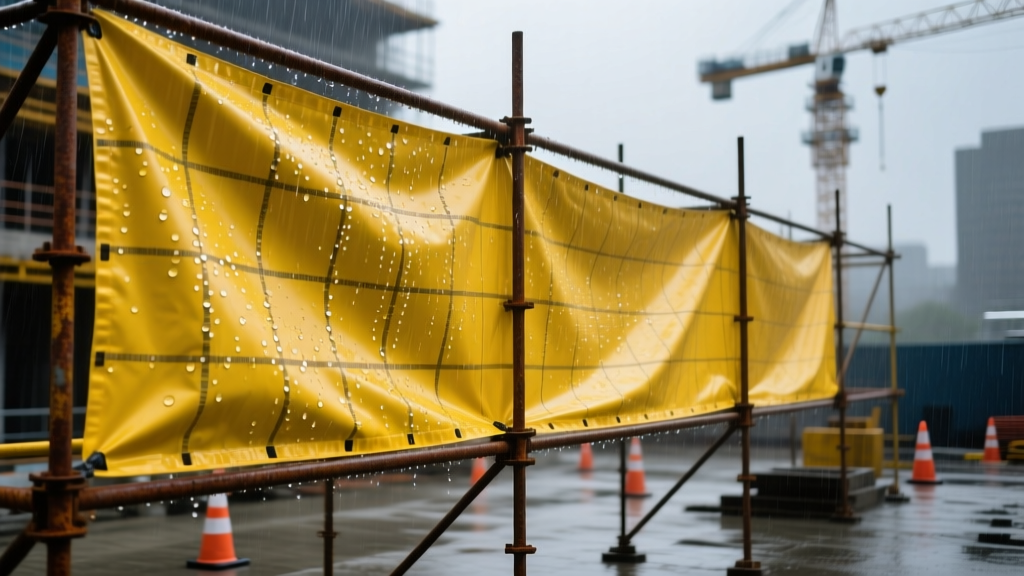
Waterproof ripstop material serves as a critical barrier in temporary construction enclosures, concrete curing blankets, and heavy-duty equipment tarps. The defining feature of ripstop is its crosshatch weave—typically reinforced nylon or polyester threads interwoven at regular intervals (usually 3mm to 8mm squares). This grid prevents small punctures from propagating into catastrophic tears under high wind loads or mechanical stress.
However, the base fabric weight, measured in Denier (D), dictates the material's structural viability for specific construction applications. Selecting an inadequate denier rating for a high-tension scaffolding wrap will result in rapid mechanical failure, while over-specifying for a simple interior dust barrier wastes project capital.
| Denier Rating | Base Fabric Weight | Primary Construction Applications | Wind Load Tolerance |
|---|---|---|---|
| 210D - 300D | Lightweight (3-5 oz/yd²) | Interior dust barriers, light-duty debris netting, short-term material covers | Low (Requires full structural support) |
| 420D - 600D | Midweight (6-9 oz/yd²) | Standard scaffolding wraps, concrete curing blankets, temporary roof patches | Moderate (Suitable for standard perimeter enclosures) |
| 1000D - 1680D | Heavyweight (12-18+ oz/yd²) | Heavy machinery tarps, tensioned perimeter enclosures, high-wind coastal zones | High (Can withstand significant billowing and tension) |
Coating Chemistries: The Waterproofing Engine
Ripstop nylon or polyester is naturally water-resistant, not waterproof. The chemical coating applied to the fabric dictates the hydrostatic head (HH) rating, UV longevity, and temperature flexibility. Understanding these coatings is the most critical step in the selection process.
Polyurethane (PU) Coatings
PU is the most common coating for mid-range construction tarps and curing blankets. It offers an excellent balance of waterproofing, flexibility, and cost. Standard PU coatings provide a hydrostatic head of 1,500mm to 3,000mm, sufficient for driving rain. However, standard PU is susceptible to hydrolysis (chemical breakdown from prolonged moisture exposure) and UV degradation unless specifically treated with UV inhibitors. For construction sites, always specify UV-stabilized PU to prevent the coating from turning brittle and flaking off after 60 days of sun exposure.
Polyvinyl Chloride (PVC) Laminates
PVC-coated ripstop is the industry standard for heavy-duty scaffolding wraps and long-term temporary enclosures. Unlike PU, which is painted on, PVC is often laminated or knife-coated in thicker layers, yielding HH ratings of 10,000mm to 20,000mm. PVC is inherently fire-retardant and highly resistant to abrasion and chemical spills (such as wet concrete or masonry solvents). The trade-off is weight and cold-weather stiffness; PVC ripstop becomes rigid and prone to cracking in temperatures below 20°F (-6°C) unless formulated with cold-flex plasticizers.
Thermoplastic Polyurethane (TPU)
TPU represents the premium tier of waterproof ripstop. It combines the extreme abrasion resistance of PVC with the lightweight flexibility of PU. TPU coatings maintain their elasticity in sub-zero temperatures and offer superior resistance to hydrolysis and microbial growth (mildew). While TPU ripstop costs 2 to 3 times more than standard PU, it is the mandatory choice for Arctic construction sites, high-altitude tension structures, and reusable heavy-duty equipment covers.
- 1,000mm - 1,500mm: Water-resistant. Suitable for interior use or light drizzle.
- 3,000mm - 5,000mm: Waterproof. Handles heavy, driving rain and standard site weather.
- 10,000mm+: Highly Waterproof. Required for flat-lay applications where water pools, or for high-pressure washing environments.
Mandatory Compliance: Fire Codes and Tear Strength
When deploying waterproof ripstop as a vertical enclosure on a commercial building site, material selection is governed by strict safety regulations. Ignoring these specifications can result in immediate work stoppages and severe fines.
Fire Retardancy (NFPA 701)
Temporary enclosures, scaffolding wraps, and interior containment barriers must comply with NFPA 701 (Standard Methods of Fire Tests for Flame Propagation of Textiles and Films). Standard nylon ripstop is highly flammable. You must procure materials that are either inherently flame-retardant (like specific PVC formulations) or topically treated to pass NFPA 701 certification. Always demand a manufacturer's certificate of compliance before installation.
Wind Load and Scaffolding Enclosures
Enclosing a scaffold with waterproof ripstop drastically increases the wind sail effect. According to OSHA 1926.451 scaffolding standards, enclosing a scaffold requires a qualified person to design or approve the tie-in and bracing system to handle the increased lateral loads. The ripstop material must possess high tear strength—measured via ASTM D1424 (Elmendorf Tear Test)—to ensure that a grommet pull-out or minor tear does not unzip the entire enclosure during a squall. For high-wind zones, specify ripstop with reinforced webbing sewn into the hems and grommet lines.
Procurement and Cost Matrix (2026 Pricing)
Budgeting for temporary enclosures requires balancing upfront material costs against the expected lifespan of the project. Below is the current commercial pricing landscape for bulk procurement (rolls of 500+ square yards).
| Material Specification | Coating Type | Avg. HH Rating | Estimated Cost (per sq. yd.) | Expected Lifespan (Outdoor) |
|---|---|---|---|---|
| 210D Nylon Ripstop | Standard PU | 1,500mm | $2.50 - $4.00 | 3 - 6 Months |
| 420D Polyester Ripstop | UV-Stabilized PU | 3,000mm | $5.50 - $8.00 | 12 - 18 Months |
| 600D Polyester Ripstop | Fire-Retardant PVC | 10,000mm+ | $9.00 - $14.00 | 2 - 4 Years |
| 1000D Nylon Ripstop | TPU Laminate | 15,000mm+ | $18.00 - $26.00 | 5+ Years |
Troubleshooting Common Field Failures
Even high-grade waterproof ripstop can fail if deployed incorrectly. Recognizing these failure modes allows site managers to adjust procurement and installation protocols.
- Seam Delamination: Symptom: Water leaks through stitched seams despite the fabric remaining intact. Cause: Standard sewing needles puncture the waterproof coating, creating capillary pathways for water. Fix: Specify RF (Radio Frequency) welded seams for PVC materials, or require factory-applied heat-sealed PU seam tape over all stitched joints.
- UV Embrittlement: Symptom: The fabric tears easily along the ripstop grid lines after a few months of sun exposure. Cause: The coating lacked Hindered Amine Light Stabilizers (HALS). Fix: Mandate HALS-additive coatings in the procurement spec for any material expected to face direct sunlight for more than 90 days.
- Grommet Pull-Out: Symptom: Tie-down points rip through the fabric under moderate wind. Cause: Grommets were pressed directly into single-layer ripstop without reinforcement. Fix: Require double-layer webbing reinforcement at all tie-down points, or use materials with integrated Kevlar/Aramid ripstop threads at 1-inch intervals for extreme tension applications.
- Hydrolysis (PU Peeling): Symptom: The waterproof coating becomes sticky, then flakes off in sheets, usually in humid or coastal environments. Cause: Standard polyether-based PU reacting with ambient moisture over time. Fix: Upgrade to polyester-based PU or TPU coatings, which are highly resistant to hydrolytic degradation.
Selecting the correct waterproof ripstop material requires matching the denier weight, coating chemistry, and fire compliance to the specific environmental and structural demands of the site. By prioritizing verified hydrostatic head ratings and reinforced seam construction, project managers can eliminate weather-related delays and ensure total compliance with site safety regulations.
Written by
David NakamuraDavid Nakamura is a licensed architect (AIA) and construction technology writer focused on sustainable building methods, mass timber engineering, and high-performance building envelopes. He holds a Master of Architecture from the University of Washington and is a certified Passive House Consultant (CPHC). David spent eight years at the Seattle firm Mithun, where he led the design of three LEED Platinum projects, before founding his own practice specializing in net-zero residential design. He serves on the editorial advisory board of GreenBuilder Magazine and has authored peer-reviewed papers on cross-laminated timber (CLT) connections for the Journal of Structural Engineering. In his spare time, David teaches woodworking at Pratt Fine Arts Center and kayaks the Puget Sound.
More from David Nakamura
View all
Construction Cost
Labor Cost to Build a Deck Per Sq Ft: 2026 Installation Guide
Discover the exact labor cost to build a deck per sq ft in 2026. This installation guide breaks down contractor rates, complexity factors, and hidden fees.
Aug 4, 2026

Construction Cost
How Much Does It Cost to Build a 3 Bedroom House? Financing Guide
Learn exactly how much it costs to build a 3 bedroom house and explore 2026 financing options, construction loan types, and budget frameworks for your build.
Aug 4, 2026

Construction Cost
Cost to Build a Tennis Court: 2026 Guide
How much does it cost to build a tennis court in 2026? Breakdowns for asphalt, concrete, and synthetic surfaces plus fencing and lighting.
Jul 30, 2026