BOPP Bag for Building Material Packaging: 2026 Cost Breakdown
Analyze the 2026 unit costs, hidden expenses, and ROI of using a BOPP bag for building material packaging compared to paper and PE alternatives.

The Economics of BOPP Laminated Woven Sacks
Procuring a bopp bag for building material packaging requires looking past the initial per-unit invoice. Biaxially Oriented Polypropylene (BOPP) laminated woven bags have dominated the packaging of hygroscopic construction materials—such as Portland cement, tile adhesives, gypsum plasters, and polymer-modified mortars—due to their superior moisture barrier and high-resolution rotogravure printability. However, in 2026, volatile polypropylene resin indices and shifting sustainability mandates mean that procurement managers must evaluate the Total Cost of Ownership (TCO). According to market data on BOPP packaging films, while base resin prices have stabilized, the cost of specialized barrier coatings and UV stabilizers has increased, fundamentally altering the cost structure of heavy-duty construction sacks.
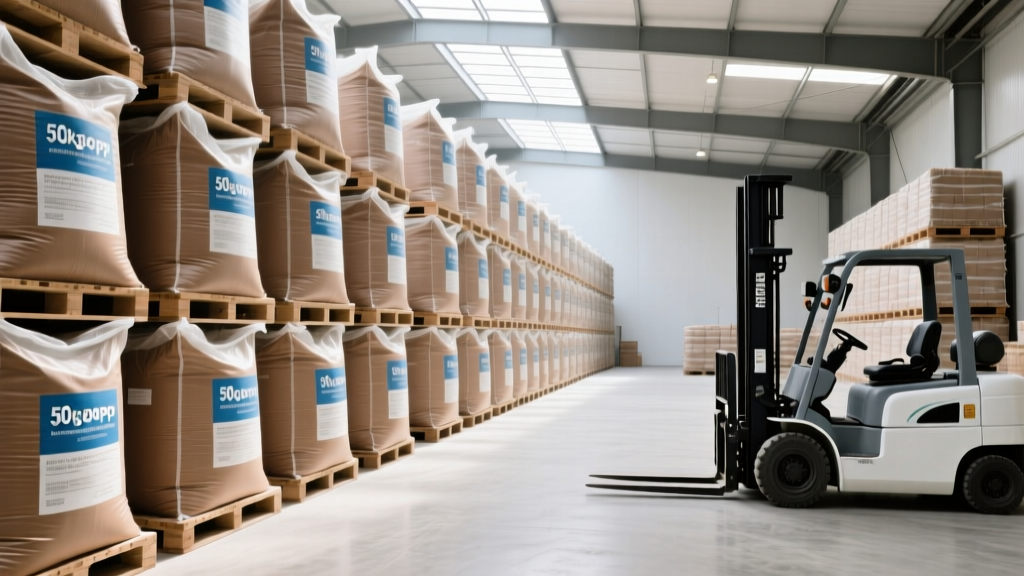
Unit Cost Breakdown: 50kg BOPP Packaging Specifications
The baseline cost of a BOPP laminated woven bag is dictated by fabric weight (GSM), BOPP film thickness, and the sealing mechanism. Below is the 2026 procurement cost matrix for a standard 50kg capacity bag (dimensions: 500mm width x 600mm length + 100mm bottom gusset).
| Component Specification | Standard Grade | Heavy-Duty / Premium | Cost Impact per 1,000 Units |
|---|---|---|---|
| Woven PP Fabric | 70 GSM | 90 GSM | +$14.00 |
| BOPP Lamination Film | 15 Micron (Glossy) | 20 Micron (Matte/Anti-slip) | +$9.50 |
| Bottom Sealing | Sewn with Crepe Tape | Block Bottom Hot-Melt Valve | +$22.00 |
| Printing (Rotogravure) | 4-Color Process | 8-Color + Spot Varnish | +$6.00 |
| Total Estimated Unit Cost | $0.18 - $0.21 | $0.24 - $0.28 | +$51.50 / 1k units |
Total Cost of Ownership (TCO): BOPP vs. Multi-Wall Paper vs. PE
When evaluating a bopp bag for building material packaging against traditional alternatives, the per-unit price is only one variable. The European Cement Association (CEMBUREAU) notes that packaging spoilage and transit damage represent a larger financial leak than the packaging material itself. Below is a TCO comparison matrix for a 100,000-bag production run of 25kg polymer-modified tile adhesive.
| Cost Metric | BOPP Laminated Woven | 3-Ply Multi-Wall Paper | Heavy-Duty PE Sack |
|---|---|---|---|
| Base Unit Cost | $0.16 | $0.24 | $0.13 |
| Moisture Spoilage Rate (Transit) | < 0.5% | 3.0% - 5.0% | < 0.2% |
| Palletizing Stability (Slip Factor) | High (with anti-slip coat) | Excellent | Poor (requires stretch wrap) |
| Packing Line Speed Compatibility | Up to 3,000 bags/hr | Up to 2,500 bags/hr | Up to 1,500 bags/hr |
| Effective Cost per Filled Bag | $0.165 | $0.252 | $0.155* |
*Note: PE sacks incur an additional $0.03 per unit equivalent in secondary stretch-wrapping and pallet stabilization costs due to poor stacking friction.
Hidden Cost Drivers and Failure Modes
Procurement teams frequently encounter unbudgeted costs due to technical mismatches between the bag specification and the packing environment. Avoid these specific failure modes:
⚠️ Warning: UV Degradation and Delamination
Standard BOPP film degrades rapidly under direct sunlight. If your distribution network involves outdoor staging at big-box retail yards or open-air construction sites, you must specify a UV-inhibitor masterbatch in both the woven fabric and the BOPP lamination adhesive. Omitting this $0.008 per bag additive will result in film delamination and catastrophic bag failure within 60 days of outdoor exposure, leading to total product loss and retail chargebacks.
💡 Pro Tip: Micro-Perforation for Air Escape
When packing fine-particle materials like cement or calcium carbonate fillers at high speeds, air becomes trapped inside the sack. If the BOPP bag lacks engineered micro-perforations (typically 0.8mm to 1.2mm needle punctures), the bags will balloon, resulting in unstable pallet stacks and burst seams during transit. Specify randomized micro-perforations on the gussets to maintain a flat, stackable profile without compromising the moisture barrier.
Tooling Amortization: The Rotogravure Printing Factor
Unlike flexographic printing used on standard PE bags, BOPP bags utilize rotogravure printing to achieve photorealistic branding and scannable barcodes—a critical requirement for modern retail building material aisles. However, rotogravure requires copper-plated printing cylinders.
- Cylinder Cost: $350 to $550 per color.
- 8-Color Setup: $2,800 to $4,400 initial tooling investment.
- Amortization Strategy: Suppliers typically amortize this cost over the first 50,000 units. If your Minimum Order Quantity (MOQ) is only 10,000 bags, your effective per-unit cost will spike by $0.28 to $0.44. To maintain the $0.18-$0.24 target price range, consolidate SKUs or commit to a 100,000+ unit annual blanket order to spread the tooling cost to less than $0.03 per bag.
ROI Calculation Framework for Dry-Mix Producers
To justify the transition from multi-wall paper to BOPP laminated woven bags, use this precise ROI framework based on a 500,000-bag annual volume (25kg tile adhesive):
- Material Savings: Paper ($0.24) vs. BOPP ($0.16) = $0.08 savings per bag. Total: $40,000.
- Spoilage Reduction: Paper suffers a 3% moisture spoilage rate in humid transit. BOPP reduces this to 0.5%. Saving 2.5% of 500,000 bags (12,500 bags) from being returned or discarded. At $12.00 wholesale value per bag of adhesive, this prevents $150,000 in lost product revenue. Total Recovered: $150,000.
- Secondary Packaging Elimination: BOPP’s high tensile strength and block-bottom stability reduce the need for heavy-duty pallet stretch wrap and cardboard slip sheets by 40%. Total: $8,500.
Net First-Year ROI: $198,500 in recovered capital and operational savings, easily offsetting the initial $4,000 rotogravure cylinder tooling investment.
Technical Specifications to Mandate in Your RFQ
Do not leave bag specifications open to supplier interpretation. When issuing a Request for Quote (RFQ) for a bopp bag for building material packaging, explicitly mandate the following parameters to ensure structural integrity and cost predictability:
- Fabric: Virgin Polypropylene (PP) tubular woven fabric, minimum 75 GSM, with a tensile warp strength of ≥ 850 N/50mm.
- Lamination: BOPP film (18-20 microns) laminated via solvent-less extrusion coating to prevent chemical off-gassing that can affect sensitive polymer additives in dry-mix mortars.
- Valve Specification: If using a block-bottom valve design, specify a hot-melt PE valve sleeve (minimum 120mm length) to ensure automatic heat-sealing upon exiting the packing spout, preventing sifting of fine 100-mesh powders.
- Slip Resistance: Mandate a Coefficient of Friction (COF) of ≥ 0.45 on the outer BOPP surface, achieved via a matte-finish embossing roller or silica-based anti-slip overprint varnish, to ensure safe pallet stacking up to 1.8 meters high.
By treating packaging as an engineered component of your supply chain rather than a commoditized consumable, construction material manufacturers can leverage BOPP technology to protect margins, reduce environmental waste, and ensure product integrity from the plant to the job site. For broader context on how flexible packaging continues to evolve in heavy industries, refer to ongoing flexible packaging market analyses to track resin indexing and sustainability compliance trends.
Written by
Priya KapoorPriya Kapoor is a real estate market analyst and construction economics researcher with expertise in housing affordability, development feasibility, and infrastructure investment. She holds a Master of Regional Planning from Cornell University and previously worked as a senior analyst at CBRE's Investment Properties group, where she modeled returns for $4B in mixed-use development pipelines. Priya now runs an independent research practice advising developers, municipalities, and REITs on construction cost forecasting and market timing. She publishes the quarterly "BuildMat Market Pulse" report tracking material price indices across 12 commodity categories. Based in Austin, TX, Priya serves on the board of Habitat for Humanity Austin and is a marathon runner.
More from Priya Kapoor
View all
Construction Cost
Cost to Build a 1600 Sq Ft Home in 2026: Full Breakdown
Accurate 2026 cost to build a 1600 sq ft home—material, labor, and regional pricing breakdowns included. Plan your budget with real-time estimates.
Aug 11, 2026

Wood & Lumber
Name the Types of Wood for Pressure Treatment and Preservation
Learn how to name the types of wood best suited for pressure treatment. Compare species treatability, chemical retention levels, and 2026 preservation costs.
Aug 4, 2026

Stone & Masonry
Stone Veneer Suppliers Lindenhurst: 2026 Cost Analysis
Analyze 2026 stone veneer costs in Lindenhurst, NY. Compare local supplier pricing, delivery fees, and Suffolk County installation labor rates.
Aug 4, 2026