Selecting Chicken Coop Building Materials for Predator-Proof Coops
Master chicken coop building materials selection. Explore structural framing, predator-proof mesh gauges, and cladding specs for durable backyard coops.

The Material Science of Backyard Poultry Housing
Building a chicken coop requires navigating a unique intersection of agricultural engineering and residential construction. Unlike standard sheds, poultry housing must manage high internal moisture, corrosive ammonia from manure, and persistent biological threats from predators. According to the University of Minnesota Extension, improper material selection is the leading cause of premature coop failure and flock loss. This application guide details the exact specifications for chicken coop building materials, focusing on structural longevity, moisture mitigation, and impenetrable predator defense.
Structural Framing: Lumber Grades and Ground Contact
The skeletal structure of your coop dictates its lifespan. While standard residential framing relies on 2x4 studs, coop framing requires specific treatment considerations due to ground proximity and internal humidity.
Base Skids and Floor Joists
Any lumber within 6 inches of the ground must be rated for ground contact. Use UC4A or UC4B pressure-treated lumber (typically treated with Copper Azole or Alkaline Copper Quaternary) for the base skids. Critical Warning: Never use pressure-treated lumber for the interior roosts, nesting boxes, or wall studs where birds will peck or roost. The copper and chemical preservatives can cause heavy metal toxicity if ingested by foraging chickens.
Wall Studs and Roof Rafters
For the elevated superstructure, use #2 Grade SPF (Spruce-Pine-Fir) dimensional lumber. Kiln-dried SPF is stable and resists warping in the fluctuating humidity of a coop environment. Frame walls at 24 inches on-center (O.C.) rather than the residential standard of 16 inches O.C. This wider spacing reduces material costs and weight while providing ample nailing surface for exterior cladding and interior wire mesh.
Exterior Cladding: Moisture and Ammonia Resistance
The exterior skin of the coop must shed rain while allowing the interior to breathe. Selecting the right cladding material prevents the rot that plagues poorly ventilated coops.
- T1-11 Plywood Siding: A traditional choice offering high shear strength, effectively bracing the coop against wind loads. However, the vertical grooves can trap moisture and harbor mites. If using T1-11, seal all cut edges with an exterior acrylic primer and paint the interior with a high-gloss, mildew-resistant enamel to allow for pressure washing.
- LP SmartSide (Engineered Wood): Treated with zinc borate to resist fungal decay and termites. It is lighter than plywood and holds screws exceptionally well. The critical application rule for SmartSide in agricultural settings is maintaining a 6-inch clearance from the soil and sealing all bottom edges to prevent moisture wicking into the OSB core.
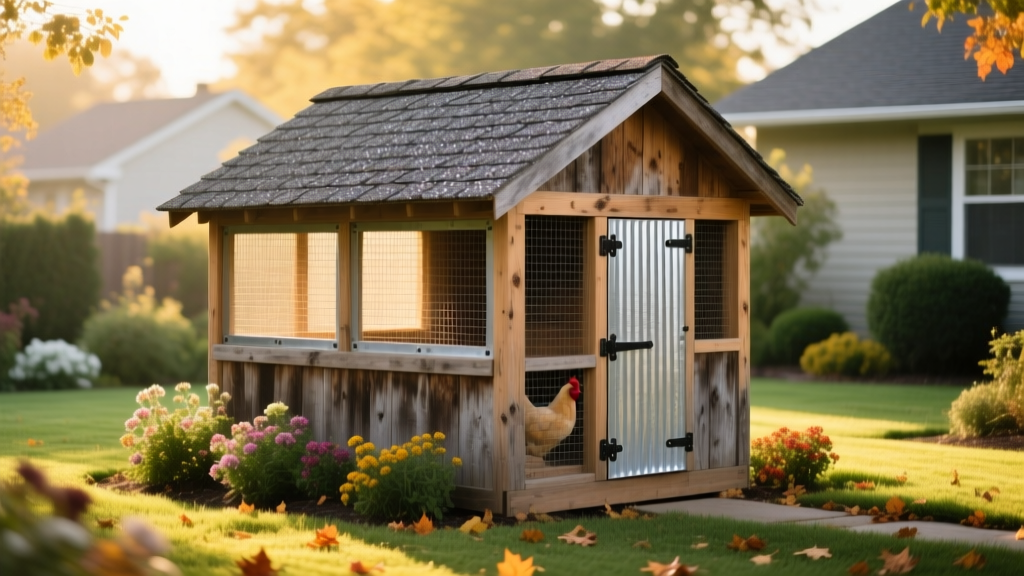
- 29-Gauge Corrugated Steel Panels: The most durable and predator-resistant cladding option. Steel panels are impervious to rot, ammonia, and pecking. When installing, use neoprene-washed hex-head roofing screws with a 3/4-inch overlap at the seams to prevent wind-driven rain infiltration.
Predator-Proofing: Wire Mesh Specifications
The most common and fatal error in selecting chicken coop building materials is confusing poultry netting (chicken wire) with hardware cloth. As noted by eXtension Poultry, chicken wire is designed solely to contain birds, not to exclude predators. Raccoons can easily shred 20-gauge chicken wire, and weasels can pass directly through the hexagonal openings.
Wire Mesh Comparison Matrix
| Material Type | Gauge & Aperture | Predator Efficacy | Application |
|---|---|---|---|
| Galvanized Hardware Cloth | 19-Gauge, 1/2' x 1/2' mesh | Excellent (Stops weasels, rats, raccoons) | Windows, vents, run enclosures, dig barriers |
| Welded Wire Fencing | 14-Gauge, 1' x 2' mesh | Good (Stops dogs, coyotes; fails vs weasels) | Large run perimeters, structural reinforcement |
| Poultry Netting (Chicken Wire) | 20-Gauge, 1' hexagonal | Poor (Easily torn by raccoons, foxes) | Internal flock dividers, temporary garden fencing |
For all ventilation openings and run enclosures, specify 1/2-inch 19-gauge galvanized hardware cloth. Fasten this mesh using 1-1/4-inch galvanized poultry staples (U-nails) driven every 6 inches, or use washer-head exterior screws for maximum pull-out resistance against prying paws.
Fasteners, Hinges, and Raccoon-Proof Hardware
Raccoons possess manual dexterity comparable to human toddlers. They can effortlessly unhook standard hook-and-eye latches and lift simple gravity bolts. When sourcing hardware for coop doors and nesting box lids, upgrade to the following specifications:
- Hinges: Use heavy-duty strap hinges with non-removable pins. Standard interior butt hinges can be popped off their pins from the outside by a determined predator.
- Latches: Install spring-loaded carabiner-locked slide bolts or dual-lever gate latches. If using a standard slide bolt, you must drill a hole through the bolt shaft and secure it with a brass padlock or a climbing-grade carabiner every night.
- Screws: Discard standard Phillips-head screws. Use #9 x 1-1/2-inch exterior wood screws with a T25 Torx drive. The Torx star pattern prevents cam-out during high-torque installation into dense pressure-treated skids, ensuring a tighter structural seal.
Flooring Substrates and the Deep Litter Method
The coop floor interacts directly with the flock's waste management system. Many keepers utilize the 'Deep Litter Method,' which involves layering carbon-rich bedding (pine shavings or hemp) over the floor to compost manure in place. This biological process generates significant moisture and heat.
For permanent, ground-level coops, a 4-inch poured concrete slab reinforced with 6x6 W1.4xW1.4 welded wire mesh is the ultimate material choice. Concrete eliminates burrowing predators, prevents rodent infestations, and allows for complete sanitization via pressure washing. If a concrete slab exceeds your budget, excavate a 12-inch deep trench around the coop perimeter and fill it with concrete to create a 'rat wall' that stops digging predators while allowing you to maintain a dirt floor inside.
Roofing and Condensation Control
Roofing materials for coops must address both precipitation and internal condensation. Chickens exhale massive amounts of water vapor, which rises and hits the cold underside of the roof, leading to destructive dripping.
- Asphalt Architectural Shingles: Provide excellent thermal mass and sound dampening during rainstorms. Require a minimum 4:12 roof pitch and proper synthetic underlayment.
- 29-Gauge Metal Roofing: Sheds snow efficiently and denies raccoons the claw-holds provided by asphalt shingles. However, metal roofs are highly susceptible to condensation drip. To mitigate this, install the metal panels over 1x4 purlins spaced 24 inches O.C., and staple a radiant barrier foil or closed-cell foam insulation board directly to the roof rafters to create a thermal break.
2026 Cost Matrix: 8x10 Coop Material Breakdown
Budgeting for high-quality chicken coop building materials prevents costly mid-build substitutions. The following matrix outlines the estimated material costs for a durable, predator-proof 8x10 foot coop (excluding interior furnishings and power tools) based on current North American lumber and steel pricing.
| Material Category | Specification Details | Est. Cost (USD) |
|---|---|---|
| Foundation & Framing | UC4A Skids, #2 SPF 2x4 Studs & Rafters | $420 - $480 |
| Exterior Cladding | LP SmartSide Panels or T1-11 Plywood | $250 - $310 |
| Predator Mesh | 1/2' 19-Ga Hardware Cloth (50ft roll) | $110 - $140 |
| Roofing System | 29-Ga Steel Panels + Closure Strips | $160 - $200 |
| Fasteners & Hardware | Torx Screws, U-Nails, Carabiner Latches | $90 - $120 |
| Total Estimated Material Cost | $1,030 - $1,250 | |
Investing in premium chicken coop building materials—specifically 19-gauge hardware cloth, exterior-grade Torx fasteners, and ammonia-resistant cladding—transforms a vulnerable wooden box into a fortified agricultural asset. By prioritizing material science over aesthetic shortcuts, you ensure a structurally sound environment that protects your flock from biological and environmental threats for decades.
Written by
Elena RodriguezElena Rodriguez is a civil engineer and technical writer specializing in concrete technology, masonry systems, and ASTM/ACI compliance. She earned her B.S. in Civil Engineering from Texas A&M University and spent a decade at a materials testing laboratory, performing over 2,000 concrete compressive strength tests and masonry prism evaluations. Elena is an ACI-certified Field Testing Technician (Grade I) and a member of ASTM Committee C12 on Natural Building Stone. She currently consults on forensic engineering cases involving concrete failures and moisture intrusion. Based in San Antonio, TX, Elena is a proud member of the Society of Women Engineers (SWE) and coaches her daughter's FIRST Robotics team.
More from Elena Rodriguez
View all
Walls & Panels
Cost Analysis: Light Gauge Steel Framing Advantages and Disadvantages
Evaluate light gauge steel framing advantages and disadvantages through a strict cost analysis lens, comparing material, labor, and lifecycle expenses.
Aug 4, 2026

Walls & Panels
Gypsum Board Types: Exact Specifications, Thickness & Dimensions
Compare standard, Type X, and moisture-resistant gypsum board types. Get exact specifications, thicknesses, dimensions, and ASTM standards for your project.
Aug 4, 2026

Fire Resistance
Best Fire-Resistant Outdoor Decking Materials: 2026 Buyer Guide
Discover the best fire-resistant outdoor decking materials for 2026. Compare Class A PVC, aluminum, and hardwood options for WUI compliance and safety.
Aug 4, 2026