Florence Building Materials Huntington New York: 2026 Supply Trends
Explore 2026 industry trends at Florence Building Materials in Huntington, New York, focusing on coastal-resistant supplies and sustainable inventory.
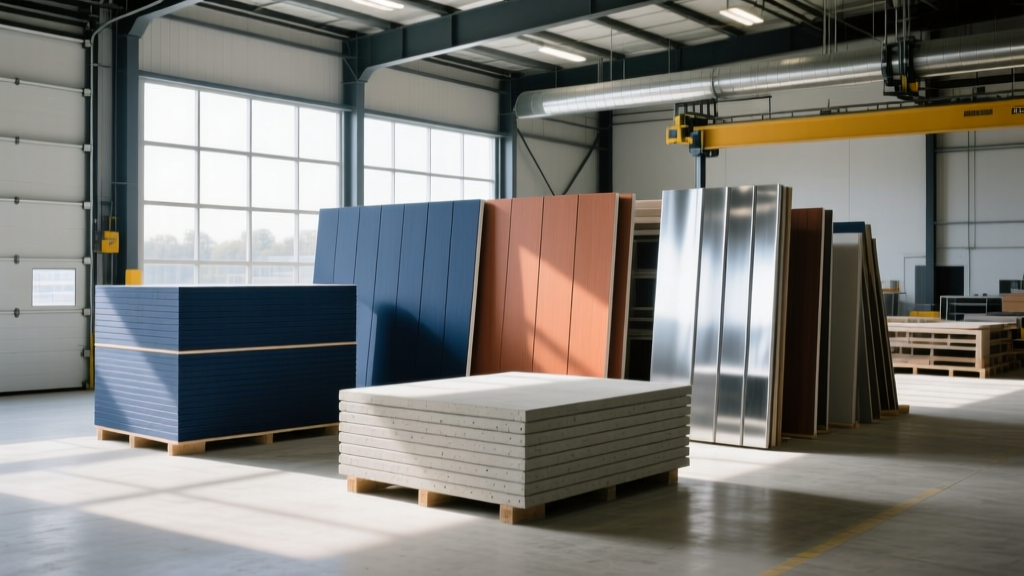
The Evolution of Long Island's Coastal Supply Chain
Huntington, New York, situated on the North Shore of Long Island, presents a unique set of microclimates, stringent zoning laws, and aggressive coastal weather patterns. For local contractors and custom home builders, sourcing materials that can withstand Nor'easter wind loads, salt spray, and the region's punishing freeze-thaw cycles is non-negotiable. In 2026, Florence Building Materials in Huntington, New York has emerged as a regional bellwether, fundamentally restructuring its inventory to align with advanced coastal building codes and shifting sustainability mandates. The days of defaulting to standard CDX plywood and untreated cedar are over. Today's local supply yards are functioning as technical consultants, stocking highly engineered, climate-resilient building envelopes that meet the rigorous demands of the 2026 NY Stretch Energy Code.
Trend 1: The Shift to Coastal-Resilient Composites and Sheathing
The most visible shift in Huntington's building material supply chain is the aggressive phase-out of traditional wood sheathing in favor of integrated structural and moisture-management systems. Proximity to the Long Island Sound means that structures in Huntington and neighboring Lloyd Neck face constant moisture intrusion risks.
Specific Product Shifts in Huntington Yards
Local suppliers have heavily indexed on products that combine structural rigidity with continuous exterior insulation and water-resistive barriers (WRB). The Huber ZIP System R-sheathing—specifically the R-12 variant featuring 2.5 inches of continuous polyisocyanurate insulation—has become a baseline stock item rather than a special order. This shift is driven by the need to eliminate thermal bridging in wood-framed coastal homes while providing a drainage plane that outperforms traditional housewrap under high-wind rain events.
- Huber ZIP System R-12: Now standard stock for exterior walls, reducing framing labor by eliminating the need for separate rigid foam board installation and taping.
- JamesHardie Artisan Lap Siding (7-inch reveal): Replacing natural cedar shingles. The fiber cement composition resists salt-air degradation and meets ASTM E84 Class A flame spread ratings, a critical requirement for Huntington's dense coastal zoning.
- Trex Transcend Lineage Decking: Capped composite boards with heat-mitigating technology. Local yards are stocking the 16-foot grooved profiles in high-demand colors like Biscay and Jasper, recognizing that PVC and composite materials now dominate North Shore deck builds due to zero water absorption rates.
2026 Inventory Matrix: Traditional vs. Trending Stock
The following matrix illustrates the inventory transformation at regional suppliers like Florence Building Materials, highlighting the cost deltas and primary drivers for Huntington-area projects in 2026.
| Material Category | Legacy Stock (Pre-2024) | 2026 Trending Stock | Cost Delta (per sq ft) | Primary Driver |
|---|---|---|---|---|
| Exterior Sheathing | 1/2" CDX Plywood + Housewrap | Huber ZIP System R-12 | +$1.85 | NY Stretch Code / Thermal Bridging |
| Exterior Cladding | Western Red Cedar Shingles | JamesHardie Artisan 7" Lap | -$2.10 | Coastal Moisture / Maintenance |
| Cavity Insulation | R-15 Kraft-Faced Fiberglass | Rockwool Comfortbatt (Mineral Wool) | +$0.95 | Moisture Resistance / Fire Rating |
| Decking Surface | Pressure-Treated Southern Yellow Pine | Trex Transcend Lineage (Capped) | +$4.50 | Salt Spray / UV Degradation |
Code Alert: NY Stretch Energy Code 2026 Impact
According to the NYSERDA NY Stretch program, the 2026 updates heavily penalize thermal bridging and mandate stricter continuous insulation (ci) requirements for residential envelopes. Suppliers in Huntington have preemptively adjusted their sheathing and insulation aisles to ensure contractors can meet these ci requirements without needing to source specialized rigid foam from out-of-state distributors.
Trend 2: Low-Carbon Materials and EPD Verification
Sustainability in 2026 is no longer a niche marketing angle; it is a documented, data-driven requirement for high-end residential and commercial bids in Suffolk and Nassau counties. Architects specifying materials for Huntington projects are increasingly demanding Environmental Product Declarations (EPDs). An EPD provides a transparent, third-party verified report of a product's environmental impact across its lifecycle.
In response, Florence Building Materials and similar regional yards have restructured their vendor agreements to prioritize manufacturers that provide digital EPDs. For example, mineral wool insulation like Rockwool Comfortbatt is heavily favored over traditional fiberglass not just for its superior acoustic and fire-resistant properties, but because its EPD clearly outlines its recycled slag content and long-term thermal stability. Furthermore, the EPA's guidelines on sustainable materials management have pushed local yards to stock low-VOC adhesives and formaldehyde-free interior millwork, ensuring that indoor air quality metrics align with modern LEED and WELL building standards.
Trend 3: Fastener Corrosion and North Shore Microclimates
One of the most critical, yet frequently overlooked, industry trends in coastal New York is the upgrade in structural fasteners. The salt-laden air blowing off the Long Island Sound accelerates galvanic corrosion, particularly when modern treated lumbers (which often contain high copper content) interact with standard zinc-plated hardware.
Following the structural engineering principles outlined by FEMA's Building Science division for coastal construction, Huntington suppliers have drastically reduced their inventory of standard hot-dip galvanized (HDG) connectors. In 2026, the baseline standard for exterior framing, deck ledgers, and shear walls is the G185 zinc coating, commonly branded as ZMAX by Simpson Strong-Tie. For projects within 1,000 feet of the water, suppliers are actively pushing contractors toward Type 304 or Type 316 stainless steel fasteners to prevent catastrophic connection failures during high-wind events.
Trend 4: Hyper-Local Millwork and Just-In-Time Logistics
The national big-box supply chain model has proven inadequate for the custom, high-tolerance requirements of Long Island's luxury housing market. In 2026, the competitive advantage of local suppliers like Florence Building Materials lies in hyper-local millwork relationships and optimized just-in-time (JIT) delivery logistics.
When a contractor in Huntington needs custom-radius PVC trim or specialized marine-grade mahogany for a dock project, national chains often quote 6-to-8-week lead times. Local yards have countered this by integrating directly with regional millwork shops in Suffolk County, reducing lead times to 10-14 days. Furthermore, JIT delivery for bulk masonry and heavy composite materials is coordinated via GPS-tracked flatbeds that navigate Huntington's narrow, weight-restricted residential streets, preventing the material damage and site congestion associated with massive national distributor drops.
Contractor Action Plan for 2026 Huntington Projects
To leverage these industry trends and ensure project success in the North Shore market, contractors and procurement managers should implement the following sourcing protocols:
- Mandate EPD Documentation at Bid Phase: Do not wait until the permit phase to request Environmental Product Declarations. Require your supplier to provide EPDs for sheathing, insulation, and cladding during the initial estimate to ensure compliance with local green building overlays.
- Specify G185 or Stainless Hardware: Update your standard framing and decking details to explicitly call out Simpson Strong-Tie ZMAX (G185) or stainless steel hardware. Standard HDG is no longer sufficient for Huntington's coastal microclimate and will fail municipal inspections on high-end builds.
- Utilize Integrated WRB Sheathing: Transition fully to ZIP System or equivalent integrated sheathing. The labor savings in wrapping and taping, combined with the superior moisture management and continuous insulation, offset the 15-20% premium in material costs.
- Leverage Local Millwork Networks: For custom exterior trim, radius work, or specialized decking, bypass national catalogs and utilize your local yard's regional millwork partnerships to cut lead times by up to 70%.
By aligning procurement strategies with the advanced inventory and technical expertise available at Florence Building Materials in Huntington, New York, builders can mitigate coastal risks, accelerate construction timelines, and deliver structures engineered for the demands of 2026 and beyond.
Written by
Marcus ChenMarcus Chen is a licensed structural engineer (PE) and building materials analyst with over 12 years of experience across residential, commercial, and industrial construction. He holds a Master of Science in Civil Engineering from UC Berkeley and spent six years at Thornton Tomasetti before transitioning to independent consulting and technical writing. Marcus specializes in material selection for seismic-prone regions, concrete reinforcement strategies, and lifecycle cost analysis. His work has been cited by the American Concrete Institute (ACI) and the Structural Engineers Association of California (SEAOC). When he is not on a job site or at his desk, you will find him hiking the Sierra Nevada or restoring a 1920s craftsman bungalow in Oakland, CA.
More from Marcus Chen
View all
Construction Cost
How Much Did the Eiffel Tower Cost to Build?
How much did the Eiffel Tower cost to build in 1889? We adjust for inflation and compare its budget to modern skyscraper construction.
Aug 4, 2026

Fire Resistance
What Is a Fire Resistant Material? Testing & Certification Guide
Discover what is a fire resistant material through ASTM and UL testing. Learn how fire ratings, certifications, and assemblies work in construction.
Aug 4, 2026

Construction Cost
How Much Did the Burj Khalifa Cost to Build?
How much did the Burj Khalifa cost to build? We break down the $1.5B project and extract 5 money-saving strategies for your next build.
Jul 30, 2026