Building Material Packaging Cost Breakdown Guide 2026
Analyze 2026 building material packaging costs. Compare single-use vs. reusable pallets, stretch wrap, and FIBC bags to reduce supply chain expenses.

The Hidden Line Item: Building Material Packaging Costs
When estimating project budgets, contractors and procurement managers heavily scrutinize the unit cost of raw materials like lumber, steel, and cement. However, building material packaging represents a hidden line item that can inflate total supply chain costs by 8% to 12%. In 2026, with fluctuating resin prices and increased landfill tipping fees, the financial impact of how materials are wrapped, palletized, and protected has never been more pronounced. Effective cost analysis requires moving beyond the initial purchase price of packaging and evaluating the Total Cost of Packaging Ownership (TCPO), which includes acquisition, application labor, damage prevention, and end-of-life disposal.
2026 Industry Baseline Metrics
- Packaging Waste Volume: Packaging accounts for roughly 15% of total Construction and Demolition (C&D) debris by volume.
- Average Damage Rate: Inadequate stretch wrap and edge protection result in a 2.4% product damage rate during transit, costing the industry over $1.2 billion annually.
- Disposal Costs: National average C&D landfill tipping fees have risen to $78 per ton, making single-use wood and plastic disposal a significant sunk cost.
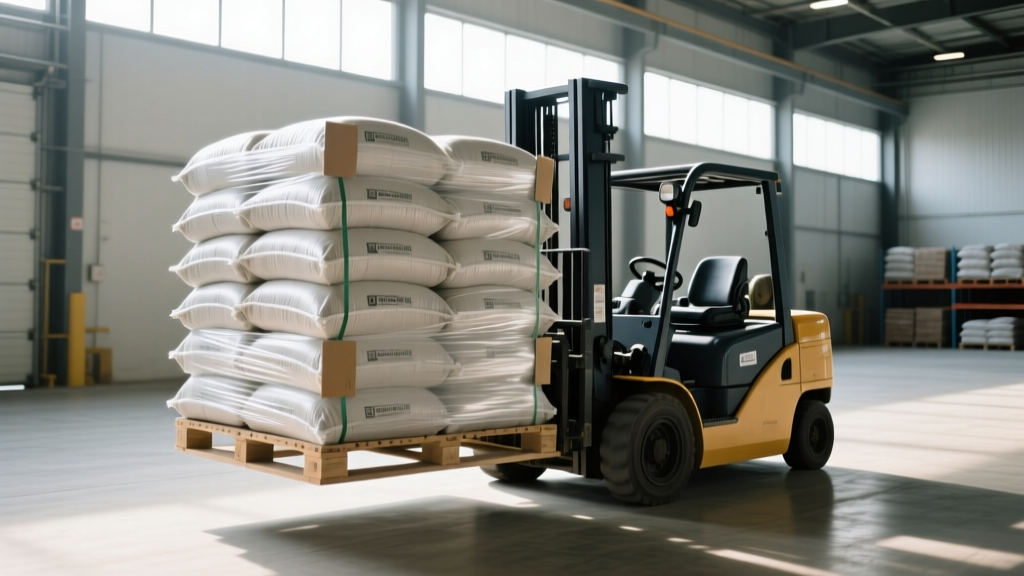
Single-Use vs. Reusable: 2026 Cost Comparison Matrix
The most critical decision in building material packaging is the shift from single-use expendables to closed-loop reusable systems. While the upfront capital expenditure (CapEx) for reusable packaging is higher, the operational expenditure (OpEx) over a 5-year period heavily favors reusable assets for high-volume suppliers and large-scale contractors.
| Packaging Type | Unit Cost (2026) | Lifespan / Yield | Cost Per Trip | Best Application |
|---|---|---|---|---|
| Standard 48x40 GMA Wood Pallet | $14.50 (New) / $8.00 (Recycled) | 1 to 3 trips | $4.83 - $14.50 | One-off shipments, remote sites |
| Heavy-Duty Plastic Pallet (e.g., ORBIS) | $65.00 - $85.00 | 150+ trips | $0.43 - $0.56 | Closed-loop distribution, automated warehouses |
| 80-Gauge Standard Stretch Wrap | $18.00 per roll (1,200 ft) | ~25 pallets per roll | $0.72 per pallet | General unitizing, weather protection |
| Pre-Stretched High-Performance Film | $26.00 per roll (1,800 ft) | ~45 pallets per roll | $0.57 per pallet | Heavy loads, high-volume wrapping stations |
| Type A Standard FIBC (Bulk Bag) | $8.50 - $11.00 | 1 trip (Single-use) | $8.50 - $11.00 | Sand, gravel, dry aggregates |
| Type C Conductive FIBC Bag | $16.00 - $22.00 | 1 trip (Single-use) | $16.00 - $22.00 | Flammable powders, chemical admixtures |
According to data from the Reusable Packaging Association (RPA), transitioning to pooled or owned reusable plastic pallets for building materials like roofing shingles and masonry blocks yields a positive ROI typically within 11 to 14 months, provided the reverse logistics network recovers at least 85% of the assets.
Calculating Total Cost of Packaging Ownership (TCPO)
To accurately forecast building material packaging expenses, procurement teams must utilize a four-step TCPO framework. Focusing solely on the invoice price of shrink wrap or pallets leads to severe budget overruns.
- Step 1: Acquisition and Material Cost
Calculate the base cost of the packaging materials. For stretch film, evaluate the cost per 1,000 feet rather than cost per roll. A cheaper $15 roll of 60-gauge film may cost $0.95 per pallet to wrap, while a premium $28 roll of 120-gauge nano-layer film might only cost $0.40 per pallet due to superior puncture resistance and higher yield. - Step 2: Application Labor and Equipment
Hand-wrapping a pallet of drywall takes an average of 3.5 minutes per worker. At a loaded labor rate of $32/hour, hand-wrapping costs $1.86 in labor per pallet. Investing in a semi-automatic rotary turntable wrapper ($8,500 CapEx) reduces wrap time to 45 seconds and cuts film usage by 25% through automated pre-stretch mechanisms, dropping the labor cost to $0.40 per pallet. - Step 3: Damage Prevention and Edge Protection
Building materials with sharp edges (e.g., metal studs, glass panels) easily puncture standard stretch film. Incorporating laminated V-board edge protectors costs approximately $0.65 per linear foot. While this adds $3.00 to the packaging cost per pallet, it prevents load shifting and edge crushing, mitigating the risk of a $400 product loss. The Bureau of Labor Statistics Producer Price Index (PPI) consistently shows that the cost of replacing damaged construction materials far outpaces the inflation rate of protective packaging supplies. - Step 4: Disposal, Tipping, and Compliance Fees
Factor in the cost to dispose of the packaging at the job site. Single-use wood pallets that break must be hauled away. If a contractor pays a third-party waste management firm $350 for a 30-yard dumpster pull, and packaging takes up 20% of the volume, the hidden disposal cost of that packaging is substantial.
The Tipping Fee Trap
Sustainable Packaging Premiums vs. Long-Term Savings
In 2026, environmental, social, and governance (ESG) mandates are pushing developers to require sustainable building material packaging. While eco-friendly alternatives carry an upfront premium, they often unlock downstream savings through waste diversion tax credits and reduced disposal fees.
- Corrugated Bubble Wrap: Replaces plastic bubble wrap for fragile fixtures. Costs 18% more upfront but is fully recyclable in standard cardboard streams, eliminating specialized plastic disposal fees.
- Molded Pulp Edge Protectors: Replaces EPS (expanded polystyrene) foam. Molded pulp costs roughly $0.15 more per unit but prevents the massive volume expansion of EPS foam in dumpsters, saving on haul-away frequency.
- Biodegradable Stretch Film: Made from plant-based resins. Currently carries a 35% price premium over petroleum-based LLDPE films and is generally only viable for projects targeting strict LEED v5 zero-waste certifications.
Frequently Asked Questions
How do we handle reverse logistics for reusable plastic pallets?
For mid-sized contractors, managing a private pool of plastic pallets is logistically burdensome. The most cost-effective strategy in 2026 is utilizing third-party pallet pooling services (e.g., PECO or CHEP). You pay a flat issue-and-return fee (typically $4.50 to $6.00 per trip), which eliminates the CapEx of purchasing the pallets and the labor cost of tracking them.
What is the most cost-effective way to protect drywall during transit?
Drywall is highly susceptible to edge crushing and moisture. The most cost-effective packaging protocol is using a 120-gauge pre-stretched stretch film combined with heavy-duty corrugated top caps and 3-inch wide laminated V-board on all four corners. This setup adds roughly $8.50 per pallet in materials but reduces transit damage claims by up to 90%.
Are FIBC bulk bags reusable for construction aggregates?
Standard Type A FIBC bags are rated for single-use only, especially when lifting via crane on active job sites, due to UV degradation and loop fatigue. Reusing them poses a severe safety and liability risk. However, multi-trip FIBC bags with a 5:1 or 6:1 safety factor and UV-treated loops are available for approximately $28 each and can be safely reused up to 6 times if inspected properly, dropping the cost per use to under $5.
Written by
David NakamuraDavid Nakamura is a licensed architect (AIA) and construction technology writer focused on sustainable building methods, mass timber engineering, and high-performance building envelopes. He holds a Master of Architecture from the University of Washington and is a certified Passive House Consultant (CPHC). David spent eight years at the Seattle firm Mithun, where he led the design of three LEED Platinum projects, before founding his own practice specializing in net-zero residential design. He serves on the editorial advisory board of GreenBuilder Magazine and has authored peer-reviewed papers on cross-laminated timber (CLT) connections for the Journal of Structural Engineering. In his spare time, David teaches woodworking at Pratt Fine Arts Center and kayaks the Puget Sound.
More from David Nakamura
View all
Construction Cost
Labor Cost to Build a Deck Per Sq Ft: 2026 Installation Guide
Discover the exact labor cost to build a deck per sq ft in 2026. This installation guide breaks down contractor rates, complexity factors, and hidden fees.
Aug 4, 2026

Construction Cost
How Much Does It Cost to Build a 3 Bedroom House? Financing Guide
Learn exactly how much it costs to build a 3 bedroom house and explore 2026 financing options, construction loan types, and budget frameworks for your build.
Aug 4, 2026

Construction Cost
Cost to Build a Tennis Court: 2026 Guide
How much does it cost to build a tennis court in 2026? Breakdowns for asphalt, concrete, and synthetic surfaces plus fencing and lighting.
Jul 30, 2026