Top Building Materials Display Solutions for 2026 Showrooms
Explore top building materials display solutions for 2026 showrooms. Compare load capacities, substrates, and modular systems for tile, stone, and lumber.
The Engineering Behind Material Merchandising
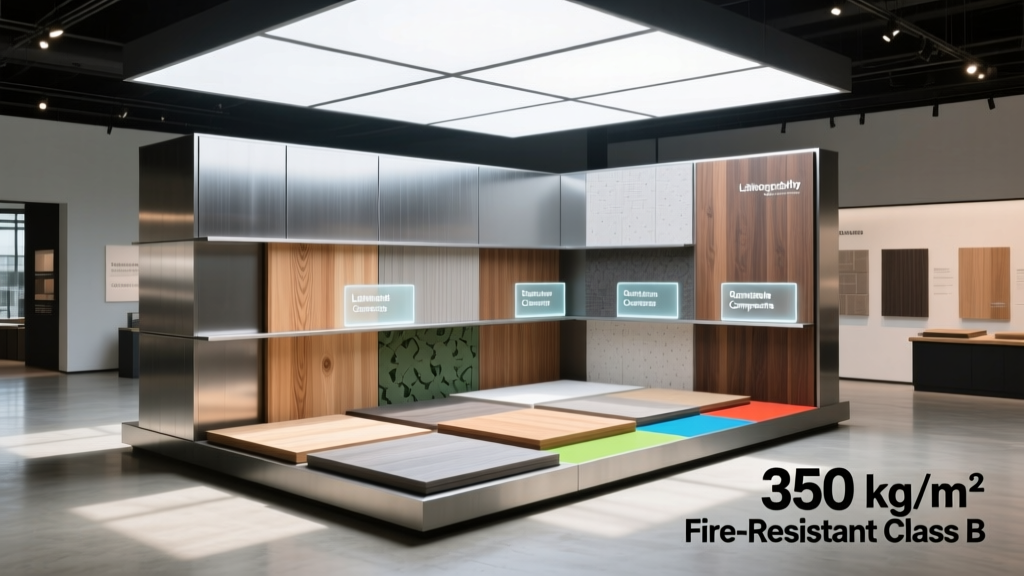
Designing a showroom for heavy, oversized, or fragile construction materials requires moving beyond standard retail fixtures. Building materials display solutions must bridge the gap between high-end aesthetic presentation and rigorous structural engineering. A 3cm slab of quartzite weighs approximately 18 pounds per square foot; a standard 4x8 foot display sample can easily exceed 550 pounds. In 2026, the most effective showrooms utilize specialized substrates, precision-machined hardware, and interactive modular systems that allow customers to safely handle heavy samples while maintaining a premium design center atmosphere.
Core Substrates: What the Displays Are Built From
The backbone of any sample board, slatwall, or casework display is the substrate. Choosing the wrong core material leads to warping, edge delamination, and catastrophic hardware pull-out under heavy loads.
High-Pressure Laminate (HPL) & Phenolic Resin Panels
For horizontal sample tables and high-wear interactive stations, standard melamine is insufficient. Top-tier showrooms specify Trespa Meteon or Formica ColorCore2 HPL panels. These materials offer superior impact resistance and prevent the dark core lines that cheapen the presentation of natural stone and wood samples. For outdoor lumber yard displays or moisture-prone masonry yards, solid phenolic resin panels (such as Trespa Athlon) are mandatory. They possess near-zero water absorption rates (less than 2% per ASTM D570) and will not delaminate when exposed to humidity or direct weather.
Moisture-Resistant MDF vs. Baltic Birch Plywood
When constructing vertical slatwall panels, standard medium-density fiberboard (MDF) is a liability in environments where wet masonry or freshly treated lumber is stored nearby. Upgrading to Moisture-Resistant (MR) MDF, which utilizes a polymeric diphenylmethane diisocyanate (pMDI) resin binder, prevents the swelling that causes aluminum slatwall inserts to pop out. Alternatively, 13-ply Baltic Birch plywood provides vastly superior screw-holding strength (up to 40% higher withdrawal resistance than standard MDF), making it the required substrate for heavy-duty French cleat systems used in large-format tile displays.
Load-Bearing Hardware & Suspension Systems
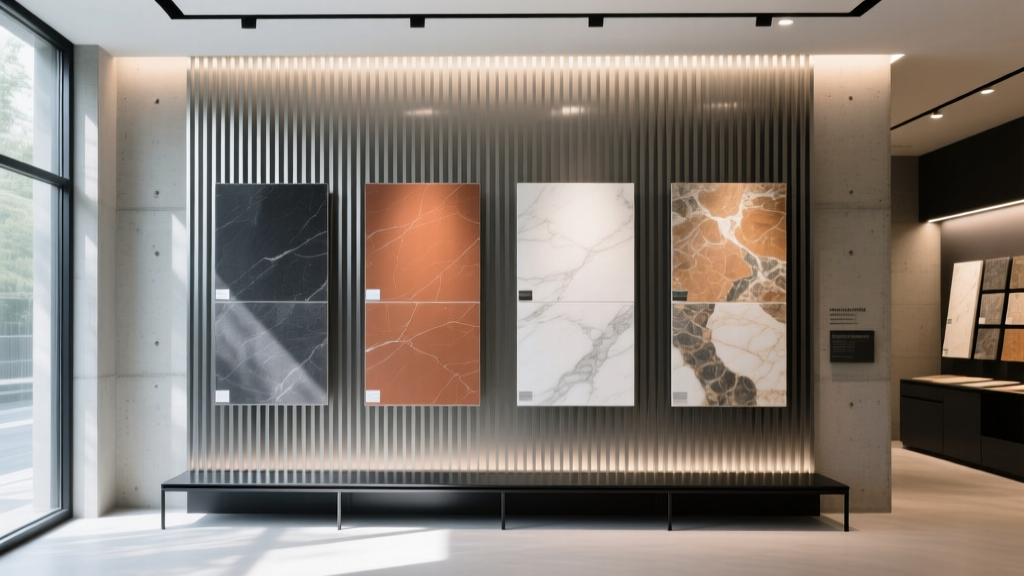
The method by which materials are suspended dictates both safety and merchandising flexibility. Below is a structural comparison of the primary suspension systems used in modern material showrooms.
| Suspension System | Core Material Requirement | Max Load per Bracket/Hook | Best Application |
|---|---|---|---|
| Standard MDF Slatwall (4" OC) | 3/4" Standard MDF | 15 - 20 lbs | Lightweight PVC trim, hardware, small tile mosaics |
| Aluminum-Insert Slatwall | 3/4" MR MDF or Plywood | 45 - 60 lbs | Mid-weight stone samples, engineered wood flooring bundles |
| Extruded Aluminum T-Track | Structural framing / Plywood backing | 85 - 120 lbs | Heavy natural stone slabs, bulk masonry veneers |
| 3-Point French Cleat | 13-Ply Baltic Birch / Steel studs | 250+ lbs (distributed) | 4x8 ft large format porcelain panels, full slab quartz |
Expert Warning: Never rely on drywall anchors for heavy material displays. Even toggle bolts in 5/8" Type X gypsum board will experience creep and eventual pull-out under the sustained static load of stone or tile samples. All heavy display frameworks must anchor directly into 16-gauge cold-rolled steel studs or structural concrete using wedge anchors.
Ergonomics and ADA Compliance in Showrooms
A common failure in building materials display solutions is prioritizing visual density over physical accessibility. According to the ADA Standards for Accessible Design, the maximum forward reach for an unobstructed display is 48 inches above the finished floor, and the minimum reach is 15 inches.
When designing angled sample boards for heavy roofing shingles or siding profiles, the top edge of the board must not exceed 48 inches if the customer is expected to touch or remove the sample. To display a 5-foot-tall sample board while maintaining compliance, the board must be mounted on a pivot hinge with a pneumatic stay, allowing the customer to safely lower the top section into the compliant reach zone without bearing the full weight of the display.
The Shift to Magnetic Sample Matrices
Static, glued-down sample boards are obsolete in premium 2026 design centers. The industry standard is now the magnetic sample matrix, which allows showroom managers to swap out discontinued SKUs in seconds without damaging the display surface.
Engineering the Magnetic Backing
A high-performance magnetic wall requires more than just magnetic paint, which typically yields a weak pull force of less than 5 lbs per square foot. Instead, specify an 18-gauge cold-rolled steel sheet laminated directly to a 5/8" particleboard core using contact cement. The visible surface is then wrapped in a neutral, high-CRI fabric or a non-reflective matte HPL.
The individual material samples (e.g., 6x6 inch stone or tile pieces) are routed on the back to accept flush-mounted N42 grade neodymium magnets. A 1-inch diameter N42 magnet provides roughly 45 lbs of pull force, ensuring that even heavy 3cm granite samples remain securely locked to the vertical display wall, yet can be easily removed by a customer using two hands and a slight twisting motion.
Lighting: Color Rendering and Material Degradation
The lighting integrated into display fixtures fundamentally alters how customers perceive building materials. Natural stone, hardwood, and architectural metals require high-fidelity illumination to reveal their true veining, grain, and patina.
- CRI (Color Rendering Index): Specify LED tape lights and spotlights with a minimum CRI of 92. Standard commercial LEDs (CRI 80) wash out the subtle red and brown undertones in natural walnut flooring and make quartzite look artificially flat.
- Color Temperature (CCT): Maintain a strict 3000K to 3500K range. Temperatures above 4000K introduce a blue cast that distorts the appearance of warm-toned masonry and clay roofing tiles.
- Thermal Management: Avoid halogen or poorly heat-sinked LED puck lights in enclosed casework. Sustained surface temperatures above 110°F (43°C) will cause PVC edgebanding on display tables to unglue and will prematurely dry out oiled wood samples, leading to micro-checking.
Decision Matrix: Matching Display Solutions to Material Types
Selecting the correct display architecture requires matching the physical properties of the merchandised product to the fixture's structural capabilities.
| Material Category | Recommended Display Architecture | Key Hardware Specification | Common Failure Mode to Avoid |
|---|---|---|---|
| Large Format Porcelain (4x8 ft) | A-Frame Pivot Racks with Gas Struts | Heavy-duty steel piano hinges; UHMW edge bumpers | Center-panel sagging and edge chipping during customer pivoting |
| Natural Stone Slabs (2cm/3cm) | Roll-out Vertical A-Frames | Sealed bearing wheels; 3-degree backward cant | Rack tipping if front-loaded; wheel seizure from stone dust |
| Hardwood & LVT Flooring | Angled Waterfall Slatwall (30-degree pitch) | Aluminum-insert slatwall; clear acrylic lip brackets | Bracket deflection causing samples to slide off the lip |
| Masonry Veneer & Brick | Modular Steel Grid Bins (Trough style) | Welded 1/4" steel rod; powder-coated finish | Scratching of brick faces against raw steel dividers |
Sourcing and 2026 Cost Projections
Budgeting for a complete showroom overhaul requires understanding the current pricing tiers for commercial-grade display components. In 2026, raw material stabilization has led to predictable pricing for custom millwork and steel fabrication.
- Aluminum-Insert Slatwall Panels: $65 - $95 per linear foot (including 3/4" MR MDF core and metallic inserts).
- Custom Magnetic Sample Walls: $120 - $160 per square foot (including 18-gauge steel backing, fabric wrapping, and sample routing).
- Heavy-Duty Steel A-Frame Racks: $800 - $1,400 per unit (for 10-foot wide roll-out stone slab racks with sealed bearings).
- High-CRI LED Casework Lighting: $35 - $55 per linear foot (including 92+ CRI tape light, aluminum heat-sink channels, and diffusers).
For further technical specifications on casework tolerances and laminate application standards, showroom fabricators should consult the Architectural Woodwork Institute (AWI) standards. Adhering to AWI Premium grade specifications ensures that display joints remain seamless and that heavy-duty hardware mounting blocks are properly integrated into the millwork, preventing the visible seam separation that plagues lower-tier retail fixtures.
Final Considerations for Showroom Longevity
The most effective building materials display solutions are those that treat the fixtures themselves as permanent architectural elements rather than temporary retail props. By specifying moisture-resistant substrates, over-engineering the load-bearing hardware by a minimum safety factor of 3:1, and integrating high-fidelity, low-heat lighting, design centers can create an environment that safely showcases the weight and quality of the materials while minimizing long-term maintenance and fixture replacement costs.
Written by
Priya KapoorPriya Kapoor is a real estate market analyst and construction economics researcher with expertise in housing affordability, development feasibility, and infrastructure investment. She holds a Master of Regional Planning from Cornell University and previously worked as a senior analyst at CBRE's Investment Properties group, where she modeled returns for $4B in mixed-use development pipelines. Priya now runs an independent research practice advising developers, municipalities, and REITs on construction cost forecasting and market timing. She publishes the quarterly "BuildMat Market Pulse" report tracking material price indices across 12 commodity categories. Based in Austin, TX, Priya serves on the board of Habitat for Humanity Austin and is a marathon runner.
More from Priya Kapoor
View all
Construction Cost
Cost to Build a 1600 Sq Ft Home in 2026: Full Breakdown
Accurate 2026 cost to build a 1600 sq ft home—material, labor, and regional pricing breakdowns included. Plan your budget with real-time estimates.
Aug 11, 2026

Wood & Lumber
Name the Types of Wood for Pressure Treatment and Preservation
Learn how to name the types of wood best suited for pressure treatment. Compare species treatability, chemical retention levels, and 2026 preservation costs.
Aug 4, 2026

Stone & Masonry
Stone Veneer Suppliers Lindenhurst: 2026 Cost Analysis
Analyze 2026 stone veneer costs in Lindenhurst, NY. Compare local supplier pricing, delivery fees, and Suffolk County installation labor rates.
Aug 4, 2026