Building Materials PVC Cost Analysis: Pipe, Trim, and Roofing
Detailed 2026 cost analysis of PVC building materials, including Schedule 40/80 piping, cellular exterior trim, and commercial roofing membranes.
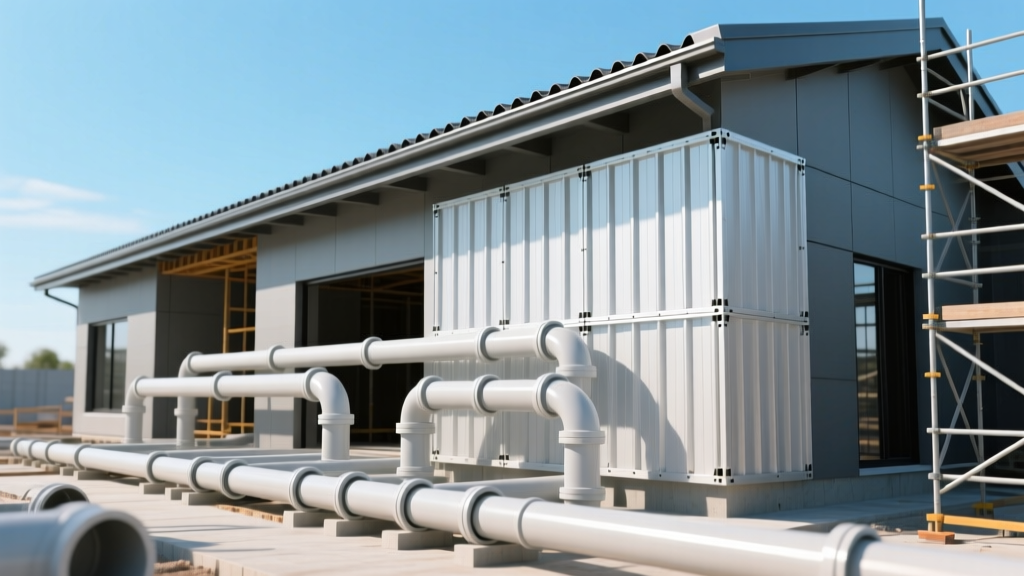
The Economics of Polyvinyl Chloride in 2026 Construction
Polyvinyl chloride (PVC) remains one of the most versatile and heavily utilized polymers in the construction industry. When evaluating building materials PVC for project budgets, contractors and estimators must look beyond the base linear-foot or square-foot cost. The true financial impact of PVC encompasses material grade variations, specialized installation requirements, thermal expansion allowances, and long-term maintenance reductions. This cost analysis breaks down the three primary categories of PVC building materials—piping systems, cellular exterior trim, and commercial roofing membranes—using current 2026 market pricing and installation data.
2026 PVC Material Cost Snapshot
- Schedule 40 PVC Pipe (2-inch): $0.85 - $1.15 per linear foot (material only)
- Cellular PVC Trim (5/4 x 6): $4.10 - $5.80 per linear foot
- 60-Mil PVC Roofing Membrane: $4.50 - $7.25 per square foot (installed)
PVC Piping: Schedule 40, Schedule 80, and CPVC Pricing
PVC piping dominates residential and commercial plumbing, drainage, and electrical conduit applications. The cost varies significantly based on the pressure rating and schedule (wall thickness). According to standards maintained by the Plastics Pipe Institute (PPI), selecting the correct schedule is critical to avoid catastrophic pressure failures while preventing budget overruns from over-engineering.
| Pipe Type | Nominal Size | 2026 Cost / LF | Max Pressure (PSI) | Primary Application |
|---|---|---|---|---|
| Schedule 40 PVC | 2-inch | $0.95 | 280 PSI | Standard DWV, cold water |
| Schedule 80 PVC | 2-inch | $1.85 | 400 PSI | Industrial, high-pressure |
| CPVC (Hot Water) | 3/4-inch | $1.40 | 400 PSI (at 180°F) | Hot water distribution |
| SDR 35 Sewer | 6-inch | $4.20 | Non-pressure | Gravity sewer/storm |
The Hidden Costs of Fittings and Solvent Welding
Estimators frequently underbudget PVC piping by calculating only linear footage. In complex residential plumbing or commercial HVAC condensation drainage, fittings (elbows, tees, wyes, and couplings) can add 25% to 40% to the base pipe material cost. Furthermore, solvent welding requires specific primers and cements. A standard 32oz can of clear PVC primer and medium-body cement costs approximately $28 in 2026 and yields roughly 400 joints for 2-inch pipe, adding $0.07 per joint in chemical costs alone. For CPVC systems, specialized orange CPVC cement is mandatory and costs roughly 15% more than standard PVC cement.
Cellular PVC Trim: Evaluating the Wood Alternative Premium
Cellular PVC trim (marketed under brands like AZEK, Kleer, and Versatex) has largely replaced primed finger-joint pine and fiber cement in high-moisture exterior applications. While the upfront material cost is significantly higher than wood, the elimination of painting and rot-replacement shifts the financial advantage over a 15-year lifecycle. The Vinyl Institute notes that cellular PVC's closed-cell structure prevents moisture absorption, making it immune to the fungal decay that destroys wood fascia and soffits.
Advantages Over Wood
- Zero moisture absorption; will not rot or delaminate.
- Does not require primer or paint (though it can be painted for custom colors using vinyl-safe formulations).
- Can be routed and milled like wood for custom architectural profiles.
Cost & Installation Drawbacks
- Material costs 2.5x to 3x more than primed pine.
- Requires specialized fasteners (stainless steel or Cortex system) to prevent rust streaking.
- High thermal expansion requires strict adherence to spacing protocols.
Thermal Expansion and Fastener Requirements
The most common financial and structural failure in PVC trim installation is ignoring thermal expansion. Cellular PVC expands and contracts at a rate of approximately 1/16 inch per 10 feet for every 10°F temperature change. If a 16-foot run of fascia is installed tightly at 40°F, it will buckle when summer temperatures reach 100°F. Installers must leave a 1/8-inch gap at all end-joints and use PVC-compatible polyurethane sealants (like OSI QUAD or Bond & Fill) rather than standard silicone, which fails to adhere to the cellular structure. Additionally, standard galvanized nails will rust and stain the white PVC within two years; contractors must budget for stainless steel trim screws or concealed plug systems (e.g., FastenMaster Cortex), which add roughly $0.45 per linear foot to the fastener budget.
PVC Roofing Membranes: Commercial Flat Roof Economics
For commercial low-slope roofs, PVC (polyvinyl chloride) single-ply membranes are preferred for their heat-weldable seams and resistance to chemicals, grease, and animal fats—making them the standard for restaurants and manufacturing facilities. When analyzing building materials PVC roofing costs, the installation method (mechanically attached vs. fully adhered) dictates the final price.
| Membrane Type | Thickness | Material Cost / Sq Ft | Installed Cost / Sq Ft | Best Use Case |
|---|---|---|---|---|
| PVC (Standard) | 50-mil | $1.80 - $2.20 | $4.50 - $5.80 | Basic commercial sheds |
| PVC (Heavy Duty) | 60-mil | $2.30 - $2.85 | $5.50 - $7.25 | Restaurants, high-wind zones |
| PVC (Premium) | 80-mil | $3.10 - $3.60 | $7.00 - $9.50 | High puncture-risk roofs |
Installation Variable: A fully adhered PVC system, required in hurricane-prone regions or over lightweight decks where mechanical fasteners cannot penetrate, requires specialized low-VOC bonding adhesives. This increases the installed cost by $1.50 to $2.50 per square foot compared to a mechanically attached system, but provides superior wind uplift resistance (often achieving FM 1-120 ratings).
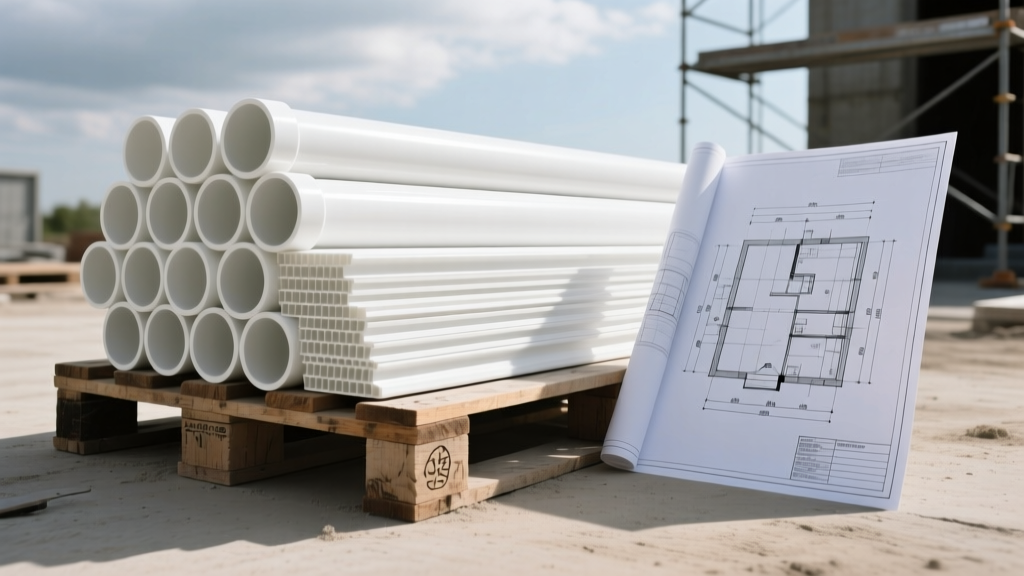
Lifecycle Cost Analysis: Initial Spend vs. Long-Term Maintenance
Evaluating the financial viability of PVC requires a lifecycle assessment. While initial procurement costs for PVC piping and trim exceed traditional alternatives like ABS pipe or pine wood, the maintenance delta is nearly zero. The EPA's guidelines on green building materials highlight that durability and reduced replacement cycles are primary drivers of sustainable material selection. A cellular PVC trim installation will easily outlast a 30-year mortgage without requiring scraping, priming, or repainting, saving commercial property managers an estimated $3.00 to $5.00 per linear foot in maintenance painting costs every 7 to 10 years.
"When underwriting commercial construction loans, the premium paid for PVC and CPVC over galvanized steel or copper in aggressive water environments is routinely justified by the elimination of internal scaling and pinhole leak liabilities over a 40-year asset lifecycle."
Strategic Procurement for PVC Materials
To optimize the budget for building materials PVC, procurement managers should leverage the following strategies in 2026:
- Dimensional Weight Freight Mitigation: PVC pipe is highly voluminous but lightweight. LTL (Less Than Truckload) carriers charge by dimensional weight. Always source PVC pipe from regional distributors within a 150-mile radius of the job site to avoid freight surcharges that can inflate pipe costs by 20%.
- Cellular PVC Off-Cuts: For smaller trim details, brickmould, or window extensions, negotiate with local lumberyards to purchase their "drop" or off-cut bundles of cellular PVC at a 30% to 50% discount. Since PVC does not degrade or warp in the yard, these remnants are perfectly viable for shorter runs.
- Membrane Roll Optimization: When ordering PVC roofing, specify custom roll widths (e.g., 5-foot or 10-foot rolls) that match the exact dimensions of the roof planes to minimize seam welding labor and reduce material waste from standard 6-foot or 12-foot roll overlaps.
FAQ: Common PVC Cost Questions
Does UV exposure degrade exterior PVC trim, requiring costly replacement?
High-quality cellular PVC contains titanium dioxide (TiO2) UV inhibitors integrated throughout the extrusion. It will not yellow or become brittle like cheap vinyl siding, maintaining its structural integrity and appearance for decades without protective coatings.
Is CPVC worth the extra cost over standard PVC for residential plumbing?
CPVC is mandatory for hot water lines due to its higher glass transition temperature (up to 200°F). Standard PVC will soften and fail under hot water pressure. However, for cold-water main lines and DWV systems, standard Schedule 40 PVC is sufficient and significantly cheaper.
Written by
Sarah WhitfieldSarah Whitfield is a chartered quantity surveyor (MRICS) and construction cost analyst with 15 years of experience in material pricing, procurement strategy, and project budgeting. She earned her degree in Construction Management from the University of Reading (UK) and has worked on projects ranging from $2M custom homes to $180M mixed-use developments across North America and Europe. Sarah currently leads cost estimating for BuildMat Insight, maintaining a proprietary database of 4,000+ material price points updated quarterly. She is a frequent contributor to RSMeans cost data panels and has presented at the International Cost Engineering Council (ICEC) congress. Based in Denver, CO, Sarah is an avid trail runner and volunteer mentor for Women in Construction.
More from Sarah Whitfield
View all
Wood & Lumber
What Are the Different Types of Wood? A Builder's Guide
Compare structural softwoods, finish hardwoods, and engineered lumber. Analyze Janka ratings, MOE values, and 2026 pricing for construction.
Aug 4, 2026

Walls & Panels
Steel Framing vs Wood Framing: Corrosion and Moisture Defense
Compare steel framing vs wood framing for moisture resistance. Learn about galvanized coatings, condensation risks, and corrosion protection strategies.
Jul 21, 2026

Stone & Masonry
How to Cut Stone Veneer: Wet Saw vs Grinder Comparison
Compare the best tools for cutting stone veneer. We review wet saws, angle grinders, and chop saws to help you achieve clean, chip-free cuts.
Jul 21, 2026