Trending Mold Resistant Building Materials for 2026 Builds
Discover the top mold resistant building materials for 2026. Compare glass-mat drywall, MgO board, and resin OSB for climate-resilient construction.

The Shift from Surface Coatings to Intrinsic Resistance
As climate volatility increases the frequency of extreme precipitation and coastal flooding, the construction industry's approach to moisture management has fundamentally changed. Relying on antimicrobial paints or surface-level fungicides is no longer viable for long-term structural integrity. In 2026, the specification of mold resistant building materials has shifted from reactive chemical treatments to intrinsic, material-level resistance. Modern building science dictates that if a material cannot inherently starve fungal spores of their required nutrients (cellulose) or resist bulk water absorption, it is a liability.
According to EPA's Mold and Moisture guidelines, mold growth requires three elements: spores, moisture, and an organic food source. While builders cannot eliminate spores or guarantee zero moisture intrusion, they can entirely eliminate the food source by specifying inorganic or highly engineered synthetic materials.
2026 Material Spotlight: What is Actually Working
The following materials represent the current industry standard for high-performance, mold-resistant assemblies, moving beyond basic drywall into subfloors and exterior sheathing.
1. Glass-Mat Gypsum Board (ASTM C1396)
Glass-mat gypsum replaces the traditional paper facing on both sides of the gypsum core with woven fiberglass mats. The core itself is often treated with siloxane or other hydrophobic agents. Georgia-Pacific DensArmor Plus and CertainTeed M2Tech remain the dominant products in this space.
- Cost: $0.85 to $1.15 per square foot (approx. 25% premium over standard drywall).
- Performance: Scores a 10 (highest resistance) on the ASTM D6329 fungal resistance scale. The fiberglass mat provides zero nutritional value to mold spores.
- Application: Interior wall cavities behind tile in showers, basement finishing, and exterior sheathing behind weather-resistive barriers (WRBs).
2. Hydrophobic Resin-Treated OSB Subflooring
Standard oriented strand board (OSB) swells and delaminates when exposed to construction-phase rain or plumbing leaks, creating a cellulose-rich breeding ground for fungi. Advanced resin-treated panels, such as Huber AdvanTech, use proprietary phenol-formaldehyde and isocyanate resins that bind the wood flakes at a cellular level, rendering the panel highly resistant to bulk water absorption.
- Cost: $62.00 to $78.00 per 4x8 panel (varies by thickness and region).
- Performance: Maintains structural integrity and resists edge swelling even after 30 days of standing water exposure during the framing stage.
- Application: Subflooring in multi-family residential and commercial builds where construction schedules risk weather exposure.
3. Low-Chloride Magnesium Oxide (MgO) Board
MgO board is an inorganic, cement-like material that is completely impervious to mold, rot, and fire. However, the industry has learned hard lessons from the "MgO crisis" of the late 2010s, where high-chloride imports caused catastrophic corrosion of steel framing and fasteners. In 2026, specifiers must strictly mandate low-chloride (sulfate-based) MgO boards, such as Elementerra or Magnum Board, which contain less than 10% soluble chloride by weight.
- Cost: $1.60 to $2.40 per square foot.
- Performance: Class A fire rating, zero mold growth capability, and high impact resistance.
- Application: Shower surrounds, exterior soffits, and elevator shaft enclosures.
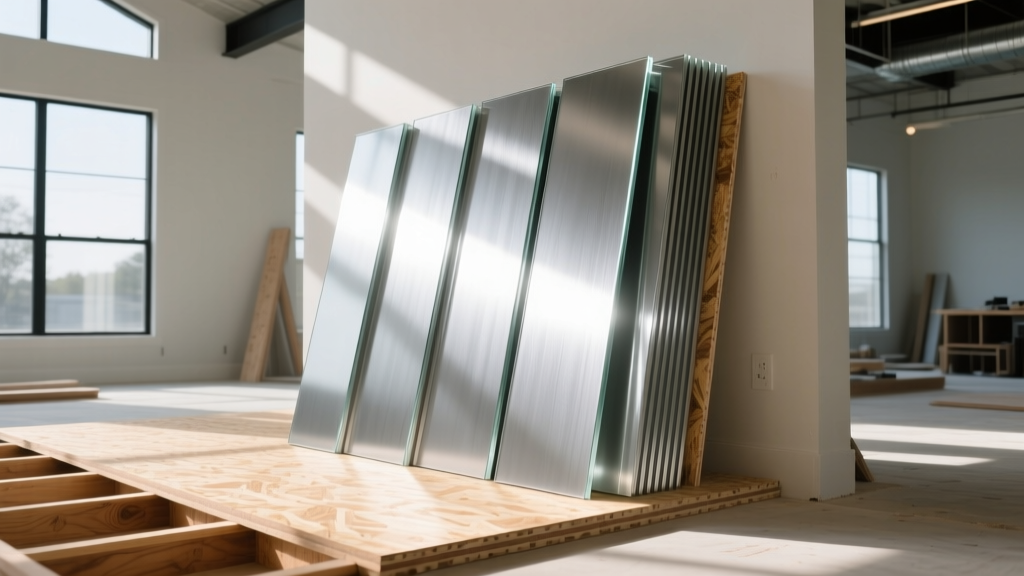
Cost & Performance Matrix: Mold Resistant Materials
| Material Category | Top 2026 Product Example | Avg. Cost (USD) | ASTM Standard | Primary Failure Mode |
|---|---|---|---|---|
| Glass-Mat Gypsum | GP DensArmor Plus | $0.95 / sq ft | C1396 / D6329 | Core degradation if submerged >72 hrs |
| Resin OSB Subfloor | Huber AdvanTech | $70.00 / panel | PS 2-18 | Fungal growth on surface dust/debris |
| Low-Chloride MgO | Elementerra Board | $1.85 / sq ft | C1186 | Fastener corrosion (if high-chloride) |
| Cellular PVC Trim | Kleer PVC Trimboard | $3.20 / lin ft | D6345 | Thermal expansion/contraction warping |
Real-World Failure Modes and Edge Cases
Specifying the right mold resistant building materials is only half the battle. As Building Science Corporation's BSI-001 emphasizes, water management and material selection must work in tandem. Here are the most common ways contractors defeat the purpose of premium mold-resistant materials in the field:
The Vapor Retarder Trap
Installing mold-resistant glass-mat drywall on the interior of a wall assembly in a hot, humid climate (e.g., US Climate Zones 1, 2, and 3) while simultaneously applying a Class I vapor retarder (polyethylene sheeting) on the exterior sheathing. When exterior moisture drives inward through the cladding, it hits the exterior poly, condenses inside the cavity, and wets the backside of the interior drywall. While the glass-mat facing won't grow mold, the wood studs behind it will rot. Solution: Use a Class III vapor retarder (vapor-permeable latex paint) on the interior drywall to allow the assembly to dry inward.
The "Surface Dust" Loophole on Subfloors
Resin-treated OSB subfloors resist water and mold internally. However, if a framing crew leaves a thick layer of sawdust, dirt, and organic debris on the subfloor before the house is dried in, a plumbing leak will cause mold to bloom on the debris, not the OSB. The mold then spreads to the baseplates. Solution: Mandate a "broom-clean" subfloor protocol prior to installing any underlayment or closing the building envelope.
MgO Board Fastener Galvanic Corrosion
Even low-chloride MgO boards possess a high pH (alkaline) environment. Using standard zinc-plated drywall screws to fasten MgO board to steel studs will result in the alkalinity eating through the zinc coating, leading to rust streaks and eventual fastener failure. Solution: Specify ceramic-coated or 300-series stainless steel screws specifically rated for highly alkaline cementitious boards.
Building Code Updates & Compliance Framework
The 2024 and 2026 iterations of the International Residential Code (IRC) and International Building Code (IBC) have tightened moisture management mandates, heavily influencing material procurement. Key compliance areas include:
- IRC Section R703.1.1 (Water-Resistive Barriers): Requires WRBs to be integrated with flashings. Mold-resistant sheathing (like glass-mat gypsum) is increasingly being used as the structural sheathing and the WRB substrate to eliminate the osmotic blistering that occurs when standard OSB gets wet behind housewrap.
- ASHRAE 62.2 Ventilation Standards: Tighter building envelopes require mechanical ventilation. If HVAC ductwork is routed through unconditioned, high-humidity spaces (like vented crawlspaces), the duct insulation must be faced with a mold-resistant, non-cellulosic jacket (e.g., FSK or ASJ facing) to prevent condensation-driven mold growth on the duct exterior.
- FEMA Flood Zone Requirements: For structures in Special Flood Hazard Areas (SFHAs), all materials below the Base Flood Elevation (BFE) must be classified as "Class 5" flood-resistant materials. Inorganic materials like MgO board, cellular PVC, and closed-cell spray foam meet this criteria, whereas paper-faced drywall and standard wood framing do not.
Strategic Sourcing for Climate Resilience
The transition to intrinsically mold-resistant materials requires upfront capital, typically adding 2% to 4% to the total envelope and interior finish budget. However, when weighed against the average cost of commercial mold remediation—which frequently exceeds $15,000 for a single multi-family unit—the ROI is immediate. According to the National Institute of Building Sciences (NIBS) moisture protocols, integrating these materials during the design phase, rather than as a value-engineering substitution later, ensures that the entire wall assembly's hygrothermal performance is modeled correctly.
For architects and general contractors operating in 2026, the mandate is clear: eliminate cellulose from wet zones, specify hydrophobic binders in structural wood, and verify the chemical composition of cementitious alternatives. By focusing on the nutritional deprivation of fungal spores through smart material science, builders can deliver structures that withstand the increasing moisture loads of a changing climate without compromising indoor air quality or structural longevity.
Written by
Marcus ChenMarcus Chen is a licensed structural engineer (PE) and building materials analyst with over 12 years of experience across residential, commercial, and industrial construction. He holds a Master of Science in Civil Engineering from UC Berkeley and spent six years at Thornton Tomasetti before transitioning to independent consulting and technical writing. Marcus specializes in material selection for seismic-prone regions, concrete reinforcement strategies, and lifecycle cost analysis. His work has been cited by the American Concrete Institute (ACI) and the Structural Engineers Association of California (SEAOC). When he is not on a job site or at his desk, you will find him hiking the Sierra Nevada or restoring a 1920s craftsman bungalow in Oakland, CA.
More from Marcus Chen
View all
Construction Cost
How Much Did the Eiffel Tower Cost to Build?
How much did the Eiffel Tower cost to build in 1889? We adjust for inflation and compare its budget to modern skyscraper construction.
Aug 4, 2026

Fire Resistance
What Is a Fire Resistant Material? Testing & Certification Guide
Discover what is a fire resistant material through ASTM and UL testing. Learn how fire ratings, certifications, and assemblies work in construction.
Aug 4, 2026

Construction Cost
How Much Did the Burj Khalifa Cost to Build?
How much did the Burj Khalifa cost to build? We break down the $1.5B project and extract 5 money-saving strategies for your next build.
Jul 30, 2026