Cherokee Building Materials OKC: Masonry & Stone Application Guide
Master masonry and hardscape applications using Cherokee Building Materials OKC. Expert guide to brick, pavers, and mortar for Oklahoma's expansive soils.
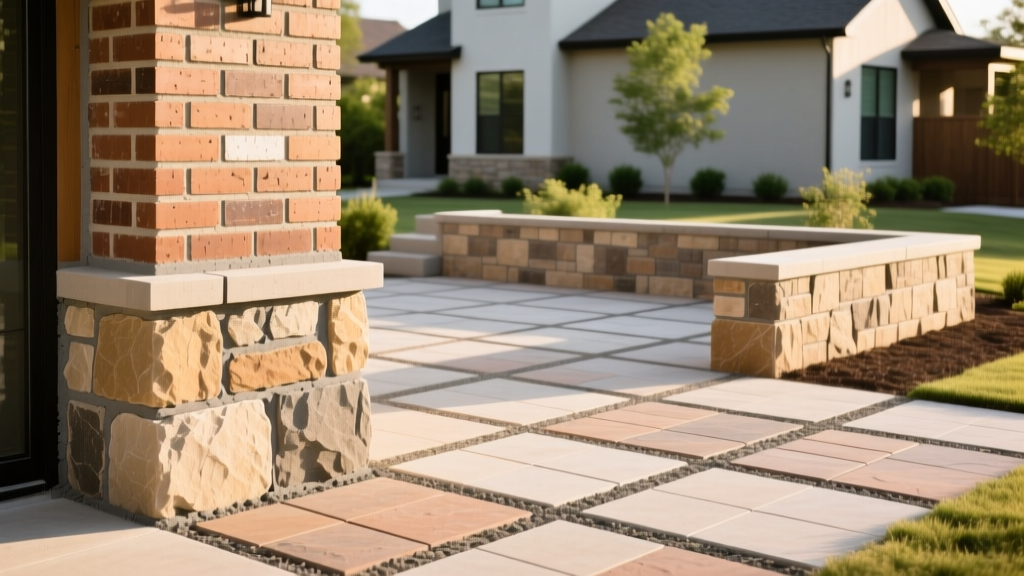
Navigating the OKC Climate for Masonry Applications
Oklahoma City presents a uniquely hostile environment for exterior masonry and hardscape installations. The region is characterized by USDA Hardiness Zones 7a and 7b, experiencing summer temperatures that routinely exceed 100°F and winter freezes that plunge into the teens. More critically, the central Oklahoma region is underpinned by the Garber-Wellington soil series—a highly expansive clay that swells significantly when wet and shrinks during droughts. This differential movement exerts immense lateral and uplift pressure on rigid structures.
When sourcing premium masonry, natural stone, and hardscape products from regional distributors like Cherokee Building Materials OKC, contractors must adapt their application techniques to mitigate these localized geological and meteorological stresses. Selecting the right brick, paver, or retaining wall block is only the first step; the subgrade preparation, mortar chemistry, and drainage engineering dictate the long-term survival of the installation.
Core Material Categories and Specification Requirements
Regional suppliers stock materials specifically rated for the Southern Plains climate. When specifying products for your project, verify that the materials meet the following ASTM standards to ensure they can withstand local freeze-thaw cycles and thermal expansion.
Brick Veneer and Solid Masonry
For exterior brick applications in Oklahoma City, you must specify ASTM C62 Grade SW (Severe Weathering) brick. Grade SW bricks are engineered with a lower absorption rate (typically under 17%) to prevent water ingress, which is the primary cause of spalling during OKC's rapid freeze-thaw transitions in February and March. When calculating yields for standard modular brick (3-5/8" x 2-1/4" x 7-5/8"), plan for 6.86 bricks per square foot of wall area, plus a 5% waste factor for cutting and breakage.
Natural Stone and Veneers
Natural stone veneers sourced locally often include limestone and sandstone profiles. For exterior applications, ensure the stone has been tested for ASTM C97 Absorption and Bulk Specific Gravity. Limestones with an absorption rate greater than 7% should be avoided for exterior veneers in Oklahoma, as they are highly susceptible to moisture retention and subsequent algal growth during the humid late-summer months.
Step-by-Step Application: Permeable Pavers on Expansive Clay
Installing interlocking concrete pavers over Oklahoma's expansive clay requires a robust, open-graded base system to manage water infiltration and prevent subgrade saturation. The Interlocking Concrete Pavement Institute (ICPI) provides rigorous guidelines for these installations, which must be modified locally for heavy clay subgrades.
- Subgrade Excavation and Stabilization: Excavate to a depth of 14 to 16 inches below the final finish grade. Compact the native clay subgrade to 95% Modified Proctor density. Immediately lay a non-woven geotextile fabric (minimum 4 oz/sq yd) to separate the clay from the aggregate base and prevent upward migration of fines.
- Geogrid Reinforcement (Driveways Only): For vehicular loads, install a biaxial geogrid (e.g., BX1200 equivalent) directly over the geotextile. This interlocks with the base aggregate, distributing point loads and preventing the expansive clay from heaving the pavement structure.
- Open-Graded Base Aggregate: Install a 10-inch layer of ASTM No. 57 (3/4-inch open-graded) crushed limestone or granite. Compact in 4-inch lifts using a vibratory plate compactor. Because No. 57 is open-graded, it acts as an underground reservoir, storing stormwater and keeping the expansive clay subgrade at a consistent moisture level.
- Bedding Layer: Apply a 2-inch layer of ASTM No. 8 (3/8-inch) open-graded aggregate. Do not use sand. Sand will wash down into the No. 57 reservoir and clog the permeable system.
- Paver Laying and Jointing: Lay the permeable pavers according to the manufacturer's pattern. Fill the joints with ASTM No. 8 or No. 9 stone, sweeping and compacting until the joints are completely full to the top of the paver chamfer.
Mortar Selection Matrix for Oklahoma Extremes
Mortar is not merely an adhesive; it is a sacrificial buffer that accommodates thermal expansion and moisture movement. Using a mortar that is too hard (high compressive strength) will cause the brick to crack during OKC's extreme temperature swings. The Brick Industry Association (BIA) Technical Notes emphasize matching mortar strength to the masonry unit. Below is the application matrix for regional projects.
| Mortar Type | Compressive Strength | Primary OKC Application | Mix Ratio (Cement:Lime:Sand) |
|---|---|---|---|
| Type N | 750 psi | Above-grade exterior veneer, parapets, and chimneys. Ideal for accommodating thermal expansion. | 1 : 1 : 6 |
| Type S | 1,800 psi | Below-grade foundations, retaining walls, and masonry walkways subject to soil lateral loads. | 1 : 0.5 : 4.5 |
| Type M | 2,500 psi | Heavy load-bearing structural walls, driveways, and areas subject to severe compressive loads. | 1 : 0.25 : 3 |
| Type O | 350 psi | Interior non-load-bearing walls or historic tuckpointing (rarely used in new OKC exterior builds). | 1 : 2 : 9 |
Summer Curing Pro-Tip: When laying brick in July or August, ambient temperatures in OKC often exceed 95°F with low humidity. Mortar will flash-set, losing bond strength. Wet the bricks lightly before laying (do not saturate), mix mortar in smaller batches, and mist the finished wall with a fine spray of water twice daily for 48 hours to ensure proper hydration of the Portland cement.
Retaining Wall Engineering for Heavy Spring Rains
Oklahoma's spring storm season can deliver 3 to 5 inches of rain in a single event, creating massive hydrostatic pressure behind retaining walls. When utilizing segmental retaining wall (SRW) blocks sourced from local yards, gravity alone is insufficient for walls exceeding 3 feet in height.
According to National Concrete Masonry Association (NCMA) design protocols, any SRW wall over 4 feet must incorporate geogrid reinforcement. For OKC's clay soils, the drainage aggregate behind the wall is equally critical. Excavate a minimum of 12 inches behind the wall blocks and fill with ASTM No. 57 clean washed gravel. Install a 4-inch perforated PVC drain pipe at the base of the aggregate, sloped at 1% to daylight at the wall ends. This prevents water from pooling in the clay subgrade, which would otherwise add thousands of pounds of lateral pressure to the wall face during heavy spring rains.
Geogrid Tie-Back Specifications
- Wall Height 3-4 ft: Geogrid typically not required unless surcharge loads (e.g., driveways) are present within 3 feet of the wall crest.
- Wall Height 4-6 ft: Install uniaxial geogrid layers every 2 courses (approx. 16 inches vertically). Grid length should be 60% of the wall height.
- Wall Height 6-10 ft: Engineer of record required. Geogrid lengths often exceed 80% of wall height, with reinforcement every 2 to 3 courses.

Frequently Asked Questions
Can I use standard concrete sand for paver joints in Oklahoma?
For standard (non-permeable) pavers, polymeric sand is highly recommended over standard concrete sand in OKC. The region's heavy spring downpours and high winds easily wash out or erode standard jointing sand. Polymeric sand binds together when activated with water, creating a flexible joint that resists erosion and prevents weed growth while still accommodating minor thermal expansion.
How do I prevent efflorescence on new brick veneer?
Efflorescence (the white, powdery salt deposit) is common in new masonry. To minimize it, ensure the brick veneer has a minimum 1-inch air cavity behind it, equipped with weep holes every 24 inches along the base flashing. This allows moisture entering the wall cavity to drain out rather than migrating through the brick face and depositing soluble salts. Never use muriatic acid to clean new brick; use a proprietary masonry cleaner buffered for clay brick.
What is the lead time for custom natural stone orders?
While standard clay bricks and concrete pavers are typically stocked locally for immediate pickup, custom natural stone veneers or specialized architectural blocks ordered through regional suppliers often require a 4 to 8-week lead time, depending on quarry availability and freight logistics from out-of-state fabricators. Always secure your stone selections during the architectural design phase to prevent project delays.
Written by
James ThorntonJames Thornton is a construction industry veteran with 25 years of hands-on experience in wood framing, lumber grading, and residential building codes. He started as a framing carpenter in rural Oregon, earned his ICC Residential Building Inspector certification, and eventually became a senior plan reviewer for the City of Portland Bureau of Development Services. James holds a B.S. in Wood Science & Technology from Oregon State University and is a certified lumber grader through the West Coast Lumber Inspection Bureau (WCLIB). He has inspected over 3,000 residential construction sites and authored the city's internal guide on advanced framing techniques (2x6 at 24" O.C.). James lives in Bend, OR, where he builds custom timber-frame cabins and competes in lumberjack sports.
More from James Thornton
View all
Insulation
Best Home Insulation Materials: Complete 2026 Guide
Compare top home insulation materials for 2026. Find R-values, installed costs per square foot, and best uses for fiberglass, spray foam, and mineral wool.
Aug 4, 2026

Sustainable Building
Certify Your Green Building Material for LEED and WELL
Step-by-step guide to certifying a green building material for LEED v5 and WELL v2. Master EPDs, HPDs, and VOC limits for 2026 project specifications.
Aug 4, 2026

Stone & Masonry
Veneer Stacked Stone Panels: Interior Design & Style Showcase
Discover how veneer stacked stone panels transform interiors. Explore modern design profiles, material pairings, and technical installation specs.
Aug 4, 2026