Trending Rust Wall Building Materials for Architectural Facades in 2026
Explore the top rust wall building materials trending in 2026. Compare Corten steel, reactive faux-rust coatings, and oxidized copper for modern facades.

The Rise of Oxidized Aesthetics in Modern Architecture
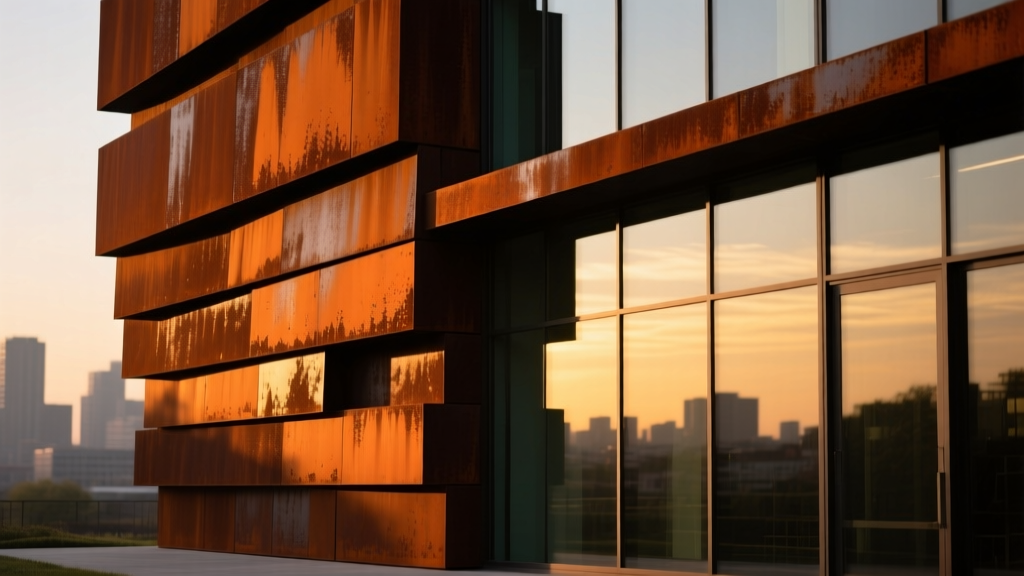
The demand for rust wall building materials has evolved significantly from simple landscaping retaining walls to premium architectural cladding and interior feature walls. In 2026, the intersection of biophilic design and industrial aesthetics has pushed oxidized metals to the forefront of commercial and high-end residential construction. Architects are specifying these materials not just for their striking visual warmth, but for their lifecycle durability and low-maintenance profiles once the patina stabilizes.
Selecting the correct rust wall building material requires a deep understanding of metallurgy, substrate compatibility, and environmental runoff management. This guide breaks down the three dominant material categories trending in 2026, providing exact specifications, installation tolerances, and cost frameworks for contractors and specifiers.
Material Breakdown: Corten, Reactive Coatings, and Pre-Patinated Alloys
1. Weathering Steel (Corten A and B)
Weathering steel, commonly referred to by the trademarked name COR-TEN, remains the gold standard for structural and semi-structural rust wall applications. The material relies on specific alloying elements—primarily copper (0.25-0.55%), chromium (0.50-1.25%), and nickel (up to 0.65%)—to form a dense, tightly adherent oxide layer when exposed to alternating wet and dry cycles.
For architectural wall cladding, specifiers typically choose between two ASTM standards:
- ASTM A588 (Grade A/B): Used for heavy structural plates, typically 1/4-inch to 1-inch thick. Ideal for load-bearing retaining walls and heavy-duty exterior screens.
- ASTM A606 (Type 4): Used for sheet and coil stock, typically 16-gauge to 11-gauge. This is the standard for rainscreen facade panels and decorative wall cladding.
The Federal Highway Administration (FHWA) extensively documents the performance of uncoated weathering steel, noting that the protective patina reduces corrosion rates to less than 1 mil per year once fully stabilized. However, stabilization requires a minimum of 12 to 18 months of natural wet/dry cycling. In constantly shaded or highly humid microclimates where the steel cannot dry, the material will experience continuous, destructive corrosion rather than forming a protective patina.
2. Reactive Faux-Rust Coatings
When structural steel is overkill or when interior applications require zero runoff, reactive faux-rust systems are the preferred alternative. These are not simple brown paints; they are multi-part chemical systems containing real iron particulate suspended in an acrylic or water-based binder.
The application process involves three distinct phases:
- Base Coat: An iron-rich primer is applied to a sealed substrate (drywall, MDF, or polyurethane architectural foam panels).
- Oxidizer Activation: A solution containing hydrogen peroxide, sea salt, and mild acids is sprayed over the tacky base coat. This forces rapid, authentic oxidation of the iron particles within 2 to 4 hours.
- Sealing: A specialized, non-yellowing polyurethane or acrylic topcoat (such as Sculpt Nouveau Smart Coatings or Everbrite) is applied to halt the chemical reaction and lock in the color.
These systems cost between $2.50 and $4.00 per square foot installed and are entirely customizable, allowing artisans to manipulate the oxidizer to create streaks, mottling, or uniform patinas.
3. Pre-Patinated Copper and Zinc-Copper Alloys
For high-budget projects requiring a rust-adjacent aesthetic with absolute dimensional stability, pre-patinated copper and zinc-carbon alloys offer a premium solution. The Copper Development Association (CDA) outlines how factory-applied chemical patinas can force copper into deep brown, statuary, or verdigris finishes before it ever reaches the job site. While not "rust" in the ferrous sense, pre-patinated copper delivers the warm, oxidized earth tones of Corten without the risk of structural bleed or staining on adjacent masonry.
Comparative Decision Matrix for Specifiers
Choosing the right rust wall building material depends heavily on the project's structural requirements, budget, and proximity to sensitive hardscaping. Use the matrix below to evaluate options for your specific application.
| Feature | ASTM A606 Corten Panels | Reactive Faux-Rust Systems | Pre-Patinated Copper |
|---|---|---|---|
| Material Cost (per sq ft) | $4.50 - $7.50 | $1.50 - $3.00 (kit cost) | $18.00 - $25.00 |
| Weight (per sq ft) | ~10.2 lbs (16 ga) | Substrate dependent | ~4.5 lbs (20 oz) |
| Runoff / Bleeding | High (first 12-18 months) | None (if sealed properly) | Minimal (mild copper salts) |
| Interior Suitability | Poor (requires chemical sealing) | Excellent | Excellent |
| Structural Capability | High (can span purlins) | None (purely cosmetic) | Low (requires solid deck) |
Installation Gotchas: Managing Runoff and Galvanic Corrosion
The most common point of failure in Corten steel facade installations is the mismanagement of rust runoff during the initial weathering phase. As the steel cycles through wet and dry periods, un-oxidized iron hydroxides wash down the face of the panels, permanently staining porous concrete, light-colored masonry, and limestone pavers below.
Do not install unsealed Corten steel directly above unsealed concrete or natural stone without a minimum 3-foot gravel splash bed or an integrated gutter system. Once iron oxide penetrates the pores of limestone or cast concrete, standard pressure washing will not remove it; only specialized oxalic acid poultices can lift the stain.
Galvanic Corrosion Risks: When detailing rust wall building materials, fastener selection is critical. Never use standard galvanized or zinc-plated screws with Corten panels. The dissimilar metals will create a galvanic cell, leading to rapid, localized pitting and premature failure of the panel around the fastener head. Always specify Type 316 stainless steel fasteners or Corten-specific carbon steel fasteners that will patina uniformly with the panel.
Rainscreen Tolerances: For exterior facade applications, Corten panels must be installed as a ventilated rainscreen. Maintain a minimum 1-inch air gap between the back of the steel panel and the weather-resistive barrier (WRB) using non-corrosive aluminum or stainless steel hat channels. This gap allows moisture to drain and prevents the back-face of the steel from remaining perpetually damp, which would lead to uncontrolled, uneven corrosion.
Accelerating and Stabilizing the Patina
Architects and owners rarely want to wait 18 months for the bleeding to stop and the final rich brown patina to emerge. In 2026, chemical acceleration and stabilization are standard practices for high-end commercial projects.
To accelerate the patina on-site, contractors use a mild solution of hydrogen peroxide, white vinegar, and table salt, misted lightly over the panels once a day for a week. This forces rapid oxidation. However, to stop the runoff and lock the color, a chemical stabilizer must be applied. Products like Everbrite ProtectaClear or Penetrol (mixed in a 1:4 ratio with mineral spirits for a matte finish) penetrate the porous oxide layer, sealing the surface without giving it an artificial, high-gloss "plastic" look. Stabilization adds roughly $0.75 to $1.20 per square foot to the total project cost but eliminates long-term liability for hardscape staining.
Sustainability and Lifecycle Considerations
From a LEED v4.1 perspective, rust wall building materials offer distinct advantages. Weathering steel is typically manufactured with a high percentage of post-consumer recycled content (often exceeding 70% for structural plates). Furthermore, because the material requires no site-applied primers, paints, or solvent-based topcoats, it eliminates the off-gassing of volatile organic compounds (VOCs) during construction.
"The elimination of maintenance painting cycles over a 50-year building lifespan makes weathering steel one of the most environmentally responsible cladding choices available, significantly reducing the lifecycle carbon footprint of the building envelope."
— Sustainable Facilities Material Guidelines
For interior designers, reactive faux-rust systems have also advanced in sustainability. Modern formulations utilize water-based carriers and zero-VOC sealants, making them safe for enclosed commercial spaces, hospitality venues, and residential interiors without requiring specialized HVAC ventilation during application.
Final Sourcing and Procurement Advice
When procuring rust wall building materials, lead times and mill minimums dictate the project schedule. Standard flat sheets of ASTM A606 Corten are often stocked by specialized architectural metal distributors in 4x10 or 5x12 foot dimensions. However, custom-formed cassettes, corrugated profiles, or perforated Corten screens require mill-direct orders with lead times stretching 8 to 14 weeks. Always order 10% overage for Corten panels from the same heat/lot number; mixing different production lots can result in panels that patina at drastically different rates, creating a permanent, patchy appearance on the finished facade.
Written by
Sarah WhitfieldSarah Whitfield is a chartered quantity surveyor (MRICS) and construction cost analyst with 15 years of experience in material pricing, procurement strategy, and project budgeting. She earned her degree in Construction Management from the University of Reading (UK) and has worked on projects ranging from $2M custom homes to $180M mixed-use developments across North America and Europe. Sarah currently leads cost estimating for BuildMat Insight, maintaining a proprietary database of 4,000+ material price points updated quarterly. She is a frequent contributor to RSMeans cost data panels and has presented at the International Cost Engineering Council (ICEC) congress. Based in Denver, CO, Sarah is an avid trail runner and volunteer mentor for Women in Construction.
More from Sarah Whitfield
View all
Wood & Lumber
What Are the Different Types of Wood? A Builder's Guide
Compare structural softwoods, finish hardwoods, and engineered lumber. Analyze Janka ratings, MOE values, and 2026 pricing for construction.
Aug 4, 2026

Walls & Panels
Steel Framing vs Wood Framing: Corrosion and Moisture Defense
Compare steel framing vs wood framing for moisture resistance. Learn about galvanized coatings, condensation risks, and corrosion protection strategies.
Jul 21, 2026

Stone & Masonry
How to Cut Stone Veneer: Wet Saw vs Grinder Comparison
Compare the best tools for cutting stone veneer. We review wet saws, angle grinders, and chop saws to help you achieve clean, chip-free cuts.
Jul 21, 2026