Elephant Building Materials: Selection Guide for Zoo Enclosures
Discover the best elephant building materials for zoo enclosures. Compare high-PSI concrete, steel bollards, and moat designs for 2026.

The Unique Engineering Challenges of Elephant Architecture
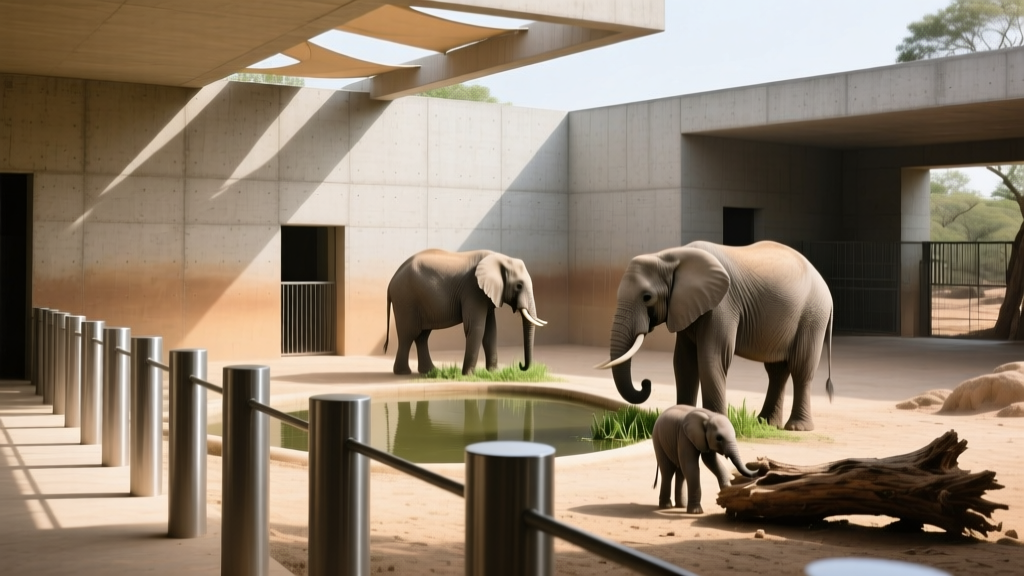
Designing and constructing habitats for the world's largest land mammals requires a radical departure from standard commercial construction. When sourcing elephant building materials for zoos, sanctuaries, and wildlife reserves, structural engineers and zoo architects must account for extreme lateral forces, high-impact abrasion, and the remarkable dexterity of the elephant's trunk. An adult African bush elephant can weigh up to 14,000 pounds and exert over 2,000 pounds of force with its tusks. Standard residential or commercial materials will fail catastrophically under these conditions, leading to severe safety hazards and exorbitant maintenance costs.
This selection guide details the exact material specifications, structural grades, and modern alternatives required for heavy-duty elephant containment and enrichment in 2026, aligning with the rigorous safety protocols outlined in the AZA Standards for Elephant Management and Care.
Primary Elephant Building Materials: A Structural Breakdown
High-Performance Concrete Formulations
Concrete is the backbone of any elephant enclosure, used for moat walls, holding pens, and foundational footings. However, standard 3,000 PSI mix designs are entirely insufficient. Elephants frequently use their tusks to pry, dig, and rub against surfaces, which causes standard concrete to spall and expose underlying rebar.
- Compressive Strength: Specify a minimum of 6,000 PSI for general containment walls, scaling up to 8,000 PSI for high-traffic rubbing posts and gate thresholds.
- Reinforcement: Utilize macro-synthetic fibers (such as Forta-Ferro) combined with #6 or #8 epoxy-coated rebar spaced at 6 inches on center. The synthetic fibers prevent micro-cracking from localized tusk impacts.
- Surface Finish: Avoid smooth trowel finishes, which become dangerously slippery when wet. A heavy broom finish or exposed aggregate provides necessary slip resistance for the animals' foot health.
- Sealers and Colorants: Never use surface-film epoxy coatings. Elephants will use their trunks to grip and peel epoxy sheets off the walls. Instead, use integral concrete colorants (to reduce solar glare) and penetrating silane/siloxane sealers that protect against moisture ingress without creating a peelable surface layer.
Heavy-Duty Steel and Galvanized Bollards
Steel is utilized for barriers, gates, and shifting alleyways. The primary failure mode in steel enclosures is lateral deflection when multiple animals lean against fencing simultaneously.
- Material Grade: Use ASTM A500 Grade B or C structural steel tubing.
- Dimensions: Vertical bollards and horizontal rails should be a minimum of 10 inches in diameter with a 3/8-inch wall thickness. For primary containment barriers, these pipes must be completely filled with concrete to prevent denting and to add mass against lateral pushing.
- Corrosion Protection: Hot-dip galvanizing is mandatory. Elephants frequently spray water, mud, and urine on steel surfaces. Standard painted steel will rust within a single season in a humid sanctuary environment.
HDPE and Synthetic Timbers for Enrichment
Wood is highly desirable for shade structures and scratching posts, but standard pressure-treated lumber poses a severe toxicity risk. Elephants are natural foragers and will strip bark, chew on structural timbers, and ingest the chemicals. Chromated Copper Arsenate (CCA) and Alkaline Copper Quaternary (ACQ) treatments are strictly prohibited in animal contact zones.
For 2026 sanctuary builds, High-Density Polyethylene (HDPE) synthetic lumber is the gold standard. HDPE boards (minimum 2x10 profile) are completely inert, impervious to moisture, and cannot be splintered by tusk prying. When natural wood is required for behavioral enrichment (such as browse poles), specify untreated, naturally rot-resistant hardwoods like Black Locust or White Oak, and plan for annual replacement.
Containment Systems: Moats, Walls, and Cabling
Selecting the right perimeter containment material is critical for visitor safety and animal welfare. The USDA Animal Welfare Act and modern zoo architecture firms heavily favor barrier systems that maintain a naturalistic sightline while providing impenetrable containment.
| Containment Type | Primary Materials Used | Pros | Cons & Edge Cases |
|---|---|---|---|
| Dry Moat (Ha-Ha Wall) | 8,000 PSI cast-in-place concrete, natural stone veneer | Invisible barrier to visitors; excellent naturalistic aesthetics. | Requires massive excavation; animal-side wall must be sheer 8ft minimum with a 30-degree escape ramp. |
| Steel Cable Fencing | 1-inch galvanized aircraft cable, steel tensioners | Low visual impact; flexible layout for irregular terrain. | High maintenance; cables must be re-tensioned monthly; risk of trunk entanglement if spacing exceeds 18 inches. |
| Concrete Block Walls | CMU blocks, vertical rebar, grout, shotcrete veneer | Highly secure; provides excellent windbreak and shade. | Obstructs visitor viewing; requires deep footings to prevent undermining by digging. |
| Laminated Glass | Multi-ply polycarbonate/laminated glass, steel mullions | Unmatched visitor experience; climate-controlled viewing. | Extremely expensive; requires heavy steel framing to absorb impact; glass must be angled to prevent head-on collisions. |
Substrate and Flooring Selection for Joint Health
The materials placed beneath the animals' feet are just as critical as the walls that contain them. Prolonged standing on flat, unyielding concrete leads to severe foot pathology, including nail cracks and sole abscesses, which are the leading cause of euthanasia in captive elephants.
The 2026 Multi-Substrate Approach:
Modern enclosures abandon monolithic concrete floors in favor of zoned substrate materials:
- Deep Sand Beds: A minimum of 12 to 18 inches of washed, angular masonry sand (not round play sand, which lacks drainage and compacts poorly). Sand provides natural give and encourages foraging behavior.
- Vulcanized Rubber Mats: For indoor holding areas, specify 1.5-inch thick, heavy-duty vulcanized rubber mats (often sourced from equine or heavy-industry suppliers). These must be interlocked and glued to a concrete subfloor to prevent the animals from lifting the edges with their trunks.
- Variable Topography: Use compacted road base (crushed aggregate) to create berms and slopes, allowing the animals to shift their weight and relieve joint pressure.
Cost Estimation and Procurement Strategy
Budgeting for elephant building materials requires accounting for specialized labor and heavy-duty freight. Below are baseline material costs for 2026 sanctuary and zoo construction projects in North America.
| Material Category | Specification | Estimated 2026 Unit Cost |
|---|---|---|
| High-Strength Concrete | 6,000 PSI w/ macro-synthetic fibers | $175 - $210 per cubic yard |
| Steel Containment Pipe | 10" OD, 3/8" wall, Galvanized | $95 - $130 per linear foot |
| HDPE Synthetic Lumber | 2x10 profile, structural grade | $18 - $24 per linear foot |
| Vulcanized Rubber Matting | 1.5" thick, 4x6 ft interlocking | $350 - $450 per panel |
Procurement Tip: When ordering hot-dip galvanized steel for elephant barriers, ensure the fabricator drills all weep holes and vent holes before galvanizing. Drilling after the galvanization process exposes raw steel to moisture, creating a rapid corrosion point that will bleed rust down the enclosure walls.
Frequently Asked Questions (FAQ)
Can elephants break standard chain-link fencing?
Yes, effortlessly. Standard 9-gauge chain link is strictly prohibited for primary elephant containment. An elephant can hook its trunk into the mesh and tear it apart or push a 4,000-pound shoulder through it. Only heavy-gauge welded steel mesh (minimum 3/16-inch wire diameter with 2x4 inch openings) or solid steel pipe barriers are acceptable.
How deep must concrete footings be for elephant barriers?
Elephants are capable diggers and will attempt to undermine shallow footings. Continuous concrete footings for perimeter walls must extend a minimum of 36 inches below grade, or 12 inches below the local frost line (whichever is deeper), and feature a 24-inch wide concrete grade beam to prevent soil erosion underneath the barrier.
What is the safest electrical fencing material for behavioral training?
When utilizing hot wires for protected contact training or temporary zoning, use highly visible, 1-inch wide polytape woven with stainless steel filaments, powered by a low-impedance energizer delivering a minimum of 6,000 volts. Never use bare high-tensile wire, which can cause severe lacerations if an animal becomes entangled.
Written by
Marcus ChenMarcus Chen is a licensed structural engineer (PE) and building materials analyst with over 12 years of experience across residential, commercial, and industrial construction. He holds a Master of Science in Civil Engineering from UC Berkeley and spent six years at Thornton Tomasetti before transitioning to independent consulting and technical writing. Marcus specializes in material selection for seismic-prone regions, concrete reinforcement strategies, and lifecycle cost analysis. His work has been cited by the American Concrete Institute (ACI) and the Structural Engineers Association of California (SEAOC). When he is not on a job site or at his desk, you will find him hiking the Sierra Nevada or restoring a 1920s craftsman bungalow in Oakland, CA.
More from Marcus Chen
View all
Construction Cost
How Much Did the Eiffel Tower Cost to Build?
How much did the Eiffel Tower cost to build in 1889? We adjust for inflation and compare its budget to modern skyscraper construction.
Aug 4, 2026

Fire Resistance
What Is a Fire Resistant Material? Testing & Certification Guide
Discover what is a fire resistant material through ASTM and UL testing. Learn how fire ratings, certifications, and assemblies work in construction.
Aug 4, 2026

Construction Cost
How Much Did the Burj Khalifa Cost to Build?
How much did the Burj Khalifa cost to build? We break down the $1.5B project and extract 5 money-saving strategies for your next build.
Jul 30, 2026