Greenhouse Building Materials: The Complete 2026 Guide
Compare the best greenhouse building materials for 2026. Expert guide on framing, glazing R-values, foundation costs, and climate-specific selection.
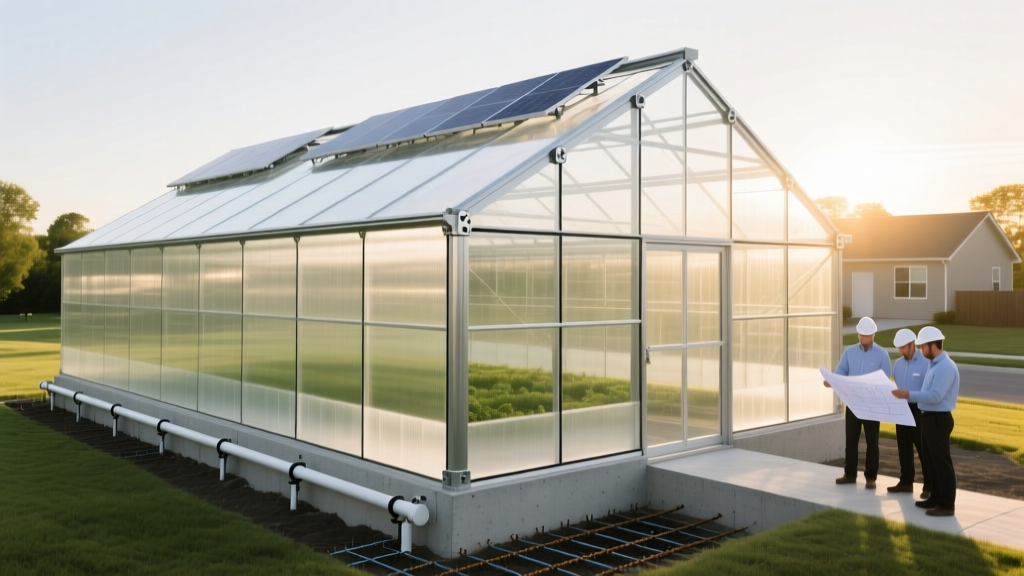
The Core Triad: Framing, Glazing, and Foundation
Selecting the right greenhouse building materials requires balancing light transmission, thermal retention, and structural load capacity. In 2026, material science has introduced advanced UV-inhibitors and aerogel-infused panels, but the fundamental physics of greenhouse construction remain unchanged. A poorly matched frame and glazing system will result in catastrophic heat loss or structural collapse under snow loads. This guide dissects the exact specifications, failure modes, and lifecycle costs of modern greenhouse components, moving beyond generic advice to provide actionable engineering and horticultural data.
Framing: Structural Skeletons Compared
The frame dictates the maximum span, snow load capacity, and lifespan of the structure. While wood remains popular for DIY builds, commercial and high-end residential builds rely on extruded aluminum or galvanized steel. According to structural guidelines published by the National Greenhouse Manufacturers Association (NGMA), framing must be engineered to handle combined dead, live, and wind loads specific to the local microclimate.
| Material | Yield Strength / Grade | Est. Lifespan | Cost (per linear ft) | Best Application |
|---|---|---|---|---|
| 6061-T6 Aluminum | 40,000 psi | 50+ years | $4.50 - $7.00 | Permanent residential & commercial |
| G90 Galvanized Steel | 50,000 psi (14-ga) | 30-40 years | $3.00 - $5.50 | High snow load / Hoop houses |
| UC4A Treated Timber | N/A (Ground Contact) | 15-25 years | $2.50 - $4.00 | Perimeter knee-walls & foundations |
| Schedule 40 PVC | N/A (Flexible) | 5-10 years | $1.00 - $2.00 | Temporary seasonal hoop tunnels |
Expert Insight: When using aluminum, specify 6061-T6 alloy rather than standard 6063 architectural aluminum. The T6 tempering process increases yield strength by nearly 60%, which is critical for purlins and rafters spanning more than 8 feet. For steel, ensure the galvanization meets ASTM A653 G90 standards (0.90 oz/sq ft of zinc coating) to prevent rust in high-humidity environments.
Glazing: Thermal Dynamics and Light Transmission
Glazing is the most critical thermal envelope component. The choice of material directly impacts Photosynthetically Active Radiation (PAR) transmission and the heating budget. The UMass Amherst Extension Greenhouse Floriculture program emphasizes that light diffusion is often more valuable than raw transmission, as scattered light penetrates deeper into the plant canopy, reducing shadowing.
- 6-Mil Polyethylene Film (UV-Treated): R-value of 1.0. Transmits ~88% PAR. Costs $0.15-$0.25 per sq ft. Requires replacement every 3-4 years. Best for seasonal high tunnels and USDA NRCS EQIP funded hoop houses.
- 8mm Twin-Wall Polycarbonate: R-value of 1.72. Transmits ~80% PAR (diffused). Costs $2.50-$3.50 per sq ft. The industry standard for year-round hobby greenhouses. Provides excellent hail resistance.
- 16mm Triple-Wall Polycarbonate: R-value of 2.50. Transmits ~75% PAR. Costs $4.50-$6.00 per sq ft. Mandatory for unheated winter growing in USDA Zones 5 and below.
- 4mm Tempered Glass: R-value of 0.95. Transmits ~90% PAR (direct). Costs $8.00-$12.00 per sq ft. Offers superior longevity and aesthetic appeal but requires heavy-duty steel or aluminum framing to support the dead load (approx. 2.5 lbs per sq ft).
Climate-Specific Material Selection Framework
Do not select materials in a vacuum; they must be matched to your specific USDA Hardiness Zone and local building code snow/wind loads. Use this decision framework to finalize your bill of materials:
Zone 3-5 (Harsh Winters, Heavy Snow)
- Frame: G90 Galvanized Steel (minimum 14-gauge) or heavy-duty 6061-T6 aluminum with internal steel cross-bracing.
- Glazing: 16mm triple-wall polycarbonate on the roof and north wall; 8mm twin-wall on the south-facing vertical walls to maximize low-angle winter solar gain.
- Foundation: Frost-protected shallow foundation (FPSF) or concrete piers poured below the local frost line (typically 48+ inches).
Zone 6-8 (Moderate Winters, High Wind/Hail)
- Frame: 6061-T6 Aluminum extrusions with integrated rubber gasket channels.
- Glazing: 8mm twin-wall polycarbonate (highly impact resistant against hail) or 4mm tempered glass if wind-load engineering permits.
- Foundation: Pressure-treated timber perimeter (UC4A grade) anchored with 36-inch rebar pins, or a continuous poured concrete stem wall.
Zone 9-11 (Hot Summers, High UV, Minimal Frost)
- Frame: Aluminum (painted white or silver to reflect heat).
- Glazing: Polyethylene film with shade cloth integration, or specialized shade-tinted polycarbonate to prevent heat stress. Ventilation area must equal at least 25% of the floor space.
- Foundation: Compacted gravel base with concrete patio blocks for point loads.
Hidden Failure Modes and Edge Cases
Even premium greenhouse building materials will fail if installed incorrectly. Avoid these common, costly mistakes:
Never allow raw aluminum framing to come into direct contact with ACQ (Alkaline Copper Quaternary) or copper azole pressure-treated lumber. The copper in the wood treatment acts as a cathode, causing rapid galvanic corrosion that will eat through the aluminum in 3 to 5 years. Always separate these materials using EPDM rubber gaskets or stainless steel fasteners.
Thermal Expansion in Polycarbonate: Polycarbonate expands and contracts at a rate of roughly 1/8 inch per 4 feet for every 40°F temperature swing. If you fasten panels tightly without leaving expansion gaps or using oversized drill holes (typically 1/4 inch larger than the fastener shaft), the panels will buckle and tear away from the screws during summer heatwaves.
Condensation and Thermal Bridging: In aluminum-framed greenhouses, the metal acts as a thermal bridge, transferring cold from the outside to the inside. This causes condensation to form directly on the frame, leading to water damage on interior sills. Specify aluminum profiles with integrated thermal breaks (polyamide strips) to interrupt heat transfer.
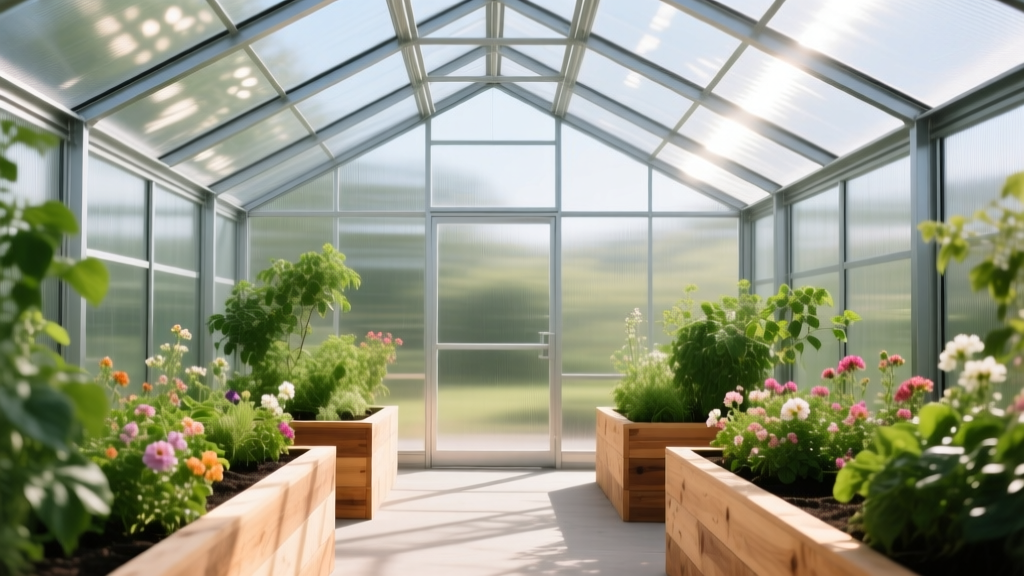
2026 Material Pricing and Lifecycle Costs
When budgeting, evaluate the lifecycle cost rather than just the initial material outlay. A cheaper glazing material that requires replacement every 4 years will ultimately cost more in labor and downtime than a premium panel.
| Component | Initial Cost (per sq ft of coverage) | Expected Lifespan | 15-Year Lifecycle Cost (incl. replacements) |
|---|---|---|---|
| 6-Mil Poly Film | $0.20 | 4 years | $0.80 (plus 3x labor) |
| 8mm Polycarbonate | $3.00 | 15-20 years | $3.00 |
| 4mm Tempered Glass | $10.00 | 30+ years | $10.00 |
| Aluminum Framing | $6.00 (per linear ft) | 50 years | $6.00 |
Sustainable and Emerging Alternatives
The greenhouse industry is actively adopting materials that reduce carbon footprints and improve energy efficiency. ETFE (Ethylene Tetrafluoroethylene) film is gaining traction in commercial builds. While it costs 30% more than premium polycarbonate, ETFE is self-cleaning, transmits UV light (which is blocked by polycarbonate and glass, but beneficial for certain crop secondary metabolites), and lasts over 25 years. Additionally, aerogel-infused polycarbonate panels are entering the market, pushing R-values past 3.5 without sacrificing critical PAR transmission, offering a viable path to net-zero heating for commercial growers in northern climates.
Written by
Priya KapoorPriya Kapoor is a real estate market analyst and construction economics researcher with expertise in housing affordability, development feasibility, and infrastructure investment. She holds a Master of Regional Planning from Cornell University and previously worked as a senior analyst at CBRE's Investment Properties group, where she modeled returns for $4B in mixed-use development pipelines. Priya now runs an independent research practice advising developers, municipalities, and REITs on construction cost forecasting and market timing. She publishes the quarterly "BuildMat Market Pulse" report tracking material price indices across 12 commodity categories. Based in Austin, TX, Priya serves on the board of Habitat for Humanity Austin and is a marathon runner.
More from Priya Kapoor
View all
Construction Cost
Cost to Build a 1600 Sq Ft Home in 2026: Full Breakdown
Accurate 2026 cost to build a 1600 sq ft home—material, labor, and regional pricing breakdowns included. Plan your budget with real-time estimates.
Aug 11, 2026

Wood & Lumber
Name the Types of Wood for Pressure Treatment and Preservation
Learn how to name the types of wood best suited for pressure treatment. Compare species treatability, chemical retention levels, and 2026 preservation costs.
Aug 4, 2026

Stone & Masonry
Stone Veneer Suppliers Lindenhurst: 2026 Cost Analysis
Analyze 2026 stone veneer costs in Lindenhurst, NY. Compare local supplier pricing, delivery fees, and Suffolk County installation labor rates.
Aug 4, 2026