The Online Marketplace for Building Materials: 2026 Industry Trends
Discover 2026 trends shaping the online marketplace for building materials, from AI-driven procurement to direct-to-site logistics and B2B pricing shifts.

The Structural Shift in Construction Procurement
The B2B construction supply chain has fundamentally restructured over the last three years. In 2026, the online marketplace for building materials is no longer a static digital catalog; it operates as an algorithmic procurement engine directly tied to Building Information Modeling (BIM) and Enterprise Resource Planning (ERP) systems. General contractors and developers are moving away from fragmented, relationship-based purchasing toward data-driven, transparent sourcing. According to industry analysis by McKinsey & Company, the digitization of construction procurement is a primary driver in reducing overall project cost overruns, which historically plagued the industry with 80% of projects finishing over budget.
This transition is not merely about convenience. It is about margin preservation, risk mitigation, and schedule certainty. As supply chain volatility remains a persistent threat, digital platforms are providing real-time inventory visibility, automated freight routing, and escrow-based payment terms that traditional lumberyards and regional distributors struggle to match.
Algorithmic Procurement and API Integrations
The most significant trend defining the online marketplace for building materials in 2026 is deep API integration with construction management software. Platforms like Procore, Autodesk Build, and Buildertrend now feature native hooks into major B2B material marketplaces. When a structural engineer updates a BIM model to specify 5000 PSI concrete or A992 Grade 50 W-shape steel beams, the marketplace algorithm automatically parses the bill of materials (BOM).
Automated RFQ Generation
Instead of a project manager manually sending Requests for Quotes (RFQs) to five local suppliers, the marketplace instantly broadcasts the BOM to a vetted network of regional manufacturers and wholesale distributors. The system filters responses based on three critical vectors:
- Proximity and Freight Cost: Calculating exact Less-than-Truckload (LTL) or Full-Truckload (FTL) routing from the nearest cross-dock facility.
- Lead Time Certainty: Penalizing suppliers with high historical variance in delivery windows.
- Mill Test Report (MTR) Availability: Ensuring structural metals come with verifiable, digitized ASTM compliance certificates.
Margin Compression and Fee Transparency
Traditional building material distribution relies on a multi-tiered markup structure. A regional distributor typically applies an 18% to 24% margin on commodity materials like 5/8-inch Type X fire-rated gypsum board or fiberglass batt insulation to cover warehousing, sales commissions, and physical branch overhead. The modern online marketplace for building materials disrupts this by operating on a take-rate model, connecting General Contractors (GCs) directly with manufacturers or Tier-1 master distributors.
| Metric | Traditional Distributor | B2B Online Marketplace |
|---|---|---|
| Average Margin / Fee | 18% - 24% markup | 3% - 7% platform take-rate |
| Quote Turnaround Time | 24 - 72 hours | Instant to 4 hours |
| Payment Terms | Net 30 (requires credit app) | Escrow release / Net 15 via platform |
| Inventory Visibility | Opaque (requires phone calls) | Real-time API sync |
While the base material cost is often identical, the elimination of the distributor's physical overhead markup results in a net savings of 11% to 15% on total material spend. Data from Construction Dive's supply chain tracking indicates that mid-sized commercial GCs utilizing digital marketplaces reduced their direct material costs by an average of 9.4% in the last fiscal year.
The Micro-Fulfillment Revolution for Heavy Materials
Historically, the biggest barrier to digital procurement was the physical logistics of heavy, palletized goods. Ordering 20,000 square feet of metal decking or 40,000 lbs of Portland cement online was a logistical gamble. In 2026, leading marketplaces have solved this through decentralized micro-fulfillment networks.
Rather than shipping from a central national warehouse, marketplaces now utilize a network of localized, third-party cross-docking yards. When a GC in Austin, Texas, orders structural steel via the platform, the algorithm routes the order to a manufacturer in Dallas, but schedules the final-mile delivery using a localized flatbed partner vetted by the marketplace. This ensures that materials arrive just-in-time (JIT), eliminating the need for expensive on-site staging and reducing the risk of material damage or theft.
Quality Assurance and the ASTM Verification Problem
As digital procurement scales, so does the risk of substandard materials entering the supply chain. The influx of unvetted overseas suppliers on generic B2B platforms has led to incidents of counterfeit ASTM certifications, particularly in structural fasteners and fire-retardant coatings.
To combat this, premium online marketplaces for building materials have implemented mandatory digital twin hashing. Every batch of critical-path material is assigned a blockchain-verified QR code at the point of manufacture. When the material arrives at the job site, the site superintendent scans the QR code, which instantly pulls up the immutable MTR, the chain of custody, and the specific ASTM/ANSI compliance data required for the municipal building inspector.
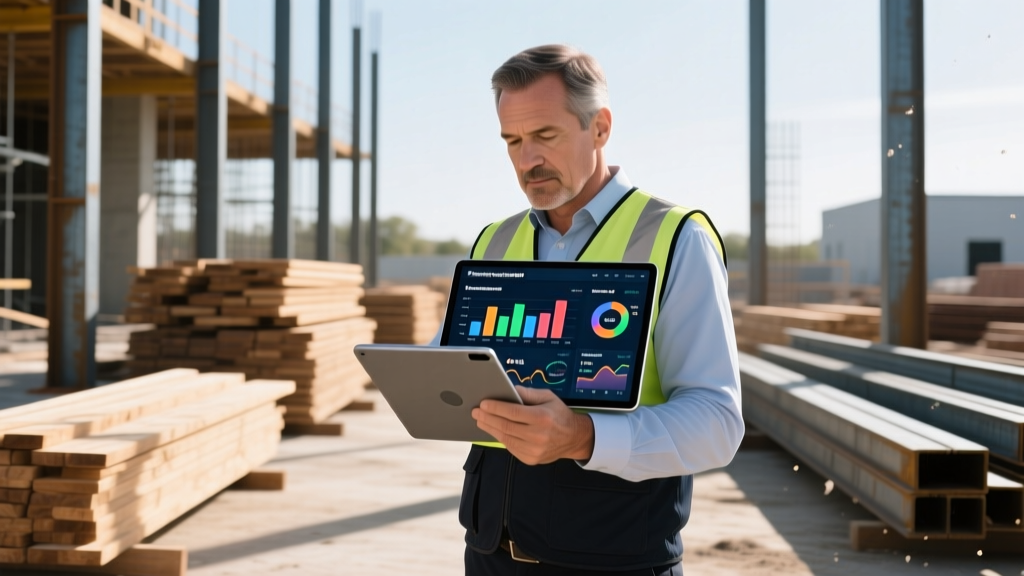
Decision Matrix: Marketplace vs. Traditional Lumberyard
Despite the advantages of digital platforms, traditional distributors still hold distinct advantages in specific scenarios. Procurement teams must apply a strategic framework to determine the optimal sourcing channel for different material categories.
When to Use the Online Marketplace
- High-Volume Commodity Orders: Full truckloads of drywall, insulation, or roofing membranes where a 5% fee difference translates to thousands of dollars in savings.
- Specialty or Long-Lead Items: Custom architectural glazing, specific HVAC RTUs (Roof Top Units), or rare stone veneers where national marketplaces have broader manufacturer access than local yards.
- Multi-State Rollouts: When a developer is building identical prototypes across five different states, a centralized marketplace ensures material consistency and unified pricing across all sites.
When to Stick with the Traditional Distributor
- Emergency / Same-Day Replenishment: If a crew runs out of specific fasteners or joint compound at 10:00 AM, the local branch's will-call counter remains unbeatable for immediate resolution.
- High-Touch Fabrication Services: Materials that require on-site cutting, bending, or custom fabrication (like specialized rebar bending or custom millwork) still rely heavily on local distributor relationships and physical shop integration.
- Micro-Orders: Orders under $1,500 often do not justify the minimum freight thresholds or platform onboarding friction associated with digital B2B marketplaces.
The trajectory of the industry is clear. As reported by Dodge Construction Network, technology adoption is no longer optional for firms aiming to maintain competitive margins. The online marketplace for building materials has evolved from a niche alternative into a foundational pillar of modern construction logistics, demanding that project managers adapt their procurement strategies or risk being outbid by more technologically integrated competitors.
Written by
Priya KapoorPriya Kapoor is a real estate market analyst and construction economics researcher with expertise in housing affordability, development feasibility, and infrastructure investment. She holds a Master of Regional Planning from Cornell University and previously worked as a senior analyst at CBRE's Investment Properties group, where she modeled returns for $4B in mixed-use development pipelines. Priya now runs an independent research practice advising developers, municipalities, and REITs on construction cost forecasting and market timing. She publishes the quarterly "BuildMat Market Pulse" report tracking material price indices across 12 commodity categories. Based in Austin, TX, Priya serves on the board of Habitat for Humanity Austin and is a marathon runner.
More from Priya Kapoor
View all
Construction Cost
Cost to Build a 1600 Sq Ft Home in 2026: Full Breakdown
Accurate 2026 cost to build a 1600 sq ft home—material, labor, and regional pricing breakdowns included. Plan your budget with real-time estimates.
Aug 11, 2026

Wood & Lumber
Name the Types of Wood for Pressure Treatment and Preservation
Learn how to name the types of wood best suited for pressure treatment. Compare species treatability, chemical retention levels, and 2026 preservation costs.
Aug 4, 2026

Stone & Masonry
Stone Veneer Suppliers Lindenhurst: 2026 Cost Analysis
Analyze 2026 stone veneer costs in Lindenhurst, NY. Compare local supplier pricing, delivery fees, and Suffolk County installation labor rates.
Aug 4, 2026