Kapers Building Material Trends: 2026 Market Shifts
Analyze 2026 kapers building material trends, covering sintered stone pricing, PET acoustic panel specs, EPD compliance, and strategic procurement tactics.

The 2026 Shift: Why Specialized Material Portfolios Are Surging
The commercial and high-end residential construction sectors have fundamentally altered their procurement strategies over the last eighteen months. General contractors and architectural firms are increasingly pivoting away from commodity-grade big-box supplies, favoring specialized distributors and curated catalogs. When evaluating kapers building material options for 2026 projects, the focus has shifted entirely toward high-performance architectural finishes, bio-based composites, and advanced acoustic treatments. This transition is not merely aesthetic; it is driven by stringent new energy codes, updated LEED v5 material credit requirements, and a demand for lifecycle durability that standard gypsum and laminate cannot provide.
According to recent industry analyses by the Dodge Construction Network, projects specifying specialized, high-performance architectural materials have seen a 22% increase in year-over-year volume. Suppliers that offer technical data sheets, verified Environmental Product Declarations (EPDs), and fabrication support are capturing market share from traditional lumber and drywall yards. Understanding the specific material categories driving this shift is critical for estimators and project managers aiming to maintain competitive bids without sacrificing margin.
Core Material Categories Driving the Catalog
The modern specialized material portfolio is anchored by three primary categories that solve specific architectural and engineering challenges in contemporary builds.
Sintered Stone and Ultra-Compact Surfaces
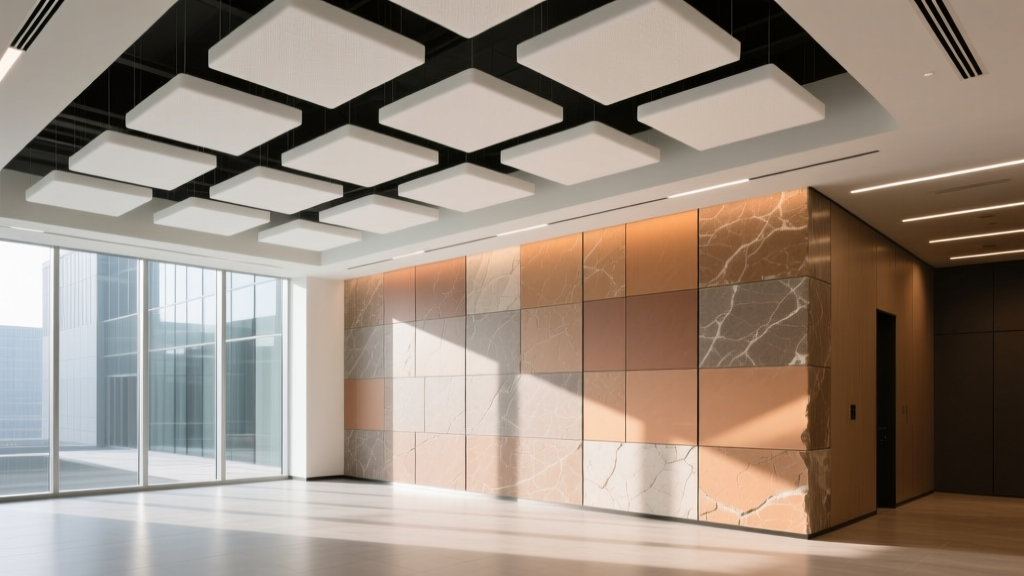
Sintered stone has effectively replaced natural quartz and solid surface materials in high-traffic commercial applications. Manufactured through extreme heat and pressure (mimicking metamorphic rock formation), these panels offer near-zero porosity. In 2026, the standard specification for commercial vanity tops and elevator cab wall cladding calls for 6mm ultra-compact panels, which reduce structural load by 40% compared to traditional 2cm stone while maintaining a Class A fire rating.
Bio-Based and PET Acoustic Treatments
Open-plan commercial offices and multi-family residential common areas require aggressive sound attenuation. Polyethylene terephthalate (PET) acoustic panels, manufactured from up to 60% post-consumer recycled plastics, are the current industry standard. The 2026 baseline specification demands a minimum Noise Reduction Coefficient (NRC) of 0.85 and a Class A flame spread index per ASTM E84. Unlike older fiberglass baffles that require fabric wrapping, modern PET panels are monolithic, eliminating the risk of fabric tearing or sagging over time.
High-Performance Rainscreen Cladding
Exterior moisture management has moved beyond simple weather-resistive barriers (WRBs). Ventilated rainscreen systems utilizing fiber-cement or ultra-high-performance concrete (UHPC) panels create a capillary break and an air cavity (typically 1.5 to 2 inches deep) that equalizes pressure and drains bulk water. These systems are now mandatory in many coastal and high-humidity building codes to prevent mold proliferation in the wall assembly.
2026 Material Pricing and Performance Matrix
| Material Category | Avg. Installed Cost (2026) | Fire Rating (ASTM E84) | Primary Application |
|---|---|---|---|
| 6mm Sintered Stone Panels | $45 - $65 / sq. ft. | Class A (Flame Spread 0) | Elevator cabs, feature walls |
| 12mm PET Acoustic Baffles | $12 - $18 / sq. ft. | Class A (Flame Spread < 25) | Open offices, auditoriums |
| UHPC Rainscreen Panels | $85 - $120 / sq. ft. | Non-combustible | Commercial facades, podiums |
| Bio-Based Wood Wool Boards | $9 - $14 / sq. ft. | Class A (with mineral binder) | Gymnasiums, mechanical rooms |
Sustainability Mandates and EPD Compliance
The most significant barrier to entry for general building materials in Tier 1 commercial projects is the lack of verified sustainability documentation. Under the latest U.S. Green Building Council (USGBC) guidelines, projects pursuing LEED certification must prioritize products with Type III Environmental Product Declarations (EPDs). An EPD acts as a nutrition label for building materials, detailing the global warming potential (GWP), ozone depletion, and acidification impacts of the product's lifecycle.
When sourcing kapers building material lines for institutional or corporate clients, project managers must request the EPD documentation during the submittal phase, not at the closeout phase. Materials lacking an EPD are routinely rejected by sustainability consultants, leading to costly change orders and schedule delays.
Do not accept generic "eco-friendly" marketing brochures in lieu of an EPD. The Whole Building Design Guide (WBDG) explicitly states that federal and high-tier commercial projects require ISO 14025 compliant, third-party verified EPDs. Manufacturer self-declarations do not satisfy LEED v5 Material and Resources credits.
Cost Dynamics: Upfront Premium vs. Lifecycle ROI
Specialized architectural materials carry a higher initial procurement cost compared to traditional assemblies. However, the 2026 underwriting models for commercial real estate heavily weigh lifecycle maintenance and replacement costs. The decision framework for specifying premium materials relies on the following trade-offs:
The Case for Premium Specialized Materials
- Maintenance Reduction: Sintered stone and UHPC require zero sealing, unlike natural marble or porous limestone, eliminating $2.50 to $4.00 per square foot in annual maintenance costs.
- Durability in High-Traffic Zones: Monolithic PET acoustic panels resist impact damage from carts and furniture, whereas fabric-wrapped fiberglass panels typically require replacement every 5 to 7 years in high-traffic corridors.
- Insurance Premiums: Non-combustible rainscreen cladding and Class A interior finishes can reduce builder's risk and long-term property insurance premiums by 8% to 12% in wildfire-prone or dense urban zones.
The Risks of Commodity Substitutions
- Moisture Intrusion: Value-engineering a rainscreen system to a direct-applied stucco or EIFS system increases the risk of trapped moisture, potentially leading to structural rot and litigation.
- Acoustic Failure: Substituting specified NRC 0.85 panels with cheaper NRC 0.50 mineral fiber tiles often results in failed post-occupancy acoustic testing, forcing the contractor to retrofit the ceiling at their own expense.
Strategic Procurement: Navigating 2026 Lead Times
Global supply chain volatility remains a factor, particularly for specialized finishes that rely on specific mineral imports or European manufacturing hubs. To secure kapers building material inventories without inflating the project budget through expedited freight charges, procurement teams must adopt a proactive sourcing methodology.
- Lock Submittals at 30% Design: Do not wait for 100% Construction Documents to initiate material submittals. Identify long-lead architectural finishes (like custom-color UHPC or large-format sintered stone) during the design development phase and secure preliminary pricing and lead-time guarantees.
- Utilize Regional Distribution Hubs: Prioritize materials stocked in domestic regional hubs rather than those requiring trans-oceanic shipping. A 12-week lead time for imported stone can be reduced to 3 weeks by specifying domestically pressed ultra-compact surfaces.
- Negotiate Staged Deliveries: For large-scale commercial fit-outs, negotiate staged delivery contracts with the supplier. This prevents site congestion, reduces the risk of material damage during on-site storage, and aligns material arrival with the specific trade's mobilization schedule.
- Order 10% Overages for Dye-Lot Consistency: Natural and manufactured stone products are subject to dye-lot variations. Always order a 10% overage from the same production batch to ensure seamless replacements for breakage during installation, avoiding visible color banding on large feature walls.
Future Outlook for Specialized Material Suppliers
The trajectory for specialized building material distributors is heavily skewed toward technical integration. The most successful suppliers in 2026 are those providing BIM (Building Information Modeling) objects directly to architectural firms, allowing their specific sintered stone profiles or acoustic baffle grids to be dropped directly into Revit models. This "spec-in" strategy locks the material into the project DNA long before the general contractor begins bidding. For contractors and estimators, building strong technical relationships with these specialized suppliers is no longer optional; it is a critical requirement for executing modern, code-compliant, and profitable commercial projects.
Written by
Sarah WhitfieldSarah Whitfield is a chartered quantity surveyor (MRICS) and construction cost analyst with 15 years of experience in material pricing, procurement strategy, and project budgeting. She earned her degree in Construction Management from the University of Reading (UK) and has worked on projects ranging from $2M custom homes to $180M mixed-use developments across North America and Europe. Sarah currently leads cost estimating for BuildMat Insight, maintaining a proprietary database of 4,000+ material price points updated quarterly. She is a frequent contributor to RSMeans cost data panels and has presented at the International Cost Engineering Council (ICEC) congress. Based in Denver, CO, Sarah is an avid trail runner and volunteer mentor for Women in Construction.
More from Sarah Whitfield
View all
Wood & Lumber
What Are the Different Types of Wood? A Builder's Guide
Compare structural softwoods, finish hardwoods, and engineered lumber. Analyze Janka ratings, MOE values, and 2026 pricing for construction.
Aug 4, 2026

Walls & Panels
Steel Framing vs Wood Framing: Corrosion and Moisture Defense
Compare steel framing vs wood framing for moisture resistance. Learn about galvanized coatings, condensation risks, and corrosion protection strategies.
Jul 21, 2026

Stone & Masonry
How to Cut Stone Veneer: Wet Saw vs Grinder Comparison
Compare the best tools for cutting stone veneer. We review wet saws, angle grinders, and chop saws to help you achieve clean, chip-free cuts.
Jul 21, 2026