Next-Gen Greenhouse Building Material Trends for 2026
Discover the 2026 greenhouse building material trends reshaping commercial CEA, from ETFE glazing and smart glass to pultruded FRP framing.

The Shift from Passive to Active Glazing
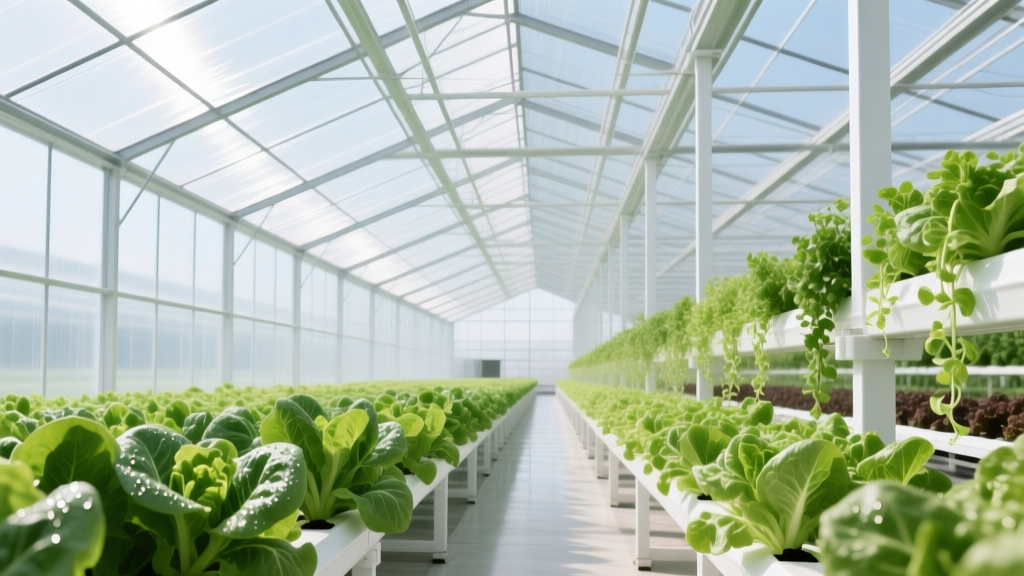
The commercial controlled environment agriculture (CEA) sector is undergoing a fundamental transformation in how it specifies enclosures. Historically, growers defaulted to 6-mil polyethylene film for budget operations or standard glass for premium builds. Today, the modern greenhouse building material landscape is dominated by advanced polymers and dynamic glazing systems designed to manipulate Photosynthetically Active Radiation (PAR) while minimizing thermal loss.
Ethylene Tetrafluoroethylene (ETFE) film has emerged as the premier greenhouse building material for high-light transmission applications. Unlike traditional polycarbonate, which degrades and yellows under UV exposure, 200-micron ETFE boasts a 95% PAR transmission rate and is virtually impervious to UV degradation. Crucially, ETFE allows UV light to penetrate the canopy, which naturally suppresses powdery mildew and botrytis spores, reducing chemical fungicide reliance by up to 30% in tomato and cucumber operations.
Simultaneously, electrochromic smart glass is moving from commercial architecture into high-tech botanical facilities. By applying a low-voltage current, growers can tint the glazing from 15% to 65% light transmission in seconds. This dynamic shading eliminates the need for mechanical shade curtains, reducing roof structural loads and maintenance downtime. According to research from the Controlled Environment Agriculture Center (CEAC), dynamic glazing can reduce summer cooling energy loads by 22% compared to static glass with deployed shade cloths.
2026 Glazing Performance Benchmarks
- ETFE (200-micron): 95% PAR transmission, 15-year lifespan, self-cleaning surface.
- 16mm Triple-Wall Polycarbonate: 79% PAR transmission, R-value of 2.5, 10-year warranty.
- Electrochromic Glass: 15%-65% tunable PAR, R-value of 1.1 (double pane), 20-year lifespan.
- 6-Mil Poly Film: 88% PAR transmission, R-value of 0.87, 3-year lifespan.
Structural Framing: Pultruded FRP vs. Extruded Aluminum
While glazing captures the spotlight, the structural skeleton supporting it dictates the facility's thermal envelope and condensation management. Extruded aluminum has been the industry standard for decades due to its high strength-to-weight ratio. However, aluminum's thermal conductivity (approximately 200 W/m·K) makes it a massive thermal bridge, drawing heat out of the greenhouse in winter and radiating it inward during summer.
The leading alternative in 2026 is Pultruded Fiberglass Reinforced Polymer (FRP). FRP profiles offer structural tensile strengths comparable to steel but with a thermal conductivity of just 0.3 W/m·K. This near-zero thermal bridging drastically reduces interior condensation drip—a primary vector for fungal diseases. Furthermore, FRP does not corrode in the high-humidity, high-salinity environments typical of hydroponic fertigation zones, outlasting galvanized steel and aluminum in coastal or geothermal-heated facilities. The upfront cost of FRP framing is roughly 18% higher than aluminum, but the elimination of thermal bridging typically yields a return on investment within 4.5 years through reduced heating costs.
Glazing Material Comparison Matrix
Selecting the right greenhouse building material requires balancing initial capital expenditure (CapEx) against long-term operational expenditure (OpEx). The matrix below outlines current market realities for commercial-scale deployments.
| Material Type | Installed Cost (per sq. ft.) | Thermal Resistance (R-Value) | PAR Transmission | Expected Lifespan | Primary Use Case |
|---|---|---|---|---|---|
| 6-Mil Poly Film | $0.25 - $0.40 | 0.87 | 88% | 3 - 4 Years | Seasonal hoophouses, low-CapEx startups |
| 8mm Twin-Wall Polycarbonate | $3.50 - $5.00 | 1.60 | 80% | 10 Years | Mid-tier commercial, moderate climates |
| 16mm Triple-Wall Polycarbonate | $6.00 - $8.50 | 2.50 | 79% | 15 Years | Year-round cold-climate operations (Zones 3-5) |
| ETFE Film (Single Layer) | $12.00 - $18.00 | 0.90 | 95% | 20+ Years | High-light vertical clerestories, botanical gardens |
| ETFE Pneumatic Cushion | $35.00 - $55.00 | 1.50 - 2.00 | 90% | 25+ Years | Premium research facilities, extreme weather zones |
Bio-Based Opaque Panels for North Walls
In the Northern Hemisphere, the north-facing wall of a greenhouse receives negligible direct solar radiation, making it a primary source of heat loss rather than light gain. The outdated practice of glazing the north wall with polycarbonate is being rapidly replaced by high-performance, bio-based opaque insulation panels.
Modern structural insulated panels (SIPs) utilizing mycelium-based cores or recycled denim batting encased in oriented strand board (OSB) are gaining traction. These panels achieve R-values between R-25 and R-40 at a fraction of the carbon footprint of petroleum-based polyisocyanurate foams. The Department of Energy Building Envelope Technologies office notes that upgrading opaque greenhouse envelopes to R-30 or higher can reduce winter heating loads by up to 40%. For growers in USDA Zones 5 and below, specifying a north wall constructed of 6-inch mycelium SIPs with an interior reflective aluminum vapor barrier is now considered a best practice for energy retention.
Decision Framework: Matching Material to USDA Hardiness Zones
There is no universal 'best' greenhouse building material; the optimal specification depends entirely on the facility's microclimate and crop light requirements. Use this framework to guide your material selection:
- USDA Zones 8-10 (Mild Winters, Hot Summers): Prioritize ventilation and shading. Specify single-layer ETFE or 8mm polycarbonate for the roof to maximize winter light, paired with automated roof vents. Use electrochromic glass or exterior shade paint to manage summer heat stress.
- USDA Zones 5-7 (Cold Winters, Warm Summers): Prioritize thermal retention. Specify 16mm triple-wall polycarbonate with an argon gas fill for the south and east roofs. Utilize pultruded FRP framing to eliminate condensation drip and thermal bridging. Install R-30 opaque SIPs on the north and west walls.
- USDA Zones 3-4 (Extreme Winters, Short Growing Seasons): Prioritize maximum insulation and snow load capacity. Specify pneumatic ETFE cushions (which shed snow effortlessly due to their inflated geometry) or 10mm twin-wall polycarbonate on steep-pitch roofs (minimum 6/12 pitch). Supplemental LED lighting is mandatory due to the lower PAR transmission of heavy insulation materials.
Supply Chain and Sourcing Realities
As demand for advanced CEA facilities accelerates, the supply chain for specialized greenhouse building materials has tightened. Lead times for custom-pultruded FRP structural profiles currently average 14 to 18 weeks, up from 8 weeks pre-2024. Similarly, architectural-grade ETFE film is heavily reliant on specialized extruders in Japan and Germany, meaning North American distributors often require a 12-week procurement window for large-scale commercial projects.
To mitigate supply chain risks, general contractors and facility developers are increasingly adopting modular greenhouse designs that utilize standardized panel sizes (e.g., 4x12-foot polycarbonate sheets and standardized FRP truss spans). According to the Food and Agriculture Organization (FAO), standardizing material dimensions not only reduces custom fabrication delays but also minimizes on-site cutting waste by up to 18%. When sourcing, always request independent laboratory test reports for PAR transmission and UV-stabilizer concentration (measured in HALS - Hindered Amine Light Stabilizers) rather than relying solely on manufacturer spec sheets, as batch-to-batch variations in polycarbonate extrusions can significantly impact crop yields over a 10-year lifecycle.
Written by
Priya KapoorPriya Kapoor is a real estate market analyst and construction economics researcher with expertise in housing affordability, development feasibility, and infrastructure investment. She holds a Master of Regional Planning from Cornell University and previously worked as a senior analyst at CBRE's Investment Properties group, where she modeled returns for $4B in mixed-use development pipelines. Priya now runs an independent research practice advising developers, municipalities, and REITs on construction cost forecasting and market timing. She publishes the quarterly "BuildMat Market Pulse" report tracking material price indices across 12 commodity categories. Based in Austin, TX, Priya serves on the board of Habitat for Humanity Austin and is a marathon runner.
More from Priya Kapoor
View all
Construction Cost
Cost to Build a 1600 Sq Ft Home in 2026: Full Breakdown
Accurate 2026 cost to build a 1600 sq ft home—material, labor, and regional pricing breakdowns included. Plan your budget with real-time estimates.
Aug 11, 2026

Wood & Lumber
Name the Types of Wood for Pressure Treatment and Preservation
Learn how to name the types of wood best suited for pressure treatment. Compare species treatability, chemical retention levels, and 2026 preservation costs.
Aug 4, 2026

Stone & Masonry
Stone Veneer Suppliers Lindenhurst: 2026 Cost Analysis
Analyze 2026 stone veneer costs in Lindenhurst, NY. Compare local supplier pricing, delivery fees, and Suffolk County installation labor rates.
Aug 4, 2026