Salvage Building Materials Inc Winston Salem: Cost Analysis
Analyze the true costs of sourcing from Salvage Building Materials Inc in Winston Salem. Compare reclaimed vs. new pricing and hidden fees.

The Economics of Architectural Reclamation in the Piedmont Triad
When local contractors, historic preservationists, and custom home builders search for a dedicated salvage building materials Inc in Winston Salem, they are targeting a highly specific procurement strategy. The Piedmont Triad region, rich with abandoned textile mills, mid-century manufacturing plants, and historic tobacco warehouses, offers a dense inventory of reclaimed materials. However, the sticker price at a local salvage yard rarely reflects the true landed cost of the material. A rigorous cost analysis requires factoring in remediation, code compliance, and fabrication delays. This guide breaks down the actual financial impact of sourcing reclaimed materials in Forsyth County and the surrounding Winston-Salem market.
Baseline Pricing Matrix: Reclaimed vs. New Materials
The following matrix compares current market rates for new building materials against typical salvage yard pricing in the Winston-Salem area. These figures represent raw material costs before any necessary restoration or milling.
| Material Type | New Market Rate (2026) | Salvage Yard Rate | Required Prep / Remediation | True Net Cost |
|---|---|---|---|---|
| Longleaf Heart Pine Flooring (per sq. ft.) | $9.50 - $14.00 | $4.00 - $7.50 | De-nailing, kiln drying, planing ($3.50/sq. ft.) | $7.50 - $11.00 |
| Red Clay Brick (per unit) | $0.65 - $0.90 | $0.45 - $0.75 | Mortar removal, power washing ($0.35/unit) | $0.80 - $1.10 |
| Cast Iron Clawfoot Tub (per unit) | $1,800 - $3,500 | $400 - $900 | Enamel refinishing, plumbing adaptation ($800+) | $1,200 - $1,700 |
| Solid Bronze Mortise Lockset (per unit) | $450 - $800 | $120 - $250 | Internal mechanism rebuild, polishing ($150) | $270 - $400 |
| Corrugated Tin Roofing (per sq.) | $180 - $240 | $90 - $130 | Rust treatment, flattening, re-drilling ($45/sq.) | $135 - $175 |
As the data indicates, salvage materials almost always carry a lower true net cost than premium new equivalents, but they rarely beat the price of entry-level new materials. The financial justification for salvage relies on acquiring premium-grade materials (like old-growth heart pine or solid bronze) at mid-tier prices.
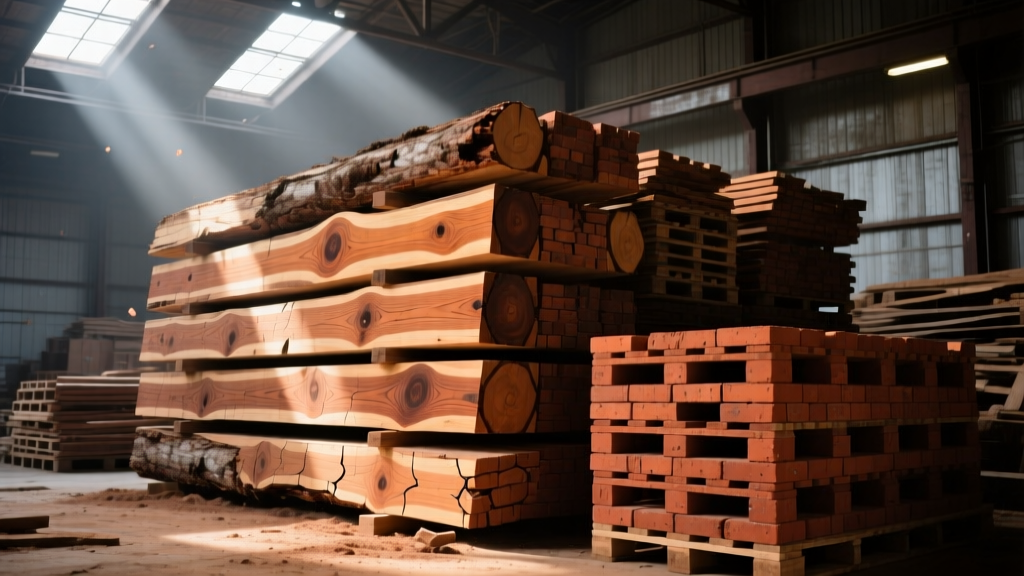
Hidden Cost Variables of Architectural Salvage
Sourcing from a salvage building materials Inc in Winston Salem introduces several hidden cost variables that can rapidly erode projected savings if not underwritten during the initial budgeting phase.
Materials sourced from pre-1978 structures in Winston-Salem's older neighborhoods (such as the West End Historic District or Washington Park) frequently contain lead-based paint. Under EPA guidelines for deconstruction and salvage, contractors must account for lead testing and safe abatement. Stripping lead paint from salvage trim costs approximately $4.00 to $8.00 per linear foot, which can instantly double the cost of reclaimed baseboards and crown molding.
Milling and Dimensional Shrinkage
Reclaimed dimensional lumber is rarely true to its nominal size. A salvaged 2x4 from a 1920s Winston-Salem tobacco warehouse is actually a full 2 inches by 4 inches. To use this material for modern framing or finish carpentry, it must be planed down to modern standards (1.5" x 3.5"). This milling process reduces the yield by up to 15% and adds $1.50 to $2.50 per board foot in local millwork fees. Furthermore, old-growth timber must be kiln-dried to acclimate to modern HVAC environments; skipping this step in North Carolina's high-humidity climate guarantees severe warping and joint failure post-installation.
Hardware and Electrical Remediation
Salvaged light fixtures and plumbing valves require extensive retrofitting to meet current Forsyth County building codes. A salvaged brass chandelier must be entirely rewired with modern, UL-listed components to pass electrical inspection, a process that typically costs $120 to $250 per fixture at a specialized lighting repair shop. Similarly, salvaged plumbing valves often require new internal seals and stems to prevent catastrophic leaks, adding $40 to $75 per valve in machinist labor.
Navigating the Winston-Salem Salvage Ecosystem
The local salvage market is segmented into three distinct tiers, each with different pricing structures, inventory reliability, and overhead costs.
- Specialized Architectural Salvage Yards: These businesses curate high-end materials (stained glass, antique hardware, old-growth flooring). Prices are heavily marked up (often 300% over acquisition cost), but the materials are pre-cleaned, tested, and guaranteed. Best for: High-budget historic restorations where time is a critical constraint.
- Non-Profit Reclamation Centers: Facilities like the local Habitat for Humanity ReStore offer massive price discounts on surplus and lightly used materials. Inventory is highly unpredictable and requires frequent, time-consuming visits. Best for: Budget-conscious renovations, DIY builders, and non-structural elements like doors and cabinetry.
- Direct-from-Demo Sourcing: Purchasing directly from demolition contractors tearing down local industrial sites yields the lowest per-unit cost. However, this transfers 100% of the extraction, cleaning, and transport liability to the buyer. You must also carry independent liability insurance to enter active demo sites.
Code Compliance and Structural Limitations
A critical, often overlooked cost in salvage procurement is structural engineering validation. Forsyth County building inspectors will not approve reclaimed lumber for load-bearing applications unless it bears a recognized grading stamp or is accompanied by a structural engineer's certification. Sourcing a stamped engineer's letter to validate a batch of salvaged floor joists typically costs $400 to $800 per site visit. Consequently, salvage structural lumber is only cost-effective on large-scale commercial projects where the engineering fee can be amortized across thousands of board feet.
Decision Framework: When to Specify Salvage
Use the following framework to determine if reclaimed materials are financially viable for your specific project phase:
Specify Salvage When:
- The project requires historically accurate materials for a designated historic district overlay (where modern substitutes are legally prohibited).
- You are sourcing finish-grade materials (flooring, mantels, hardware) where the patina and old-growth density cannot be replicated by modern manufacturing.
- The project timeline includes a 4-to-8-week buffer for material hunting, de-nailing, and custom milling.
Specify New Materials When:
- The material is intended for structural, load-bearing framing (due to engineering stamp costs and liability).
- The project is operating on a strict, compressed timeline where material delays will trigger liquidated damages.
- You require standardized warranties and uniform dimensional tolerances for automated CNC fabrication.
"The true value of architectural salvage in the Piedmont Triad is not found in beating the price of big-box store lumber. It is found in acquiring irreplaceable, old-growth material density and historical provenance at a fraction of the cost of custom-milled new equivalents."
Ultimately, a successful cost analysis for salvage building materials in Winston Salem requires looking past the initial yard tag. By accurately underwriting the hidden costs of milling, lead abatement, and code-compliance retrofitting, builders can leverage the region's rich industrial salvage market to deliver high-end, historically resonant projects without compromising the bottom line.
Written by
Sarah WhitfieldSarah Whitfield is a chartered quantity surveyor (MRICS) and construction cost analyst with 15 years of experience in material pricing, procurement strategy, and project budgeting. She earned her degree in Construction Management from the University of Reading (UK) and has worked on projects ranging from $2M custom homes to $180M mixed-use developments across North America and Europe. Sarah currently leads cost estimating for BuildMat Insight, maintaining a proprietary database of 4,000+ material price points updated quarterly. She is a frequent contributor to RSMeans cost data panels and has presented at the International Cost Engineering Council (ICEC) congress. Based in Denver, CO, Sarah is an avid trail runner and volunteer mentor for Women in Construction.
More from Sarah Whitfield
View all
Wood & Lumber
What Are the Different Types of Wood? A Builder's Guide
Compare structural softwoods, finish hardwoods, and engineered lumber. Analyze Janka ratings, MOE values, and 2026 pricing for construction.
Aug 4, 2026

Walls & Panels
Steel Framing vs Wood Framing: Corrosion and Moisture Defense
Compare steel framing vs wood framing for moisture resistance. Learn about galvanized coatings, condensation risks, and corrosion protection strategies.
Jul 21, 2026

Stone & Masonry
How to Cut Stone Veneer: Wet Saw vs Grinder Comparison
Compare the best tools for cutting stone veneer. We review wet saws, angle grinders, and chop saws to help you achieve clean, chip-free cuts.
Jul 21, 2026