Shed Building Materials Compared: Wood vs Metal vs Resin
Compare top shed building materials including wood, metal, and resin. Analyze costs, durability, and insulation to choose the right option for your yard.

The Core Trio: Wood, Metal, and Resin Sheds
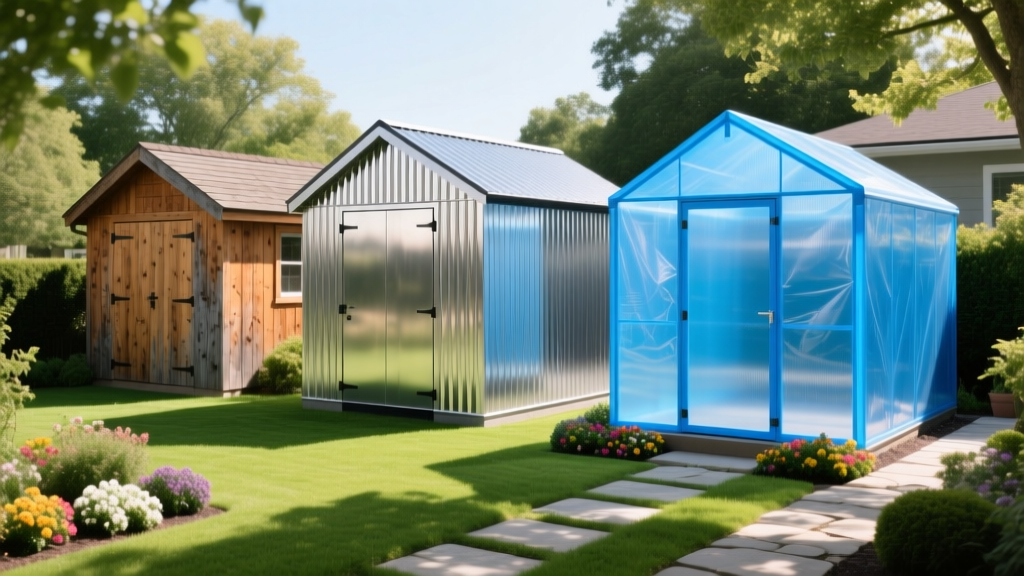
Selecting the right shed building materials dictates not only the upfront cost but also the structure's longevity, maintenance requirements, and structural integrity under local weather loads. The market is dominated by three primary material categories: engineered or natural wood, galvanized steel, and high-density polyethylene (HDPE) resin. Each material behaves distinctly when exposed to UV radiation, moisture, and thermal expansion. This comparison evaluates the technical specifications, failure modes, and real-world costs of each option to help you make an informed decision.
| Material Category | Avg. Cost (per sq. ft.) | Expected Lifespan | Wind Load Resistance | Maintenance Level |
|---|---|---|---|---|
| Engineered Wood (e.g., LP SmartSide) | $18 - $28 | 30 - 50 Years | High (130+ mph when braced) | Moderate (Paint/Stain every 5-7 yrs) |
| Natural Wood (Western Red Cedar) | $35 - $55 | 20 - 40 Years | High (130+ mph when braced) | Moderate (Sealing every 3-5 yrs) |
| Metal (24-Gauge Galvalume Steel) | $12 - $22 | 40 - 60 Years | Moderate to High (Depends on framing) | Low (Inspect for scratches/rust) |
| Resin (Double-Wall HDPE) | $22 - $40 | 15 - 25 Years | Low to Moderate (Requires deep anchoring) | Very Low (Wash with soap/water) |
Wood Sheds: The Customizable Classic
Wood remains the most versatile of all shed building materials, allowing for on-site modifications, custom shelving, and seamless integration with existing residential architecture. However, 'wood' is a broad category that encompasses everything from cheap plywood to advanced engineered substrates.
Material Specs: T1-11 vs. Engineered Wood vs. Cedar
T1-11 plywood siding is a traditional choice, featuring routed grooves to simulate board-and-batten. While cost-effective ($10-$15 per sheet), standard T1-11 is highly susceptible to delamination and bottom-edge wicking if it contacts soil or splash zones.
For superior durability, engineered wood products like LP SmartSide utilize a strand wood substrate treated with zinc borate to resist termites and fungal decay. According to the American Wood Protection Association (AWPA) guidelines, ensuring your wood treatments meet specific use-category standards is critical for ground-clearance applications. SmartSide panels feature a resin-saturated overlay that provides a highly paintable surface and exceptional impact resistance.
Western Red Cedar offers natural rot resistance due to its high extractive content (thujaplicins), but it is expensive and requires periodic UV-blocking sealants to prevent it from weathering to a silvery-gray and checking (cracking) over time.
Failure Modes & Fastener Compatibility
The most common failure mode in wood sheds is fastener corrosion leading to structural loosening. If you are using pressure-treated lumber for the floor joists or sill plates (which are typically treated with Alkaline Copper Quaternary or ACQ), the copper in the preservative is highly corrosive to standard steel and aluminum. You must use hot-dipped galvanized fasteners meeting ASTM A153 standards, or stainless steel. Using electroplated 'zinc-washed' screws will result in severe corrosion within three to five years.
Metal Sheds: The Budget Utility Option
Metal sheds are frequently chosen for their low upfront cost and fire resistance. However, the market is flooded with ultra-thin, big-box store models that dent in minor hailstorms and collapse under light snow loads. Evaluating metal shed building materials requires a strict focus on gauge thickness and protective coatings.
Gauge Thickness and Coating Technologies
Steel gauge is counterintuitive: a lower number indicates a thicker panel. Cheap utility sheds often use 31-gauge or 29-gauge steel, which is roughly 0.012 inches thick—barely stronger than heavy foil. For a durable structure, specify a minimum of 26-gauge (0.0179 inches) for walls and 24-gauge (0.0239 inches) for roofs to handle snow loads and resist 'oil-canning' (visible waviness caused by thermal expansion).
Look for Galvalume coatings (an aluminum-zinc alloy, typically designated as AZ50 or AZ55) rather than standard galvanized (G90) coatings. The Metal Construction Association notes that Galvalume provides up to four times the corrosion resistance of standard galvanized steel in rural and moderate industrial environments, making it the superior choice for long-term panel survival.
Condensation and Rust Risks
Metal is highly conductive, meaning the interior of a metal shed will rapidly cool below the dew point on humid nights, causing severe condensation. This 'sweating' drips onto stored tools and equipment. To mitigate this, premium metal sheds feature an anti-condensation fleece backing (often a polyester felt applied at the factory) that absorbs and slowly releases moisture, or you must install a separate vapor barrier and ventilation system.
'A metal shed is only as strong as its internal framing. A 24-gauge steel skin wrapped around a 2x3 pine frame will fail at the joints during high winds before the steel itself yields.' — Structural framing guidelines for light-gauge accessory buildings.
Resin (Plastic) Sheds: The Zero-Maintenance Contender
Resin sheds have evolved significantly from the brittle, single-wall plastic bins of the past. Modern high-end models utilize double-wall blow-molded High-Density Polyethylene (HDPE), offering a rigid, maintenance-free alternative to wood and metal.
HDPE Formulations and Structural Rigidity
Double-wall HDPE panels feature an outer and inner skin connected by a ribbed internal web, mimicking the structural profile of corrugated cardboard but in plastic. This design provides excellent insulation properties and impact resistance. However, because resin lacks the tensile strength of wood or steel, large resin sheds (over 8x10 feet) require internal steel-reinforced roof trusses and powder-coated steel wall columns to prevent sagging under snow loads.
UV Degradation and Anchoring Requirements
Unprotected plastic becomes brittle and shatters after a few seasons of sun exposure. High-quality resin shed building materials incorporate Hindered Amine Light Stabilizers (HALS) and UV inhibitors directly into the polyethylene resin during the extrusion process, not just as a surface coating. This ensures the panels remain flexible and impact-resistant for decades.
The critical vulnerability of resin sheds is wind uplift. Because they are relatively lightweight and feature large, flat wall surfaces, they act like sails in high winds. Resin sheds cannot rely on their own weight to stay grounded. They must be anchored using heavy-duty auger anchors driven at least 30 inches into undisturbed soil, or wedge anchors driven into a cured concrete slab, directly through the reinforced floor grommets provided by the manufacturer.
Decision Framework: Which Material Fits Your Climate?
Choosing between these shed building materials should be heavily influenced by your local microclimate. Use the following framework to match the material to your environmental stressors:
- High Humidity / Coastal Zones: Avoid standard metal sheds due to rapid salt-spray corrosion. Choose HDPE resin or naturally rot-resistant Cedar. If using engineered wood, ensure all cut edges are heavily sealed with a zinc-borate field treatment.
- Heavy Snow Load Regions (50+ PSF): Resin and cheap metal sheds will collapse. You must use a wood shed with engineered roof trusses (e.g., 2x4 top chords with metal gusset plates) spaced no more than 24 inches on center, or a heavy-gauge (14-gauge steel frame) metal building.
- High Wind / Hurricane Zones: Wood sheds, when properly tied down with Simpson Strong-Tie hurricane ties and anchored to a concrete pier foundation, offer the best localized repairability and structural resilience. Check local FEMA Building Science publications for accessory structure wind-load requirements in your zip code.
- Arid / High UV Deserts: Wood requires constant resealing to prevent checking, and metal sheds can turn into ovens that damage stored chemicals or tools. Double-wall resin sheds with UV inhibitors perform exceptionally well here, offering thermal breaks that keep the interior significantly cooler.
Foundation and Sill Plate Considerations
Regardless of the wall and roof materials selected, the foundation dictates the ultimate lifespan of the shed. A shed placed directly on bare soil will wick moisture, rotting wooden floor joists and rusting metal floor runners within a few years.
For wood and metal sheds, a 4-inch crushed gravel pad (using 3/4-inch crushed stone with fines) contained within a pressure-treated timber perimeter provides excellent drainage and frost-heave mitigation. The wooden floor joists resting on this gravel must be pressure-treated to a minimum retention level of UC4A (Ground Contact) as defined by the AWPA. For resin sheds, which often include an integrated plastic floor, a perfectly level gravel pad or a poured concrete slab is mandatory; if the base is uneven by more than half an inch, the interlocking resin wall panels will fail to latch properly, compromising the entire structure's rigidity and weatherproofing.
By matching the specific technical properties of wood, metal, or resin to your budget, climate, and intended use case, you can ensure your accessory structure remains functional and structurally sound for decades.
Written by
Priya KapoorPriya Kapoor is a real estate market analyst and construction economics researcher with expertise in housing affordability, development feasibility, and infrastructure investment. She holds a Master of Regional Planning from Cornell University and previously worked as a senior analyst at CBRE's Investment Properties group, where she modeled returns for $4B in mixed-use development pipelines. Priya now runs an independent research practice advising developers, municipalities, and REITs on construction cost forecasting and market timing. She publishes the quarterly "BuildMat Market Pulse" report tracking material price indices across 12 commodity categories. Based in Austin, TX, Priya serves on the board of Habitat for Humanity Austin and is a marathon runner.
More from Priya Kapoor
View all
Construction Cost
Cost to Build a 1600 Sq Ft Home in 2026: Full Breakdown
Accurate 2026 cost to build a 1600 sq ft home—material, labor, and regional pricing breakdowns included. Plan your budget with real-time estimates.
Aug 11, 2026

Wood & Lumber
Name the Types of Wood for Pressure Treatment and Preservation
Learn how to name the types of wood best suited for pressure treatment. Compare species treatability, chemical retention levels, and 2026 preservation costs.
Aug 4, 2026

Stone & Masonry
Stone Veneer Suppliers Lindenhurst: 2026 Cost Analysis
Analyze 2026 stone veneer costs in Lindenhurst, NY. Compare local supplier pricing, delivery fees, and Suffolk County installation labor rates.
Aug 4, 2026