Cost Analysis: Skyrim Building Materials ID vs Real-World Pricing
Discover how virtual economies mirror real construction. We compare a Skyrim building materials ID with 2026 real-world lumber, stone, and steel costs.
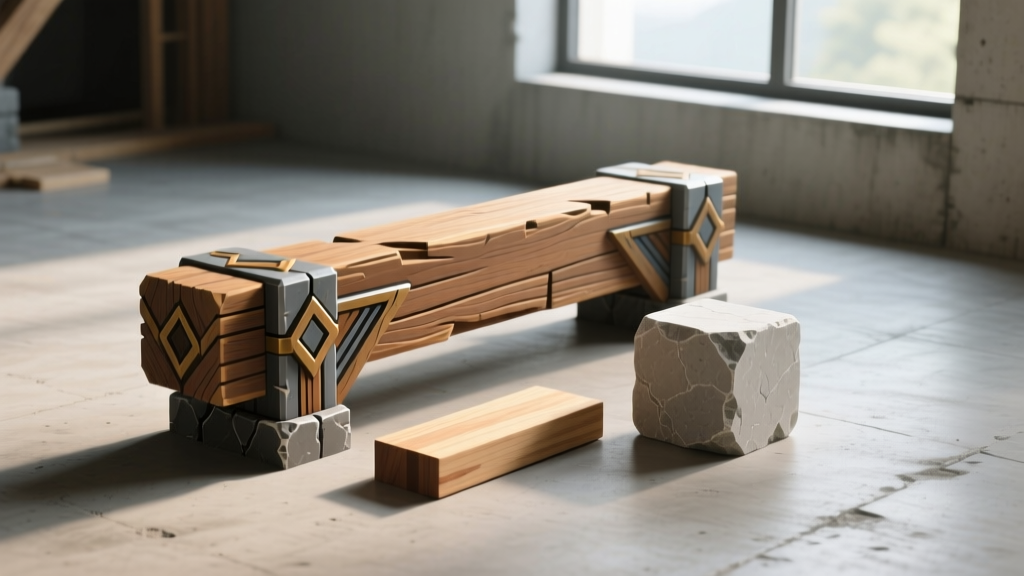
The Economics of Virtual Construction
At first glance, querying a Skyrim building materials ID seems strictly confined to the realm of video game modding and console commands. However, for construction estimators and supply chain analysts, the Hearthfire expansion of The Elder Scrolls V: Skyrim offers a fascinating, albeit simplified, sandbox for studying resource scarcity, material tracking, and labor-to-material cost ratios. When players use commands like player.additem 00030030 100 to instantly spawn sawn logs, they are essentially bypassing the virtual supply chain—acting as project managers expediting materials to avoid labor bottlenecks.
By analyzing the in-game economy of Tamriel and contrasting it with 2026 real-world construction pricing, we can extract surprising insights into how raw material extraction, manufacturing markups, and labor costs dictate the final price of residential builds. This cost analysis bridges virtual hex codes with real-world MasterFormat tracking to explore the true cost of building an estate.
Decoding the Hearthfire Supply Chain
In the game, constructing a homestead requires a rigid bill of materials (BOM). Unlike real-world estimating, where material specs can be swapped (e.g., substituting I-joists for dimensional lumber), the virtual engine demands exact quantities of specific items. The primary materials and their corresponding IDs include:
- Sawn Logs (ID: 00030030): The structural framing equivalent. Purchased from mill operators or logged manually.
- Clay (ID: 0005A69C): Used for wattle-and-daub walls and foundation grading. Extracted from riverbanks.
- Quarried Stone (ID: 0005A69D): The foundation and masonry component. Mined from cliff faces.
- Iron Fittings (ID: 0005A69E): Structural connectors, hinges, and nails. Forged from iron ore.
- Glass (ID: 0005A69B): Fenestration and windowpanes. Purchased from general goods merchants.
According to the definitive Unofficial Elder Scrolls Pages (UESP), a standard three-section homestead requires roughly 30 sawn logs, 60 clay units, and 40 quarried stones. To understand the economic weight of this BOM, we must translate Tamriel's gold standard into 2026 USD construction costs.

Material Cost Matrix: Tamriel Gold vs. 2026 USD
The following matrix compares the in-game acquisition costs with current real-world market rates for equivalent residential building materials. Real-world costs reflect 2026 national averages for residential stick-frame and masonry construction.
| Material | Skyrim Item ID | In-Game Cost (Gold/Unit) | 2026 Real-World Equivalent | 2026 Real Cost (USD) |
|---|---|---|---|---|
| Sawn Log | 00030030 | 20g (Mill Purchase) | Dimensional Lumber (2x6x10 SPF) | $7.50 - $9.20 / piece |
| Clay | 0005A69C | 0g (Mined) | Rammed Earth / Masonry Clay | $180 - $250 / ton |
| Quarried Stone | 0005A69D | 0g (Mined) | Natural Stone Veneer / Footings | $14.00 - $22.00 / sq ft |
| Iron Fittings | 0005A69E | ~15g (Forged) | Simpson Strong-Tie Joist Hangers | $1.85 - $3.50 / unit |
| Glass | 0005A69B | 25g (Merchant) | Low-E Dual-Pane Glazing | $18.00 - $28.00 / sq ft |
The 'Free' Resource Fallacy: Labor vs. Material
One of the most glaring economic discrepancies in the virtual model is the treatment of clay and quarried stone. In the game, these materials have a material cost of zero; the player simply equips a pickaxe and mines them. However, in real-world construction estimating, 'free' raw materials do not exist. The cost is simply shifted from the material ledger to the labor and equipment ledger.
Excavation and Quarrying Economics
If a 2026 general contractor attempts to source their own quarried stone or clay rather than buying from a supplier, they face heavy equipment and labor overhead. According to the National Association of Home Builders (NAHB), supply chain localization often increases upfront labor costs even when material markups are avoided.
Manufactured Components: Iron Fittings and Glass
Where the virtual economy accurately mirrors real-world construction is in the markup of manufactured goods. Raw iron ore in the game is cheap, but smelting it into ingots and forging Iron Fittings (ID: 0005A69E) requires access to a forge and time. Similarly, real-world structural steel connectors (like Simpson Strong-Tie LUS210-18 hangers) are inexpensive per unit ($1.85), but the manufacturing, galvanization, and distribution network adds a 400% markup from the raw iron commodity price.
Glass represents the ultimate supply chain bottleneck in both worlds. In Skyrim, players cannot craft glass for buildings; they must buy it from merchants at a premium (25 gold per unit). In 2026, residential fenestration remains one of the most expensive and lead-time-heavy components of a build. Custom Low-E argon-filled dual-pane windows carry high manufacturing energy costs and fragile logistics requirements, keeping prices firmly in the $18 to $28 per square foot range, regardless of lumber market fluctuations.
From Hex Codes to MasterFormat: How Real Estimators Track IDs
When a gamer types a Skyrim building materials ID into the console, they are utilizing a rudimentary database query to spawn an asset. Real-world construction estimators use a vastly more complex, standardized system to track materials across global supply chains.
Rather than 8-character hex codes, the construction industry relies on the Construction Specifications Institute (CSI) MasterFormat and OmniClass tables. For example:
- Sawn Logs (00030030) translates to MasterFormat 06 11 00 - Wood Framing.
- Quarried Stone (0005A69D) translates to MasterFormat 04 43 00 - Stone Masonry.
- Iron Fittings (0005A69E) translates to MasterFormat 05 10 00 - Structural Metal Framing / Connectors.
In modern Building Information Modeling (BIM), every 3D object is tagged with a unique GUID (Globally Unique Identifier) and linked to a live cost database like RSMeans. If a project manager in 2026 needs to 'spawn' 500 board feet of lumber, they don't use a console command; they update the BIM parameter, which automatically triggers a procurement API to check local distributor inventory and lock in current market pricing.
Final Estimating Verdict
Analyzing a Skyrim building materials ID through the lens of a professional cost estimator reveals the fundamental truths of construction economics. Whether you are building a homestead in the virtual tundra of Hjaalmarch or a 3,500-square-foot custom build in 2026 Colorado, the rules remain identical: raw materials are only as cheap as the labor required to extract them, and manufactured components will always command a premium due to processing and logistics. While gamers can bypass the supply chain with a simple keystroke, real-world estimators must rely on precise MasterFormat tracking, rigorous labor burden calculations, and deep supplier relationships to keep projects under budget.
Written by
Priya KapoorPriya Kapoor is a real estate market analyst and construction economics researcher with expertise in housing affordability, development feasibility, and infrastructure investment. She holds a Master of Regional Planning from Cornell University and previously worked as a senior analyst at CBRE's Investment Properties group, where she modeled returns for $4B in mixed-use development pipelines. Priya now runs an independent research practice advising developers, municipalities, and REITs on construction cost forecasting and market timing. She publishes the quarterly "BuildMat Market Pulse" report tracking material price indices across 12 commodity categories. Based in Austin, TX, Priya serves on the board of Habitat for Humanity Austin and is a marathon runner.
More from Priya Kapoor
View all
Construction Cost
Cost to Build a 1600 Sq Ft Home in 2026: Full Breakdown
Accurate 2026 cost to build a 1600 sq ft home—material, labor, and regional pricing breakdowns included. Plan your budget with real-time estimates.
Aug 11, 2026

Wood & Lumber
Name the Types of Wood for Pressure Treatment and Preservation
Learn how to name the types of wood best suited for pressure treatment. Compare species treatability, chemical retention levels, and 2026 preservation costs.
Aug 4, 2026

Stone & Masonry
Stone Veneer Suppliers Lindenhurst: 2026 Cost Analysis
Analyze 2026 stone veneer costs in Lindenhurst, NY. Compare local supplier pricing, delivery fees, and Suffolk County installation labor rates.
Aug 4, 2026