Sourcing Building Materials for Free: Reclaim & Salvage Guide
Discover how to source building materials for free through salvage, reclamation, and surplus negotiation. A comprehensive guide to zero-cost construction.

The Economics of Zero-Cost Construction
The pursuit of building materials for free requires a fundamental shift in how you value construction inputs. In commercial and residential building, 'free' is rarely an absence of cost; it is an exchange of financial capital for sweat equity. When you bypass the supply chain and source reclaimed, salvaged, or surplus materials, you are trading your labor—de-nailing, deconstructing, and transporting—for the material's market value. With dimensional lumber prices remaining volatile and supply chain bottlenecks affecting specialty finishes, mastering material reclamation is a highly viable strategy for DIY builders, eco-conscious developers, and community projects.
According to the Environmental Protection Agency (EPA), deconstruction and salvage can divert up to 90% of building waste from landfills. However, sourcing these materials at zero cost requires navigating municipal bulk waste schedules, negotiating directly with general contractors, and understanding the structural limitations of aged materials. This guide outlines the exact protocols, tools, and safety standards required to build with reclaimed materials safely and legally.
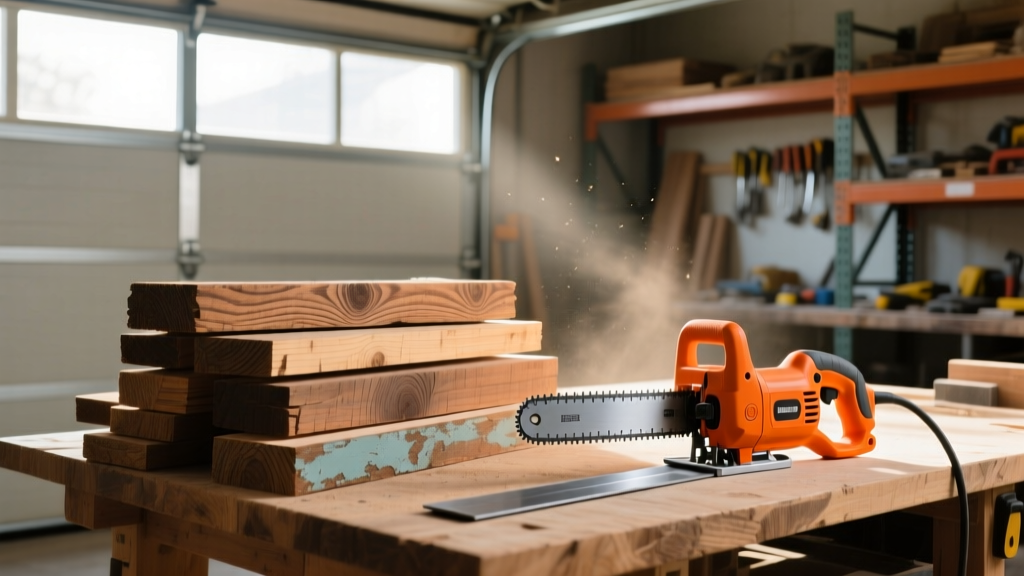
Top 5 Channels to Source Building Materials for Free
1. Municipal Bulk Waste and Curb-Side Salvage
Most municipalities operate a 'bulk pickup' schedule where residents can leave large items, including construction debris, cabinetry, and lumber, on the curb for municipal hauling. The critical window for reclamation is the 12 to 24 hours before the scheduled municipal truck arrives. Focus on affluent neighborhoods undergoing rapid renovation cycles, where high-end materials like solid hardwood flooring, granite remnants, and custom millwork are frequently discarded due to minor cosmetic flaws or design changes rather than structural failure.
2. Active Job Site Surplus Negotiation
General contractors (GCs) pay significant fees for dumpster rentals and waste hauling. If you approach a site superintendent and offer to remove specific surplus materials—such as off-cuts of dimensional lumber, unused drywall sheets, or excess insulation—you are providing a free waste-diversion service. Protocol: Never enter a fenced site without permission. Approach the site trailer during non-critical hours (typically between 2:00 PM and 4:00 PM), present yourself professionally, and offer to sign a liability waiver releasing the GC from any injury claims related to material removal.
3. Industrial Pallet Yards and Shipping Crates
Manufacturing facilities, stone yards, and heavy equipment dealers receive materials on heavy-duty industrial pallets and timber crates. Unlike standard grocery store pallets, industrial crates are often built from high-grade, thick-sawn oak or southern yellow pine. Many facilities consider these crates a disposal problem and will allow you to dismantle and remove them for free, provided you clear the debris entirely.
4. Online Buy-Nothing Groups and Freecycle Networks
Hyper-local networks like the Buy Nothing Project or Freecycle are goldmines for finishing materials. Homeowners frequently give away leftover boxes of ceramic tile, unopened gallons of premium paint, and removed light fixtures. Set up keyword alerts on local community boards for terms like 'leftover tile,' 'demo,' 'renovation,' and 'lumber.' Speed is critical; you must be prepared to pick up materials within hours of the post going live.
5. Agricultural and Rural Demolition
Barns, silos, and rural outbuildings are frequently demolished by landowners who simply want the structure gone. By offering to perform the manual labor of deconstruction in exchange for the materials, you can acquire massive quantities of old-growth timber, corrugated metal roofing, and heavy-duty hardware. Old-growth wood harvested prior to 1950 possesses tighter growth rings and higher density than modern SPF (Spruce-Pine-Fir) #2 lumber, making it exceptionally valuable for structural and aesthetic applications.
⚠️ Critical Safety Warning: Pallet Wood Stamps
When sourcing free pallet wood, you must read the IPPC (International Plant Protection Convention) stamp. Only use pallets stamped with HT (Heat Treated). Pallets stamped with MB (Methyl Bromide) have been treated with a highly toxic neurotoxin pesticide. Never use MB-stamped pallets for indoor furniture, garden beds, or any project involving heat, as off-gassing and soil leaching pose severe health risks. For detailed stamp definitions, refer to the USDA APHIS Wood Packaging Materials guidelines.
Material Viability Matrix: What to Keep vs. Reject
Not all free materials are worth the labor required to reclaim them. Use this decision matrix to evaluate salvage opportunities on-site.
| Material Type | Reclamation Labor | Structural Viability | Primary Hazard / Red Flag |
|---|---|---|---|
| Pre-1980 Dimensional Lumber | High (denailing, milling) | Excellent (old-growth density) | Lead paint dust, hidden iron nails |
| Salvaged Brick / Masonry | Medium (mortar chipping) | High (if unspalled) | Respirable crystalline silica dust |
| Vinyl / Aluminum Windows | Low (frame removal) | Poor (seal failure, thermal loss) | Broken IGU seals, non-standard sizing |
| Solid Hardwood Flooring | High (prying, sanding) | Excellent (if tongue/groove intact) | Asbestos-containing mastic adhesive |
| Drywall / Gypsum Board | Low | Reject (structural integrity lost) | Mold, paper delamination, edge crush |
Legal and Safety Protocols for Reclaimed Materials
Reclaiming building materials introduces specific environmental and legal liabilities that do not exist when purchasing new materials from a distributor.
Lead Paint and the EPA RRP Rule
Any salvaged wood, trim, or window sash originating from a structure built prior to 1978 must be presumed to contain lead-based paint. Under the EPA Lead Renovation, Repair and Painting (RRP) Rule, disturbing lead paint requires specific containment protocols. If you are planing, sanding, or cutting salvaged pre-1978 lumber, you must use a HEPA-filtered vacuum attachment and wear a NIOSH-approved P100 respirator. Never burn lead-painted wood; the vaporized lead is highly toxic and environmentally hazardous.
Asbestos in Flooring and Insulation
When reclaiming 9x9 inch vinyl floor tiles or rigid pipe insulation from mid-century demolitions, assume the presence of asbestos. Asbestos fibers are friable and carcinogenic when airborne. If you suspect asbestos, halt reclamation and hire a certified inspector to perform a Polarized Light Microscopy (PLM) test. The cost of a $50 lab test far outweighs the catastrophic health and legal consequences of asbestos exposure.
Liability Waivers for Site Salvage
General contractors will rarely allow you to remove materials from an active site without a signed hold-harmless agreement. Draft a simple one-page waiver stating that you assume all risk for injury during extraction and that you will not hold the GC or property owner liable for material defects or subsequent project failures. Presenting this waiver proactively demonstrates professionalism and drastically increases your chances of securing surplus materials.
Step-by-Step: Negotiating Surplus from Active Job Sites
- Identify the Target Phase: Monitor residential construction sites. The 'rough-in' phase yields excess lumber and piping; the 'finishes' phase yields excess tile, drywall, and trim. Approach the site during the phase that matches your material needs.
- Locate the Superintendent: Look for the individual holding the blueprints or managing the subcontractors. Do not interrupt critical lifts or concrete pours.
- Frame as Waste Diversion: State clearly: 'I see you have a pile of off-cut 2x6s heading to the dumpster. I run a local salvage project and can haul them away for you today, saving you a dumpster trip. I will sign a liability waiver.'
- Execute Cleanly: Bring your own tarps, tie-downs, and cleanup brooms. Leave the staging area cleaner than you found it. GCs will ban you if you leave a mess, but they will call you for future sites if you save them labor.
Essential Tools for Material Reclamation
Standard construction tools are designed for assembly, not disassembly. Reclaiming materials without destroying them requires specialized leverage and cutting tools.
- Vaughan 1105 Bullbar (15-inch): The industry standard for prying apart nailed framing without snapping the wood. The wide, flat strike surface distributes force evenly across fragile reclaimed boards.
- Diablo DS0908CF Reciprocating Saw Blade: Specifically engineered for 'nail-embedded wood.' When cutting through old framing where iron nails cannot be fully extracted, this carbide-tipped blade prevents catastrophic binding and kickback.
- Knipex 87 01 250 Cobra Pliers: Essential for gripping and twisting stubborn, rusted lag bolts and masonry anchors that strip under standard wrench pressure.
- Cat's Claw Nail Puller (e.g., Stanley 45-090): Features a rolling head that provides mechanical advantage to extract deeply buried square-cut nails common in pre-1920s timber framing.
- Heavy-Duty Denailing Pliers: Used to grip the nail head flush with the wood surface and roll the nail out backward, preserving the structural fibers of the reclaimed board.
Final Considerations for Zero-Cost Building
Sourcing building materials for free is an exercise in patience, networking, and risk management. The financial savings on materials must always be weighed against the labor hours required for extraction, de-nailing, and remediation. By strictly adhering to safety protocols regarding lead and silica, utilizing the correct reclamation tooling, and building mutually beneficial relationships with local contractors, you can sustainably supply your projects with high-quality, zero-cost materials while actively diverting usable resources from landfills.
Written by
David NakamuraDavid Nakamura is a licensed architect (AIA) and construction technology writer focused on sustainable building methods, mass timber engineering, and high-performance building envelopes. He holds a Master of Architecture from the University of Washington and is a certified Passive House Consultant (CPHC). David spent eight years at the Seattle firm Mithun, where he led the design of three LEED Platinum projects, before founding his own practice specializing in net-zero residential design. He serves on the editorial advisory board of GreenBuilder Magazine and has authored peer-reviewed papers on cross-laminated timber (CLT) connections for the Journal of Structural Engineering. In his spare time, David teaches woodworking at Pratt Fine Arts Center and kayaks the Puget Sound.
More from David Nakamura
View all
Construction Cost
Labor Cost to Build a Deck Per Sq Ft: 2026 Installation Guide
Discover the exact labor cost to build a deck per sq ft in 2026. This installation guide breaks down contractor rates, complexity factors, and hidden fees.
Aug 4, 2026

Construction Cost
How Much Does It Cost to Build a 3 Bedroom House? Financing Guide
Learn exactly how much it costs to build a 3 bedroom house and explore 2026 financing options, construction loan types, and budget frameworks for your build.
Aug 4, 2026

Construction Cost
Cost to Build a Tennis Court: 2026 Guide
How much does it cost to build a tennis court in 2026? Breakdowns for asphalt, concrete, and synthetic surfaces plus fencing and lighting.
Jul 30, 2026