How to Build a Bamboo Fence: A Structural Engineering Guide
Learn how to build a bamboo fence with structural integrity. Expert guide on post footings, wind-load joinery, and rot-proofing for lasting durability.

The Structural Reality of Bamboo Fencing
Bamboo possesses a tensile strength that rivals mild steel (up to 28,000 psi) and a compressive strength exceeding many hardwoods. However, learning how to build a bamboo fence that survives high winds and seasonal moisture requires treating the material as an engineered structural component, not merely a decorative screen. The primary failure points in bamboo fencing are basal rot from improper ground contact, longitudinal splitting from mechanical fasteners, and catastrophic shear failure from uncalculated wind loads.
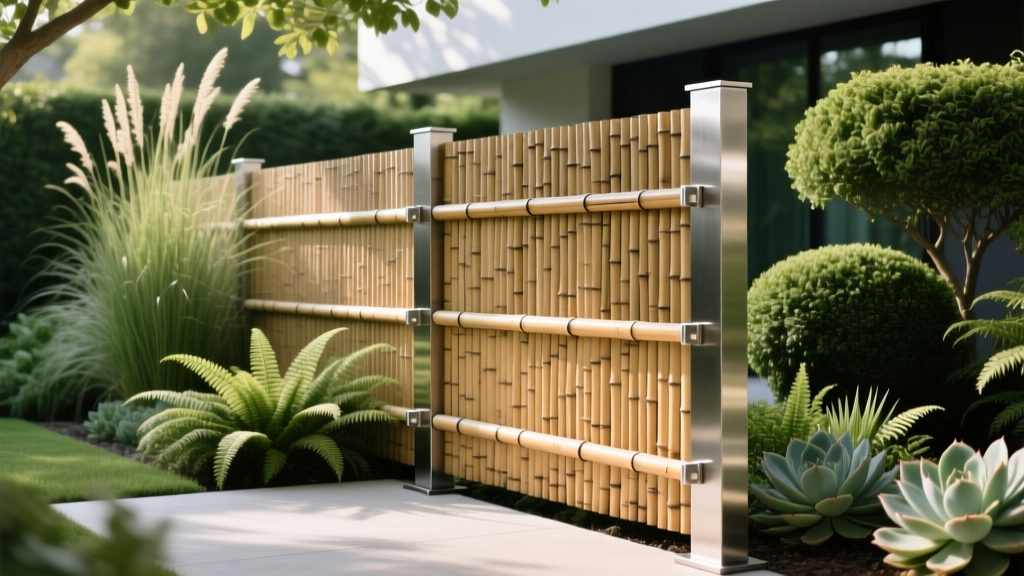
Species Selection Matrix for Load-Bearing Frames
Not all bamboo is structurally equal. For a fence designed to withstand 90 mph wind gusts, you must select species with thick culm walls and high modulus of rupture (MOR). Below is the structural grading for the three most accessible fencing species in 2026.
| Species | Common Name | Avg. Wall Thickness (at 4" dia) | Compressive Strength | Best Structural Application | Est. Cost (8ft Pole) |
|---|---|---|---|---|---|
| Guadua angustifolia | Iron Bamboo | 1.0" - 1.5" | ~5,500 psi | Main load-bearing posts, corner braces | $28 - $42 |
| Phyllostachys edulis | Moso | 0.5" - 0.75" | ~4,200 psi | Horizontal rails, heavy infill poles | $18 - $24 |
| Pseudosasa amabilis | Tonkin | 0.25" - 0.4" | ~3,800 psi | Lightweight infill, decorative lashing | $9 - $14 |
Engineering the Footings: Defeating Basal Rot
The foundation dictates the lifespan of your fence. For a 6-foot-tall structural bamboo fence, main posts must resist significant overturning moments. The industry-standard approach for permanent bamboo structures is the PVC Slip-Joint Sleeve method, which allows for future pole replacement without excavating new concrete footings.
- Excavation: Dig post holes to a minimum depth of 36 inches (or 6 inches below your local frost line) with a diameter of 12 inches.
- Gravel Base: Add 6 inches of compacted 3/4-inch crushed gravel to the base for hydrostatic drainage.
- Concrete Pour: Use a 5,000 PSI high-early-strength concrete mix. Embed a 4-inch Schedule 40 PVC pipe into the wet concrete, ensuring the PVC extends exactly 2 inches above the final grade. Use a magnetic level to plumb the PVC sleeve.
- Internal Drainage: Before inserting the bamboo, drill four 1/2-inch weep holes into the exposed PVC above grade, and drop a 2-inch layer of pea gravel inside the PVC tube.
- Pole Insertion & Pinning: Insert your 4-inch Guadua post into the PVC sleeve. Drill a 1/2-inch hole horizontally through the PVC and the bamboo node, and drive a 1/2-inch galvanized rebar pin through both to lock the post against uplift and rotation.
Joinery and Fastening: Preventing Longitudinal Splits
Bamboo's vascular structure runs strictly parallel to its length, meaning it has virtually zero radial tensile strength. Driving a nail or screw directly into a culm without preparation will instantly split the pole, destroying its structural integrity.
Calculating Wind Load and Post Spacing
A solid 6-foot fence faces approximately 15-20 psf (pounds per square foot) of wind pressure in a 50 mph gust. By spacing bamboo infill poles with a 1/2-inch gap, you achieve 25% permeability, reducing the structural wind load on the posts by up to 40%. For 4-inch Guadua posts, maximum structural spacing is 8 feet on-center. For 3-inch Moso posts, reduce spacing to 6 feet on-center.
The Node-Drilling Technique
Always place mechanical fasteners within 1 inch of a bamboo node (the solid joint). The node provides internal lateral support that prevents the culm from crushing under the compression of a bolt head. Use a 5/16-inch brad-point drill bit to pre-drill holes for 3/8-inch stainless steel lag screws. The brad-point prevents the bit from wandering on the curved, silica-rich surface of the bamboo epidermis.
For heavy structural connections, such as attaching horizontal rails to vertical posts, use 316-grade stainless steel carriage bolts with 2-inch fender washers. The fender washer distributes the clamping force across a wider area of the curved culm, preventing the bolt head from pulling through the outer wall during high-wind shear events.
Attaching the Infill Panels
The infill is the visual and functional barrier of the fence. You have two primary structural options for attaching the infill to your horizontal Moso rails:
- Stainless Steel U-Nails (Pole-by-Pole): If using individual 1-inch to 2-inch diameter poles, secure them using 304-grade stainless steel U-nails (poultry netting staples). Pre-drill a 3/32-inch pilot hole through the infill pole into the rail to prevent splitting. This method offers superior rigidity and individual pole replaceability.
- Galvanized Tie Wire (Rolled Fencing): If using pre-assembled rolled bamboo fencing, unroll the panels and secure them using 16-gauge galvanized tie wire. Weave the wire through the panel's internal wire framework and wrap it tightly around the horizontal bamboo rail, twisting it off with lineman's pliers. Space wire ties every 12 inches vertically.
Preservation and Weatherproofing Protocols
Untreated bamboo contains high levels of starch and sugars, making it highly susceptible to powderpost beetles and fungal decay. According to preservation guidelines outlined by the Food and Agriculture Organization (FAO), raw bamboo must undergo chemical treatment before exterior installation.
For exterior fencing, pressure-treated bamboo is ideal, but if you are sourcing raw poles, you must perform a localized borate treatment. Submerge the base of the poles (the bottom 24 inches) in a solution of disodium octaborate tetrahydrate (such as Bora-Care or Tim-bor) for 48 hours. The bamboo's natural capillary action will draw the borate salts upward into the vascular bundles, rendering the starch toxic to insects and fungi.
After assembly, seal the entire fence with a penetrating, UV-inhibiting oil. Avoid polyurethane or surface-film finishes, which will trap internal moisture and peel within a single season. Products like Cabot Australian Timber Oil or specialized tung-oil blends formulated for high-silica grasses penetrate the epidermis and repel liquid water while allowing water vapor to escape. Reapply every 18 to 24 months based on local UV exposure.
Frequently Asked Questions
Do I need a permit to build a structural bamboo fence?
Most municipalities require a building permit for any fence exceeding 6 feet in height. Because bamboo is classified as a non-wood agricultural material, local building inspectors may require an engineer's stamp verifying that your post footing depth and hardware meet local wind-load and seismic codes. Always consult the International Bamboo and Rattan Organization (INBAR) structural grading standards when submitting your permit plans.
How long will a properly engineered bamboo fence last?
A bamboo fence built with elevated PVC slip-joint footings, borate-treated poles, 316-stainless steel hardware, and regular oil maintenance will reliably last 15 to 20 years. Fences set directly in dirt or concrete typically fail from basal rot within 3 to 5 years.
Written by
David NakamuraDavid Nakamura is a licensed architect (AIA) and construction technology writer focused on sustainable building methods, mass timber engineering, and high-performance building envelopes. He holds a Master of Architecture from the University of Washington and is a certified Passive House Consultant (CPHC). David spent eight years at the Seattle firm Mithun, where he led the design of three LEED Platinum projects, before founding his own practice specializing in net-zero residential design. He serves on the editorial advisory board of GreenBuilder Magazine and has authored peer-reviewed papers on cross-laminated timber (CLT) connections for the Journal of Structural Engineering. In his spare time, David teaches woodworking at Pratt Fine Arts Center and kayaks the Puget Sound.
More from David Nakamura
View all
Construction Cost
Labor Cost to Build a Deck Per Sq Ft: 2026 Installation Guide
Discover the exact labor cost to build a deck per sq ft in 2026. This installation guide breaks down contractor rates, complexity factors, and hidden fees.
Aug 4, 2026

Construction Cost
How Much Does It Cost to Build a 3 Bedroom House? Financing Guide
Learn exactly how much it costs to build a 3 bedroom house and explore 2026 financing options, construction loan types, and budget frameworks for your build.
Aug 4, 2026

Construction Cost
Cost to Build a Tennis Court: 2026 Guide
How much does it cost to build a tennis court in 2026? Breakdowns for asphalt, concrete, and synthetic surfaces plus fencing and lighting.
Jul 30, 2026