Best Things to Build Out of Bamboo: Structural to Decorative
Discover the best things to build out of bamboo, from structural framing and scaffolding to flooring and furniture. Get expert specs, costs, and data.

The Mechanics of Bamboo: Why It Rivals Steel and Timber
When evaluating things to build out of bamboo, it is critical to understand that bamboo is not a wood; it is a grass with a unique vascular bundle structure. This anatomy grants specific species a tensile strength parallel to the grain of up to 400 MPa—rivaling mild steel—while maintaining a compressive strength that exceeds many commercial softwoods. The secret lies in the dense, lignin-rich outer rind and the hollow, lightweight inner culm, which provides an exceptional strength-to-weight ratio. However, the viability of your project depends entirely on selecting the correct species, harvest maturity (typically 3 to 5 years for structural culms), and post-harvest treatment protocols.
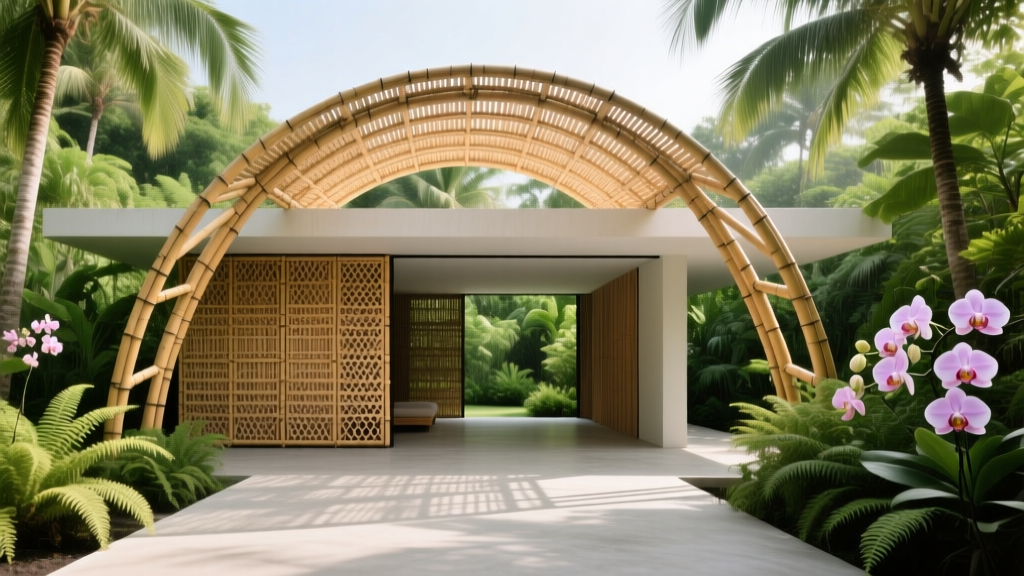
Heavy-Duty Structural Applications
High-Rise Scaffolding and Temporary Shoring
In dense urban environments across Asia, bamboo scaffolding remains the standard for high-rise construction due to its rapid assembly and seismic flexibility. The preferred species for this application is Bambusa blumeana (thorny bamboo) or Bambusa oldhamii. A single 40mm diameter culm of mature B. blumeana can support over 300 kg in vertical compression. Modern scaffolding systems utilize high-tensile nylon zip-ties or specialized reusable ratcheting lashings instead of traditional hemp rope, reducing joint slippage by up to 40% under dynamic wind loads. For temporary shoring of concrete slabs, bamboo poles are often capped with steel or hardwood blocks to distribute point loads and prevent culm splitting.
Load-Bearing Trusses and Pavilion Framing
For permanent architectural structures, Guadua angustifolia (Neotropical bamboo) is the premier choice, recognized by the International Bamboo and Rattan Organization (INBAR) for its predictable structural properties. When building roof trusses, traditional lashing is insufficient for modern building codes. Instead, structural engineers utilize the 'fish-mouth' joint technique, where the culm is precisely notched to seat against another member. To prevent the hollow culm from crushing under bolt tension, the joint cavity is infilled with a high-strength, non-shrink epoxy-mortar mixture. This creates a rigid, moment-resisting connection that complies with ISO 22156 structural design standards. A standard 120mm diameter Guadua truss system can span up to 10 meters without intermediate support, costing roughly 30% less than equivalent glulam timber.
| Species | Avg. Culm Diameter | Compressive Strength (MPa) | Best Structural Application |
|---|---|---|---|
| Guadua angustifolia | 90 - 130 mm | 38 - 45 | Primary roof trusses, load-bearing columns |
| Phyllostachys edulis (Moso) | 80 - 120 mm | 45 - 55 | Engineered lumber, heavy timber framing |
| Bambusa blumeana | 40 - 60 mm | 30 - 35 | Scaffolding, concrete shoring, fencing |
| Dendrocalamus asper | 100 - 200 mm | 25 - 32 | Decorative columns, large-span purlins |
Interior Architecture and Millwork
Strand-Woven Flooring Systems
Among the most popular interior things to build out of bamboo is strand-woven flooring. Unlike traditional horizontal or vertical grain bamboo, strand-woven bamboo is manufactured by shredding the culm into fibers, boiling them to remove starches, and compressing them under 2,000+ PSI with a phenolic resin binder. The result is a flooring product with a Janka hardness rating of 3,000 to 3,200 lbf—making it roughly 73% harder than traditional red oak and highly resistant to denting from heavy furniture. Modern 2026 manufacturing processes utilize UV-cured aluminum oxide finishes that provide a commercial-grade wear layer. Expect to pay between $4.50 and $8.00 per square foot for premium click-lock strand-woven planks, which can be floated over a foam underlayment or glued directly to a concrete subfloor.
Laminated Bamboo Lumber (LBL) for Cabinetry
Laminated Bamboo Lumber (LBL) is an engineered sheet good that outperforms traditional hardwood plywood in dimensional stability. By cross-laminating thin bamboo strips, manufacturers eliminate the natural tendency of the grass to warp or check. When building custom cabinetry, island surrounds, or built-in shelving, specify LBL panels manufactured with methylene diphenyl diisocyanate (MDI) or soy-based adhesives to ensure ultra-low VOC emissions. A standard 4x8 foot sheet of 3/4-inch LBL typically costs between $85 and $120. It machines beautifully with standard carbide-tipped router bits and accepts water-based polyurethanes and hardwax oils just like solid timber.
Critical Warning: Powderpost Beetle Vulnerability
Natural, untreated bamboo contains high levels of starch, making it a primary target for the powderpost beetle (Dinoderus minutus). If you are building with raw culms for interior furniture or exposed ceiling slats, the bamboo must undergo a borax-boric acid bath treatment (minimum 48 hours for 100mm diameter culms) or the Boucherie sap-displacement method. Never install raw, untreated bamboo in enclosed, climate-controlled environments, as an infestation can reduce a structural culm to dust within two years.
Landscape, Exterior, and Hardscaping
Pergolas and Shade Trellises
Bamboo pergolas offer a striking, organic aesthetic for outdoor living spaces. For exterior load-bearing posts, use Dendrocalamus asper or pressure-treated Moso bamboo. The primary enemy of exterior bamboo is not moisture, but ultraviolet (UV) radiation, which degrades the lignin and causes the culm to gray and split. To protect exterior structures, apply a penetrating oil specifically formulated with UV blockers, such as Messmer's UV Plus or a dedicated bamboo oil containing transoxide pigments. Reapplication is required every 12 to 18 months depending on solar exposure. For the overhead lattice, split bamboo poles (20-30mm diameter) can be lashed or screwed to the primary beams to create dappled shade.
Retaining Walls and Privacy Fencing
While bamboo roll fencing is common for cheap privacy screens, it degrades rapidly. For permanent privacy fencing or low retaining walls, build using rigid, vertically oriented bamboo poles set into a concrete grade beam. The culms must be harvested at peak maturity (minimum 4 years) and treated with a copper-based wood preservative. To prevent water accumulation inside the hollow internodes—which leads to internal rot and splitting from freeze-thaw cycles—drill a 5mm weep hole at the base of each culm just above the concrete line, and cap the top of the fence with a sloped timber or metal rail to shed precipitation.
Project Selection Matrix: Natural vs. Engineered Bamboo
Selecting the right material format is the most common failure point in bamboo construction. Use this decision framework to match your project requirements with the correct bamboo product type:
- High Moisture / Ground Contact (Retaining Walls, Fencing): Use natural culms treated with copper azole or CCA (Chromated Copper Arsenate). Avoid engineered bamboo, as the adhesives will delaminate under constant soil moisture.
- High Load / Long Spans (Roof Trusses, Beams): Use large-diameter natural culms (Guadua or Asper) with epoxy-mortar infilled bolted connections. Engineered bamboo is generally limited to shorter spans due to shear limitations in the glue lines.
- Dimensional Stability Required (Cabinetry, Doors, Window Frames): Use cross-laminated Laminated Bamboo Lumber (LBL). Natural culms will warp and twist as indoor humidity fluctuates, ruining tight joinery tolerances.
- High Traffic / Abrasion Resistance (Floors, Stair Treads): Use strand-woven bamboo. The randomized fiber orientation and phenolic resin matrix provide the necessary surface hardness to resist scuffing and denting.
- Acoustic Baffles / Ceiling Slats: Use vertically laminated bamboo strips. They offer excellent sound diffusion properties and are lightweight enough to be suspended from standard T-bar grid systems without overloading the ceiling plenum.
By aligning the specific mechanical properties of bamboo—whether in its natural cylindrical form or its engineered composite state—with the exact demands of your project, you ensure a structure that is both aesthetically striking and structurally enduring. For further inspiration on complex joinery and modern architectural implementations, review the project archives on ArchDaily's Bamboo Architecture tag to see how leading firms are pushing the boundaries of this versatile grass.
Written by
Elena RodriguezElena Rodriguez is a civil engineer and technical writer specializing in concrete technology, masonry systems, and ASTM/ACI compliance. She earned her B.S. in Civil Engineering from Texas A&M University and spent a decade at a materials testing laboratory, performing over 2,000 concrete compressive strength tests and masonry prism evaluations. Elena is an ACI-certified Field Testing Technician (Grade I) and a member of ASTM Committee C12 on Natural Building Stone. She currently consults on forensic engineering cases involving concrete failures and moisture intrusion. Based in San Antonio, TX, Elena is a proud member of the Society of Women Engineers (SWE) and coaches her daughter's FIRST Robotics team.
More from Elena Rodriguez
View all
Walls & Panels
Cost Analysis: Light Gauge Steel Framing Advantages and Disadvantages
Evaluate light gauge steel framing advantages and disadvantages through a strict cost analysis lens, comparing material, labor, and lifecycle expenses.
Aug 4, 2026

Walls & Panels
Gypsum Board Types: Exact Specifications, Thickness & Dimensions
Compare standard, Type X, and moisture-resistant gypsum board types. Get exact specifications, thicknesses, dimensions, and ASTM standards for your project.
Aug 4, 2026

Fire Resistance
Best Fire-Resistant Outdoor Decking Materials: 2026 Buyer Guide
Discover the best fire-resistant outdoor decking materials for 2026. Compare Class A PVC, aluminum, and hardwood options for WUI compliance and safety.
Aug 4, 2026