Why Is Bamboo Considered a Green Flooring Option? The Complete Guide
Discover why bamboo is considered a green flooring option. We analyze Moso bamboo carbon sequestration, VOC-free adhesives, and lifecycle costs.
The Botanical Advantage: Grass vs. Hardwood
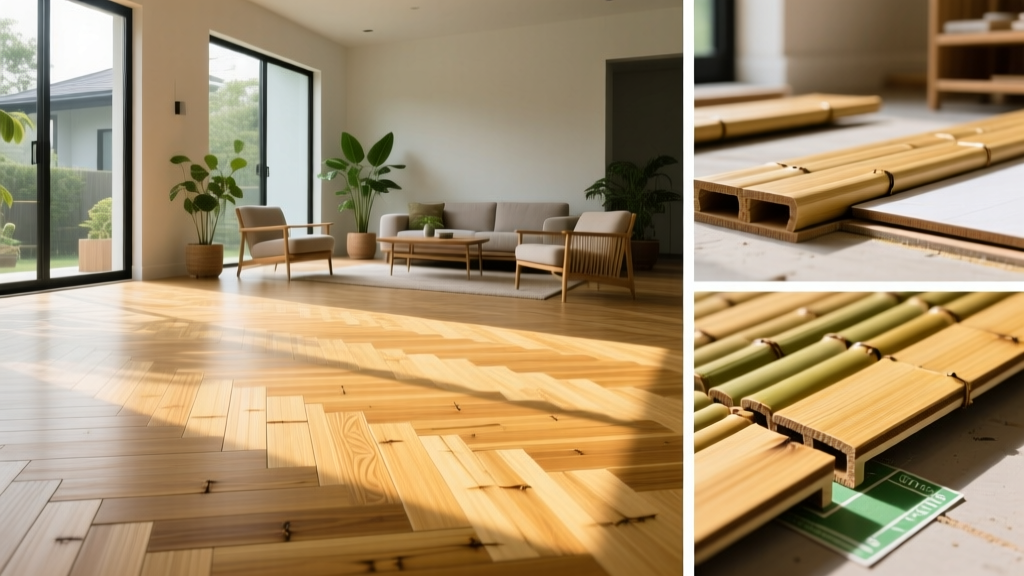
To understand why bamboo is considered a green flooring option, you must first discard the assumption that it is a tree. Bamboo is a rapidly renewable grass, with Phyllostachys edulis (Moso bamboo) being the primary species used for architectural and flooring applications. Unlike traditional hardwoods that require clear-cutting and decades to regenerate, Moso bamboo reaches structural maturity in just 3 to 5 years. More importantly, it propagates via an underground rhizome network. When a mature culm (stalk) is harvested, the root system remains entirely intact, immediately pushing up 3 to 4 new shoots the following spring without the need for replanting, tilling, or chemical fertilizers.
| Metric | Moso Bamboo (Strand-Woven) | Red Oak (Quercus rubra) | Brazilian Cherry (Hymenaea courbaril) |
|---|---|---|---|
| Harvest Cycle | 3–5 Years | 60–80 Years | 80–120 Years |
| Replanting Required? | No (Rhizome regeneration) | Yes | Yes |
| Janka Hardness Rating | ~3,000 lbf | 1,290 lbf | 2,350 lbf |
| Yield per Acre | High (Continuous selective harvest) | Low (Single harvest cycle) | Very Low |
Carbon Sequestration and the Harvesting Cycle
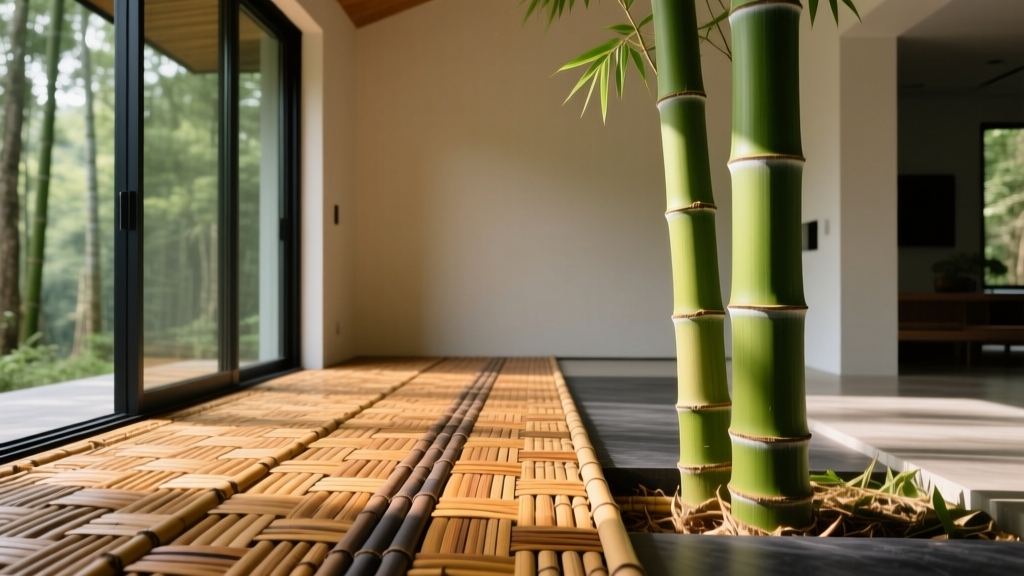
The most compelling environmental argument for bamboo flooring lies in its carbon dynamics. According to the International Bamboo and Rattan Organization (INBAR), a well-managed bamboo plantation can sequester up to 12 tons of carbon dioxide per hectare annually—significantly outpacing many tree species of similar footprint.
When an old-growth oak is felled for flooring, the forest's carbon sink is abruptly halted, and the decaying root system releases stored carbon back into the atmosphere. Conversely, selective harvesting of bamboo actually stimulates the rhizome. By removing mature 5-year-old culms, you allow more sunlight to reach the forest floor, accelerating the growth of younger shoots and increasing the overall biomass and carbon-capturing capacity of the grove. The carbon remains locked in the rhizome and the harvested flooring for the lifespan of the building.
Expert Insight: The "green" status of bamboo is entirely dependent on selective harvesting. Clear-cutting a bamboo forest destroys the rhizome mat and causes severe topsoil erosion. Always verify that the brand sources from FSC-certified (Forest Stewardship Council) managed forests where selective culm harvesting is strictly enforced.
The Adhesive Catch: When "Green" Bamboo Isn't
While the raw material is undeniably sustainable, the manufacturing process can compromise bamboo's eco-friendly status. To create strand-woven bamboo flooring—the hardest and most durable variant—bamboo fibers are shredded, mixed with adhesive resins, and compressed under extreme heat and pressure (over 2,000 PSI). The type of resin used dictates the indoor air quality and true environmental impact of the final product.
Adhesive Resins Used in Bamboo Manufacturing
| Resin Type | Formaldehyde Content | Durability & Moisture Resistance | Eco-Verdict |
|---|---|---|---|
| Urea-Formaldehyde (UF) | High (Off-gasses continuously) | Poor (Degrades with moisture) | Avoid entirely. |
| Phenol-Formaldehyde (PF) | Low (Stable, minimal off-gassing) | Excellent (Highly water-resistant) | Acceptable, but not zero-VOC. |
| MDI (Methylene Diphenyl Diisocyanate) | Zero Added Formaldehyde | Superior (Reacts with moisture to cure) | The gold standard for green flooring. |
| Soy-Based Bio-Resins | Zero | Moderate (Requires advanced cross-linking) | Excellent, but less common in strand-woven. |
For a truly green flooring option, specify MDI-based adhesives. MDI is a polyurethane precursor that contains no formaldehyde. It chemically reacts with the natural moisture in the bamboo fibers to create an irreversible, waterproof bond. Brands utilizing MDI can legitimately claim "No Added Formaldehyde" (NAF) status.
Decoding Eco-Certifications
Do not rely on marketing terms like "eco-friendly" or "natural." Demand third-party testing documentation. When evaluating why bamboo is considered a green flooring option for your specific project, look for these exact certifications:
- FloorScore: Administered by SCS Global Services, this is the most recognized indoor air quality certification for hard surface flooring. It guarantees that Total Volatile Organic Compounds (TVOCs) are ≤0.5 mg/m³ and formaldehyde is ≤0.05 mg/m³. Check the SCS FloorScore directory to verify a brand's active status.
- CARB Phase 2 (ATCM): The California Air Resources Board standard limits formaldehyde emissions from composite wood products to 0.09 ppm. While a baseline requirement for selling in California, premium green bamboo will test well below this threshold (often at 0.01 ppm or NAF).
- FSC 100% or FSC Mix: Ensures the bamboo was harvested from responsibly managed forests that protect biodiversity and local workers' rights, preventing the clear-cutting of natural forests to plant bamboo monocultures.
Lifecycle Cost and Environmental ROI
While the upfront material cost of premium, MDI-bonded bamboo flooring is higher than budget laminate or UF-bonded bamboo, its lifecycle cost is highly competitive with traditional hardwoods. Strand-woven bamboo's Janka hardness of 3,000 lbf means it resists denting from pet claws and high heels far better than Red Oak, delaying the need for refinishing or replacement.
| Flooring Type | Material Cost (per sq. ft.) | Expected Lifespan | Refinishing Potential |
|---|---|---|---|
| Solid Horizontal Bamboo | $3.50 – $5.00 | 20–25 Years | 1–2 times |
| Strand-Woven Bamboo (NAF/MDI) | $6.00 – $9.50 | 30–50 Years | 2–3 times (requires specialized abrasives) |
| Engineered Bamboo | $7.00 – $11.00 | 25–40 Years | 0–1 times (depends on wear layer thickness) |
| Solid Red Oak (Reference) | $8.00 – $14.00 | 50–100 Years | 5+ times |
End-of-Life Biodegradability
At the end of its useful life, solid bamboo flooring bonded with MDI or soy resins is mechanically recyclable and will eventually biodegrade in a landfill environment, unlike luxury vinyl plank (LVP) or petroleum-based laminates which persist for centuries. However, engineered bamboo with a high-density fiberboard (HDF) core must be disposed of according to local composite-wood regulations.
Frequently Asked Questions
Is bamboo flooring completely waterproof?
No. While strand-woven bamboo is highly moisture-resistant—especially when manufactured with MDI resins—it is still an organic, hygroscopic material. Prolonged exposure to standing water will cause the fibers to swell and cup. For wet areas like full bathrooms, porcelain tile or 100% waterproof mineral-core flooring remains a better choice, though engineered bamboo with a waterproof SPC (stone plastic composite) core is emerging as a viable hybrid alternative.
Does harvesting bamboo harm panda habitats?
This is a common misconception. Moso bamboo (Phyllostachys edulis) grows at lower elevations and is not part of the wild giant panda's diet or habitat in China. Pandas primarily consume arrow bamboo and umbrella bamboo at higher altitudes. Commercial bamboo flooring plantations are located far from protected panda reserves.
Can I install bamboo flooring over radiant heat?
Yes, but with strict parameters. You must use engineered bamboo or narrow-width (under 4 inches) solid strand-woven planks. The radiant heating system must be hydronic (water-based) rather than electric mats, and the surface temperature of the floor must never exceed 85°F (29°C). Always float the floor using a premium acoustic underlayment rather than gluing it directly to the subfloor to allow for natural thermal expansion and contraction.
Written by
David NakamuraDavid Nakamura is a licensed architect (AIA) and construction technology writer focused on sustainable building methods, mass timber engineering, and high-performance building envelopes. He holds a Master of Architecture from the University of Washington and is a certified Passive House Consultant (CPHC). David spent eight years at the Seattle firm Mithun, where he led the design of three LEED Platinum projects, before founding his own practice specializing in net-zero residential design. He serves on the editorial advisory board of GreenBuilder Magazine and has authored peer-reviewed papers on cross-laminated timber (CLT) connections for the Journal of Structural Engineering. In his spare time, David teaches woodworking at Pratt Fine Arts Center and kayaks the Puget Sound.
More from David Nakamura
View all
Construction Cost
Labor Cost to Build a Deck Per Sq Ft: 2026 Installation Guide
Discover the exact labor cost to build a deck per sq ft in 2026. This installation guide breaks down contractor rates, complexity factors, and hidden fees.
Aug 4, 2026

Construction Cost
How Much Does It Cost to Build a 3 Bedroom House? Financing Guide
Learn exactly how much it costs to build a 3 bedroom house and explore 2026 financing options, construction loan types, and budget frameworks for your build.
Aug 4, 2026

Construction Cost
Cost to Build a Tennis Court: 2026 Guide
How much does it cost to build a tennis court in 2026? Breakdowns for asphalt, concrete, and synthetic surfaces plus fencing and lighting.
Jul 30, 2026