Best Material for Area Rugs: 2026 Durability & Selection Guide
Discover the best material for area rugs based on traffic, durability, and cost. Compare wool, nylon, PET, and jute for your 2026 interior build.
The Science of Rug Fibers: Natural vs. Synthetic Polymers
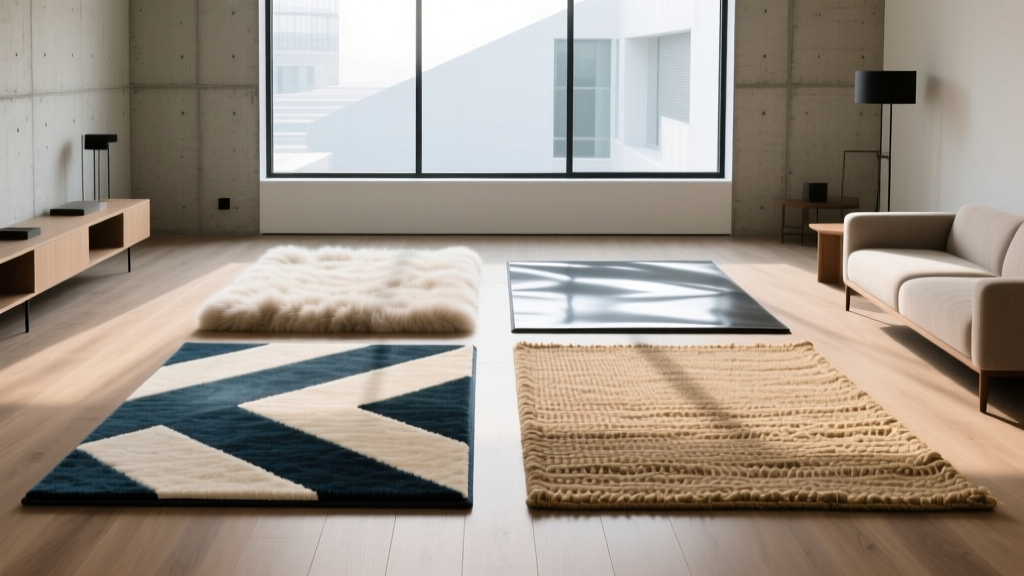
Selecting the best material for area rugs requires moving beyond aesthetics to understand fiber morphology. In interior construction and commercial build-outs, floor coverings impact acoustic dampening (NRC ratings), thermal insulation, and indoor air quality. The fundamental divide in rug manufacturing is between natural protein/cellulose fibers and synthetic petroleum-based polymers. Natural fibers like wool possess overlapping epidermal scales that repel liquid but trap particulate soil, while synthetics like nylon and polyester are extruded through spinnerets to create continuous, non-porous filaments. Understanding these micro-structures dictates how a rug will perform under specific environmental stressors, UV exposure, and mechanical abrasion over its lifecycle.
Material Comparison Matrix: Performance & Cost Metrics
Before specifying a rug for a residential or commercial project, evaluate the core performance metrics. The table below synthesizes 2026 market data, averaging costs for high-density, commercial-grade equivalents (minimum 40 ounces per square yard face weight).
| Material | Fiber Classification | Moisture Absorption | Crush Resistance | Avg Cost (Per Sq Ft) | Optimal Application |
|---|---|---|---|---|---|
| New Zealand Wool | Natural Protein | High (up to 30%) | Excellent (Natural Spring) | $9.00 - $24.00 | High-end residential, executive offices |
| Type 6,6 Nylon | Synthetic Polyamide | Low (4% - 5%) | Superior (Heat-Set) | $5.00 - $14.00 | High-traffic corridors, commercial lobbies |
| PET (Polyester) | Synthetic Polymer | Hydrophobic (0.4%) | Poor (Prone to Matting) | $3.50 - $9.00 | Low-traffic bedrooms, formal dining |
| Polypropylene (Olefin) | Synthetic Polyolefin | Zero (0.01%) | Fair (Low Resilience) | $2.50 - $7.00 | Outdoor patios, sunrooms, basements |
| Jute / Sisal | Natural Cellulose | Very High | Poor (Rigid/Brittle) | $4.00 - $11.00 | Low-traffic, dry interior zones |
Top Contenders: Analyzing the Best Material for Area Rugs
Wool: The Benchmark for High-End Residential
When architects and interior designers specify luxury floor coverings, New Zealand wool remains the gold standard. Wool fibers contain natural lanolin, which provides a temporary barrier against water-based spills. Furthermore, wool's complex molecular structure allows it to absorb up to 30% of its weight in moisture without feeling damp, making it an excellent humidity buffer in climate-controlled buildings. However, wool is highly susceptible to alkaline cleaners; using a high-pH spot treatment will permanently strip the protective lipid layer and cause fiber degradation. For optimal longevity, specify wool rugs with a tight, low-pile construction (minimum 5 turns per inch twist) to prevent shedding and fuzzing during the first year of use.
Solution-Dyed Nylon (Type 6,6): The Commercial Champion
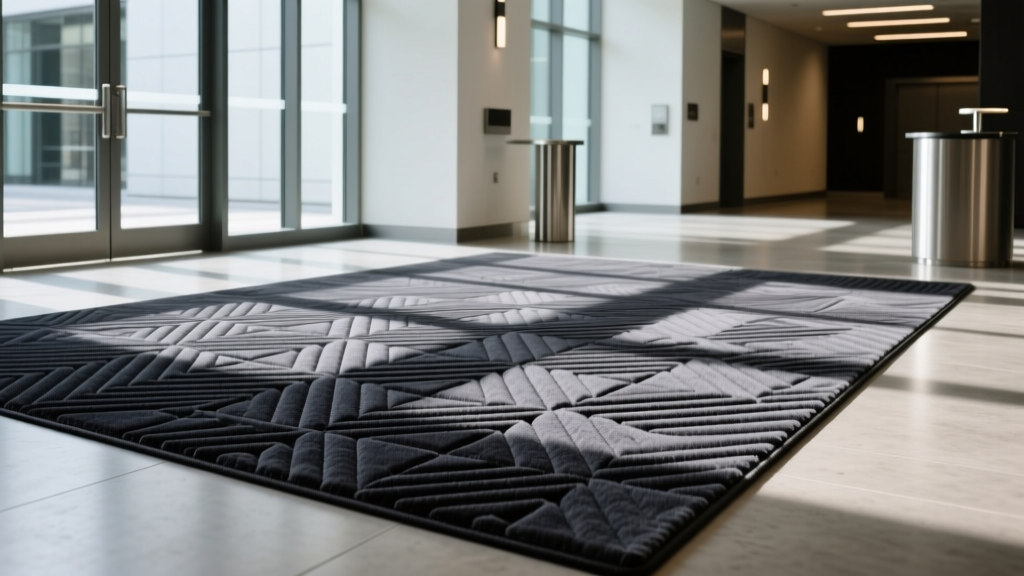
For high-traffic environments where the best material for area rugs must withstand severe mechanical abrasion, Type 6,6 solution-dyed nylon is unmatched. Unlike piece-dyed fibers where color is applied after extrusion, solution-dyed nylon incorporates pigment into the liquid polymer before the fiber is formed. This makes the color completely impervious to bleach, UV fading, and aggressive cleaning chemicals. According to testing standards outlined by the Carpet and Rug Institute (CRI), heat-set Type 6,6 nylon exhibits superior memory, meaning the fibers will bounce back from heavy furniture compression rather than suffering permanent pile crush. It is the mandatory choice for hospitality, healthcare, and busy residential entryways.
Polyethylene Terephthalate (PET): The Stain-Resistant Paradox
PET, often marketed as recycled polyester, is inherently hydrophobic—it repels water and water-based stains (like coffee or wine) exceptionally well. However, PET is oleophilic, meaning it aggressively attracts and binds with oil-based soils. In a dining room or kitchen-adjacent space, PET rugs will slowly develop gray, oily traffic lanes that are nearly impossible to extract with standard hot-water cleaning. If specifying PET, limit its use to low-traffic, dry zones like master bedrooms, and ensure the rug features a high-density, low-pile cut to minimize surface area for oil adhesion.
Polypropylene (Olefin): The Moisture and UV Specialist
Polypropylene is a workhorse for outdoor and moisture-prone areas. Because it absorbs virtually zero moisture, it cannot harbor mold, mildew, or bacteria, making it ideal for covered patios, sunrooms, or basement build-outs. It also possesses exceptional UV stability and will not fade in direct sunlight. The critical failure mode of polypropylene is its low melting point (around 300°F). Dragging heavy furniture across a polypropylene rug can generate enough friction heat to permanently melt and fuse the fibers. Specify flatweave or loop-pile constructions for polypropylene to mitigate this abrasion risk.
Traffic-to-Material Decision Framework
Use this rapid selection matrix to match your specific spatial requirements to the correct fiber:
- Scenario A (Ground-floor entryway with wet foot traffic): Polypropylene flatweave. Allows for easy hose-down cleaning and resists mold.
- Scenario B (Open-plan office with rolling casters): Type 6,6 Nylon, low-profile loop pile. Prevents caster snagging and resists compression.
- Scenario C (Formal living room, low traffic, high aesthetic demand): Hand-knotted New Zealand wool or silk-blend. Maximizes acoustic dampening and luxury feel.
- Scenario D (Dining room under a heavy table): PET or Nylon cut-pile. Hides crumbs, resists wine spills (PET), and withstands chair drag.
Hidden Costs: Padding, Off-Gassing, and Lifecycle Maintenance
The true cost of an area rug extends beyond the face fiber. In 2026, building codes and green certification programs (like LEED and WELL) heavily scrutinize indoor air quality. Many budget rugs utilize styrene-butadiene rubber (SBR) latex backings that off-gas volatile organic compounds (VOCs) for months. The Environmental Protection Agency (EPA) notes that poor indoor air quality can lead to significant health and productivity impacts. Always specify rugs and underlying pads that carry the CRI Green Label Plus certification to ensure VOC emissions remain below strict microgram thresholds.
Furthermore, the rug pad is a critical structural component. Avoid cheap PVC or vinyl pads, which can chemically react with polyurethane floor finishes, causing permanent yellowing and delamination of hardwood floors. Instead, invest in 100% natural felt or felt-rubber hybrid pads (typically $1.50 to $3.00 per square foot), which provide necessary acoustic insulation and prevent micro-scratching on engineered wood or polished concrete substrates.
Expert Insight: Never place a rubber-backed rug directly onto luxury vinyl plank (LVP) or freshly finished hardwood. The plasticizers in the rubber can migrate into the floor finish, causing irreversible chemical staining. Always use a breathable felt barrier.
Edge Cases & Failure Modes to Anticipate
Even when you select the best material for area rugs, installation and environmental edge cases can cause premature failure. Be aware of these specific phenomena:
- Pile Reversal (Watermarking): Common in cut-pile nylon and wool rugs, this occurs when fibers bend in different directions, creating permanent-looking light and dark patches. It is an optical illusion caused by light reflection, not a manufacturing defect, but it is highly visible in rooms with strong directional sunlight.
- Latex Dry Rot (Powdering): If a rug is placed in a sunroom or over radiant floor heating, the UV rays and sustained heat will bake the latex backing, causing it to turn into a fine white powder that tracks across the floor. For heated floors, specify rugs with woven polypropylene backings rather than glued latex.
- Edge Delamination: In high-traffic corridors, the constant shearing force of foot traffic can separate the secondary backing from the primary tufting cloth. Look for rugs with reinforced, serged edges and high-density tuft bind ratings (minimum 8 lbs of force required to pull a single tuft).
By prioritizing fiber morphology, chemical resistance, and structural backing over superficial patterns, project managers and homeowners can specify area rugs that perform flawlessly for decades, aligning with both aesthetic visions and rigorous building standards.
Written by
Marcus ChenMarcus Chen is a licensed structural engineer (PE) and building materials analyst with over 12 years of experience across residential, commercial, and industrial construction. He holds a Master of Science in Civil Engineering from UC Berkeley and spent six years at Thornton Tomasetti before transitioning to independent consulting and technical writing. Marcus specializes in material selection for seismic-prone regions, concrete reinforcement strategies, and lifecycle cost analysis. His work has been cited by the American Concrete Institute (ACI) and the Structural Engineers Association of California (SEAOC). When he is not on a job site or at his desk, you will find him hiking the Sierra Nevada or restoring a 1920s craftsman bungalow in Oakland, CA.
More from Marcus Chen
View all
Construction Cost
How Much Did the Eiffel Tower Cost to Build?
How much did the Eiffel Tower cost to build in 1889? We adjust for inflation and compare its budget to modern skyscraper construction.
Aug 4, 2026

Fire Resistance
What Is a Fire Resistant Material? Testing & Certification Guide
Discover what is a fire resistant material through ASTM and UL testing. Learn how fire ratings, certifications, and assemblies work in construction.
Aug 4, 2026

Construction Cost
How Much Did the Burj Khalifa Cost to Build?
How much did the Burj Khalifa cost to build? We break down the $1.5B project and extract 5 money-saving strategies for your next build.
Jul 30, 2026