Structural Puppetry: Selecting the Best Material for Joint in a Puppet Armature
Discover the best material for joint in a puppet armature. Compare Delrin, UHMW, brass, and 3D-printed polymers for durable, low-friction animatronic builds.
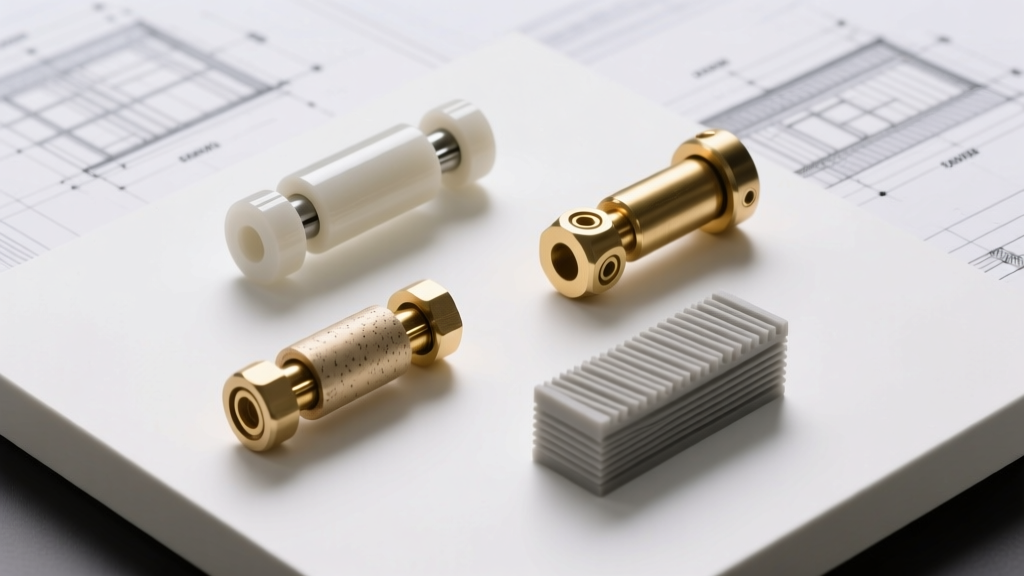
The Engineering of Puppetry: Why Joint Material Matters
Constructing an animatronic or stop-motion puppet requires bridging the gap between structural engineering and fine art. When determining the best material for joint in a puppet armature, builders must balance friction coefficients, tensile strength, weight, and fatigue resistance. Unlike standard architectural construction, puppet joints endure thousands of micro-movements, dynamic loads, and extreme articulation angles. A joint that fails mid-performance or degrades over time compromises the entire build. As of 2026, advances in triboplastics and high-performance elastomers have revolutionized armature fabrication, moving the industry away from standard hardware store brass and steel toward specialized, self-lubricating polymers.
Material Comparison Matrix: Friction, Wear, and Load
Selecting the right polymer or metal depends on the specific kinematic requirements of the joint. Below is a structural comparison of the top-tier materials used in professional puppet fabrication.
| Material | Friction Coefficient (Dry) | Max Continuous Load (PSI) | Best Joint Application | Machinability |
|---|---|---|---|---|
| Delrin® 150 (Acetal) | 0.20 | 1,500 | Ball-and-socket, high-tolerance pivots | Excellent |
| Tivar® 1000 (UHMWPE) | 0.15 | 1,000 | Sliding tracks, low-load hinges | Poor (gummy) |
| iglide® J (Triboplastic) | 0.12 | 2,100 | Continuous rotational pivots, heavy-load axles | Good (Injection molded) |
| Formlabs Tough 2000 (Resin) | 0.45 | 850 | Rapid prototyping, complex geometries | N/A (3D Printed) |
Data sourced from manufacturer technical datasheets for dry-running applications at room temperature.
Hard Joints vs. Soft Joints: A Structural Breakdown
Hard Articulation (Ball-and-Socket, Hinge, Pivot)
For rigid skeletal connections, Delrin (Polyoxymethylene or POM) remains the undisputed industry standard. According to Professional Plastics, Delrin's high mechanical strength and low moisture absorption make it dimensionally stable. When machining a Delrin ball joint, the material's natural slipperiness eliminates the need for liquid lubricants. This is critical in puppetry; liquid greases attract dust, degrade over time, and can chemically migrate through the armature to stain or melt the external silicone skin.
For continuous rotational joints (like a wrist or neck pivot), molded triboplastic bearings from igus are superior to machined alternatives. An iglide J bearing costs roughly $8 to $15 per unit but provides a consistent, play-free rotation that outlasts machined brass by a factor of ten. The triboplastic contains solid lubricants embedded in the polymer matrix, ensuring a lifetime of maintenance-free operation.
Soft Articulation (Elastomeric Hinges, Cable-Driven Tendons)
Not all puppet joints rely on hard mechanical stops. Soft joints, often used in facial articulation or flexible spines, require elastomers with high tear strength and fatigue resistance. Standard latex degrades rapidly due to UV exposure and oxidation. Instead, professional fabricators use platinum-cure silicones or specific polyurethanes.
For repetitive flex-hinges, Smooth-On Dragon Skin (specifically the 30 or 10 Fast variants) offers a tear strength exceeding 120 PSI and an elongation at break of 500%. When designing a soft joint, the elastomer must be cast over a rigid core with a calculated relief zone to prevent shear stress at the bond line.
Never use PVC (polyvinyl chloride) or standard flexible 3D printing filaments (like basic TPU) in direct contact with platinum-cure silicone puppet skins. The plasticizers in these materials will migrate into the silicone over 3 to 6 months, causing the skin to become permanently tacky, weaken, and eventually tear at the joint stress points. Always use Delrin, UHMW, or sealed aluminum for sub-dermal armatures.
Step-by-Step: Fabricating a Low-Friction Delrin Hinge
Achieving a perfectly tensioned hinge requires precise tolerances. A joint that is too loose will cause the puppet to 'droop' under gravity; too tight, and the servo motors will strip their gears. Follow this procedure for a standard 1/4-inch pivot hinge:
- Material Selection: Purchase 1/2-inch diameter Delrin 150 rod stock. Avoid copolymer acetal (often sold generically as 'acetal') as it has lower fatigue resistance than the homopolymer Delrin.
- Reaming the Bore: Drill the hinge eyelet with a standard 1/4-inch drill bit, then follow with a 0.252-inch chucking reamer. This provides exactly 0.002 inches of diametral clearance.
- Pin Selection: Use 18-8 stainless steel or Grade 5 titanium dowel pins. Carbon steel will rust and cause catastrophic joint seizure if exposed to ambient humidity.
- Chamfering: Cut a 45-degree micro-chamfer on the inside edges of the Delrin eyelet. This prevents the sharp polymer edge from scraping shavings off the metal pin during articulation.
- Tensioning (Optional): If the joint requires 'hold' (the ability to stay in place when posed), integrate a microscopic wave spring washer between the Delrin cheek plates to introduce 2-4 lbs of axial friction.

Real-World Failure Modes and How to Prevent Them
Even with premium materials, armature joints fail if the geometry or environmental factors are ignored. Understanding these failure modes is essential for long-term durability.
- Cold Flow (Creep): UHMWPE and standard 3D printed plastics (like ABS or PETG) suffer from cold flow. Under constant static load—such as a puppet's arm holding a heavy prop—the polymer slowly deforms, turning a tight pivot into a sloppy, loose joint. Fix: Use Delrin or metal bushings for load-bearing static joints.
- Particulate Jamming: Stop-motion stages and foam fabrication shops are incredibly dusty. Fine particulate matter works its way into open ball-and-socket joints, acting as an abrasive lapping compound that destroys the tolerance. Fix: Design overlapping 'dust shrouds' into the Delrin joint cheeks, or use sealed igus xiros® polymer ball bearings.
- Galvanic Corrosion: Using aluminum armature plates with stainless steel pins in a high-humidity environment creates a galvanic cell. The aluminum will corrode rapidly, creating aluminum oxide dust that seizes the joint. Fix: Isolate dissimilar metals using Delrin washers or sleeves, or stick to a single metal family for the entire assembly.
- Resin Layer Delamination: 3D printed resin joints often fail along the Z-axis layer lines under shear stress. Fix: Orient the 3D print so that the layer lines run parallel to the direction of the shear force, and always use engineering-grade resins like Formlabs Tough 2000 or Rigid 10K rather than standard drafting resins.
Sourcing and Machining Best Practices
When sourcing materials for your next build, bypass local hardware stores. The tolerances on generic hardware store brass tubes and steel rods are typically ±0.010 inches, which is far too loose for precision puppetry. Instead, source your metals from aerospace-grade suppliers like McMaster-Carr or Misumi, which offer ground stainless steel dowel pins with tolerances of ±0.0002 inches. For plastics, buy cast or extruded Delrin rods from dedicated plastics distributors rather than Amazon resellers, ensuring you receive genuine DuPont material rather than a brittle, generic substitute. By treating puppet fabrication with the same rigor as structural engineering, you ensure your armatures perform flawlessly, whether they are subjected to the rapid cycles of an animatronic theme park show or the meticulous, repetitive posing of a stop-motion feature film.
Written by
Sarah WhitfieldSarah Whitfield is a chartered quantity surveyor (MRICS) and construction cost analyst with 15 years of experience in material pricing, procurement strategy, and project budgeting. She earned her degree in Construction Management from the University of Reading (UK) and has worked on projects ranging from $2M custom homes to $180M mixed-use developments across North America and Europe. Sarah currently leads cost estimating for BuildMat Insight, maintaining a proprietary database of 4,000+ material price points updated quarterly. She is a frequent contributor to RSMeans cost data panels and has presented at the International Cost Engineering Council (ICEC) congress. Based in Denver, CO, Sarah is an avid trail runner and volunteer mentor for Women in Construction.
More from Sarah Whitfield
View all
Wood & Lumber
What Are the Different Types of Wood? A Builder's Guide
Compare structural softwoods, finish hardwoods, and engineered lumber. Analyze Janka ratings, MOE values, and 2026 pricing for construction.
Aug 4, 2026

Walls & Panels
Steel Framing vs Wood Framing: Corrosion and Moisture Defense
Compare steel framing vs wood framing for moisture resistance. Learn about galvanized coatings, condensation risks, and corrosion protection strategies.
Jul 21, 2026

Stone & Masonry
How to Cut Stone Veneer: Wet Saw vs Grinder Comparison
Compare the best tools for cutting stone veneer. We review wet saws, angle grinders, and chop saws to help you achieve clean, chip-free cuts.
Jul 21, 2026