What Clothing Material Is Best for Camping on Remote Build Sites?
Discover what clothing material is best for camping on remote construction sites. We analyze fabric denier, MVTR, and thermal specs for off-grid builders.
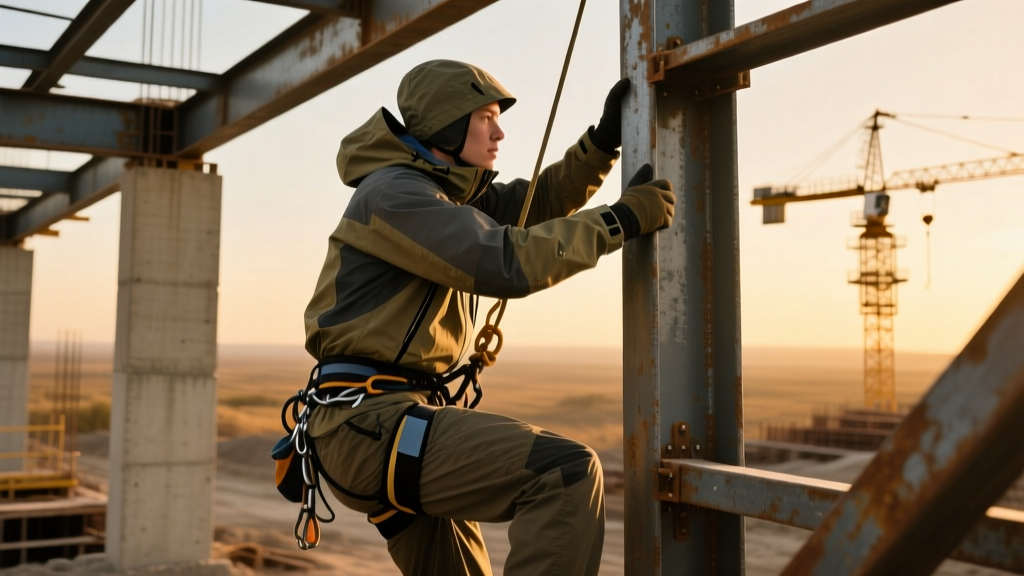
Treating the Human Body as a Building Envelope
When determining what clothing material is best for camping on remote construction sites, field engineers and off-grid builders must approach apparel with the same rigor used to specify building envelopes. Just as a commercial structure requires a vapor barrier, thermal insulation, and a weather-resistive barrier (WRB), a remote site worker's layering system demands precise material specifications to manage moisture vapor transmission, thermal resistance, and abrasion. Standard consumer camping gear often fails under the mechanical stress of infrastructure projects, mining camps, and forestry operations. This guide breaks down the exact textile specifications required for off-grid construction camping.
Base Layer Specifications: Moisture Vapor Transmission Rate (MVTR)
The base layer functions as the interior vapor barrier of your personal building envelope. Its primary metric is the Moisture Vapor Transmission Rate (MVTR), measured in grams per square meter over 24 hours (g/m²/24h). If sweat cannot escape, it condenses against the skin, dropping the body's core temperature and increasing the risk of cold stress—a leading hazard for remote workers according to NIOSH guidelines on outdoor cold stress.
Merino Wool vs. Synthetic Polymers
For remote site camping, material choice dictates both thermal regulation and biological resistance. Merino wool and synthetic polyester blends dominate the market, but their technical profiles differ significantly.
| Material Specification | Micron / Denier | Estimated MVTR | Odor Resistance (Continuous Wear) | Best Application |
|---|---|---|---|---|
| Ultrafine Merino Wool | 17.5 - 18.5 microns | High (Absorbs up to 30% of weight in moisture) | 5-7 Days | Multi-day remote camps without laundry facilities |
| Mid-Micron Merino Blend | 19.5 microns + 12% Nylon | Medium-High | 3-5 Days | High-abrasion base layering under tool belts |
| Polyester/Spandex Grid Fleece | 75D - 100D face | Very High (Mechanical wicking via grid channels) | 1-2 Days | High-output daytime site clearing and surveying |
Procurement Insight: Specify 18.5-micron Merino wool (such as Icebreaker's 200g/m² Oasis line) for base layers. The 18.5-micron threshold is critical; anything above 20 microns triggers the human skin's pain receptors, causing the 'itch' factor. For high-abrasion zones (shoulders and waist), require a core-spun yarn where the wool wraps around a nylon filament core, increasing tensile strength by up to 40% without sacrificing the wool's natural MVTR.
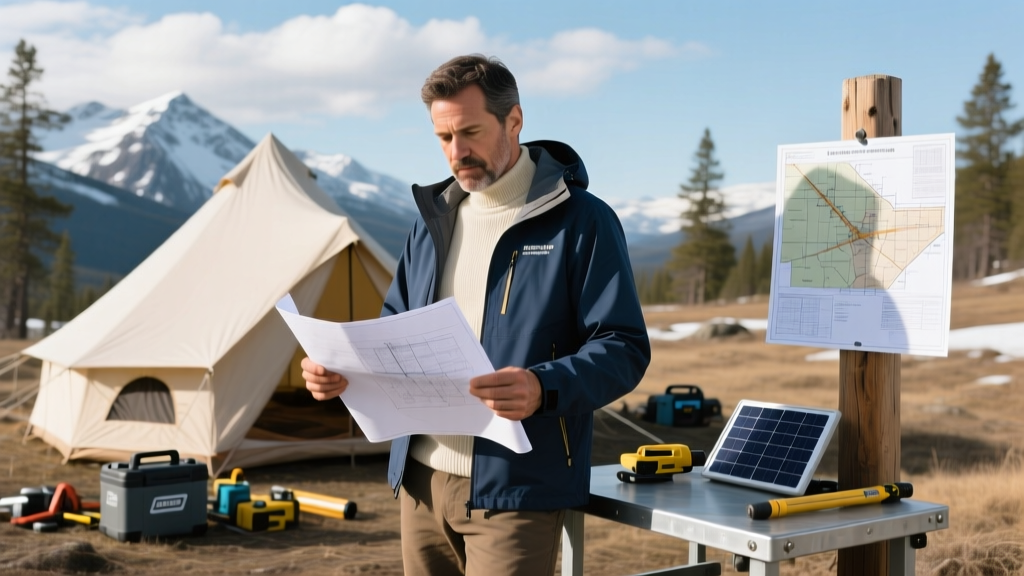
Mid-Layer Insulation: Thermal Resistance (CLO Values)
The mid-layer acts as the structural insulation, trapping dead air to maintain thermal equilibrium. In textiles, thermal resistance is measured in CLO units (1 CLO = 0.155 m²·K/W). When evaluating what clothing material is best for camping in variable off-grid climates, compressibility and wet-insulation retention are the deciding factors.
Standard polar fleece fails as a technical mid-layer because it lacks wind resistance and traps debris from construction sites. Specify Polartec Power Stretch Pro, which utilizes a low-profile nylon exterior (for abrasion resistance and wind blocking) and a polyester interior grid (for mechanical moisture wicking). This dual-knit architecture provides a CLO value of approximately 0.8 while maintaining a 4-way mechanical stretch necessary for overhead framing and welding tasks.
Synthetic Insulation vs. Down
While 800-fill goose down offers the highest warmth-to-weight ratio (CLO ~1.5 per inch of loft), it is entirely unsuitable for remote construction camping. Down loses up to 90% of its thermal resistance when wet and requires specialized cleaning. Instead, specify continuous-filament synthetic insulations like PrimaLoft Gold or Coreloft. These materials mimic down's structure using varying denier polyester fibers (typically a mix of 3D and 7D fibers) and retain 85-98% of their CLO value when saturated, a critical safety margin for workers exposed to sudden precipitation or site water main breaks.
Outer Shell Durability: Denier, Hydrostatic Head, and DWR
The outer shell is the weather-resistive barrier (WRB). It must withstand mechanical abrasion from lumber, rebar, and rock, while maintaining a high hydrostatic head rating. The durability of the face fabric is measured in Denier (D), representing the mass in grams of 9,000 meters of the yarn.
Hydrostatic Head and Breathability Matrix
According to REI's technical layering standards, a garment must meet a minimum 10,000mm hydrostatic head to be considered fully waterproof. For remote construction camping, where workers may kneel on wet concrete or sit on damp earth, the localized pressure exceeds standard ratings.
- 10,000mm - 15,000mm: Adequate for light rain and passive camp use. Fails under the hydrostatic pressure of a kneeling worker (~15,000mm localized pressure).
- 20,000mm - 28,000mm: Required for active site work. Membranes like 3-layer (3L) Gore-Tex Pro or eVent DV Alpine utilize an expanded polytetrafluoroethylene (ePTFE) or electrospun polyurethane (PU) matrix with 9 billion pores per square inch, ensuring liquid water cannot penetrate while allowing vapor to escape.
Face Fabric and the 2026 DWR Shift
The face fabric must be a minimum of 70-denier (70D) nylon ripstop to resist snags from exposed fasteners and brush. Crucially, the Durable Water Repellent (DWR) coating on the face fabric is undergoing a massive regulatory shift. As of 2025/2026, strict EPA and EU regulations have phased out C8 and C6 fluorocarbon (PFAS) DWR treatments due to environmental toxicity. When procuring shells for your crew, specify PFC-free DWR technologies, such as Gore-Tex's ePE (expanded polyethylene) membrane, which provides a lower carbon footprint and eliminates 'forever chemicals' from the remote camp's watershed without sacrificing the 20,000mm hydrostatic head requirement.
Material Decision Matrix for Field Engineers
Use the following matrix to specify camping apparel for your remote site procurement based on the primary environmental and operational stressors.
| Site Condition / Activity | Base Layer Spec | Mid-Layer Spec | Outer Shell Spec |
|---|---|---|---|
| Sub-Arctic Mining Camp (Static & Low Output) | 260g/m² Mid-Micron Merino | 100g/m² PrimaLoft Gold | 80D 3L Gore-Tex Pro (28k mm HH) |
| Pacific Northwest Forestry (High Moisture, High Output) | 150g/m² Synthetic Grid Fleece | Polartec Power Stretch Pro | 70D eVent DV Alpine (20k mm HH) |
| Desert Solar Farm (High UV, Extreme Temp Delta) | 120g/m² Ultrafine Merino (UPF 50+) | Lightweight 60g Coreloft Vest | 40D 2.5L Softshell (Windblock focus) |
Seam Construction: Taped vs. Welded
A waterproof membrane is only as effective as its seams. In building construction, we use flashing and sealants at penetrations; in technical apparel, we use seam tape. Standard polyurethane (PU) seam tape applied via heat pressing is the industry standard. However, for heavy-duty construction camping, look for ultrasonic welded seams. Welding uses high-frequency acoustic vibrations to melt and fuse the fabric layers together, eliminating the needle holes entirely and reducing seam bulk by 30%. This prevents water ingress at high-stress articulation points like the gusset and shoulders, where tool harnesses create repetitive friction.
Frequently Asked Technical Questions
Can cotton be used in any remote camping scenario?
No. Cotton is highly hydrophilic, absorbing up to 27 times its weight in water and losing all insulating properties. In a remote construction setting, a wet cotton garment drastically accelerates conductive heat loss, leading to rapid hypothermia even in 50°F (10°C) conditions. Always specify hydrophobic materials (polyester, nylon, merino wool).
How do I calculate the required CLO value for my specific site?
Thermal comfort models, such as the ASHRAE 55 standard adapted for outdoor work, suggest a baseline of 1.0 CLO for sedentary activities at 70°F (21°C). For every 10°F drop in ambient temperature, add approximately 0.5 CLO. Factor in the metabolic heat generated by physical labor (which can reduce required insulation by 30-50%) and the wind chill factor, which strips away the boundary layer of warm air if the outer shell lacks adequate CFM (cubic feet per minute) wind resistance ratings.
Written by
James ThorntonJames Thornton is a construction industry veteran with 25 years of hands-on experience in wood framing, lumber grading, and residential building codes. He started as a framing carpenter in rural Oregon, earned his ICC Residential Building Inspector certification, and eventually became a senior plan reviewer for the City of Portland Bureau of Development Services. James holds a B.S. in Wood Science & Technology from Oregon State University and is a certified lumber grader through the West Coast Lumber Inspection Bureau (WCLIB). He has inspected over 3,000 residential construction sites and authored the city's internal guide on advanced framing techniques (2x6 at 24" O.C.). James lives in Bend, OR, where he builds custom timber-frame cabins and competes in lumberjack sports.
More from James Thornton
View all
Insulation
Best Home Insulation Materials: Complete 2026 Guide
Compare top home insulation materials for 2026. Find R-values, installed costs per square foot, and best uses for fiberglass, spray foam, and mineral wool.
Aug 4, 2026

Sustainable Building
Certify Your Green Building Material for LEED and WELL
Step-by-step guide to certifying a green building material for LEED v5 and WELL v2. Master EPDs, HPDs, and VOC limits for 2026 project specifications.
Aug 4, 2026

Stone & Masonry
Veneer Stacked Stone Panels: Interior Design & Style Showcase
Discover how veneer stacked stone panels transform interiors. Explore modern design profiles, material pairings, and technical installation specs.
Aug 4, 2026