The Best Material for Outdoor Dog Potty Areas: A Builder's Guide
Discover the best material for outdoor dog potty areas. Compare drainage rates, costs, and sub-base engineering for odor-free, durable results.

The Core Engineering Challenge: Drainage and Nitrogen
Constructing a dedicated canine elimination zone is fundamentally a stormwater and biological management project. Dog urine is highly concentrated with urea, nitrogen, and salts. When liquid pools on impermeable surfaces or becomes trapped in poorly draining soils, anaerobic bacteria rapidly multiply, breaking down urea into ammonia gas. This results in the persistent, pungent odors that plague poorly planned potty areas.
To prevent this, the surface material must achieve a percolation rate exceeding 2 inches per hour, allowing liquids to bypass the surface layer and disperse into a properly engineered sub-base. Selecting the best material for outdoor dog potty areas requires balancing percolation rates, surface durability, paw comfort, and long-term maintenance costs.
Material Comparison Matrix
The following matrix evaluates the top surface materials based on 2026 contractor pricing, hydraulic performance, and lifecycle durability.
| Surface Material | Avg. Cost (per sq. ft.) | Percolation Rate | Odor Retention | Lifespan |
|---|---|---|---|---|
| 3/8" Washed Pea Gravel | $2.50 - $4.00 | High (>5 in/hr) | Low | 10+ years |
| Antimicrobial Artificial Turf | $12.00 - $18.00 | High (if base is correct) | Medium (requires enzymes) | 12-15 years |
| Unstabilized Decomposed Granite | $3.50 - $6.00 | Medium (2-4 in/hr) | Medium | 5-7 years |
| Cedar Wood Chips | $1.50 - $3.00 | High (initially) | High (as material rots) | 1-2 years |
| Brushed Concrete Pavers | $15.00 - $22.00 | Zero (surface runoff) | Low (if hosed daily) | 25+ years |
Top Material Profiles and Builder Specifications
1. Washed Pea Gravel (3/8-Inch Diameter)
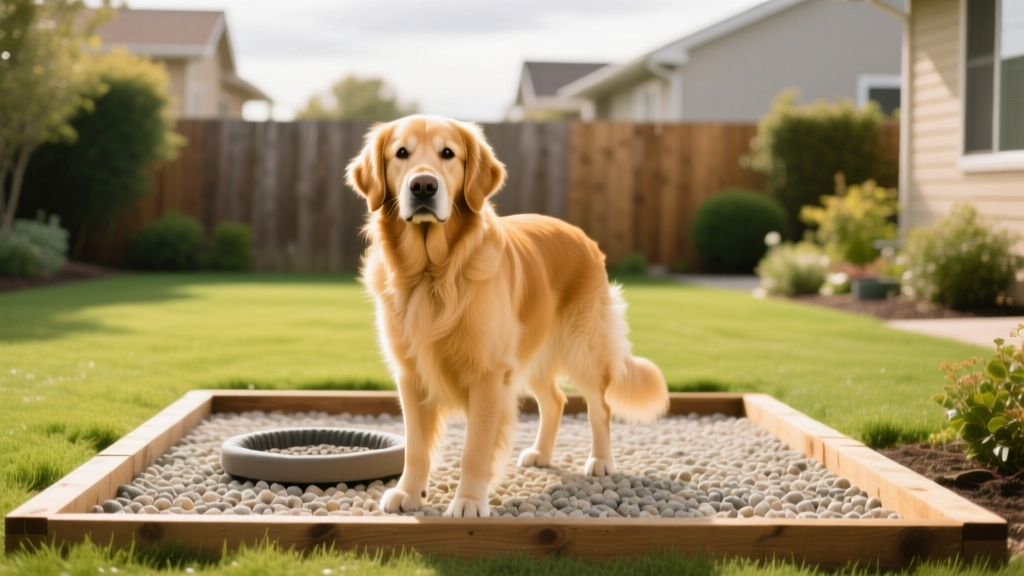
Pea gravel remains the industry standard for high-drainage, budget-conscious potty areas. The smooth, rounded edges are comfortable on canine paw pads, and the void spaces between the stones allow immediate liquid percolation.
- Specification: Use exactly 3/8-inch washed pea gravel. Larger gravel (3/4-inch) is difficult for small dogs to walk on, while unwashed gravel contains fines (dust and clay) that will clog the sub-base and trap odors.
- Failure Mode: Gravel displacement. Dogs digging or running will kick the gravel into surrounding lawn areas.
- Builder Fix: Install a heavy-duty plastic honeycomb geogrid (geocell) beneath the gravel to lock the stones in place, maintaining a level surface and preventing bare spots.
2. Antimicrobial Artificial Turf
Artificial turf offers the most aesthetic integration into residential landscaping and keeps muddy paws out of the house. However, standard turf installations fail as potty areas because the backing traps urine against the soil.
- Specification: Select a turf with a fully permeable, hole-punched polyurethane backing. Avoid latex backings, which degrade rapidly when exposed to uric acid.
- Infill Selection: Never use crumb rubber infill. It retains extreme heat (reaching 140°F+ in summer) and harbors bacteria. Instead, use an antimicrobial acrylic-coated sand infill like Envirofill, which actively inhibits bacterial growth and odor.
- Maintenance: Requires monthly application of a bio-enzymatic cleaner to break down uric acid crystals that accumulate in the sub-base.
3. Unstabilized Decomposed Granite (DG)
DG provides a natural, compacted look that blends well with xeriscaping. For potty areas, it must remain unstabilized. Stabilized DG contains resin binders that create a semi-impermeable surface, causing urine to pool and evaporate rather than drain.
- Specification: Apply a 2-inch layer of 1/4-inch minus DG over a permeable aggregate base. Rake it monthly to prevent the top layer from compacting into an impermeable crust.
- Drawback: High nitrogen concentration from urine can sometimes cause localized dark staining on lighter-colored DG over time.
Never use cocoa bean mulch in any area accessible to dogs. While it smells like chocolate and deters some insects, it contains theobromine and caffeine. Ingestion during sniffing or digging can cause severe cardiovascular and neurological toxicity. Always refer to the FDA guidelines on cocoa bean mulch toxicity for veterinary safety data. Stick to untreated cedar or pine bark if organic mulch is required.
The Sub-Base: Where Potty Area Projects Fail
The surface material is only 20% of the equation; the sub-base does 80% of the work. If you lay gravel or turf directly on native topsoil, the soil will compact, drainage will halt within six months, and the area will become an anaerobic swamp. Follow this engineered sub-base protocol:
- Excavation: Dig down 8 to 10 inches below the final desired grade.
- Geotextile Fabric: Line the excavated trench with a non-woven geotextile fabric. Woven fabrics (often used for weed control) will clog with silt and block water flow. Non-woven fabric allows water to pass while separating the sub-base from the native soil.
- Aggregate Base: Fill the bottom 6 inches with #57 crushed angular stone. The angular edges lock together while maintaining large void spaces for liquid storage and dispersal. Avoid rounded river rock for the base, as it shifts and compacts under weight.
- French Drain Integration (For Heavy Soils): If your native soil is heavy clay, the aggregate base will eventually fill with water and back up. Install a 4-inch perforated PVC pipe wrapped in filter fabric at the lowest point of the excavation, sloped at 1/8-inch per foot to daylight or a dry well.
- Surface Layer: Apply your chosen 2-inch surface material (pea gravel, DG, or turf) over the aggregate base.
When engineering the sub-base, borrow principles from municipal stormwater management. According to the Environmental Protection Agency (EPA) permeable surface standards, maintaining an open-graded aggregate base is critical for preventing subsurface clogging. Furthermore, Penn State Extension's guidelines on permeable paving and aggregate bases emphasize that the uniformity coefficient of the crushed stone must be tightly controlled to ensure long-term hydraulic conductivity without fine-particle migration.
Decision Framework: Climate and Budget
Select your material based on your specific regional climate and project budget constraints.
- High Rainfall / Humid Climates (e.g., Pacific Northwest, Southeast): Prioritize maximum drainage. 3/8" washed pea gravel over a deep #57 stone base with a French drain is mandatory. Avoid DG and wood chips, which will remain perpetually damp and foster fungal growth.
- Freeze/Thaw Regions (e.g., Midwest, Northeast): Avoid solid surfaces like concrete pavers unless they are installed on a flexible, deep aggregate base; otherwise, frost heave will crack and unevenly shift the pavers, creating tripping hazards and urine pools. Artificial turf performs exceptionally well here, as it does not heave and remains usable immediately after snowmelt.
- Arid / Hot Climates (e.g., Southwest): Artificial turf can retain heat. If using turf, ensure it is shaded or install a subsurface misting system. Decomposed granite is highly effective in arid zones, as the high evaporation rates quickly dry out the surface layer, minimizing odor.
Maintenance Protocols for Longevity
Even the best-engineered potty area requires targeted maintenance to preserve its percolation rate and biological neutrality.
- Bi-Annual Flushing: Use a garden hose with a high-pressure nozzle to flush the surface material once every six months. This drives accumulated silt, dust, and organic matter down through the void spaces and into the sub-base, preventing surface crusting.
- Enzymatic Treatment: For artificial turf and DG, apply a liquid bio-enzymatic treatment (containing Bacillus subtilis strains) monthly. These enzymes specifically target and digest uric acid crystals, which are insoluble in water and cannot be removed by rain or hosing alone.
- Solid Waste Management: Remove solid waste within 24 hours. As feces decompose, they release fine particulate matter that washes into the sub-base during rain, gradually clogging the geotextile fabric and reducing the percolation rate of the entire system.
Written by
David NakamuraDavid Nakamura is a licensed architect (AIA) and construction technology writer focused on sustainable building methods, mass timber engineering, and high-performance building envelopes. He holds a Master of Architecture from the University of Washington and is a certified Passive House Consultant (CPHC). David spent eight years at the Seattle firm Mithun, where he led the design of three LEED Platinum projects, before founding his own practice specializing in net-zero residential design. He serves on the editorial advisory board of GreenBuilder Magazine and has authored peer-reviewed papers on cross-laminated timber (CLT) connections for the Journal of Structural Engineering. In his spare time, David teaches woodworking at Pratt Fine Arts Center and kayaks the Puget Sound.
More from David Nakamura
View all
Construction Cost
Labor Cost to Build a Deck Per Sq Ft: 2026 Installation Guide
Discover the exact labor cost to build a deck per sq ft in 2026. This installation guide breaks down contractor rates, complexity factors, and hidden fees.
Aug 4, 2026

Construction Cost
How Much Does It Cost to Build a 3 Bedroom House? Financing Guide
Learn exactly how much it costs to build a 3 bedroom house and explore 2026 financing options, construction loan types, and budget frameworks for your build.
Aug 4, 2026

Construction Cost
Cost to Build a Tennis Court: 2026 Guide
How much does it cost to build a tennis court in 2026? Breakdowns for asphalt, concrete, and synthetic surfaces plus fencing and lighting.
Jul 30, 2026