How to Select the Best Material for Your Handbag for Construction Pros
Discover how to select the best material for your handbag when working in construction. Compare Cordura, Dyneema, and canvas for job-site durability.
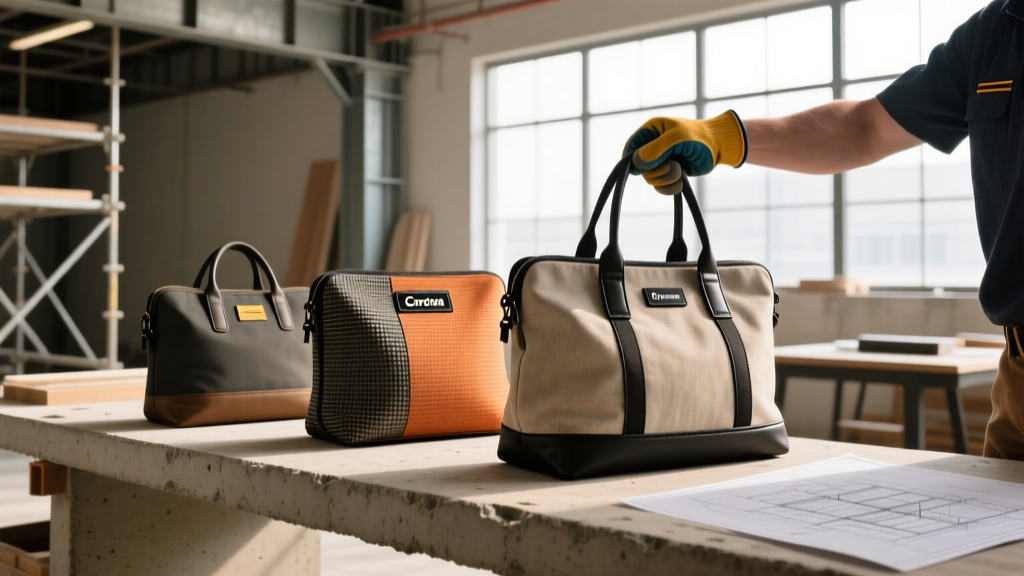
The Material Science of Professional Job-Site Carryalls
For construction professionals—architects, project managers, and site superintendents—a carryall is not merely an accessory; it is a critical piece of personal protective equipment for thousands of dollars in technology and irreplaceable physical documents. While the consumer market focuses on aesthetics, learning how to select the best material for your handbag in the construction industry requires a rigorous, engineering-first approach. The environment of an active job site exposes gear to alkaline dust (concrete), UV radiation, abrasive rebar, and sudden hydrostatic loads from heavy rain.
To evaluate satchels, messengers, and professional handbags, we must look past marketing terms and examine the underlying polymer chemistry, weave structures, and standardized testing metrics. This guide breaks down the exact material specifications you need to specify when purchasing or commissioning a job-site handbag in 2026.
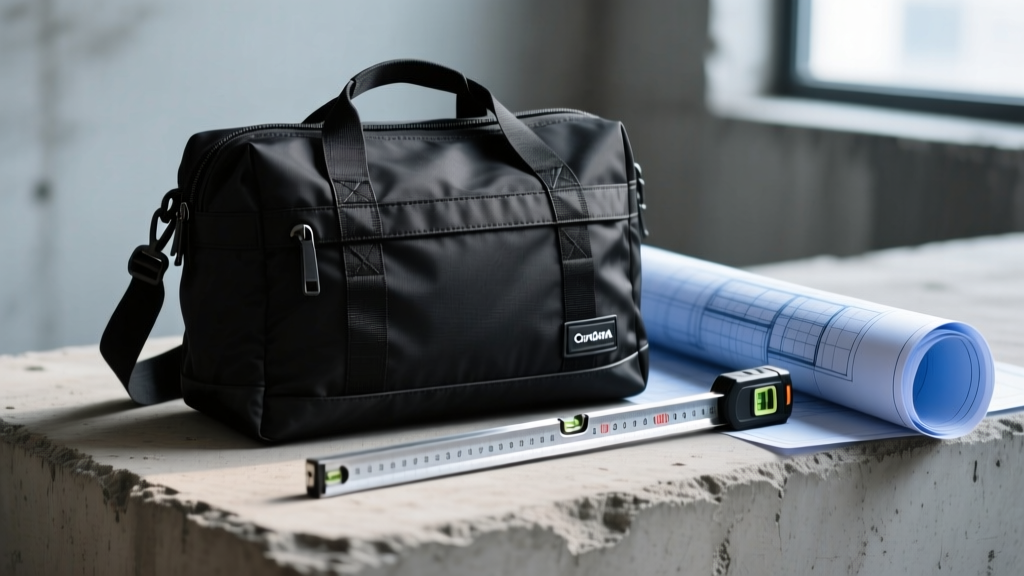
Standardized Testing: Beyond the Marketing Hype
Manufacturers frequently use subjective terms like "heavy-duty" or "military-grade." As construction professionals, we rely on standardized testing frameworks to quantify durability. When evaluating handbag materials, cross-reference the manufacturer's technical data sheets with the following standards:
- ASTM D3884 (Rotary Platform Abrasion): Measures a fabric's resistance to surface wear. The test uses a H-18 calibrate wheel under a 500g load. High-end job-site materials should withstand >1,000 cycles before yarn rupture.
- ASTM D5034 (Grab Tensile Strength): Determines the breaking force of the fabric. A minimum threshold of 400 lbs (warp) and 300 lbs (fill) is recommended for bags carrying 15+ lb tech loads.
- Hydrostatic Head (AATCC 127): Measures water resistance in millimeters. For a bag protecting blueprints and tablets, a minimum rating of 3,000mm is required, though 10,000mm is preferred for exterior shell materials.
Job-Site Handbag Material Comparison Matrix
The following matrix compares the four dominant materials used in high-performance architectural and construction handbags, evaluating them against critical job-site metrics and current 2026 market pricing.
| Material | Weight / Denier | Abrasion Cycles (ASTM D3884) | Hydrostatic Head | Avg. Bag Cost (2026) | Primary Failure Mode |
|---|---|---|---|---|---|
| 1000D Cordura Nylon | 1000D / 13.5 oz | > 1,200 cycles | 3,000mm (PU coated) | $180 - $280 | PU Coating Hydrolysis |
| Dyneema Composite (DCF) | 2.92 oz / UHMWPE | > 2,500 cycles | 10,000mm+ (Inherent) | $350 - $500 | Delamination at folds |
| 1050D Ballistic Nylon | 1050D / 14 oz | > 800 cycles | 1,500mm (DWR treated) | $150 - $250 | Seam Slippage / Fraying |
| Martexin Waxed Canvas | 18 oz / Cotton | > 400 cycles | Variable (Re-waxable) | $220 - $400 | Mildew / Alkaline staining |
Deep Dive: Polymer Performance in Construction Environments
1000D Cordura: The Air-Jet Textured Workhorse
According to Invista's Cordura technical specifications, true 1000D Cordura utilizes an air-jet texturing process that roughens the surface of the nylon 6,6 yarn. This creates a canvas-like feel and drastically increases the surface area for abrasion resistance. For a site superintendent who frequently drops their handbag onto rough-trowled concrete or gravel, 1000D Cordura offers the highest threshold against surface scuffing. However, it requires a polyurethane (PU) backing to achieve waterproofing, which is susceptible to hydrolysis in high-humidity environments over a 5-to-7-year lifespan.
Dyneema Composite Fabric (UHMWPE): The Structural Marvel
Ultra-high-molecular-weight polyethylene (UHMWPE), branded as Dyneema, is a material more commonly found in structural tension cables and ballistic armor. As noted by Dyneema's material science data, it is up to 15 times stronger than steel on a weight-for-weight basis. In handbag construction, DCF is created by laminating UHMWPE fibers between thin polyester films. The resulting handbag is entirely waterproof without needing a degradable PU coating, and it resists the alkaline pH of wet concrete dust. The trade-off is structural: DCF lacks drape and flexibility, meaning the handbag will resemble a rigid architectural box rather than a traditional satchel, and repeated sharp folding can cause micro-delaminations in the film matrix.
1050D Ballistic Nylon: High Tensile, Lower Abrasion
Originally developed for WWII flak jackets, ballistic nylon utilizes a 2x2 basket weave. This weave structure provides exceptional tear and tensile strength (ASTM D5034), meaning the fabric will not easily rip if snagged on exposed rebar or scaffolding nails. However, the smooth, tightly packed yarns offer less surface abrasion resistance than Cordura. When dragged across aggregate, the outer layer of yarns can sheer off. Furthermore, the slick nature of the yarns makes it prone to seam slippage if the bag is not constructed with heavy-duty bonded nylon thread (e.g., V-92 or V-138 sizing) and lock-stitched seams.
Critical Failure Modes on the Active Job Site
When evaluating how to select the best material for your handbag, understanding how materials fail in construction-specific environments is paramount.
Waxed canvas and leather are highly prized in architectural studios for their aesthetic patina. However, Portland cement and concrete dust are highly alkaline (pH 12-13). When alkaline dust mixes with moisture on a canvas or leather handbag, it initiates a saponification process that breaks down the natural oils and waxes, leading to premature dry-rot, stiffening, and catastrophic tearing at the stress points. Reserve natural fibers for studio use only.
UV Degradation and Solution-Dyeing
Standard piece-dyed nylons will lose up to 20% of their tensile strength after 500 hours of direct UV exposure—a common scenario for bags left in the bed of a pickup truck or on an exposed roof deck. When specifying a handbag material, require solution-dyed yarns (where the pigment is added to the liquid polymer before extrusion). Solution-dyed fabrics retain their structural integrity and color fastness indefinitely under UV radiation.
Hardware and Anchor Point Shear
A fabric is only as strong as its anchor points. The most common failure in heavy-duty handbags is not the fabric tearing, but the webbing pulling through the fabric at the shoulder strap D-rings. Look for handbags that utilize bartacked box-X stitching on 1.5-inch nylon webbing, anchored through a secondary layer of hypalon or Cordura reinforcement. The ASTM D5034 grab test should be applied to the webbing-to-fabric interface, not just the raw fabric.
Role-Based Selection Framework
To finalize your material selection, align the fabric properties with your specific daily operational parameters on the job site.
- The Field Engineer / Site Superintendent: You are in the dirt, navigating mud, wet concrete, and sharp debris. Selection: 1000D Cordura with a TPU (Thermoplastic Polyurethane) laminate lining. TPU resists hydrolysis far better than standard PU, ensuring the bag remains waterproof through years of wet job-site conditions. Ensure the base features a molded rubberized foot or a double-layer of 1680D ballistic nylon to resist abrasion when set on the ground.
- The Design Architect / Client-Facing PM: You transition between the dusty site and the pristine client boardroom. Selection: A hybrid construction. Look for a primary chassis of 500D Cordura (which offers a cleaner drape and lighter weight than 1000D) accented with full-grain, vegetable-tanned leather handles. The leather provides a professional aesthetic and grips well, while the nylon chassis keeps the weight manageable when carrying heavy laptops and material samples.
- The Specialized Inspector / Drone Operator: You carry highly sensitive, moisture-vulnerable optical and electronic equipment across uneven terrain. Selection: Dyneema Composite Fabric (DCF). The inherent waterproofing, rigid structural protection, and ultra-lightweight nature of DCF allow you to maximize the weight allowance for your actual inspection equipment rather than the bag itself.
By applying structural engineering principles and standardized material testing metrics to your carryall selection, you ensure that your gear will survive the harsh realities of the construction environment while protecting the critical assets inside.
Written by
Elena RodriguezElena Rodriguez is a civil engineer and technical writer specializing in concrete technology, masonry systems, and ASTM/ACI compliance. She earned her B.S. in Civil Engineering from Texas A&M University and spent a decade at a materials testing laboratory, performing over 2,000 concrete compressive strength tests and masonry prism evaluations. Elena is an ACI-certified Field Testing Technician (Grade I) and a member of ASTM Committee C12 on Natural Building Stone. She currently consults on forensic engineering cases involving concrete failures and moisture intrusion. Based in San Antonio, TX, Elena is a proud member of the Society of Women Engineers (SWE) and coaches her daughter's FIRST Robotics team.
More from Elena Rodriguez
View all
Walls & Panels
Cost Analysis: Light Gauge Steel Framing Advantages and Disadvantages
Evaluate light gauge steel framing advantages and disadvantages through a strict cost analysis lens, comparing material, labor, and lifecycle expenses.
Aug 4, 2026

Walls & Panels
Gypsum Board Types: Exact Specifications, Thickness & Dimensions
Compare standard, Type X, and moisture-resistant gypsum board types. Get exact specifications, thicknesses, dimensions, and ASTM standards for your project.
Aug 4, 2026

Fire Resistance
Best Fire-Resistant Outdoor Decking Materials: 2026 Buyer Guide
Discover the best fire-resistant outdoor decking materials for 2026. Compare Class A PVC, aluminum, and hardwood options for WUI compliance and safety.
Aug 4, 2026