Brick Pizza Oven Performance Ratings and Thermal Specs Guide
Analyze brick pizza oven performance ratings, refractory firebrick specs, thermal mass metrics, and high-temperature mortar requirements for optimal baking.
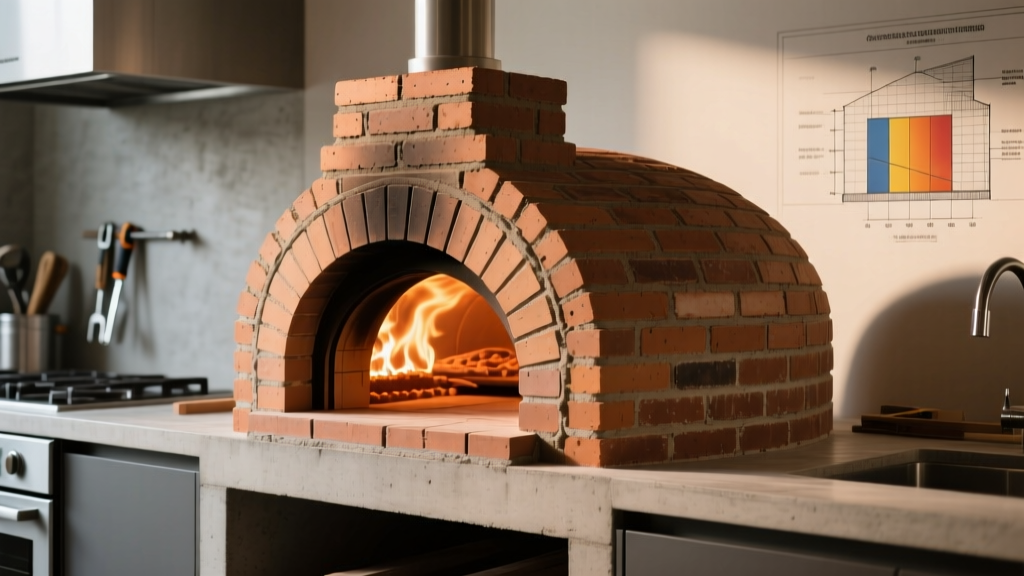
Core Refractory Brick Specifications (ASTM C27)
Constructing a high-performance brick pizza oven requires strict adherence to refractory material standards. Standard clay face bricks will spall, crack, and degrade when subjected to the 800°F to 1,000°F (426°C to 537°C) floor temperatures required for Neapolitan-style baking. The firebox and dome must be constructed using medium-duty firebrick classified under ASTM C27.
Medium-duty firebricks typically contain 30% to 40% alumina and 50% to 60% silica. This specific chemical balance is critical: the silica content provides exceptional thermal shock resistance, allowing the brick to withstand rapid temperature fluctuations during daily heating and cooling cycles without micro-fracturing. High-duty firebricks (with >45% alumina) are engineered for continuous industrial furnace use and lack the thermal shock resilience needed for intermittent pizza oven operation, making them a poor and overly expensive choice.
| Firebrick Classification | Alumina Content | Max Service Temp | Thermal Shock Resistance | Pizza Oven Suitability |
|---|---|---|---|---|
| Low-Duty | 15% - 25% | 1,600°F (871°C) | Moderate | Poor (Fails at peak dome temps) |
| Medium-Duty | 30% - 40% | 2,400°F (1,315°C) | Excellent | Ideal (Optimal heat flux and shock resistance) |
| High-Duty | 45% - 60% | 2,800°F (1,537°C) | Poor | Not Recommended (Prone to spalling in cyclic use) |
Refractory Mortar and Joint Tolerances
The mortar used in a brick pizza oven dome is the most frequent point of structural and thermal failure. Standard Portland cement-based masonry mortars (Type N or Type S) dehydrate and lose structural integrity at temperatures exceeding 400°F. For the inner refractory shell, you must use a non-water-soluble refractory mortar that meets ASTM C199 standards, such as HeatStop 50 or an equivalent calcium aluminate-based premixed product.
For the outer veneer and non-combustible insulation layers, standard Type S mortar is acceptable, as these layers will not exceed 250°F during normal operation.
Thermal Mass and Heat Retention Metrics
Thermal mass dictates how much heat energy the oven can store and how evenly it radiates that heat back into the baking chamber. A standard 42-inch diameter brick pizza oven dome requires approximately 180 to 200 medium-duty firebricks (each weighing roughly 7.5 lbs). This yields a total refractory mass of about 1,500 lbs.
With a specific heat capacity of approximately 0.25 BTU/lb°F for firebrick, a fully saturated 1,500 lb dome holding an average internal temperature of 850°F stores roughly 318,750 BTUs of thermal energy. This massive heat sink is what allows a wood-fired brick pizza oven to bake 60-second pizzas continuously without requiring an active flame inside the baking chamber.
According to thermal dynamics principles outlined by the Masonry Heater Association, optimizing thermal mass requires balancing the thickness of the firebrick. A 2.5-inch thick firebrick floor provides rapid heat transfer to the pizza crust, while a 4.5-inch thick dome wall ensures long-duration radiant heat retention for roasting and bread baking after the fire is removed.
Insulation Performance Ratings
Without adequate insulation, the thermal mass of the brick will dissipate into the surrounding environment, resulting in massive fuel inefficiency and dangerous exterior surface temperatures. High-temperature insulation must be installed directly behind the refractory shell.
| Insulation Material | Max Temp Rating | R-Value per Inch (at 1000°F) | Application Method | Performance Verdict |
|---|---|---|---|---|
| Ceramic Fiber Blanket (8 lb density) | 2,300°F (1,260°C) | ~ 1.8 | Wrapped directly over dome | Superior (Best thermal resistance, lightweight) |
| Vermiculite / Portland Cement (5:1 mix) | 2,000°F (1,093°C) | ~ 0.7 | Poured or troweled over dome | Good (High mass, lower R-value, structural) |
| Perlite / Portland Cement (10:1 mix) | 1,800°F (982°C) | ~ 0.9 | Poured over sub-floor | Excellent for sub-floor (Prevents downward heat loss) |
For optimal performance, specify a minimum of two layers (2 inches total) of 8 lb density ceramic fiber blanket over the dome, followed by a 1-inch air gap, and finally an outer clay brick veneer. This configuration keeps the exterior veneer below 120°F even when the interior dome is at 1,000°F.
Heating Curves and Operational Thresholds
Understanding the heating curve is essential for managing the thermal saturation of the brick. Rushing the heating process causes the interior face of the brick to expand faster than the cold exterior face, resulting in severe thermal spalling.
- Phase 1: Curing (Days 1-5): Small fires not exceeding 200°F to 300°F to slowly drive out ambient moisture from the refractory mortar and brick.
- Phase 2: Ramp Up (Hours 1-2): Medium fire building. Dome temperature reaches 500°F. The brick begins to absorb sensible heat.
- Phase 3: Saturation (Hours 2-3): High-intensity rolling flame. Dome reaches 850°F to 900°F. The firebrick turns white, indicating carbon burn-off and full thermal saturation.
- Phase 4: Baking Equilibrium: Fire is moved to the rear. Floor temperature stabilizes at 750°F to 800°F. The stored BTUs radiate evenly.
Troubleshooting Thermal Failures
Symptom: Hairline Cracks in the Dome Mortar Joints
Cause: Mortar joints were applied too thick (exceeding 1/8-inch) during construction, or the oven was heated too rapidly before the refractory mortar fully cured.
Fix: Minor hairline cracking in refractory mortar is normal and often self-sealing due to thermal expansion. If cracks exceed 1/4-inch, rake out the damaged mortar when the oven is cold and repack with a high-temperature refractory patching compound.
Symptom: Floor Bricks Spalling or Flaking
Cause: Using hard, high-alumina firebricks or standard pavers instead of medium-duty, high-silica firebricks. Alternatively, moisture was trapped under the floor bricks due to a lack of a perlite insulation sub-layer.
Fix: Spalled floor bricks cannot be repaired; they must be carefully chiseled out and replaced with properly rated ASTM C27 medium-duty firebricks laid in a herringbone pattern over a dry-set sand and fireclay mixture to allow for lateral thermal expansion.
Symptom: Rapid Temperature Drop After Fire Removal
Cause: Insufficient insulation mass. Heat is migrating through the dome into the outer masonry or escaping through an uninsulated chimney flue.
Fix: Verify the integrity of the ceramic fiber blanket. If the blanket was compressed or torn during the veneer application, thermal bridging occurs. Add a secondary layer of ceramic fiber or apply a 2-inch coat of vermiculite-cement insulation over the existing exterior shell.