The Best Bonding Methods for Dissimilar Materials in Construction
Discover the best bonding methods for dissimilar materials in construction. Compare epoxies, polyurethanes, and mechanical fasteners for lasting adhesion.

The Physics of Failure: Why Dissimilar Bonds Break
Bonding dissimilar building materials—such as structural steel to concrete, tempered glass to aluminum mullions, or fiber-reinforced polymers (FRP) to timber—introduces complex mechanical and chemical challenges. The primary cause of bond failure in these assemblies is not inadequate adhesive strength, but rather Coefficient of Thermal Expansion (CTE) mismatch. According to the Engineering Toolbox CTE database, aluminum expands at roughly 23 µm/m°C, while structural steel expands at 12 µm/m°C, and glass at just 9 µm/m°C. When a rigid adhesive locks these materials together, a 50°C seasonal temperature swing generates immense shear stress at the bond line, leading to catastrophic delamination.
Chemical Adhesive Selection Matrix
Selecting the correct chemistry requires balancing lap shear strength against elongation at break. The following matrix outlines the four primary structural adhesive families used in modern construction, with current 2026 market pricing for standard 50mL dual-cartridges.
| Chemistry | Tensile/Shear Strength | Elongation at Break | CTE Tolerance | Cost (50mL) | Best Use Case |
|---|---|---|---|---|---|
| Structural Epoxy | 3,500 - 4,500 psi | 1% - 5% (Rigid) | Low | $35 - $50 | Steel-to-concrete, FRP-to-masonry, static load joints |
| Polyurethane (PUR) | 400 - 800 psi | 300% - 600% (Flexible) | High | $15 - $25 | Glass-to-aluminum curtain walls, dynamic expansion joints |
| MS Polymer / Hybrid | 500 - 900 psi | 200% - 400% | High | $20 - $35 | Exterior cladding, UV-exposed metal-to-composite panels |
| MMA Acrylic | 2,500 - 3,500 psi | 10% - 15% | Medium | $40 - $65 | LSE plastics (HDPE/UHMW) to metals, minimal surface prep |
Top Product Specifications for High-Stress Joints
1. Structural Epoxies: 3M Scotch-Weld DP420 & Lord 320/322
For rigid, high-shear applications where substrates share similar CTEs (e.g., bonding carbon steel plates to reinforced concrete for seismic retrofitting), two-part toughened epoxies are mandatory. 3M Scotch-Weld DP420 delivers approximately 3,600 psi in overlap shear strength per ASTM D1002 testing standards. Its critical advantage is a 20-minute work life, allowing for complex fixture alignment before the 2-hour handling cure. For vertical concrete applications, Lord 320/322 is preferred due to its high-viscosity, non-sag rheology, which prevents adhesive slump in overhead and vertical shear joints.
2. Polyurethanes & MS Polymers: Sikaflex-252 & SikaTack PRO
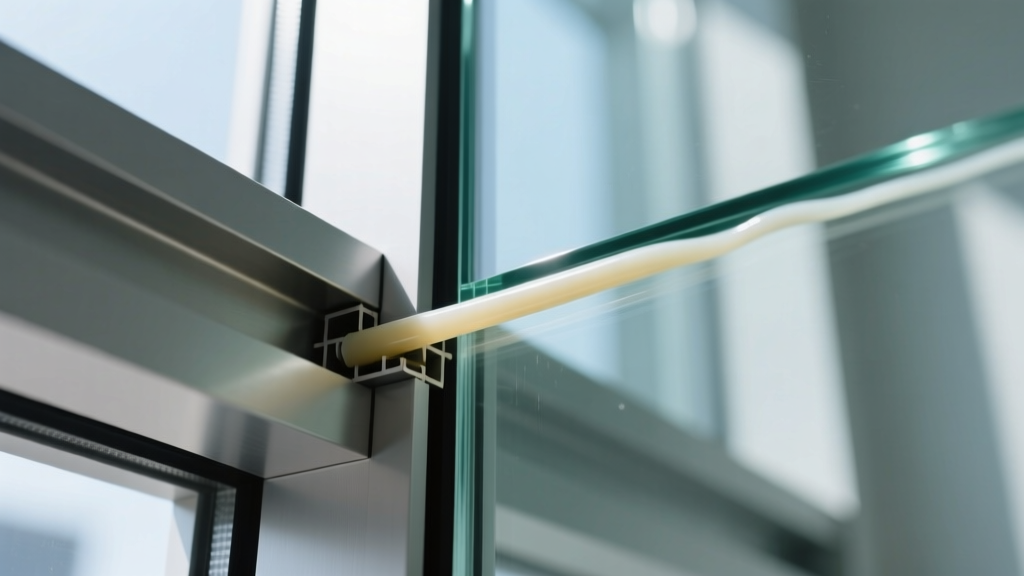
When bonding glass to aluminum in unitized curtain wall systems, the adhesive must act as a structural shock absorber. Sikaflex-252 is a structural polyurethane offering 400% elongation, accommodating the severe CTE mismatch between glass and aluminum framing during extreme thermal cycling. However, polyurethanes degrade under prolonged UV exposure. For exterior architectural cladding where the bond line is exposed to sunlight, SikaTack PRO (an MS Polymer hybrid) provides comparable flexibility but with inherent UV stability, eliminating the need for secondary sealant caps and reducing long-term maintenance costs.
3. Methyl Methacrylate (MMA) Acrylics: Plexus MA300
Modern construction increasingly utilizes low surface energy (LSE) materials like HDPE, polypropylene, and powder-coated aluminum. Traditional epoxies and polyurethanes fail on these surfaces without aggressive, environmentally hazardous primers. Plexus MA300 is a two-part MMA acrylic that chemically bites into LSE plastics and oily metals without priming. It achieves structural shear strength (approx. 3,000 psi) and is the industry standard for bonding composite architectural panels to extruded aluminum subframes in modular construction.
Surface Preparation: The 80% Rule of Adhesion
Adhesion is fundamentally a surface phenomenon. A substrate must achieve a surface energy of at least 38 dynes/cm to allow structural adhesives to properly 'wet out' and form secondary chemical bonds. Relying solely on the adhesive's marketed strength without proper preparation guarantees failure.
- Dyne Testing: Use dyne pens on plastics and painted metals prior to bonding. If the ink beads up, surface energy is too low.
- The SME Protocol (Solvent-Mechanical-Solvent): Never abrade a dirty surface. The first solvent wipe (using methyl ethyl ketone or isopropyl alcohol) removes oils. Abrasion (80-grit aluminum oxide) increases surface area and mechanical interlocking. The second solvent wipe removes the resulting dust.
- Plasma & Flame Treatment: For high-volume modular construction involving LSE plastics, atmospheric plasma treatment raises surface energy above 50 dynes/cm in seconds, replacing manual solvent wiping and ensuring 100% cohesive failure rates during QA testing.
Hybrid Bonding: Combining Mechanical and Chemical Fastening
In critical structural nodes, relying entirely on chemical adhesion introduces unacceptable risk if the bond line is subjected to unexpected peel forces (which adhesives handle poorly compared to shear forces). The best practice for high-load dissimilar joints is hybrid bonding.
By combining drawn-arc weld studs or structural blind rivets with a flexible structural acrylic or polyurethane, the mechanical fasteners handle the peel and cleavage loads, while the adhesive handles the shear loads and seals the joint against moisture ingress. This method, heavily utilized in the 3M Structural Adhesives portfolio guidelines for heavy equipment and modular buildings, provides a redundant load path. If the adhesive degrades over 40 years, the mechanical fasteners prevent sudden structural collapse, transitioning the failure mode from catastrophic to detectable.
Troubleshooting Common Bond Failures
When a dissimilar material bond fails in the field, forensic analysis of the fracture surface dictates the corrective action. Use this diagnostic matrix to identify root causes.
| Failure Mode | Visual Evidence | Root Cause | Corrective Action |
|---|---|---|---|
| Adhesive Failure | Adhesive remains entirely on one substrate; the other is clean. | Poor surface prep, moisture contamination, or surface energy below 38 dynes/cm. | Implement SME prep protocol; verify with dyne pens; switch to MMA acrylic if LSE substrate. |
| Cohesive Failure | Adhesive splits down the middle; residue is left on both substrates. | The adhesive is under-engineered for the applied shear/tensile load. | Increase bond line thickness; switch to a higher-modulus structural epoxy; add mechanical fasteners. |
| Substrate Failure | The adhesive holds perfectly, but the wood, foam, or plastic substrate tears apart. | The adhesive is stronger than the substrate material itself. | No adhesive correction needed. Redesign the substrate geometry or distribute the load over a larger bond area. |
| Thermal Fatigue | Micro-cracking within the adhesive bead after seasonal temperature shifts. | CTE mismatch between substrates exceeds the adhesive's elongation limits. | Switch from rigid epoxy to high-elongation polyurethane or MS polymer; increase bond line thickness to 2mm+. |
Mastering the selection of bonding methods for dissimilar materials requires moving beyond generic 'construction adhesive' labels. By calculating the thermal shear stress, matching the adhesive's elongation properties to the CTE delta, and enforcing strict surface energy protocols, contractors and engineers can achieve structural joints that outlast the mechanical fasteners they replace.
Written by
James ThorntonJames Thornton is a construction industry veteran with 25 years of hands-on experience in wood framing, lumber grading, and residential building codes. He started as a framing carpenter in rural Oregon, earned his ICC Residential Building Inspector certification, and eventually became a senior plan reviewer for the City of Portland Bureau of Development Services. James holds a B.S. in Wood Science & Technology from Oregon State University and is a certified lumber grader through the West Coast Lumber Inspection Bureau (WCLIB). He has inspected over 3,000 residential construction sites and authored the city's internal guide on advanced framing techniques (2x6 at 24" O.C.). James lives in Bend, OR, where he builds custom timber-frame cabins and competes in lumberjack sports.
More from James Thornton
View all
Insulation
Best Home Insulation Materials: Complete 2026 Guide
Compare top home insulation materials for 2026. Find R-values, installed costs per square foot, and best uses for fiberglass, spray foam, and mineral wool.
Aug 4, 2026

Sustainable Building
Certify Your Green Building Material for LEED and WELL
Step-by-step guide to certifying a green building material for LEED v5 and WELL v2. Master EPDs, HPDs, and VOC limits for 2026 project specifications.
Aug 4, 2026

Stone & Masonry
Veneer Stacked Stone Panels: Interior Design & Style Showcase
Discover how veneer stacked stone panels transform interiors. Explore modern design profiles, material pairings, and technical installation specs.
Aug 4, 2026