Best Material for Chicken Run Enclosures: A Predator-Proof Guide
Discover the best material for chicken run enclosures. This guide covers 19-gauge hardware cloth, L-footer trenching, and predator-proof fasteners.

The Anatomy of a Predator-Proof Perimeter
Constructing a secure chicken run requires treating the enclosure not as a simple pen, but as a fortress. The primary failure point in most backyard flocks is the assumption that standard agricultural wire is sufficient. Predators such as raccoons, foxes, coyotes, and hawks possess specialized physical adaptations—ranging from hand-like dexterity and immense bite force to digging endurance and aerial strike speeds—that easily compromise substandard materials.
When determining the best material for chicken run construction, you must evaluate three distinct zones: the vertical fencing, the ground-level perimeter, and the overhead roofing. Each zone requires specific material properties to counter specific predator threat models. According to guidelines from eXtension Poultry, a multi-layered approach combining heavy-gauge wire mesh with physical digging barriers is the only reliable method for long-term flock survival.
Hexagonal 'chicken wire' (poultry netting) is designed solely to keep chickens contained, not to keep predators out. Raccoons can easily reach their paws through the 1-inch hexagonal gaps, grab a bird, and pull it apart piece by piece without ever breaching the wire itself. Furthermore, the thin 20-gauge wire is easily snapped by coyotes and foxes. Never use hexagonal netting as your primary structural barrier.
Evaluating the Best Material for Chicken Run Fencing
For vertical barriers, welded wire mesh is the undisputed standard. However, not all welded wire is created equal. The specification you need is 1/2-inch x 1/2-inch mesh, 19-gauge or thicker. This aperture size prevents predators from reaching through, while the 19-gauge thickness (0.041 inches) resists bending and biting.
| Material Type | Mesh Size & Gauge | Predator Resistance | Best Application |
|---|---|---|---|
| 19-Gauge Hardware Cloth | 1/2' x 1/2', 19ga | Excellent (Stops all mammals & snakes) | Lower 4 feet of run, coop windows |
| 16-Gauge Welded Wire | 1' x 2', 16ga | Good (Stops dogs/coyotes, fails vs raccoons) | Upper run framing, structural support |
| Hexagonal Poultry Netting | 1', 20ga | Poor (Easily breached by raccoons/foxes) | Internal garden protection only |
| Chain Link Fencing | 2' diamond, 11.5ga | Moderate (Stops large dogs, weasels enter) | Large run perimeters (must be lined) |
The GAW vs. GBW Distinction
When purchasing hardware cloth, the galvanization process dictates the lifespan of your fence. GBW (Galvanized Before Welding) wire is coated, then welded. The heat from the welding torch burns off the zinc coating at every intersection, creating microscopic rust points that will fail within 2 to 3 years in outdoor conditions. You must specifically source GAW (Galvanized After Welding) hardware cloth. In the GAW process, the welded mesh is dipped in molten zinc after fabrication, ensuring a thick, uniform coating that encapsulates the vulnerable weld joints, extending the material's life to 10+ years.
Ground-Level Application: Defeating Diggers
Foxes and coyotes will not attempt to bite through 19-gauge steel; they will simply dig under it. A vertical fence buried straight down is easily bypassed, as predators instinctively dig directly at the base of a barrier. To counter this, you must install an 'L-Footer' apron.
Average Raccoon Bite & Pull Force
800+ PSI
Capable of snapping standard 20-gauge wire and tearing through weak weld points.
The L-Footer Trenching Method:
- Dig a Trench: Excavate a trench 12 inches deep and 4 inches wide along the entire exterior perimeter of the run.
- Bend the Mesh: Take your 36-inch wide hardware cloth and bend the bottom 12 inches outward at a strict 90-degree angle, creating an 'L' shape.
- Position the Apron: Drop the vertical portion into the trench. The 12-inch horizontal apron should point outward, away from the coop, resting just below the soil surface.
- Backfill and Secure: Fill the trench with soil and tamp it down. When a predator digs at the base of the fence, their paws will hit the horizontal wire apron, triggering their instinct to back up rather than dig deeper.
Roofing Materials: Overhead Protection
Aerial predators like hawks and owls strike with immense kinetic energy, while climbing predators like raccoons will scale adjacent trees to drop into an open run. The Humane Society of the United States strongly recommends fully enclosed runs for urban and suburban flocks.
Solid vs. Netted Roofing
For permanent structures, multi-wall polycarbonate panels (such as Suntuf) are the premier choice. They block rain, preventing the run from turning into a mud pit (which breeds coccidiosis and respiratory issues), while allowing 90% light transmission. Install these on a roof with a minimum 2/12 pitch to shed snow load.
If a solid roof is cost-prohibitive, use heavy-duty knotted polyethylene netting with a breaking strength of at least 400 lbs. Avoid standard bird netting, which degrades under UV exposure within a single season and offers zero resistance to a climbing raccoon. Secure the netting using bungee ball ties every 18 inches to allow for tension adjustments and wind sway.
Fasteners and Framing: Securing the Weakest Links
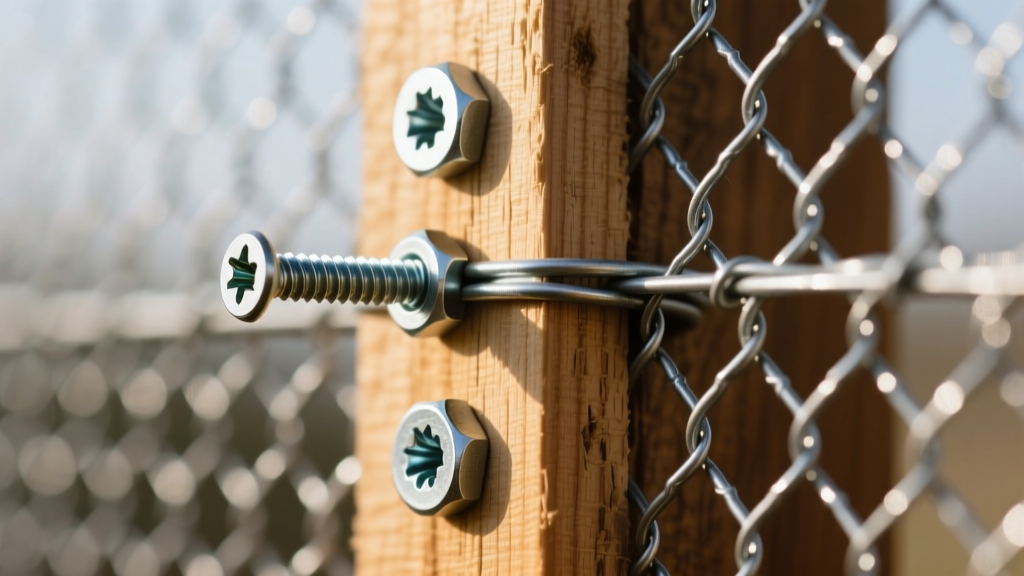
The best material for chicken run walls is useless if the fasteners fail. Predators will pull at the edges of the wire mesh. Standard staples driven with a hammer are insufficient; they pull out easily when the wood swells and contracts with seasonal moisture changes.
- Primary Fasteners: Use #8 x 1-1/4 inch galvanized washer-head wood screws paired with 1/2-inch galvanized fender washers. The wide surface area of the fender washer grips the wire mesh securely without snapping the wire or pulling through the gaps.
- Spacing: Place a fastener every 6 inches along all perimeter framing, and every 12 inches along intermediate studs.
- Framing Lumber: If using pressure-treated wood, ensure it is treated with ACQ (Alkaline Copper Quaternary). ACQ is highly corrosive to standard metals. You must use hot-dipped galvanized or stainless steel screws; standard zinc-plated screws will corrode and snap within 18 months when in contact with ACQ lumber.
2026 Material Cost Breakdown
Budgeting for a predator-proof run requires accounting for premium materials. Below are average retail costs for a 10x10 foot run enclosure in 2026.
| Material Component | Specification | Estimated Cost |
|---|---|---|
| GAW Hardware Cloth | 36' x 50' roll, 19-gauge | $145.00 - $165.00 |
| Washer-Head Screws | 1 lb box (approx. 220 pcs) | $18.00 - $24.00 |
| Polycarbonate Roof Panels | 26' x 8' multi-wall (x2) | $110.00 - $140.00 |
| ACQ Pressure-Treated 2x4s | 8-foot studs (x12) | $75.00 - $95.00 |
Frequently Asked Questions
Can I use electric poultry netting instead of hardware cloth?
Electric poultry netting is an excellent rotational grazing tool and provides a strong psychological deterrent to coyotes and foxes. However, it requires constant maintenance, a reliable energizer (minimum 0.25 joules), and weeding to prevent voltage drain. It should not replace a permanent physical barrier for nighttime security or in heavily wooded areas where falling branches can short out the fence.
How do I protect the run from rats and weasels?
Rats and weasels can squeeze through gaps as small as 3/4 of an inch. This is why 1/2-inch hardware cloth is mandatory. Additionally, ensure that all door frames have a 1x2 inch wooden stopper installed on the inside, so the door closes flush against the frame, eliminating the 1/4-inch gap that typically exists on the hinge side of standard shed doors.
Written by
David NakamuraDavid Nakamura is a licensed architect (AIA) and construction technology writer focused on sustainable building methods, mass timber engineering, and high-performance building envelopes. He holds a Master of Architecture from the University of Washington and is a certified Passive House Consultant (CPHC). David spent eight years at the Seattle firm Mithun, where he led the design of three LEED Platinum projects, before founding his own practice specializing in net-zero residential design. He serves on the editorial advisory board of GreenBuilder Magazine and has authored peer-reviewed papers on cross-laminated timber (CLT) connections for the Journal of Structural Engineering. In his spare time, David teaches woodworking at Pratt Fine Arts Center and kayaks the Puget Sound.
More from David Nakamura
View all
Construction Cost
Labor Cost to Build a Deck Per Sq Ft: 2026 Installation Guide
Discover the exact labor cost to build a deck per sq ft in 2026. This installation guide breaks down contractor rates, complexity factors, and hidden fees.
Aug 4, 2026

Construction Cost
How Much Does It Cost to Build a 3 Bedroom House? Financing Guide
Learn exactly how much it costs to build a 3 bedroom house and explore 2026 financing options, construction loan types, and budget frameworks for your build.
Aug 4, 2026

Construction Cost
Cost to Build a Tennis Court: 2026 Guide
How much does it cost to build a tennis court in 2026? Breakdowns for asphalt, concrete, and synthetic surfaces plus fencing and lighting.
Jul 30, 2026