Best Couch Material for Cats With Claws: 2026 Fabric Guide
Discover the best couch material for cats with claws. Compare Crypton, microfiber, and velvet using 2026 textile durability standards.

Residential Interior Specifications: The Science of Scratch-Resistant Upholstery
When specifying materials for residential interior fit-outs in households with felines, standard aesthetic criteria must yield to extreme mechanical durability. The search for the best couch material for cats with claws is not merely about finding a tough fabric; it is a matter of textile engineering, specifically analyzing weave topology, fiber tensile strength, and surface friction. Cats do not scratch upholstery to destroy it; they scratch to shed the outer sheath of their claws and mark territory. Therefore, the ideal material must resist the mechanical hooking action of a feline claw while offering zero tactile reward.
To understand feline fabric destruction, interior specifiers must look at weave structures. According to behavioral studies outlined by the ASPCA, cats seek out materials that provide resistance and allow them to dig their claws in and pull back. Fabrics with looped weaves, high-pile textures, or loose threads act as mechanical traps. When a claw catches a loop, the resulting tension pulls the warp and weft threads out of alignment, causing catastrophic structural failure of the upholstery surface. The solution lies in flat, tightly woven, or short cut-pile textiles that offer no leverage.
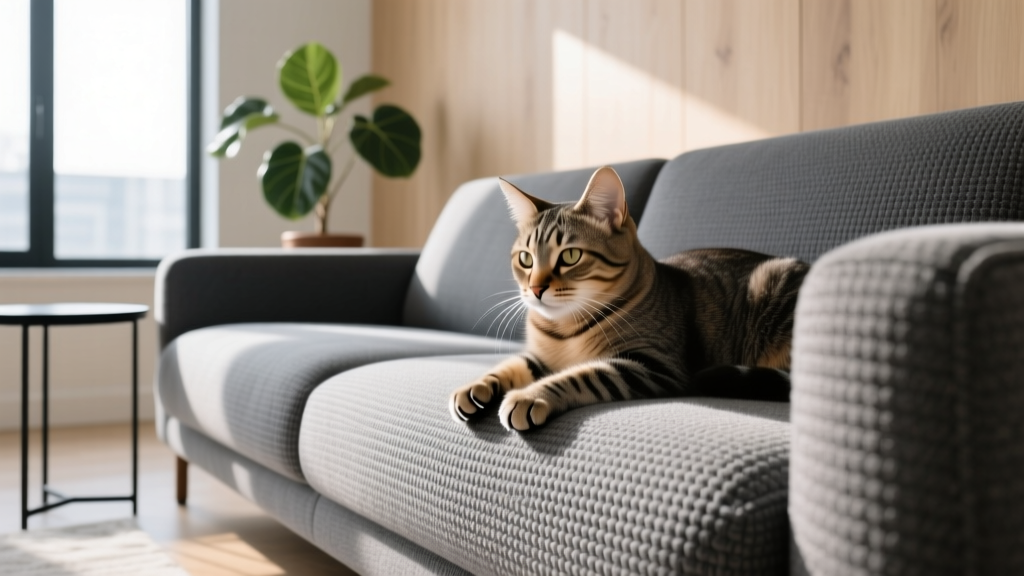
Material Comparison Matrix: Durability & Feline Resistance
When evaluating textiles for high-wear residential environments, professionals rely on the Wyzenbeek abrasion test (ASTM D4157), which measures a fabric's ability to withstand surface wear. While originally designed for human friction, a high double-rub count strongly correlates with the tightness of the weave, which directly prevents claw penetration. Below is a comparative analysis of the top-performing upholstery materials for 2026.
| Material Type | Weave Topology | Wyzenbeek Rating | Claw Snag Risk | Stain Resistance | Approx. Cost (per yard) |
|---|---|---|---|---|---|
| Crypton Home | Tight Flat Weave + Barrier | 50,000+ Double Rubs | Extremely Low | Superior (Moisture Proof) | $90 - $140 |
| Microfiber | Ultra-Tight Knit/Weave | 30,000 - 45,000 | Low | Moderate (Requires Treatment) | $25 - $50 |
| Short-Pile Velvet | Dense Cut Pile | 40,000 - 60,000 | Low | Moderate | $60 - $110 |
| Heavy Canvas/Denim | Plain/Twill Weave | 25,000 - 35,000 | Moderate | Low (Absorbs Liquids) | $15 - $35 |
Deep Dive: Top Contenders for Cat-Proof Sofas
Crypton Home Fabric: The Gold Standard in Performance Textiles
For high-end residential projects where budget allows, Crypton remains the undisputed leader in pet-friendly upholstery. Crypton is not a specific fiber, but rather a proprietary engineering process applied to various woven fabrics. According to Crypton's technical specifications, the fabric undergoes an immersive treatment that wraps every individual fiber in a stain-resistant formula, followed by a moisture barrier backing.
From a feline-resistance standpoint, Crypton fabrics are woven with extreme tightness, often exceeding 50,000 double rubs on the Wyzenbeek scale. The surface is so dense and slick that cat claws simply glide off rather than catching. Furthermore, if a cat does manage to leave a mark, or if the sofa is subjected to pet accidents, the hydrophobic barrier prevents liquids and odors from penetrating the foam cushioning. The primary drawback is the premium cost, but for a custom-built sectional, the longevity justifies the investment.
Microfiber and Microsuede: The Budget Workhorse
Microfiber is constructed from ultra-fine synthetic fibers, typically a polyester-nylon blend, where each filament is less than 1 denier (thinner than a strand of silk). Because the fibers are so microscopic, they can be woven or knitted into an incredibly dense matrix. This density is what makes microfiber an excellent choice for cat owners. The tight interlocking structure leaves no gaps for claws to hook into.
Microsuede, a variation of microfiber, is brushed to create a soft, suede-like nap. While it feels luxurious, the nap is a cut pile, meaning there are no loops to snag. If a cat scratches microfiber, the worst-case scenario is usually a slight shifting of the surface fibers, which can often be brushed back into place with a damp sponge. However, microfiber is highly susceptible to oil-based stains and body oils from human skin, requiring regular professional steam cleaning to prevent darkening over time.
Short-Pile Velvet: The Unexpected Hero
Velvet is frequently dismissed by pet owners as too delicate, but this is a misconception rooted in confusing velvet with fragile silk blends. Modern residential velvet is typically woven from high-durability polyester or nylon. The secret to velvet's cat resistance lies in its cut-pile construction. The fibers stand straight up and are sheared extremely short. When a cat attempts to scratch velvet, their claws encounter a dense forest of blunt fiber ends rather than a weave they can dig into. The claws simply slide between the fibers without catching.
Additionally, velvet's light-reflecting properties naturally camouflage minor surface abrasions. For interior designers specifying a formal living room that must withstand a multi-cat household, a heavy-duty polyester velvet (look for a minimum of 40,000 double rubs) provides an elegant aesthetic without sacrificing durability.
Materials to Absolutely Avoid in Feline Households
Specifying the wrong material can result in a destroyed piece of furniture within weeks. The following textiles should be strictly excluded from any interior fit-out involving cats:
- Chenille and Bouclé: These fabrics are defined by their looped, textured yarns. They act like a cat scratching post, inviting destruction and unraveling instantly when caught by a claw.
- Tweed and Slubbed Linens: The irregular, thick-and-thin yarns create a highly textured surface with loose fibers that cats find irresistible to pull and fray.
- Faux Leather (PU Leather): While top-grain leather can sometimes be buffed to remove minor scratches, polyurethane (PU) faux leather is catastrophic. Once a cat punctures the thin plastic top layer, the material will delaminate and peel, rendering the entire sofa unsalvageable.
- Silk and Rayon Blends: These natural and semi-synthetic fibers lack the tensile strength to resist tearing and are highly prone to permanent water spotting from pet accidents.
The Interior Specifier's Decision Tree
Use this framework to select the exact material specification based on the client's lifestyle and budget constraints:
- Is the household prone to pet accidents (urine/vomit) in addition to scratching?
Yes: Specify Crypton Home Fabric. The moisture barrier is non-negotiable for biohazard protection.
No: Proceed to step 2. - Is the budget constrained to under $1,500 for the entire furniture piece?
Yes: Specify a high-density polyester Microfiber or Microsuede. Ensure it is treated with a topical fabric protector like Scotchgard.
No: Proceed to step 3. - Does the design scheme require a formal, high-sheen, or luxurious aesthetic?
Yes: Specify a heavy-duty Polyester Velvet (minimum 40,000 Wyzenbeek double rubs).
No: Specify a tight-weave Canvas or Denim blend, ensuring the weave is flat and devoid of slubs.
Maintenance and Repair Protocols for Upholstery
Even the most durable textiles require specific maintenance protocols to extend their lifecycle in a feline environment. For routine cleaning, avoid harsh chemical solvents that can degrade the synthetic fibers or strip factory-applied stain guards. Instead, utilize enzymatic cleaners specifically formulated for pet proteins. These cleaners break down the amino acids in pet dander and saliva, eliminating the scent markers that encourage cats to return to the same spot.
If a minor snag does occur in a microfiber or canvas weave, never pull the loose thread. Use a pair of fine-tipped embroidery scissors to carefully snip the snagged fiber flush with the surface, then use a soft-bristled brush to redistribute the surrounding fibers. Finally, advise the homeowner to keep a sisal scratching post positioned immediately adjacent to the sofa's most vulnerable corners, redirecting the feline's natural territorial marking behavior away from the upholstery.
Pro-Tip for Specifiers: Always request a physical memo sample of the fabric before finalizing the order. Perform the 'Claw-Catch Test' by running a fine metal pick or a sewing needle across the surface at a 45-degree angle. If the tool catches or pulls a thread, the fabric will fail against cat claws. If it glides smoothly, the material is approved for specification.
Written by
James ThorntonJames Thornton is a construction industry veteran with 25 years of hands-on experience in wood framing, lumber grading, and residential building codes. He started as a framing carpenter in rural Oregon, earned his ICC Residential Building Inspector certification, and eventually became a senior plan reviewer for the City of Portland Bureau of Development Services. James holds a B.S. in Wood Science & Technology from Oregon State University and is a certified lumber grader through the West Coast Lumber Inspection Bureau (WCLIB). He has inspected over 3,000 residential construction sites and authored the city's internal guide on advanced framing techniques (2x6 at 24" O.C.). James lives in Bend, OR, where he builds custom timber-frame cabins and competes in lumberjack sports.
More from James Thornton
View all
Insulation
Best Home Insulation Materials: Complete 2026 Guide
Compare top home insulation materials for 2026. Find R-values, installed costs per square foot, and best uses for fiberglass, spray foam, and mineral wool.
Aug 4, 2026

Sustainable Building
Certify Your Green Building Material for LEED and WELL
Step-by-step guide to certifying a green building material for LEED v5 and WELL v2. Master EPDs, HPDs, and VOC limits for 2026 project specifications.
Aug 4, 2026

Stone & Masonry
Veneer Stacked Stone Panels: Interior Design & Style Showcase
Discover how veneer stacked stone panels transform interiors. Explore modern design profiles, material pairings, and technical installation specs.
Aug 4, 2026