Cable Insulation Materials: PVC vs XLPE vs EPR Compared
Compare top cable insulation materials like PVC, XLPE, and EPR for commercial building wiring. Discover thermal limits, costs, and NEC code compliance.

Selecting the correct cable insulation materials is a critical engineering decision that dictates the safety, longevity, and code compliance of a building's electrical infrastructure. While structural insulation focuses on thermal and acoustic resistance, electrical insulation serves as the dielectric barrier preventing arc faults, signal attenuation, and catastrophic fires. In 2026, commercial and industrial construction relies heavily on three primary dielectric polymers: Polyvinyl Chloride (PVC), Cross-Linked Polyethylene (XLPE), and Ethylene Propylene Rubber (EPR). Each material exhibits distinct thermal thresholds, chemical resistances, and mechanical behaviors under fault conditions.
The Core Contenders in Building Wire Insulation
Understanding the baseline specifications of these polymers is essential for specifying engineers and procurement managers. The following matrix outlines the critical performance metrics for standard building wire applications.
| Material | Max Continuous Temp | Short-Circuit Temp | Dielectric Strength (kV/mm) | Primary Building Application |
|---|---|---|---|---|
| PVC (Thermoplastic) | 75°C to 105°C | 150°C | 20 - 30 | Standard branch circuits (THHN/THWN-2) |
| XLPE (Thermoset) | 90°C | 250°C | 25 - 35 | Feeders, wet locations, high-heat (XHHW-2) |
| EPR (Thermoset Rubber) | 90°C to 105°C | 250°C | 20 - 25 | Medium-voltage campus/hospital feeders |
| PTFE / FEP (Fluoropolymer) | 90°C to 250°C | 250°C+ | 40 - 60 | Plenum spaces, aerospace, high-temp |
Polyvinyl Chloride (PVC): The Commercial Standard
PVC remains the most ubiquitous cable insulation material in North American commercial construction, primarily utilized in THHN (Thermoplastic High Heat-resistant Nylon-coated) and THWN-2 configurations. The insulation relies on a dual-layer approach: a base PVC dielectric layer surrounded by a thin nylon jacket. This nylon layer drastically reduces the coefficient of friction, allowing contractors to pull wires through long conduit runs without exceeding the maximum pulling tension limits defined in NEC Chapter 9.
Performance and Failure Modes
PVC is a thermoplastic, meaning it softens and melts when exposed to extreme heat. Under a sustained short-circuit fault, PVC insulation will melt away, potentially causing phase-to-phase faults or ground faults if the circuit breaker fails to trip instantaneously. Furthermore, standard PVC contains halogens. When combusted, it releases hydrogen chloride gas, which is highly toxic and corrosive to adjacent metallic infrastructure.
Under NFPA 70 (National Electrical Code) Article 300.22, standard PVC is strictly prohibited in plenum air-handling spaces due to its toxic smoke profile. Engineers must specify Low Smoke Zero Halogen (LSZH) PVC variants or fluoropolymers like FEP/PTFE for these environments to prevent toxic gas circulation through HVAC systems during a fire.
Cross-Linked Polyethylene (XLPE): High-Heat and Moisture Defense
XLPE represents a significant upgrade over standard PVC for demanding applications. Through a chemical or irradiation cross-linking process (often using peroxides or silane), the linear polyethylene molecules are bonded into a three-dimensional thermoset matrix. This structural transformation fundamentally changes how the material reacts to heat.
Thermal Stability and Short-Circuit Survival
Unlike PVC, XLPE does not melt at high temperatures; it chars. This thermoset property grants XLPE a maximum short-circuit temperature rating of 250°C, compared to PVC's 150°C. In the event of a massive electrical fault, XLPE maintains its physical shape long enough for upstream protective relays to clear the fault, preventing catastrophic phase-to-phase contact. This makes XHHW-2 (XLPE-insulated) wire the mandatory choice for industrial facilities with high fault-current availability.
Additionally, XLPE exhibits superior moisture resistance. While standard PVC can suffer from plasticizer migration and water-treeing degradation when submerged in wet conduits over decades, XLPE's dense molecular structure resists water penetration, making it ideal for underground vaults, concrete-embedded conduits, and exterior building feeds.
Ethylene Propylene Rubber (EPR): Medium-Voltage Flexibility
For large-scale commercial campuses, data centers, and hospitals requiring medium-voltage (5kV to 35kV) distribution, EPR is the premier cable insulation material. EPR is a synthetic rubber that offers exceptional flexibility, which is critical when pulling large-diameter, heavily shielded medium-voltage cables through complex underground duct banks with multiple 90-degree sweeps.
Capacitance and Dielectric Considerations
Engineers must account for EPR's higher dielectric constant (approximately 3.0) compared to XLPE (approximately 2.3). A higher dielectric constant results in higher cable capacitance. In extremely long medium-voltage feeder runs, this increased capacitance generates higher charging currents, which can impact the sizing of upstream transformers and protective relays. However, EPR's outstanding resistance to partial discharge and corona inception makes it highly reliable for continuous 15kV and 25kV building service entrances.
2026 Procurement Metrics and Cost Analysis
Material selection is inevitably tied to project budgets. The pricing delta between thermoplastic and thermoset cable insulation materials has narrowed in 2026 due to optimized cross-linking manufacturing processes, though XLPE and EPR still command a premium. Below is a comparative cost analysis for standard copper conductors.
| Conductor Size | PVC (THHN/THWN-2) | XLPE (XHHW-2) | Cost Delta (XLPE vs PVC) |
|---|---|---|---|
| 12 AWG (Stranded) | $115 / 1,000 ft | $138 / 1,000 ft | +20% |
| 2 AWG (Stranded) | $410 / 1,000 ft | $465 / 1,000 ft | +13% |
| 1/0 AWG (Stranded) | $680 / 1,000 ft | $755 / 1,000 ft | +11% |
Note: Pricing reflects Q1 2026 bulk distributor averages for standard 600V building wire. Medium-voltage EPR cables require custom quoting based on shielding and jacketing requirements.
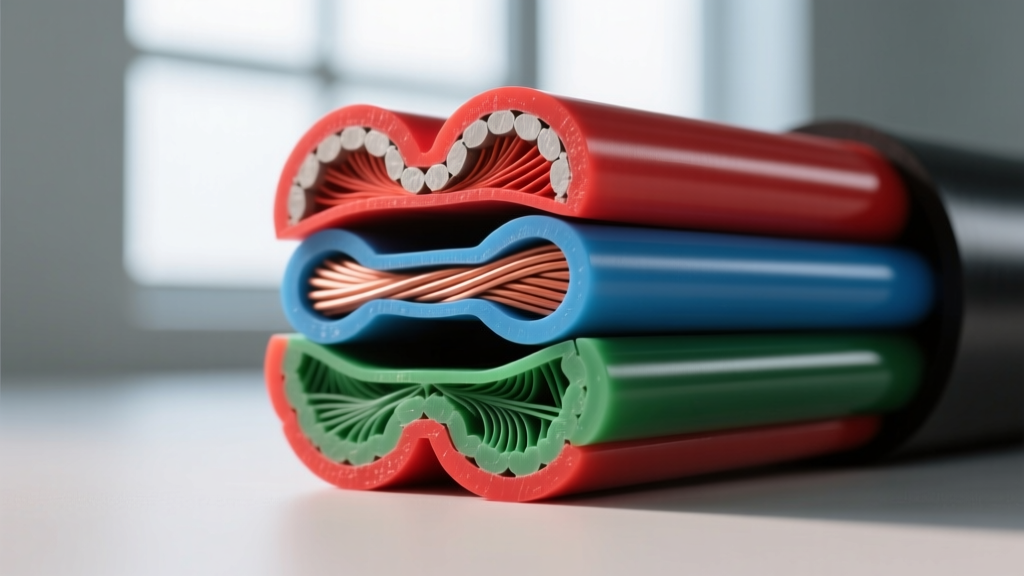
NEC Compliance and Application Decision Tree
To ensure compliance with National Electrical Manufacturers Association (NEMA) standards and local building codes, use the following decision framework when specifying cable insulation materials for your next construction project:
- Standard Dry/Damp Commercial Branch Circuits: Specify PVC (THHN/THWN-2). It is the most cost-effective solution for standard office lighting, receptacles, and HVAC control wiring where ambient temperatures do not exceed 40°C.
- High-Ambient Heat, Wet Locations, or Solar Exposure: Specify XLPE (XHHW-2). The 90°C continuous rating and thermoset moisture barrier prevent insulation degradation in boiler rooms, exterior rooftop units, and underground conduit banks.
- Medium-Voltage (5kV+) Campus Feeders: Specify EPR. Its flexibility eases installation in complex duct banks, and its partial-discharge resistance ensures a 40+ year lifespan for critical infrastructure.
- Plenum Air-Handling Spaces: Specify FEP/PTFE or LSZH-rated PVC. Standard PVC and XLPE will fail fire marshal inspections in plenums due to smoke toxicity and flame spread characteristics.
- High-Vibration or Continuous Flexing (e.g., Elevator Shafts, Cranes): Specify Silicone or specialized Thermoplastic Elastomers (TPE). Standard PVC and XLPE will crack and fail under continuous mechanical flexing.
By matching the specific dielectric, thermal, and mechanical properties of these cable insulation materials to the exact environmental demands of the building zone, engineers can eliminate premature insulation failure, reduce lifecycle maintenance costs, and guarantee strict adherence to modern fire and electrical safety codes. For specialized testing and certification requirements, always verify product listings via Underwriters Laboratories (UL) Wire and Cable Testing directories prior to procurement.
Written by
David NakamuraDavid Nakamura is a licensed architect (AIA) and construction technology writer focused on sustainable building methods, mass timber engineering, and high-performance building envelopes. He holds a Master of Architecture from the University of Washington and is a certified Passive House Consultant (CPHC). David spent eight years at the Seattle firm Mithun, where he led the design of three LEED Platinum projects, before founding his own practice specializing in net-zero residential design. He serves on the editorial advisory board of GreenBuilder Magazine and has authored peer-reviewed papers on cross-laminated timber (CLT) connections for the Journal of Structural Engineering. In his spare time, David teaches woodworking at Pratt Fine Arts Center and kayaks the Puget Sound.
More from David Nakamura
View all
Construction Cost
Labor Cost to Build a Deck Per Sq Ft: 2026 Installation Guide
Discover the exact labor cost to build a deck per sq ft in 2026. This installation guide breaks down contractor rates, complexity factors, and hidden fees.
Aug 4, 2026

Construction Cost
How Much Does It Cost to Build a 3 Bedroom House? Financing Guide
Learn exactly how much it costs to build a 3 bedroom house and explore 2026 financing options, construction loan types, and budget frameworks for your build.
Aug 4, 2026

Construction Cost
Cost to Build a Tennis Court: 2026 Guide
How much does it cost to build a tennis court in 2026? Breakdowns for asphalt, concrete, and synthetic surfaces plus fencing and lighting.
Jul 30, 2026