Carhartt Coveralls Insulated: Crew Cost & Quantity Calculator
Calculate the exact cost and quantity of Carhartt coveralls insulated for your winter insulation crew. Includes sizing, bulk pricing, and ROI data.
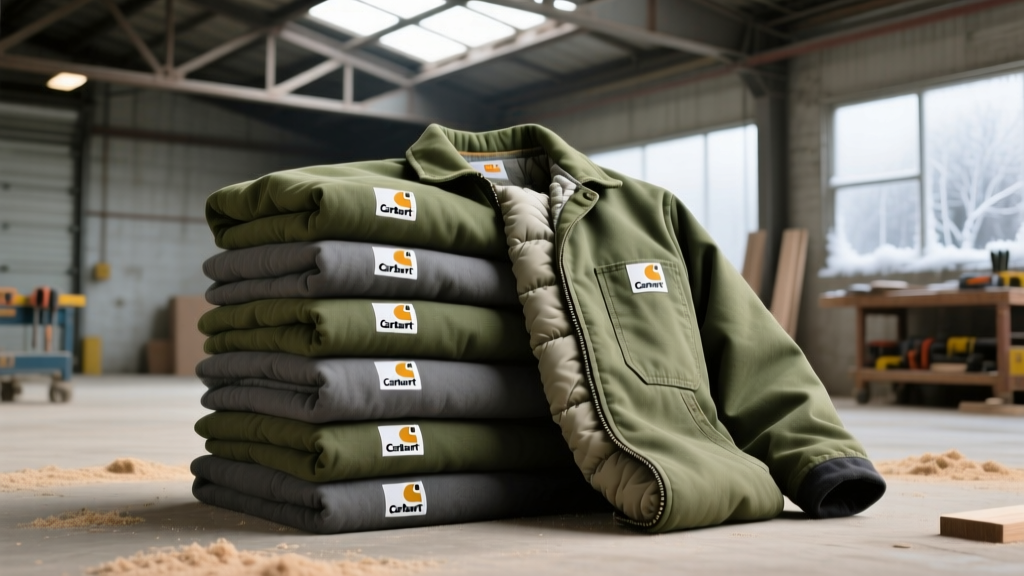
The Overhead of Winter Envelope Sealing
When estimating the cost of winter building envelope projects, contractors frequently account for the material costs of closed-cell spray foam, mineral wool, and rigid foam boards, but overlook the thermal PPE required to install them. Installing insulation in unconditioned, unheated structures during winter months exposes crews to severe cold stress. Outfitting your team with carhartt coveralls insulated for extreme temperatures is not merely a perk; it is a critical line-item expense that directly impacts labor efficiency, safety compliance, and material handling precision.
This estimator guide provides a comprehensive framework for calculating the quantity, sizing, and lifecycle costs of insulated coveralls for an insulation installation crew. By treating thermal workwear as a depreciating asset rather than a one-time uniform expense, project managers can build more accurate winter-overhead budgets.
Carhartt Coveralls Insulated: Model & Material Matrix
Not all insulated coveralls perform equally in the demanding environment of an insulation install. Fiberglass fibers, spray foam overspray, and dense-pack cellulose dust require durable, tightly woven outer shells that resist snagging and chemical adherence. Below is a cost and specification matrix for the three primary Carhartt models utilized by insulation contractors.
| Model Number | Shell Material | Insulation Lining | Weight | Retail Unit Cost | Bulk Cost (12+ Units) |
|---|---|---|---|---|---|
| J130 (Arctic Duck) | 12 oz 100% Cotton Duck | Arctic Quilt (Nylon/Poly) | 4.2 lbs | $139.99 | $124.50 |
| 104396 (Yukon Extremes) | 500d Cordura Nylon | Arctic Quilt (Nylon/Poly) | 3.8 lbs | $169.99 | $152.00 |
| 104940 (Quick Duck) | 8.5 oz 60% Cotton / 40% Poly | Sherpa Fleece | 3.1 lbs | $129.99 | $115.00 |
If your crew primarily installs two-component polyurethane spray foam, the 104396 Yukon Extremes (Cordura shell) is mandatory. The J130 cotton duck shell absorbs isocyanate overspray and becomes permanently stiff, ruining the garment within a single season. The nylon Cordura shell allows for chemical wipe-downs, extending the garment lifecycle by an estimated 18 months.
Sizing Protocols for Insulation Installers
Standard sizing charts fail when estimating for insulation crews. Installers require a high degree of overhead mobility for stapling faced batts, maneuvering spray hoses, and reaching into deep wall cavities. Furthermore, winter base layers add significant bulk.
The Layering Sizing Formula
To calculate the correct order quantity by size, apply the following modifications to your crew's standard measurements:
- Chest/Bust: Add 4 to 6 inches to the base body measurement to accommodate FR (fire-resistant) thermals and mid-layer fleece.
- Inseam: Add 2 inches to the standard inseam. Insulation installers spend 40% of their time kneeling or crouching; a standard inseam will expose the ankle gap when bending, allowing fiberglass particulates to enter the boot.
- Sleeve Length: Add 1 inch to ensure the wrist stays covered during overhead drilling or stapling.
The Crew Quantity & Cost Calculator
Use the following framework to estimate your total initial capital outlay and annual maintenance costs for a standard 12-person insulation crew.
Step 1: Base Allocation & Backup Stock
Never order a 1:1 ratio of coveralls to crew members. Winter conditions, chemical spills, and industrial laundering turnaround times require a buffer. The industry standard allocation formula is:
Total Units = (Crew Size × 2) + (Crew Size × 0.15 for backup stock)
For a 12-person crew: (12 × 2) + 1.8 = 26 total units. The two-suit rotation allows one set to be worn while the other undergoes industrial laundering to remove hazardous particulates.
Step 2: Lifecycle & Laundry Depreciation
Heavy-duty insulated coveralls require specialized industrial laundering to remove embedded fiberglass shards and chemical residues without destroying the thermal quilting. Standard commercial washers degrade the Arctic Quilt lining in roughly 12 cycles.
| Cost Category | Calculation Basis | Estimated Annual Cost (12-Person Crew) |
|---|---|---|
| Initial Outlay (Yukon 104396) | 26 units × $152.00 (Bulk) | $3,952.00 |
| Industrial Laundry Service | 26 units × $8.50/wash × 20 weeks | $4,420.00 |
| Mid-Season Replacements (15%) | 4 units × $152.00 | $608.00 |
| Total Year-One PPE Cost | $8,980.00 |
ROI Analysis: PPE Investment vs. Cold-Weather Productivity Loss
Is an $8,980 annual line item justifiable for thermal PPE? To determine ROI, estimators must weigh the cost of the carhartt coveralls insulated against the documented productivity losses associated with cold stress.
"Cold stress can lead to serious health issues, including trench foot, frostbite, and hypothermia. Workers exposed to cold environments experience reduced manual dexterity, impaired judgment, and increased error rates, directly impacting construction safety and efficiency." — Occupational Safety and Health Administration (OSHA)
According to NIOSH cold stress guidelines, manual dexterity drops significantly when core body temperature fluctuates. In insulation installation, reduced dexterity leads to:
- Material Waste: Improperly cut batts or misapplied spray foam due to stiff fingers, increasing material overage by 4-7%.
- Labor Inefficiency: Crews taking frequent, unstructured warming breaks in the work truck, reducing billable installation hours by up to 15% on days below 30°F.
- Rework Costs: Gaps in the thermal envelope caused by rushed work to escape the cold, leading to failed blower-door tests and costly callbacks.
By investing $748 per worker annually in premium thermal coveralls, contractors typically recoup the cost within the first three weeks of winter operations through maintained productivity rates, reduced material waste, and zero cold-stress related downtime.
Estimator FAQ
Can we expense insulated coveralls as a consumable material?
For accounting and bidding purposes, insulated coveralls should be categorized under "Job-Site Safety & PPE Overhead" rather than direct consumable materials. However, if the coveralls are strictly required for a specific hazardous insulation task (e.g., handling high-itch mineral wool or toxic spray foam chemicals), they can be allocated directly to that specific project's safety budget.
How do we handle sizing discrepancies across a diverse crew?
Maintain a centralized sizing matrix at the estimator level. Do not rely on verbal size requests. Require each crew member to submit chest, waist, and inseam measurements in inches. Cross-reference these with the manufacturer's specific "tall" and "big" SKU variations. Carhartt offers specific tall inseams (e.g., 32" and 34" instead of the standard 30") which are critical for preventing ankle exposure during overhead insulation work.
Are lighter Sherpa-lined models acceptable for attic insulation?
No. While attics may seem enclosed, winter attic spaces are heavily ventilated and subject to extreme wind-wash. Sherpa fleece (like the 104940 model) is highly breathable and offers poor wind resistance, leading to rapid convective heat loss. Always specify wind-resistant, tightly woven nylon or heavy duck canvas shells with quilted linings for attic and crawlspace environments.