Top Electrical Insulation Material Options Compared for 2026 Projects
Compare top electrical insulation material options for 2026 building projects. Analyze XLPE, PTFE, and Mica composites for dielectric strength and cost.
The Critical Role of Dielectric Selection in Modern Building Infrastructure
Electrical infrastructure in commercial, industrial, and high-rise residential buildings demands precise dielectric isolation. Selecting the optimal electrical insulation material is not merely about preventing short circuits; it dictates the thermal headroom, fire survival time, and long-term degradation rate of the entire power distribution network. As building codes evolve and power densities increase—driven by EV charging infrastructure and high-performance data centers—the thermal and dielectric limits of standard wiring are frequently tested.
This guide provides a technical comparison of the three dominant dielectric materials used in modern construction: Cross-Linked Polyethylene (XLPE), Polytetrafluoroethylene (PTFE), and Mica-Glass Composites (MGS). We analyze their molecular behavior under load, exact failure modes, and procurement costs to help electrical engineers and project managers specify the right material for 2026 infrastructure projects.
Core Electrical Insulation Material Profiles
1. Cross-Linked Polyethylene (XLPE)
XLPE is the workhorse of commercial building mains and feeder circuits. Unlike standard thermoplastic PVC, XLPE undergoes a chemical or irradiation cross-linking process that creates a three-dimensional molecular network. This structural change transforms the polymer from a thermoplastic into a thermoset material, meaning it will not melt or deform under high-temperature short-circuit conditions.
- Dielectric Strength: 20 to 30 kV/mm
- Maximum Continuous Operating Temperature: 90°C (standard) to 105°C (specialized formulations)
- Short-Circuit Rating: 250°C for up to 5 seconds
- Primary Applications: Main switchgear feeders, underground service laterals, and high-amperage HVAC compressors.
For standard commercial wiring (e.g., XHHW-2), XLPE offers the best balance of flexibility, moisture resistance, and cost. However, it is susceptible to 'water treeing'—a degradation mechanism where micro-voids in the insulation fill with moisture and electrical stress, eventually leading to dielectric breakdown.
2. Polytetrafluoroethylene (PTFE)
PTFE (commonly known by the brand name Teflon) represents the premium tier of thermoplastic electrical insulation. Its carbon-fluorine bonds are among the strongest in organic chemistry, granting it exceptional thermal stability and near-total chemical inertness. In building construction, PTFE is rarely used for standard power distribution due to its cost; instead, it is specified for high-density, high-temperature environments.
- Dielectric Strength: 60 to 70 kV/mm
- Maximum Continuous Operating Temperature: 250°C
- Short-Circuit Rating: Not typically rated for high-fault currents due to thin-wall applications
- Primary Applications: Data center busways, commercial aerospace hangars, high-temperature industrial ovens, and specialized control wiring.
While PTFE offers superior dielectric strength, it suffers from 'cold flow' (creep) under sustained mechanical pressure. Installers must use specialized, wide-radius cable ties and avoid over-torquing terminal lugs to prevent the insulation from thinning over time.
3. Mica-Glass Composite (MGS)
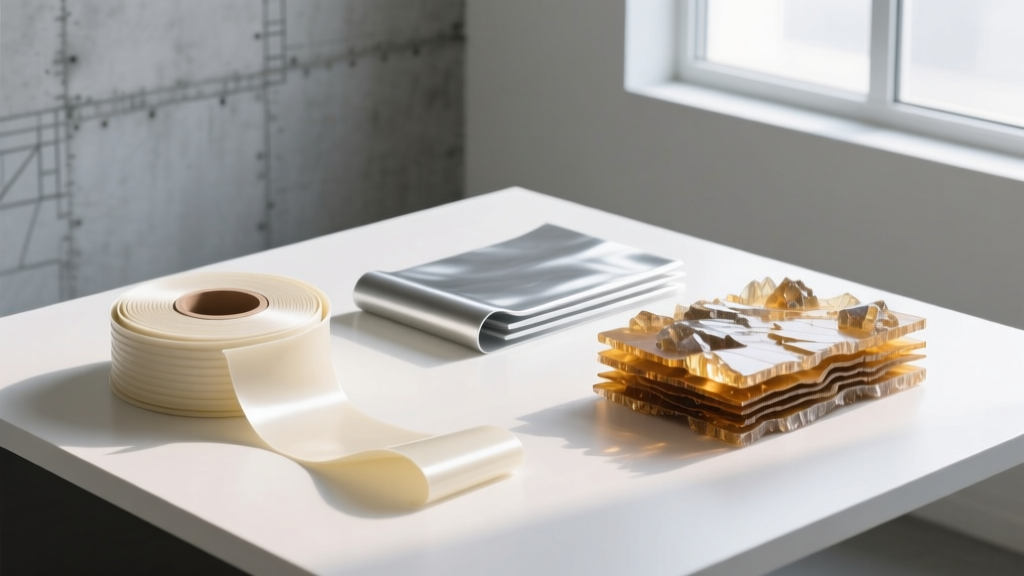
Mica is a naturally occurring phyllosilicate mineral that is inherently non-combustible and highly resistant to electrical tracking. In building wiring, mica flakes are bonded with a glass-fiber backing and a high-temperature silicone or polyimide resin to create a flexible, fire-survival tape applied over copper conductors.
- Dielectric Strength: 10 to 15 kV/mm (highly dependent on resin matrix)
- Maximum Continuous Operating Temperature: 250°C to 350°C
- Fire Survival Rating: Maintains circuit integrity at 1000°C for up to 2 hours (tested to UL 2196)
- Primary Applications: Fire pump feeders, emergency egress lighting circuits, smoke evacuation fan controls, and life-safety systems.
According to UL Electrical Safety Guidelines, life-safety circuits in high-rise buildings increasingly mandate fire-resistive cable systems. Mica composites are the only viable electrical insulation material that guarantees circuit continuity during an active structural fire, allowing emergency systems to operate while occupants evacuate.
Comparative Matrix: Dielectric Strength, Thermal Limits, and Cost
The following matrix provides a direct comparison of the three materials based on 2026 market pricing and standardized testing metrics. Costs are estimated per linear foot for a standard 4/0 AWG copper conductor.
| Material | Dielectric Strength (kV/mm) | Max Cont. Temp (°C) | Fire Survival (UL 2196) | Approx. Cost (USD/ft) |
|---|---|---|---|---|
| XLPE (XHHW-2) | 20 - 30 | 90°C | None (Standard) | $4.50 - $6.00 |
| PTFE | 60 - 70 | 250°C | None (Standard) | $18.00 - $24.00 |
| Mica-Glass (MGS) | 10 - 15 | 250°C - 350°C | 2 Hours @ 1000°C | $35.00 - $48.00 |
Failure Modes and Edge Cases in Commercial Installations
Specifying the correct electrical insulation material requires understanding how these materials fail in real-world building environments. Theoretical lab ratings rarely account for installation abuse, harmonic heating, and environmental contaminants.
XLPE: Water Treeing and Harmonic Overheating
In underground vaults or damp conduit runs, XLPE can develop water trees—microscopic, fern-like channels that reduce the effective dielectric thickness. To mitigate this, specify TR-XLPE (Tree-Retardant Cross-Linked Polyethylene) for any below-grade or wet-location applications. Additionally, XLPE insulation on neutral conductors in commercial buildings with heavy non-linear loads (LED lighting, VFDs) can suffer thermal degradation due to triplen harmonic currents overheating the conductor beyond the 90°C rating.
PTFE: Cold Flow and Toxic Off-Gassing
PTFE's primary mechanical weakness is cold flow. If a PTFE-insulated wire is clamped tightly in a standard metal cable gland, the insulation will slowly extrude away from the pressure point over 12 to 18 months, eventually exposing the bare conductor to the grounded gland. Furthermore, while PTFE is highly flame resistant, if exposed to temperatures exceeding 400°C (such as in a severe electrical arc flash), it decomposes and releases hydrogen fluoride gas, which is highly toxic and corrosive to surrounding metal switchgear.
Mica-Glass: Delamination Under Vibration
Mica tapes are inherently brittle compared to solid extruded polymers. When used in building environments with high mechanical vibration—such as conduit runs attached directly to heavy diesel generators or large centrifugal chillers—the mica layer can delaminate from the glass backing. This exposes the conductor and compromises the fire-survival rating. In high-vibration zones, engineers must specify mica cables with an additional outer layer of braided fiberglass or a continuous welded armor jacket.
Decision Framework: Matching Material to Building System
Use the following logic tree to determine the optimal electrical insulation material for specific building subsystems, ensuring compliance with NEMA Wire and Cable Standards and local jurisdictional requirements.
- IF the circuit is a standard power feeder, branch circuit, or underground service lateral AND operates below 600V THEN specify XLPE (XHHW-2 or THHN/THWN-2). It provides the most cost-effective ampacity and physical toughness for 95% of commercial construction.
- IF the circuit supplies life-safety systems (fire pumps, stairwell pressurization fans, emergency lighting) AND local code mandates a 2-hour fire rating THEN specify Mica-Glass Composite (MGS) with a UL 2196 listing. Do not substitute with standard fire-retardant PVC, which will fail in minutes.
- IF the wiring is routed through high-ambient-temperature zones (e.g., inside commercial baking ovens, boiler rooms, or dense data center exhaust plenums) AND space constraints require thin-wall insulation THEN specify PTFE. Ensure all termination hardware is designed for thin-wall, cold-flow-prone materials.
Sourcing and Procurement Standards
When procuring these materials for large-scale 2026 projects, verifying the supply chain is as critical as the material science. Counterfeit electrical wire with substandard insulation thickness or recycled, non-cross-linked polymers periodically infiltrates the commercial construction market. These materials pass initial visual inspections but fail catastrophically under sustained thermal load.
Procurement managers must require mill test reports (MTRs) and third-party UL certification marks directly on the cable jacket, not just the packaging spool. For XLPE, request documentation of the cross-linking method (peroxide vs. silane) and the specific gel-content percentage, which should exceed 65% to ensure proper thermoset curing. For Mica composites, verify that the specific cable assembly (conductor size, mica tape thickness, and outer jacket) has been tested together as a complete system under UL 2196, as modifying the outer jacket in the field voids the fire-resistive certification.
Expert Insight: Never assume that a higher temperature rating automatically equates to a better electrical insulation material for standard building wiring. PTFE's 250°C rating is useless if the termination lugs on the connected switchgear are only rated for 75°C. The system's ampacity is always limited by the lowest-rated component in the circuit path, making XLPE the mathematically superior choice for standard commercial terminations.
Written by
Sarah WhitfieldSarah Whitfield is a chartered quantity surveyor (MRICS) and construction cost analyst with 15 years of experience in material pricing, procurement strategy, and project budgeting. She earned her degree in Construction Management from the University of Reading (UK) and has worked on projects ranging from $2M custom homes to $180M mixed-use developments across North America and Europe. Sarah currently leads cost estimating for BuildMat Insight, maintaining a proprietary database of 4,000+ material price points updated quarterly. She is a frequent contributor to RSMeans cost data panels and has presented at the International Cost Engineering Council (ICEC) congress. Based in Denver, CO, Sarah is an avid trail runner and volunteer mentor for Women in Construction.
More from Sarah Whitfield
View all
Wood & Lumber
What Are the Different Types of Wood? A Builder's Guide
Compare structural softwoods, finish hardwoods, and engineered lumber. Analyze Janka ratings, MOE values, and 2026 pricing for construction.
Aug 4, 2026

Walls & Panels
Steel Framing vs Wood Framing: Corrosion and Moisture Defense
Compare steel framing vs wood framing for moisture resistance. Learn about galvanized coatings, condensation risks, and corrosion protection strategies.
Jul 21, 2026

Stone & Masonry
How to Cut Stone Veneer: Wet Saw vs Grinder Comparison
Compare the best tools for cutting stone veneer. We review wet saws, angle grinders, and chop saws to help you achieve clean, chip-free cuts.
Jul 21, 2026