2026 Heat Insulating Materials List: R-Value & Cost Analysis
Analyze the 2026 heat insulating materials list with real-world costs, R-values, and hidden labor variables to maximize thermal ROI.
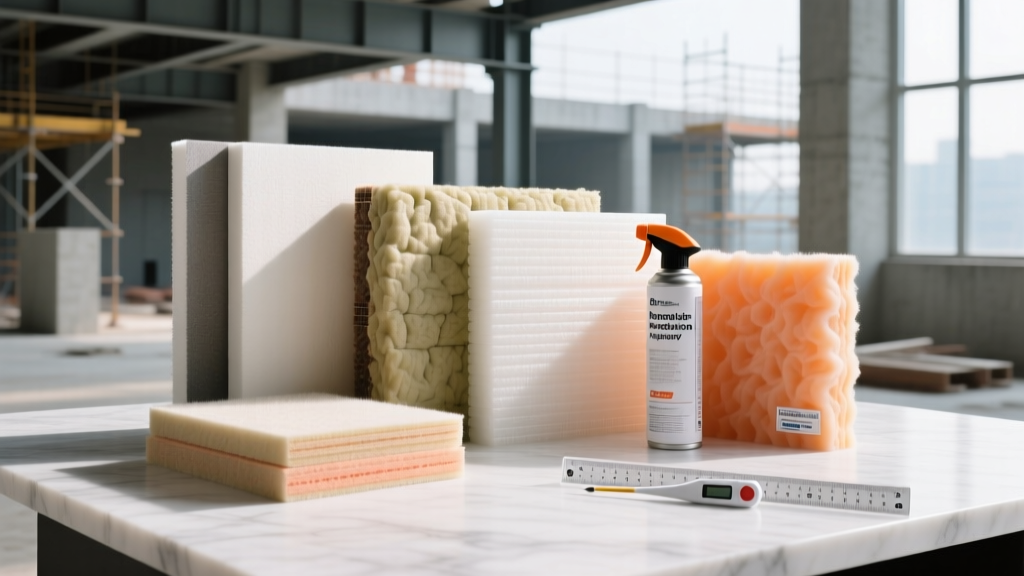
The Economics of Thermal Resistance: Beyond the Sticker Price
When evaluating a comprehensive heat insulating materials list, building professionals and homeowners often make the critical mistake of comparing materials based solely on upfront cost per square foot. In 2026, the true cost of thermal insulation must be calculated using the "Cost per R-Value" metric, factoring in installation labor, air-sealing requirements, and long-term thermal drift. With the ongoing implementation of the American Innovation and Manufacturing (AIM) Act altering the chemical blowing agents used in foam plastics, the pricing hierarchy of insulation materials has shifted dramatically over the last 24 months.
According to the U.S. Department of Energy, proper insulation selection and installation can reduce heating and cooling costs by up to 20%. However, achieving those savings requires matching the specific hygrothermal properties of the material to the building's climate zone and structural assembly. Below is the definitive cost and performance analysis of the primary thermal insulation materials available on the market today.
The Definitive Heat Insulating Materials List for 2026
1. Closed-Cell Spray Polyurethane Foam (ccSPF)
Closed-cell foam remains the premium choice for space-constrained assemblies and structural racking strength. In 2026, the industry has largely transitioned to next-generation Hydrofluoroolefin (HFO) blowing agents, which have a near-zero Global Warming Potential (GWP) compared to older HFCs. While this environmental upgrade initially spiked prices, supply chain stabilization has brought installed costs down to a manageable premium.
- R-Value: R-6.5 to R-7.0 per inch.
- 2026 Installed Cost: $1.85 to $2.70 per board foot (1 inch thick).
- Best Application: Cathedral ceilings, unvented attics, and below-grade foundation walls where moisture resistance is paramount.
- Hidden Cost Factor: ccSPF acts as a Class II vapor retarder at 1.5 inches thick. Over-spraying in cold climates can trap moisture inside wall cavities if interior drying potential is not modeled correctly.
2. Polyisocyanurate (Polyiso) Rigid Boards
Polyiso offers the highest nominal R-value per inch of any rigid board, but it comes with a significant caveat: thermal drift. As ambient temperatures drop below 40°F (4°C), the blowing gases inside the closed cells begin to condense, reducing the effective R-value. Builders in Climate Zones 5 and higher must derate Polyiso by 15-20% in their energy models for winter performance.
- R-Value: R-6.0 to R-6.5 per inch (at 75°F); drops to ~R-5.0 at 20°F.
- 2026 Material Cost: $0.95 to $1.35 per square foot (1 inch thick).
- Best Application: Continuous exterior insulation (ci) over wood or steel stud framing to eliminate thermal bridging.
Standard foil-faced Polyiso is a Class I vapor retarder (less than 0.1 perms). Never install foil-faced Polyiso on the exterior of a wall assembly in a cooling-dominated climate, as it will prevent outward drying and lead to severe sheathing rot. Specify unfaced or permeable-faced Polyiso for exterior applications.
3. Mineral Wool (Stone Wool) Batts
Mineral wool has captured significant market share from fiberglass in high-performance builds due to its superior acoustic damping, hydrophobic nature, and fire resistance. Products like Rockwool Comfortbatt maintain their dimensional stability over time, eliminating the sagging issues common in poorly supported fiberglass.
- R-Value: R-4.2 to R-4.3 per inch.
- 2026 Material Cost: $1.25 to $1.75 per square foot (for R-15 batts).
- Best Application: Fire-stopping, exterior continuous insulation (mineral wool boards), and high-humidity areas where wetting is a risk.
- Installation Nuance: Mineral wool is dense. Cutting it requires a specialized serrated knife or a bread knife; standard utility blades will dull instantly and result in jagged edges that compromise the friction fit.
4. High-Density Fiberglass Batts
Fiberglass remains the most cost-effective entry point on any heat insulating materials list, but its performance is entirely dependent on installation quality. The North American Insulation Manufacturers Association (NAIMA) emphasizes that compression or gaps severely degrade performance. A Grade III installation (per RESNET standards) can lose up to 28% of its labeled R-value due to gaps, compressions, and missed cavities.
- R-Value: R-3.1 to R-3.8 per inch (Standard); up to R-4.3 for High-Density.
- 2026 Material Cost: $0.50 to $0.85 per square foot (for R-15 batts).
- Best Application: Standard 2x4 and 2x6 above-grade wall cavities in budget-conscious builds with strict quality control.
2026 Cost vs. Performance Matrix
The following table normalizes costs to achieve a target wall cavity R-value of R-15, providing a direct comparison of material and labor investments.
| Material Type | Thickness for R-15 | Material Cost / Sq Ft | Installed Cost / Sq Ft | Vapor Permeability |
|---|---|---|---|---|
| High-Density Fiberglass | 3.5" | $0.65 | $1.40 - $1.80 | High (Permeable) |
| Mineral Wool Batts | 3.5" | $1.45 | $2.30 - $2.80 | High (Permeable) |
| ccSPF (Closed-Cell) | 2.2" | N/A (Pro Only) | $4.50 - $5.80 | Low (Class II Retarder) |
| Polyiso Rigid Board | 2.5" | $2.60 | $3.90 - $4.50 | Varies by Facers |
The AIM Act Impact: The Disappearance of Cheap XPS
Historically, Extruded Polystyrene (XPS) was the go-to rigid foam for below-grade and exterior applications due to its low cost and high compressive strength. However, the traditional HFC-134a blowing agent used in XPS has a GWP of 1,430. Under the AIM Act and the Kigali Amendment, the production of these high-GWP chemicals has been aggressively phased down through 2025 and 2026.
Manufacturers have reformulated XPS using newer, lower-GWP blowing agents, but the transition has permanently elevated XPS pricing. In many 2026 markets, XPS now costs 20% to 30% more than Expanded Polystyrene (EPS) and competes directly with Polyiso. For below-grade applications where moisture absorption is the primary concern, XPS remains necessary, but for above-grade continuous insulation, value-engineering dictates a shift toward EPS or mineral wool boards.
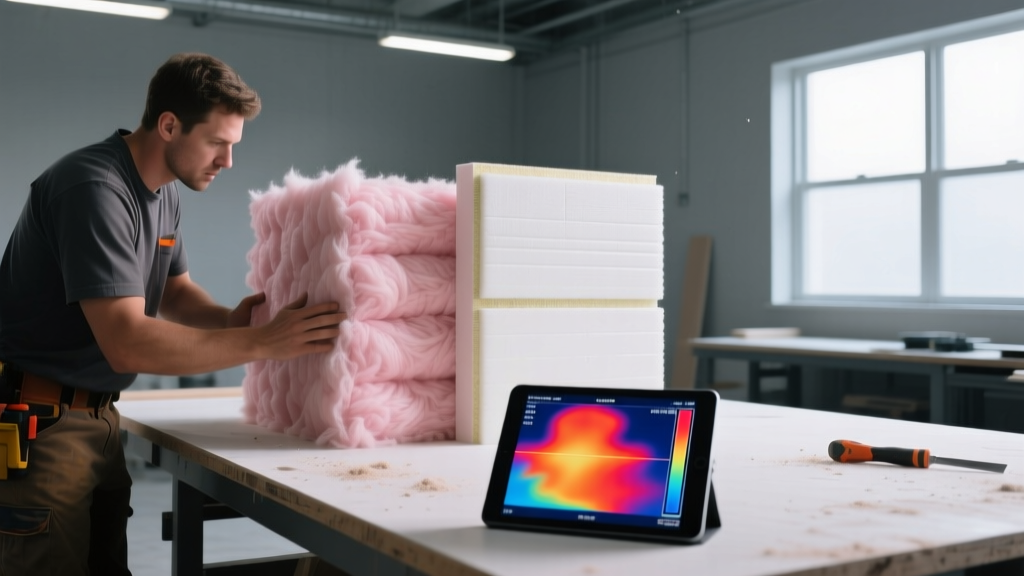
Hidden Cost Variables: Air Sealing and Installation Grading
The most expensive insulation in the world will fail to deliver its rated R-value if the building envelope leaks air. Convective heat loss through gaps bypasses the conductive resistance of the insulation entirely. Building Science Corporation routinely demonstrates that a 4% gap in a fiberglass batt installation can reduce its effective thermal performance by up to 60% due to convective looping.
Manual air sealing with caulk and canned spray foam is highly labor-dependent and prone to human error. In 2026, automated aerosolized sealing systems like AeroBarrier cost approximately $0.85 to $1.25 per square foot of floor area. While this adds to the upfront budget, it guarantees a specific ACH50 (Air Changes per Hour at 50 Pascals) target, often allowing builders to downsize HVAC equipment and offset the sealing cost.
The True Cost of RESNET Grading
When budgeting for cavity insulation, you must specify the required RESNET installation grade. Grade I requires that the insulation fills the cavity completely without gaps, voids, or excessive compression. Achieving Grade I with fiberglass requires meticulous cutting around electrical boxes and plumbing, increasing labor costs by 15% to 25% compared to a "slap-it-in" Grade III install. If your energy model relies on the full R-value of the cavity, your contract documents must explicitly mandate and verify Grade I installation via third-party inspection.
ROI Payback Framework by Climate Zone
To determine which material on this heat insulating materials list offers the best return on investment, apply the following framework based on your specific IECC Climate Zone:
- Zones 1-3 (Hot/Humid & Hot/Dry): Prioritize radiant barriers, open-cell spray foam (for interior air sealing and vapor permeability), and standard fiberglass. The ROI on high-R continuous exterior insulation is minimal here because the delta-T (temperature difference) between indoors and outdoors is relatively low.
- Zones 4-5 (Mixed & Cold): This is the sweet spot for continuous exterior insulation (Polyiso or Mineral Wool). The code requires a specific ratio of exterior R-value to cavity R-value to prevent condensation on the interior side of the wall sheathing. Budget heavily for rigid board materials and specialized window buck detailing.
- Zones 6-8 (Very Cold & Subarctic): Maximize cavity depth (2x8 framing or double-stud walls) and utilize dense-pack cellulose or ccSPF. The extreme delta-T makes every fraction of an R-value financially viable, with payback periods on premium insulation often dropping below 5 years.
Sourcing and Procurement Strategies
In the current market, material availability can fluctuate based on regional chemical supply chains. Procuring Polyiso and ccSPF requires locking in pricing 60 to 90 days before the insulation phase of construction begins. Conversely, mineral wool and fiberglass are commoditized and widely stocked; leveraging bulk purchasing agreements across multiple framing phases can yield a 5% to 8% discount on these batt materials. Always verify the specific product data sheets for the exact blowing agents and facers being delivered, as manufacturers frequently update formulations to meet evolving environmental compliance standards without changing the primary product branding.
Written by
David NakamuraDavid Nakamura is a licensed architect (AIA) and construction technology writer focused on sustainable building methods, mass timber engineering, and high-performance building envelopes. He holds a Master of Architecture from the University of Washington and is a certified Passive House Consultant (CPHC). David spent eight years at the Seattle firm Mithun, where he led the design of three LEED Platinum projects, before founding his own practice specializing in net-zero residential design. He serves on the editorial advisory board of GreenBuilder Magazine and has authored peer-reviewed papers on cross-laminated timber (CLT) connections for the Journal of Structural Engineering. In his spare time, David teaches woodworking at Pratt Fine Arts Center and kayaks the Puget Sound.
More from David Nakamura
View all
Construction Cost
Labor Cost to Build a Deck Per Sq Ft: 2026 Installation Guide
Discover the exact labor cost to build a deck per sq ft in 2026. This installation guide breaks down contractor rates, complexity factors, and hidden fees.
Aug 4, 2026

Construction Cost
How Much Does It Cost to Build a 3 Bedroom House? Financing Guide
Learn exactly how much it costs to build a 3 bedroom house and explore 2026 financing options, construction loan types, and budget frameworks for your build.
Aug 4, 2026

Construction Cost
Cost to Build a Tennis Court: 2026 Guide
How much does it cost to build a tennis court in 2026? Breakdowns for asphalt, concrete, and synthetic surfaces plus fencing and lighting.
Jul 30, 2026