Carhartt Insulated Coveralls: Scenario Matching for Builders
Match the right Carhartt insulated coveralls to your construction scenario. Compare loft, shell fabrics, and mobility for cold-site building pros.
Personal Thermal Insulation: The Human Building Envelope
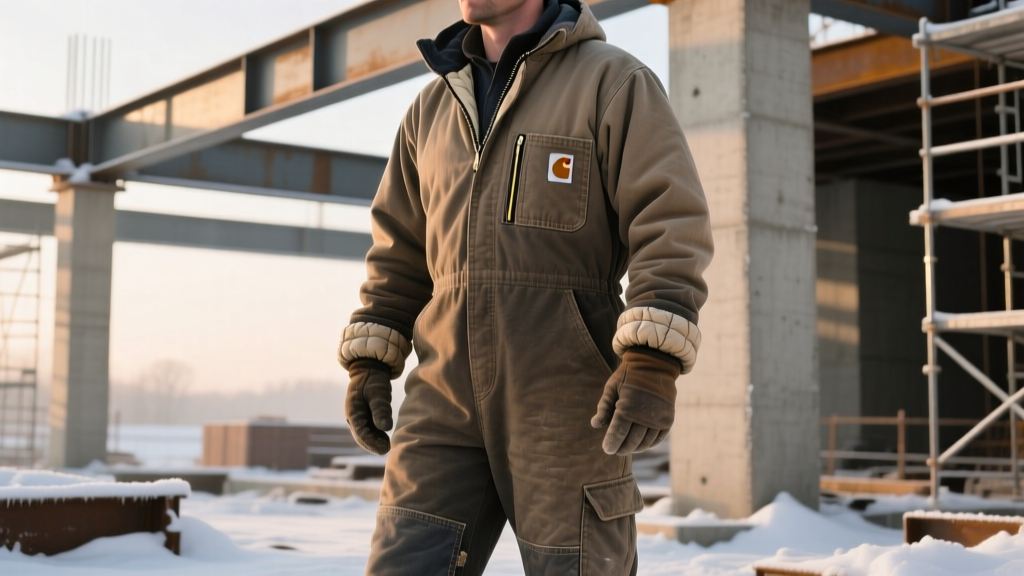
While structural insulation materials like closed-cell spray foam and rigid mineral wool protect the building envelope from thermal bridging and heat loss, personal insulation protects the human engine driving the construction. For building professionals working in sub-freezing environments, selecting the right carhartt insulated coveralls is not merely a matter of comfort; it is a critical safety and productivity decision. According to OSHA's Cold Stress Guidelines, prolonged exposure to cold environments forces the body to expend energy maintaining core temperature, leading to rapid fatigue, reduced manual dexterity, and increased risk of severe cold-related illnesses.
Treating personal workwear with the same analytical rigor as building materials requires understanding thermal resistance (CLO values), moisture management, and ergonomic failure points. This guide breaks down the application-fit for Carhartt's heavy-duty coverall lineup, matching specific construction scenarios to the exact model, shell fabric, and insulation loft required for 2026 job site demands.
Core Temperature vs. Extremity Heat Loss
The human body prioritizes core organ warmth by restricting blood flow to extremities. A coverall with high-torso insulation but inadequate lower-leg thermal retention will result in numb feet and compromised balance on scaffolding. Always match the coverall's insulation continuity with your primary working posture.
Scenario Matrix: Matching Coverall Models to Construction Tasks
Carhartt’s lineup is segmented by shell durability and insulation weight. Choosing the wrong model results in either restricted mobility (over-insulation) or rapid heat loss (under-insulation). Below is a scenario-matching matrix for the most prevalent models used in commercial and residential construction.
| Model Number | Shell & Lining | Ideal Construction Scenario | 2026 Est. Price |
|---|---|---|---|
| 100785 (Sandstone Duck) | 12oz Cotton Duck / Quilt Lining | High-mobility framing, drywall, and roofing in 20°F to 40°F. | $140 - $155 |
| 104397 (Extremes) | 1000D Nylon / Arctic Quilt | Static or low-mobility tasks (concrete pouring, surveying) below 20°F. | $165 - $185 |
| 102200 (Yukon Extremes) | Cordura Nylon / Arctic Quilt | Wet, freezing conditions (exterior cladding, sleet) requiring wind/water resistance. | $200 - $225 |
Shell Fabric Technologies: Breathability vs. Abrasion
The outer shell of an insulated coverall dictates its lifespan, wind resistance, and moisture management. In building trades, the shell must withstand abrasion from OSB, concrete forms, and scaffolding clips.
When to Choose 12oz Ringspun Cotton Duck
Models like the 100785 utilize 12-ounce ringspun cotton duck. Cotton is highly breathable, allowing sweat vapor from high-exertion tasks (like framing or carrying lumber) to escape. If moisture becomes trapped inside a non-breathable shell, it condenses, chilling the body and negating the insulation's R-value. However, cotton absorbs liquid water. If your scenario involves wet snow or freezing rain, cotton duck will saturate, freeze, and become dangerously rigid.
The Nylon and Cordura Advantage for Wet Sites
For exterior envelope work in sleet or wet snow, synthetic shells are mandatory. The Extremes and Yukon lines use high-denier nylon or Cordura blends. These fabrics shed liquid water and block wind entirely. According to CCOHS guidelines on working in the cold, wind chill drastically accelerates heat loss; a windproof nylon shell effectively increases the thermal efficiency of the underlying insulation by eliminating convective heat transfer. The trade-off is reduced breathability, requiring strict adherence to moisture-wicking base layers.
Insulation Loft and the CLO Framework
Carhartt generally utilizes two primary insulation tiers in their coveralls: standard Quilt Lining and Arctic Quilt Lining.
- Quilt Lining (Midweight): Typically features a polyester batting around 3 to 4 oz/sq yd. It provides roughly 1.5 to 2.0 CLO units. This is sufficient for active workers in temperatures down to 30°F.
- Arctic Quilt Lining (Heavyweight): Utilizes a thicker, higher-loft polyester insulation (approx. 5.5 to 6 oz/sq yd) paired with a nylon taffeta face. It yields 2.5+ CLO units, designed for single-digit temperatures and low metabolic output scenarios.
Ergonomic Warning: Higher loft insulation increases the physical diameter of the garment. Wearing an Arctic Quilt coverall for overhead electrical rough-ins or tight-crawlspace plumbing will restrict your range of motion and cause the insulation to compress at the joints. Compressed insulation loses its dead-air pockets, effectively dropping its thermal resistance to zero at the knees and elbows.
Closure Mechanics and Thermal Bridging
Just as a poorly sealed window frame creates thermal bridging in a wall assembly, poorly sealed coverall closures allow cold air infiltration. Inspect the following hardware elements when matching a coverall to your site conditions:
- Two-Way Brass Zippers: Essential for ventilation. If you transition from outdoor trenching to indoor mechanical room work, a two-way zipper allows you to vent the torso without removing the garment.
- Storm Flaps: The main zipper must be backed by an internal wind flap and covered by an external snap-button storm flap. Exposed zippers act as thermal conduits, drawing heat directly out of the torso cavity.
- Ankle-to-Knee Zippers: Construction workers wear heavy, insulated work boots (e.g., 10-inch logger boots). Coveralls must feature heavy-duty zippers extending to at least the knee, backed by snap-adjustable gussets, to allow the leg to pass over the boot heel without tearing the inseam.
The Layering Framework: Maximizing Coverall Efficiency
Insulated coveralls are only the outermost layer of a personal thermal management system. NIOSH recommends a strict three-layer system for cold-weather occupational safety. To prevent the coverall's insulation from becoming damp with sweat, follow this material hierarchy:
Base Layer (Skin Contact): 200-250 GSM Merino wool or synthetic polypropylene. Never use cotton. Merino retains insulating properties even when damp and naturally resists odor buildup over multi-day shifts.
Mid-Layer (Dead Air Trapping): Grid fleece or lightweight synthetic puffer. Grid fleece provides excellent warmth-to-weight ratios and allows vapor to channel through the grid gaps.
Outer Layer (The Coverall): Blocks wind, sheds precipitation, and provides the primary loft for extreme ambient cold.
Maintenance and Longevity of Thermal Workwear
The thermal efficiency of polyester batting degrades if the loft is permanently crushed or if the fabric is clogged with job site contaminants like drywall mud, concrete slurry, or heavy grease. Wash Carhartt coveralls using a mild, non-detergent soap. Avoid fabric softeners entirely; they coat the fibers of the shell and lining, destroying the moisture-wicking capabilities of the base layers and flattening the insulation loft. For nylon-shell Extremes models, reapply a DWR (Durable Water Repellent) spray treatment every 60 days of active field use to maintain the shell's hydrophobic properties.