High Heat Insulation Material: R-Value and Performance Guide
Compare high heat insulation materials by R-value and thermal performance. Expert guide to ceramic fiber, silica, and calcium silicate specs.
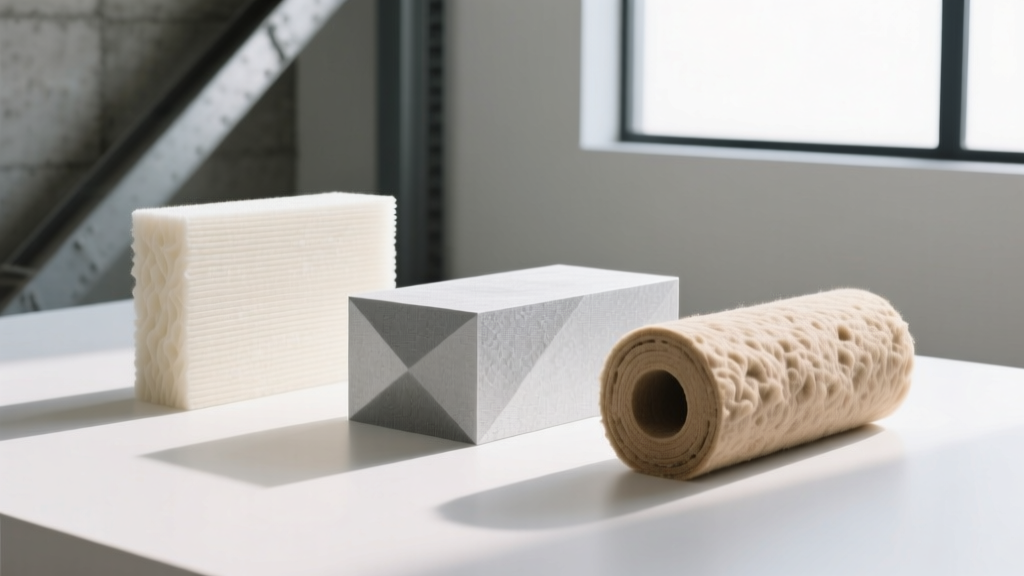
Defining High Heat in Construction and Industrial Applications
Standard building envelope insulation is engineered for ambient temperature differentials, typically performing optimally between -20°F and 150°F. However, mechanical rooms, commercial kitchens, industrial exhaust flues, and boiler rooms require a specialized high heat insulation material capable of withstanding continuous service temperatures from 500°F to over 2,000°F. In these extreme environments, evaluating performance solely by the standard R-value stamped on a residential batt is a critical engineering error. Thermal resistance in high-temperature applications is dynamic, and material selection must account for thermal degradation, binder combustion limits, and structural stability under thermal cycling.
Standard fiberglass and mineral wool batts utilize organic acrylic or phenol-formaldehyde binders. When exposed to temperatures exceeding 250°F–400°F, these binders combust. This not only causes the insulation to sag and lose its physical form but also releases toxic off-gassing into the mechanical space. Always verify the maximum continuous service temperature of the binder, not just the base fiber.
Top High Heat Insulation Materials Ranked by Thermal Performance
Selecting the correct material requires balancing maximum temperature tolerance, thermal conductivity (k-value) at elevated means, and physical durability. Below is an analysis of the four primary high-temperature insulation categories used in modern construction and industrial retrofitting.
1. Microporous Silica Boards (e.g., Johns Manville Microtherm)
Microporous silica represents the pinnacle of high-temperature thermal resistance. The material consists of amorphous silica powder with pore sizes smaller than the mean free path of air molecules (the Knudsen effect), effectively eliminating gaseous conduction.
Max Service Temp: 1,832°F (1,000°C).
Performance: Delivers an exceptional R-10 to R-12 per inch at 400°F, outperforming traditional fibers by a factor of three in high-heat zones.
2026 Cost Profile: $18.00–$26.00 per square foot. Supply chain stabilization in 2026 has made this viable for high-end commercial HVAC exhaust applications where space constraints prohibit thick fiber wraps.
2. Ceramic Fiber Blankets (e.g., Unifrax Kaowool)
Composed of alumina-silica fibers, ceramic blankets are the industry standard for wrapping irregular geometries, kilns, and extreme-heat flues. They are highly flexible and resistant to thermal shock.
Max Service Temp: 2,300°F (1,260°C) for high-purity grades.
Performance: R-value hovers around R-3.5 to R-4.0 per inch at 1,000°F. While the baseline R-value is lower than silica, its ability to maintain structural integrity at 2,000°F+ is unmatched.
2026 Cost Profile: $4.50–$8.00 per square foot. Requires strict PPE protocols during installation due to Refractory Ceramic Fiber (RCF) respiratory hazards.
3. Calcium Silicate Pipe Insulation (e.g., Thermo-12 Gold)
For high-temperature steam lines and hot water piping, rigid calcium silicate provides both thermal resistance and high compressive strength (typically 150+ psi), allowing it to support pipe weights and resist physical abuse.
Max Service Temp: 1,200°F (650°C).
Performance: Yields approximately R-4.0 per inch at 300°F. It is highly resistant to moisture ingress, which is critical for preventing Corrosion Under Insulation (CUI) on carbon steel pipes.
2026 Cost Profile: $7.00–$12.00 per linear foot (depending on pipe diameter).
4. High-Temperature Mineral Wool (e.g., Rockwool ProRox MA 960)
Specifically engineered basalt-based mineral wool mats wired to a galvanized or stainless steel mesh. These are designed for large-diameter pipes, boilers, and flat surfaces in power generation.
Max Service Temp: 1,200°F (650°C).
Performance: R-4.2 per inch at ambient, dropping predictably at elevated temperatures. The wired matting prevents sagging on vertical vessels.
2026 Cost Profile: $2.50–$4.50 per square foot, making it the most economical choice for sub-1,200°F applications.
High-Heat Material Comparison Matrix
| Material Type | Max Temp (°F) | R-Value @ 75°F | R-Value @ 800°F | Best Application |
|---|---|---|---|---|
| Microporous Silica | 1,832°F | R-10.0 / in | R-6.5 / in | Space-constrained exhaust flues |
| Ceramic Fiber Blanket | 2,300°F | R-4.0 / in | R-2.1 / in | Kilns, irregular furnace wraps |
| Calcium Silicate | 1,200°F | R-4.5 / in | R-2.8 / in | High-pressure steam piping |
| Wired Mineral Wool Mat | 1,200°F | R-4.2 / in | R-2.5 / in | Large boilers, flat vessel walls |
The R-Value Degradation Curve at Extreme Temperatures
A common misconception among junior mechanical engineers is that R-value is a static material property. According to the U.S. Department of Energy, R-value is highly dependent on the mean temperature of the material. In high-heat environments, thermal conductivity (the k-value) increases exponentially due to radiative heat transfer and solid conduction through the fiber matrix. Because R-value is the inverse of k-value (R = thickness / k), as temperatures rise, R-values inherently drop.
"Designing a high-temperature insulation system based on the 75°F ASTM C518 R-value rating will result in catastrophic under-insulation. Engineers must calculate the required thickness using the k-value at the specific mean operating temperature of the system, as outlined by the National Insulation Association (NIA) design manuals."
For example, a ceramic fiber blanket rated at R-4.0 per inch at room temperature may effectively perform at R-2.1 per inch when the hot face is exposed to 1,200°F and the cold face is at 100°F. To achieve a target thermal resistance, you must physically increase the insulation thickness to compensate for this high-temperature degradation.
Installation Failure Modes and Edge Cases
Even the most advanced high heat insulation material will fail if installation protocols ignore the physics of thermal expansion and material chemistry. The most frequent field failures include:
- Compression of Fiber Blankets: Wrapping a ceramic fiber blanket too tightly around a pipe reduces its physical thickness. Because trapped, stagnant air provides the bulk of the thermal resistance in fibrous materials, compressing a 2-inch blanket down to 1 inch effectively halves its R-value while doubling the thermal bridging through the solid fibers.
- Thermal Shock Cracking in Rigid Boards: Microporous silica and calcium silicate are brittle. If installed on equipment that undergoes rapid thermal cycling (e.g., a batch-process exhaust flue that goes from 100°F to 1,500°F in minutes), the rigid boards will crack. These gaps create direct thermal short-circuits, rendering the insulation useless and damaging the outer cladding.
- Chloride-Induced Stress Corrosion: When insulating austenitic stainless steel pipes (common in high-heat chemical processing), standard mineral wool can leach water-soluble chlorides. Under high heat and moisture, this causes catastrophic stress corrosion cracking. You must specify materials that pass ASTM C795 testing for use over austenitic stainless steel.
Decision Framework: Selecting the Right Material
Use this conditional logic to specify the correct high-temperature insulation for your 2026 project scope:
IF the operating temperature exceeds 1,500°F AND the geometry is complex or irregular → SPECIFY Ceramic Fiber Blanket (with high-purity alumina content).
IF the operating temperature is 500°F–1,200°F AND the application involves high-pressure piping subject to physical impact → SPECIFY Calcium Silicate with aluminum jacketing.
IF space is severely constrained (e.g., tight mechanical chases) AND temperatures are below 1,800°F → SPECIFY Microporous Silica Boards to maximize R-value per inch.
IF the application is a large, flat boiler wall under 1,200°F requiring cost-efficiency → SPECIFY Wired Mineral Wool Mats.
Building Code and Safety Compliance
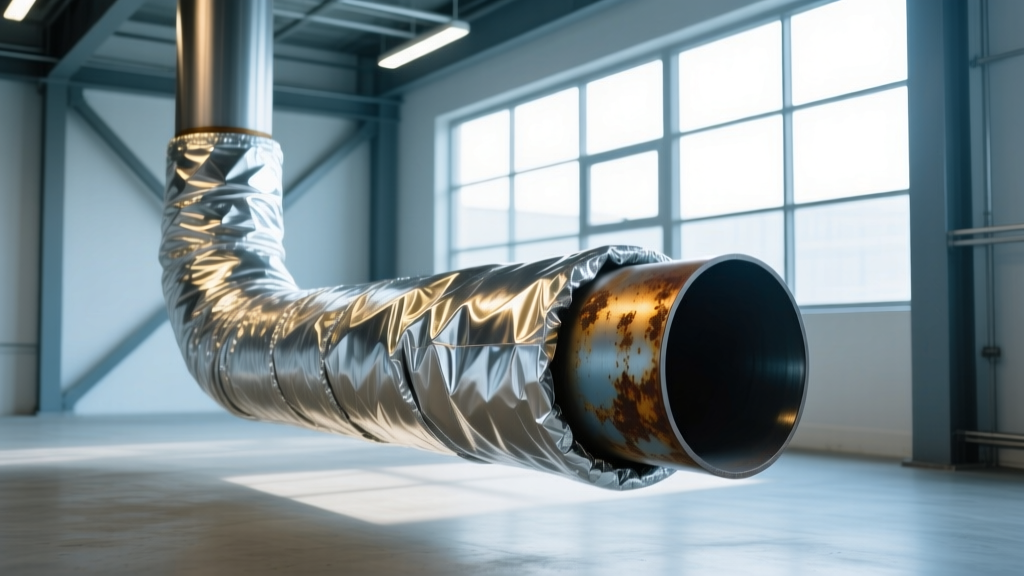
High-temperature insulation is heavily regulated due to fire propagation and toxicity risks. Ensure all specified materials carry the appropriate ASTM International certifications. ASTM C547 governs mineral fiber pipe insulation, while ASTM C795 is mandatory for any material contacting stainless steel. Furthermore, when utilizing ceramic fibers (RCF), OSHA mandates strict respiratory protection and post-installation cleanup protocols to prevent airborne fiber inhalation. Always pair RCF installations with a high-temperature silicone or PTFE-coated fiberglass outer lagging to encapsulate the fibers completely, ensuring long-term indoor air quality compliance in occupied mechanical spaces.
Written by
Priya KapoorPriya Kapoor is a real estate market analyst and construction economics researcher with expertise in housing affordability, development feasibility, and infrastructure investment. She holds a Master of Regional Planning from Cornell University and previously worked as a senior analyst at CBRE's Investment Properties group, where she modeled returns for $4B in mixed-use development pipelines. Priya now runs an independent research practice advising developers, municipalities, and REITs on construction cost forecasting and market timing. She publishes the quarterly "BuildMat Market Pulse" report tracking material price indices across 12 commodity categories. Based in Austin, TX, Priya serves on the board of Habitat for Humanity Austin and is a marathon runner.
More from Priya Kapoor
View all
Construction Cost
Cost to Build a 1600 Sq Ft Home in 2026: Full Breakdown
Accurate 2026 cost to build a 1600 sq ft home—material, labor, and regional pricing breakdowns included. Plan your budget with real-time estimates.
Aug 11, 2026

Wood & Lumber
Name the Types of Wood for Pressure Treatment and Preservation
Learn how to name the types of wood best suited for pressure treatment. Compare species treatability, chemical retention levels, and 2026 preservation costs.
Aug 4, 2026

Stone & Masonry
Stone Veneer Suppliers Lindenhurst: 2026 Cost Analysis
Analyze 2026 stone veneer costs in Lindenhurst, NY. Compare local supplier pricing, delivery fees, and Suffolk County installation labor rates.
Aug 4, 2026