Complete Guide: Choosing the Best Pipe Insulation Material
Master your HVAC and plumbing projects with our complete guide to pipe insulation material selection, sizing, and failure prevention.

The Physics of Pipe Insulation: Why Material Choice Dictates Performance
Selecting the correct pipe insulation material is not merely about retaining heat; it is a critical exercise in moisture management, condensation control, and corrosion prevention. When insulating chilled water or refrigerant lines, the primary enemy is the dew point. If the outer surface temperature of the insulation drops below the ambient dew point, condensation forms. In open-cell or improperly jacketed materials, this moisture wicks through to the pipe surface, triggering Corrosion Under Insulation (CUI) and catastrophic system failure.
Corrosion Under Insulation accounts for nearly 40% to 60% of all piping maintenance costs in industrial and commercial facilities. Using an open-cell material on below-ambient piping without a flawless, continuous vapor barrier guarantees moisture intrusion and accelerated pipe degradation.
According to the U.S. Department of Energy, properly insulating hot water pipes can raise the water temperature at the tap by 2°F to 4°F, reducing the energy required to heat the water and cutting heat loss by up to 45%. However, achieving these metrics requires matching the exact thermal conductivity (k-value) and water vapor transmission rate of the material to the pipe's operating environment.
Core Pipe Insulation Material Categories & Technical Specs
The market is dominated by four primary material classes, each engineered for specific temperature bands and environmental exposures.
1. Elastomeric Rubber (Closed-Cell)
Elastomeric foam, such as Armacell ArmaFlex AP, is the industry standard for below-ambient and moderate-temperature applications. Its closed-cell structure provides a built-in vapor barrier, eliminating the need for external jacketing on indoor chilled water and refrigerant lines.
- Temperature Range: -297°F to 220°F (-183°C to 105°C).
- Thermal Conductivity: 0.24 BTU·in/(hr·ft²·°F) at 75°F.
- Best Application: VRF systems, chilled water, DX refrigerant lines, and cold domestic water.
- Limitation: Degrades rapidly under UV exposure; requires a protective coating (e.g., WB Finishing Compound) for outdoor use.
2. Fiberglass & Mineral Wool (Pre-formed)
Products like Johns Manville Micro-Lok HP utilize high-density fiberglass or mineral wool. These are rigid, pre-formed tubes ideal for high-temperature hot water, steam, and process piping. Because they are porous, they require an All-Service Jacket (ASJ) or a specialized PVC/metal vapor barrier when used on cold pipes.
- Temperature Range: Up to 850°F (454°C) for fiberglass; up to 1,200°F (650°C) for mineral wool.
- Thermal Conductivity: 0.23 to 0.30 BTU·in/(hr·ft²·°F) depending on mean temperature.
- Best Application: Steam mains, high-temperature hydronics, and industrial process piping.
- Limitation: Requires meticulous sealing of the ASJ jacket at every longitudinal and circumferential seam to prevent vapor drive on cold lines.
3. Polyethylene & PVC Foam
Polyethylene (e.g., Nomaco Tubolit) is a cost-effective, closed-cell foam typically sold in pre-slit, peel-and-stick tubes. It is highly resistant to moisture and chemicals but has a strict upper temperature limit.
- Temperature Range: -100°F to 200°F (-73°C to 93°C).
- Best Application: Residential hot and cold domestic plumbing, drain lines (to prevent sweating), and low-temperature heating.
- Limitation: Cannot withstand the temperatures of commercial steam or high-temp hydronic systems; will melt and off-gas if exposed to temperatures exceeding 200°F.
4. Aerogel Blankets (Silica-Based)
Aerogel insulation, such as Aspen Aerogels Pyrogel XT-E, represents the cutting edge of thermal resistance. It offers the lowest thermal conductivity of any commercial insulation, allowing for drastically reduced insulation thickness in space-constrained mechanical rooms.
- Temperature Range: Up to 1,200°F (650°C).
- Thermal Conductivity: 0.14 BTU·in/(hr·ft²·°F) at 100°F (up to 5x better than fiberglass).
- Best Application: High-temp industrial piping, space-restricted pipe racks, and areas prone to severe CUI (aerogel is inherently hydrophobic).
- Limitation: Premium pricing; requires specialized cutting tools and PPE due to silica dust generation during fabrication.
Decision Matrix: Matching Material to Operating Temperature
Use this framework to rapidly identify the correct pipe insulation material based on your system's operating parameters.
| System Type | Operating Temp | Primary Material | Vapor Barrier Required? |
|---|---|---|---|
| Chilled Water / VRF | 40°F to 55°F | Elastomeric Rubber (ArmaFlex) | No (Closed-cell) |
| Domestic Cold Water | 50°F to 70°F | Polyethylene or Elastomeric | No (Closed-cell) |
| Hot Water Hydronics | 140°F to 180°F | Fiberglass or Polyethylene | Yes (if fiberglass) |
| Low-Pressure Steam | 220°F to 250°F | Fiberglass (Micro-Lok) | Yes (ASJ Jacket) |
| High-Pressure Steam | 300°F to 500°F+ | Mineral Wool / Calcium Silicate | Yes (Metal/PVC Jacket) |
Sizing, Thickness, and the Dew Point Calculation
Thickness selection is not arbitrary; it is governed by the ambient dew point and the desired surface temperature. For below-ambient piping, the insulation must be thick enough so that the outer surface remains above the dew point of the surrounding air.
Never default to 1-inch thickness for commercial chilled water lines. In high-humidity environments (e.g., Miami, FL or indoor natatoriums), a 2-inch copper chilled water line carrying 42°F water may require 2.5 inches of elastomeric foam to prevent surface condensation during peak summer humidity. Always run a dew point calculation using tools like the Armacell InsulSheet Calculator or ASHRAE psychrometric charts.
Standard Thickness Guidelines (ASTM C680 compliant):
- Pipe OD up to 2.375": Minimum 1.5" for hot water; Minimum 1.5" to 2.0" for chilled water.
- Pipe OD 2.5" to 4.5": Minimum 2.0" for hot water; Minimum 2.0" to 2.5" for chilled water.
- Pipe OD 5.0" and above: Minimum 2.5" to 3.0" for both hot and chilled systems.
Installation Failure Modes and How to Avoid Them
Even the highest-grade pipe insulation material will fail if installed incorrectly. Field data highlights three primary failure modes:
- Compression at Pipe Hangers: When a pipe rests on a standard metal hanger, the weight of the pipe and fluid crushes the insulation, destroying the vapor barrier and creating a thermal bridge. Solution: Always use high-density polyurethane or structural foam insulation saddles (e.g., ProFab) at every hanger point to maintain the continuous vapor seal.
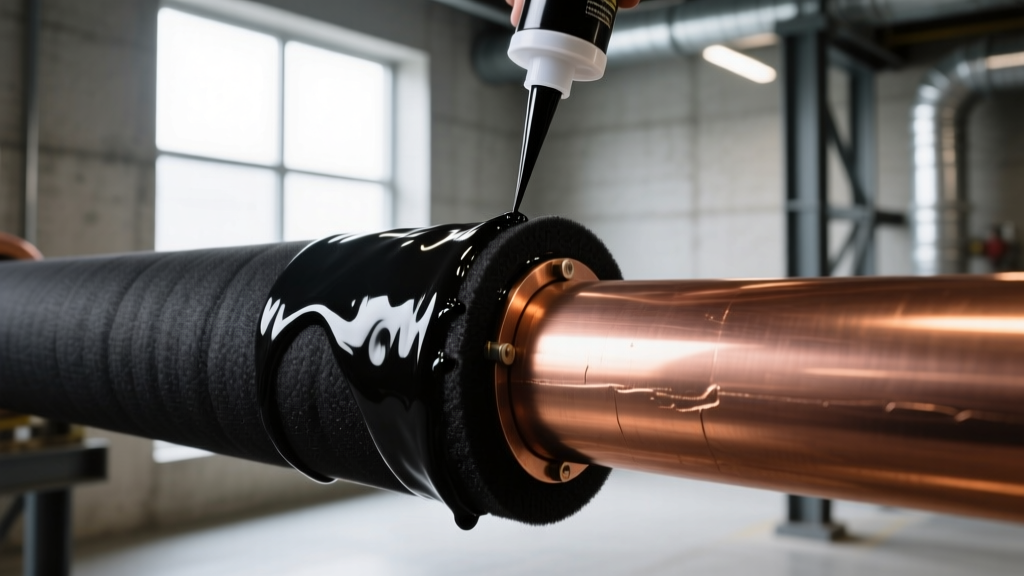
- Unsealed Longitudinal Seams: On pre-slit fiberglass or elastomeric tubes, installers often rely solely on the factory-applied peel-and-stick tape. Over time, thermal expansion and contraction break this adhesive bond. Solution: For critical chilled water lines, apply a continuous bead of specialized contact adhesive (e.g., ArmaFlex 520) inside the seam before pressing it shut, followed by a layer of mastic or tape.
- UV Degradation on Exterior Lines: Elastomeric and polyethylene foams break down into a chalky powder when exposed to direct sunlight, exposing the pipe within 12 to 18 months. Solution: Wrap exterior lines in an aluminum or PVC jacket, or apply two coats of a UV-resistant elastomeric coating (e.g., Armacell ArmorFlex).
Cost Breakdown: Material vs. Installed Pricing
The following table reflects 2026 market averages for commercial HVAC and plumbing applications. Labor costs assume standard union or prevailing wage rates for mechanical insulators in major metropolitan areas.
| Material Type | Material Cost (per lin. ft.) | Installed Cost (per lin. ft.) | Lifespan / Durability |
|---|---|---|---|
| Polyethylene (Tubolit) | $0.60 - $1.20 | $2.50 - $4.00 | 10-15 years (Indoor only) |
| Elastomeric Rubber (ArmaFlex) | $2.80 - $5.50 | $6.50 - $11.00 | 20+ years (with UV protection) |
| Fiberglass w/ ASJ Jacket | $3.20 - $6.00 | $8.00 - $14.00 | 25+ years (if jacket remains intact) |
| Aerogel Blanket (Pyrogel) | $18.00 - $32.00 | $28.00 - $45.00 | 30+ years (Highly durable) |
When evaluating the total cost of ownership, factor in the energy penalty of thermal bridging and the catastrophic repair costs associated with CUI. Spending an additional $3.00 per linear foot on closed-cell elastomeric foam over porous fiberglass for a chilled water system will yield a positive ROI within 36 months through avoided moisture damage and reduced chiller load. Consult the National Insulation Association (NIA) design guides for project-specific mechanical specifications.
Written by
James ThorntonJames Thornton is a construction industry veteran with 25 years of hands-on experience in wood framing, lumber grading, and residential building codes. He started as a framing carpenter in rural Oregon, earned his ICC Residential Building Inspector certification, and eventually became a senior plan reviewer for the City of Portland Bureau of Development Services. James holds a B.S. in Wood Science & Technology from Oregon State University and is a certified lumber grader through the West Coast Lumber Inspection Bureau (WCLIB). He has inspected over 3,000 residential construction sites and authored the city's internal guide on advanced framing techniques (2x6 at 24" O.C.). James lives in Bend, OR, where he builds custom timber-frame cabins and competes in lumberjack sports.
More from James Thornton
View all
Insulation
Best Home Insulation Materials: Complete 2026 Guide
Compare top home insulation materials for 2026. Find R-values, installed costs per square foot, and best uses for fiberglass, spray foam, and mineral wool.
Aug 4, 2026

Sustainable Building
Certify Your Green Building Material for LEED and WELL
Step-by-step guide to certifying a green building material for LEED v5 and WELL v2. Master EPDs, HPDs, and VOC limits for 2026 project specifications.
Aug 4, 2026

Stone & Masonry
Veneer Stacked Stone Panels: Interior Design & Style Showcase
Discover how veneer stacked stone panels transform interiors. Explore modern design profiles, material pairings, and technical installation specs.
Aug 4, 2026