Complete Guide to Thermal Insulation Materials for 2026
Compare top thermal insulation materials for 2026. Explore R-values, costs per square foot, and installation best practices for maximum efficiency.

The Physics of Thermal Resistance and Bridging
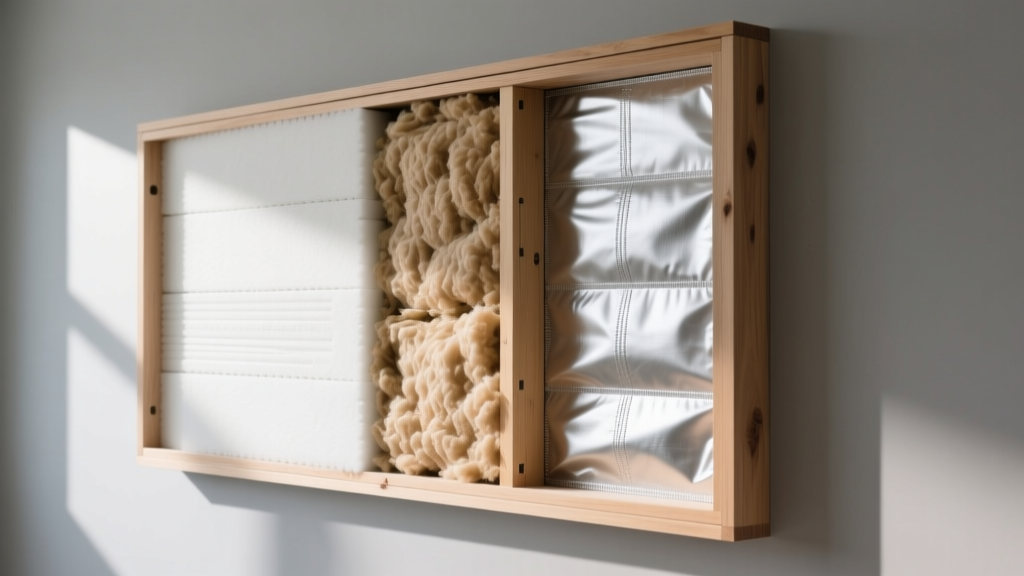
Selecting the correct thermal insulation materials requires moving beyond the basic R-value printed on the packaging. The true performance of a building envelope is dictated by whole-wall R-value, which accounts for thermal bridging through framing members. Standard wood studs (R-1.25 per inch) and steel studs (highly conductive) create thermal shortcuts that bypass cavity insulation. According to the Building Science Corporation, mitigating thermal bridging requires continuous exterior insulation (ci) to wrap the structural skeleton, effectively decoupling the interior conditioned space from exterior temperature extremes.
Furthermore, the U.S. Department of Energy emphasizes that air leakage can reduce the effective performance of even high-R-value cavities by up to 40%. Therefore, the best thermal insulation materials in 2026 are evaluated not just on thermal resistance, but on their inherent air-sealing capabilities and vapor permeability profiles.
2026 Thermal Insulation Materials Matrix
| Material Type | R-Value per Inch | Installed Cost (per sq ft) | Vapor Permeability | Primary Application |
|---|---|---|---|---|
| Closed-Cell SPF | R-6.5 to R-7.0 | $1.80 - $3.20 | Impermeable (>1.5 in) | Rooflines, rim joists, flood zones |
| Polyiso Rigid Board | R-5.6 (Aged) | $0.85 - $1.30 | Impermeable (Foil-faced) | Exterior continuous insulation (ci) |
| Mineral Wool Batt | R-4.2 to R-4.3 | $1.40 - $1.90 | Highly Permeable | Fire-rated assemblies, exterior walls |
| Dense-Pack Cellulose | R-3.5 to R-3.8 | $1.90 - $2.60 | Permeable | Retrofits, enclosed wall cavities |
| Fiberglass Batt | R-3.1 to R-3.4 | $0.90 - $1.40 | Highly Permeable | Budget-conscious attic floors |
Material Deep Dives and Product Specifications
Closed-Cell Spray Polyurethane Foam (ccSPF)
Closed-cell foam remains the highest-performing cavity insulation available. With a density of 2.0 lbs/ft³, it provides structural racking strength and acts as a Class II vapor retarder once it reaches 1.5 inches in thickness. For 2026 projects, specify ccSPF formulations that utilize Hydrofluoroolefin (HFO) blowing agents, such as Demilec Heatlok Soya HFO. HFOs have a Global Warming Potential (GWP) of less than 1, resolving the environmental concerns associated with older HFC-based foams.
- Pros: Highest R-value per inch, total air barrier, moisture resistant, adds structural rigidity.
- Cons: Highest material cost, requires professional installation, difficult to modify after curing.
Mineral Wool (Stone Wool) Batts
Mineral wool is engineered from basalt rock and slag, spun into dense fibers that trap air. Products like Rockwool Comfortbatt 80 offer an R-value of R-4.2 per inch but shine in secondary performance metrics. Mineral wool is inherently hydrophobic (repels liquid water while allowing vapor diffusion) and non-combustible, withstanding temperatures up to 2,150°F. It is the mandatory choice for fire-blocking applications, such as insulating around masonry chimneys or in multi-family party walls.
- Pros: Excellent acoustic dampening, fireproof, retains R-value when exposed to moisture, friction-fit installation.
- Cons: Heavier than fiberglass, requires a sharp serrated knife for cutting, higher cost than standard fiberglass.
Polyisocyanurate (Polyiso) Rigid Boards
Polyiso is the dominant material for exterior continuous insulation (ci). While it boasts an initial R-value of R-6.5 per inch, the blowing agents diffuse over time, stabilizing at an aged R-value of approximately R-5.6. Foil-faced polyiso, such as GAF EnergyGuard, acts as a highly effective exterior vapor barrier. However, builders in Climate Zones 5 and higher must account for 'thermal drift'—a phenomenon where the R-value of polyiso temporarily decreases in sub-freezing temperatures.
Dense-Pack Cellulose
Manufactured from recycled newsprint treated with borate for fire and pest resistance, cellulose is installed via pneumatic blowing at a density of 3.5 lbs/ft³. Unlike loose-fill fiberglass, dense-pack cellulose effectively blocks air infiltration through wall cavities. It is the premier choice for existing home retrofits, as it can be blown into closed wall cavities through small access holes drilled into the exterior siding or interior drywall.
Critical Failure Modes and How to Avoid Them
Warning: Fiberglass Compression
The Failure: Stuffing an R-19 (6.25-inch) fiberglass batt into a standard 2x4 (3.5-inch) wall cavity does not yield R-19. The compression destroys the trapped air pockets, dropping the effective R-value to roughly R-13 while increasing the material cost.
The Fix: Always match the batt thickness to the cavity depth. For 2x4 walls, use R-15 high-density fiberglass or mineral wool batts specifically manufactured for 3.5-inch depths.
Warning: Open-Cell SPF Moisture Trapping
The Failure: Open-cell spray foam (0.5 lb/ft³) is highly vapor-permeable. In cold climates (Zones 5+), interior moisture migrates through the foam, hits the cold exterior sheathing, and condenses. Because open-cell foam holds moisture against the wood, this leads to catastrophic sheathing rot.
The Fix: If using open-cell foam in cold climates, you must install a Class II vapor retarder (like MemBrain or traditional 6-mil poly) on the interior warm-in-winter side of the drywall.
Tip: Polyiso Cold-Weather Thermal Drift
The Issue: Polyiso's R-value can drop by 20% when outdoor temperatures fall below 20°F due to the condensation of blowing agents within the foam cells.
The Fix: In northern climates, use a hybrid exterior assembly: place a layer of EPS (Expanded Polystyrene, which maintains stable R-values in extreme cold) over the polyiso, or increase the overall thickness of the polyiso by 20% to compensate for the winter drop.
Climate-Specific Decision Framework
Choosing the right thermal insulation materials depends heavily on your specific IECC Climate Zone. Use this framework to guide your envelope design:
- Hot-Humid (Zones 1-3): Prioritize vapor-open cavity insulation (fiberglass or mineral wool) paired with exterior rigid foam that is foil-faced to block exterior moisture drive. Ensure the exterior foam R-value is high enough to keep the interior drywall above the dew point.
- Mixed-Humid (Zone 4): The most demanding zone due to both heating and cooling loads. Use ccSPF in the rim joists and rooflines to seal the envelope, and mineral wool batts in the walls for vapor permeability and fire safety.
- Cold/Very Cold (Zones 5-8): Maximize continuous exterior insulation to eliminate thermal bridging and keep the structural sheathing warm. The U.S. Department of Energy recommends that exterior rigid foam comprise at least 20% to 30% of the total wall R-value in these zones to prevent interstitial condensation.
Code Compliance and 2026 IECC Standards
The 2026 International Energy Conservation Code (IECC) continues to push for tighter building envelopes and higher continuous insulation requirements. Builders must pay close attention to the mandatory air-sealing provisions. Simply installing high-R-value thermal insulation materials is no longer sufficient if the assembly leaks. Blower door testing, targeting 2.0 to 3.0 ACH50 (Air Changes per Hour at 50 Pascals) in most jurisdictions, is now a standard code requirement. Ensure your insulation contractor coordinates with your air-sealing team, as materials like ccSPF and dense-pack cellulose can serve dual purposes, acting as both thermal barriers and critical components of the continuous air barrier system.
Written by
Priya KapoorPriya Kapoor is a real estate market analyst and construction economics researcher with expertise in housing affordability, development feasibility, and infrastructure investment. She holds a Master of Regional Planning from Cornell University and previously worked as a senior analyst at CBRE's Investment Properties group, where she modeled returns for $4B in mixed-use development pipelines. Priya now runs an independent research practice advising developers, municipalities, and REITs on construction cost forecasting and market timing. She publishes the quarterly "BuildMat Market Pulse" report tracking material price indices across 12 commodity categories. Based in Austin, TX, Priya serves on the board of Habitat for Humanity Austin and is a marathon runner.
More from Priya Kapoor
View all
Construction Cost
Cost to Build a 1600 Sq Ft Home in 2026: Full Breakdown
Accurate 2026 cost to build a 1600 sq ft home—material, labor, and regional pricing breakdowns included. Plan your budget with real-time estimates.
Aug 11, 2026

Wood & Lumber
Name the Types of Wood for Pressure Treatment and Preservation
Learn how to name the types of wood best suited for pressure treatment. Compare species treatability, chemical retention levels, and 2026 preservation costs.
Aug 4, 2026

Stone & Masonry
Stone Veneer Suppliers Lindenhurst: 2026 Cost Analysis
Analyze 2026 stone veneer costs in Lindenhurst, NY. Compare local supplier pricing, delivery fees, and Suffolk County installation labor rates.
Aug 4, 2026