Electrically Insulating Thermally Conductive Materials for Smart Building Tech
Compare electrically insulating thermally conductive materials like AlN, alumina, and BN for BIPV microinverters, smart sensors, and radiant heating.

The Engineering Paradox of Modern Building Electronics
Modern commercial and high-performance residential buildings rely on dense electronic integration. Building-Integrated Photovoltaics (BIPV), IoT environmental sensors, and electric radiant floor heating systems generate localized heat that must be dissipated to prevent component failure. However, building codes—such as NEC Article 411 for low-voltage systems and Article 424 for electric radiant heating—strictly mandate electrical isolation to prevent shock hazards and ground faults. This creates a highly specific engineering demand: selecting an electrically insulating thermally conductive material that can pull heat away from sensitive electronics without creating a conductive path to the building structure.
Unlike consumer electronics, where standard thermal pastes often contain metallic particles (silver, zinc, or liquid metal) that are electrically conductive, building applications require strict dielectric isolation. If a BIPV microinverter casing cracks or a radiant heating wire frays, a conductive thermal interface material (TIM) will create a short circuit, tripping GFCI breakers and potentially causing fire hazards. According to research on smart building thermal management by the Lawrence Berkeley National Laboratory, improper thermal dissipation in embedded building sensors reduces component lifespan by up to 40% for every 10°C rise in operating temperature.
Material Comparison Matrix: TCEI Options for Construction
Not all dielectric thermal materials are created equal. The choice depends heavily on the thermal load, the physical footprint of the component, and the environmental exposure of the installation site. Below is a technical comparison of the primary electrically insulating thermally conductive materials used in modern construction.
| Material Type | Thermal Conductivity (W/m·K) | Dielectric Strength (kV/mm) | Approx. Cost | Best Building Application |
|---|---|---|---|---|
| Aluminum Oxide (Alumina) Pads | 1.0 - 3.0 | 10 - 15 | $0.50 - $1.50 / sq ft | Smart home hubs, LED drivers, low-power IoT sensors |
| Aluminum Nitride (AlN) Ceramics | 170 - 200 | 15 - 20 | $15.00 - $25.00 / sq ft | BIPV microinverters, high-power solar optimizers |
| Boron Nitride (BN) Filled Epoxies | 3.0 - 6.0 | 20 - 30 | $80 - $120 / kg | Potting compound for outdoor smart building controllers |
| Polyimide (Kapton) Ceramic Films | 0.5 - 1.5 | 5 - 8 | $2.00 - $4.00 / sq ft | Electric radiant floor heating wire wrapping |
Deep Dive: BIPV Microinverters and Power Optimizers
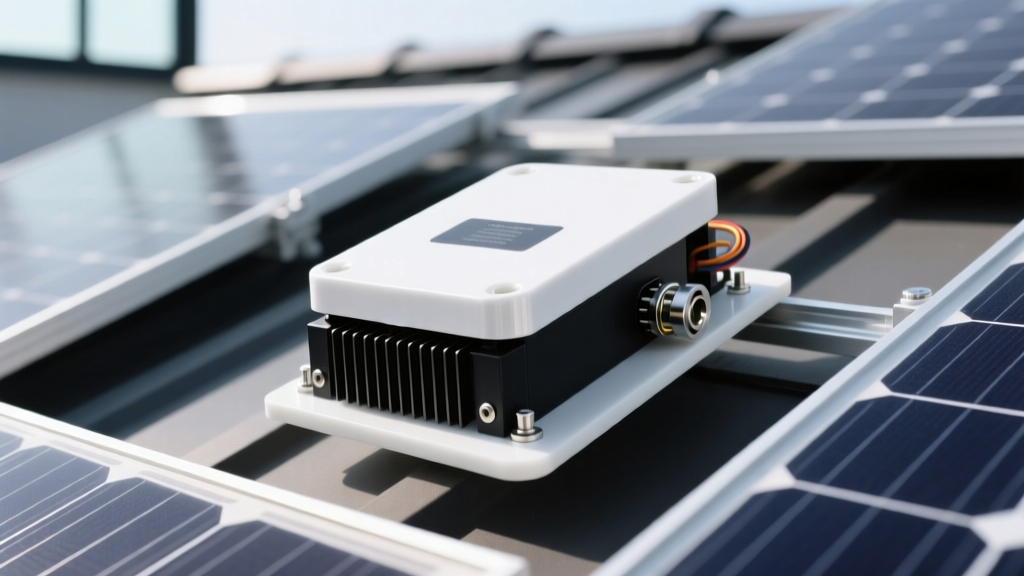
Building-Integrated Photovoltaics embed solar cells directly into roofing membranes, facades, and skylights. The U.S. Department of Energy notes that BIPV systems operate in much harsher thermal envelopes than traditional rack-mounted solar panels because they lack the passive airflow gap behind the modules. Microinverters (such as the Enphase IQ8 series) embedded in these systems must handle high thermal loads while maintaining strict electrical isolation from the metal roof decking or structural steel.
For this application, Aluminum Nitride (AlN) ceramic substrates are the industry standard. AlN offers a thermal conductivity approaching that of pure aluminum (up to 200 W/m·K) while maintaining exceptional dielectric strength. However, AlN is brittle and highly sensitive to mechanical stress. When installing AlN-based thermal shims between a microinverter heat sink and a metal roof pan, contractors must adhere to strict torque specifications—typically not exceeding 0.5 Nm per fastener. Over-torquing will cause micro-fractures in the ceramic lattice, destroying its dielectric properties and allowing high-voltage DC current to arc to the building structure.
Deep Dive: Electric Radiant Floor Heating Systems
Electric radiant floor heating systems, such as Schlüter-DITRA-HEAT or Nuheat mats, utilize dual-conductor resistance wires embedded in thinset mortar. The mortar must efficiently transfer heat upward into the tile or stone while electrically insulating the wire from the concrete subfloor and any embedded metal mesh.
Standard unmodified thinset is a poor thermal conductor and can trap heat around the wire, leading to premature degradation of the wire's PTFE (Teflon) jacket. To solve this, manufacturers utilize Alumina-doped polymer-modified thinsets. These specialized mortars incorporate fine Aluminum Oxide particles that increase the thermal conductivity of the cured mortar by 30% to 50% compared to standard cementitious mixes. The alumina particles are naturally dielectric, ensuring that even if the wire jacket is compromised during tile installation, the mortar itself will not conduct electricity to the subfloor, allowing the GFCI breaker to trip safely rather than energizing the floor.
Decision Framework for MEP Engineers and Contractors
Thermal Interface Material Selection Guide
- IF the component generates less than 5W of heat and operates in a climate-controlled indoor ceiling plenum (e.g., PoE LED drivers, occupancy sensors) → USE Alumina-filled silicone pads. They are compressible, forgiving of surface imperfections, and cost-effective.
- IF the component generates high heat (50W+) and is mounted to an exterior structural element (e.g., BIPV microinverters, EV charging station power modules) → USE Aluminum Nitride (AlN) ceramics paired with a dielectric phase-change material to eliminate air gaps.
- IF the component has an irregular geometry and is exposed to moisture (e.g., outdoor smart irrigation controllers, facade lighting drivers) → USE Boron Nitride (BN) filled epoxy potting compounds. The epoxy seals out moisture while the BN provides the thermal pathway.
Field Installation Gotchas and Failure Modes
Specifying the correct electrically insulating thermally conductive material is only half the battle. Field installation errors frequently negate the material's engineered properties. Avoid these common failure modes:
- The Air Gap Penalty: Air is a thermal insulator (approx. 0.026 W/m·K). If a rigid ceramic pad is applied to a rough metal surface without a secondary dielectric interface grease, the microscopic air gaps will bottleneck heat transfer. Always pair rigid AlN or Alumina ceramics with a thin layer of dielectric thermal grease (e.g., Dow DOWSIL 340) to displace trapped air.
- Surface Flatness Requirements: For high-performance AlN substrates, the mating metal surface must be machined to a surface roughness of Ra < 1.5 µm. Standard extruded aluminum heat sinks often have an Ra of 3.0 µm or higher, which will cause localized hot spots and eventual dielectric breakdown of the ceramic.
- Compression Set in Silicone Pads: When using alumina-filled silicone pads for smart building sensors, ensure the pad is compressed by exactly 10% to 20% of its original thickness. Under-compression leaves air gaps; over-compression causes the silicone to extrude out of the joint, thinning the pad and reducing its dielectric breakdown voltage below safe NEC thresholds.
- Moisture Ingress in Epoxies: While BN-filled epoxies are highly water-resistant, the curing process is exothermic and sensitive to ambient humidity. If applied in a high-humidity environment without proper climate control, the epoxy can trap microscopic water bubbles, creating conductive pathways that compromise electrical isolation.
Frequently Asked Questions
Can I use standard PC thermal paste for building automation controllers?
No. Most high-performance PC thermal pastes contain silver or liquid metal, which are highly electrically conductive. Using them in building automation panels risks shorting out 24V AC/DC control boards to the grounded metal enclosure. Always specify a paste explicitly rated with a dielectric strength of at least 10 kV/mm.
Does thermally conductive thinset affect the electrical resistance of radiant heating wires?
No. The alumina particles in the thinset are purely thermal and dielectric. They do not alter the electrical resistance of the heating cable. However, the improved heat dissipation may result in the thermostat calling for heat less frequently, slightly reducing overall energy consumption.
How do I test the dielectric integrity of a thermal pad after installation?
MEP commissioning agents typically use a megohmmeter (Megger) to perform a dielectric withstand test (hipot test) between the electronic component casing and the grounded building structure. A reading below 100 megohms indicates compression damage, moisture ingress, or material failure in the thermal interface layer.
Written by
James ThorntonJames Thornton is a construction industry veteran with 25 years of hands-on experience in wood framing, lumber grading, and residential building codes. He started as a framing carpenter in rural Oregon, earned his ICC Residential Building Inspector certification, and eventually became a senior plan reviewer for the City of Portland Bureau of Development Services. James holds a B.S. in Wood Science & Technology from Oregon State University and is a certified lumber grader through the West Coast Lumber Inspection Bureau (WCLIB). He has inspected over 3,000 residential construction sites and authored the city's internal guide on advanced framing techniques (2x6 at 24" O.C.). James lives in Bend, OR, where he builds custom timber-frame cabins and competes in lumberjack sports.
More from James Thornton
View all
Insulation
Best Home Insulation Materials: Complete 2026 Guide
Compare top home insulation materials for 2026. Find R-values, installed costs per square foot, and best uses for fiberglass, spray foam, and mineral wool.
Aug 4, 2026

Sustainable Building
Certify Your Green Building Material for LEED and WELL
Step-by-step guide to certifying a green building material for LEED v5 and WELL v2. Master EPDs, HPDs, and VOC limits for 2026 project specifications.
Aug 4, 2026

Stone & Masonry
Veneer Stacked Stone Panels: Interior Design & Style Showcase
Discover how veneer stacked stone panels transform interiors. Explore modern design profiles, material pairings, and technical installation specs.
Aug 4, 2026