Top Heat Insulation Material Options Compared for 2026
Compare the top heat insulation material options for 2026. Analyze R-values, installed costs, and best applications for fiberglass, spray foam, and mineral wool.

The Physics of Thermal Resistance: Beyond the Basic R-Value
When evaluating a heat insulation material for residential or commercial construction, relying solely on the printed R-value is a critical mistake. The U.S. Department of Energy defines R-value as the measure of resistance to conductive heat flow, but real-world thermal performance is dictated by three factors: conduction, convection, and thermal bridging. According to the Pacific Northwest National Laboratory (PNNL), a poorly installed high-R-value batt can perform worse than a flawlessly installed lower-R-value material due to convective loops and compression gaps.
In 2026, building codes across North America are heavily enforcing RESNET grading standards. A 'Grade I' installation—the gold standard for heat insulation material—requires zero compression, no gaps around wiring or plumbing, and complete filling of the cavity. Before selecting a product, contractors and homeowners must understand how different materials behave under real-world constraints, including moisture exposure, settling, and air infiltration.
Head-to-Head Matrix: Top Heat Insulation Material Contenders
| Material Type | R-Value per Inch | Air Sealing Capability | Moisture Response | Fire Resistance |
|---|---|---|---|---|
| Fiberglass Batts | R-3.1 to R-4.3 | Poor (Requires separate air barrier) | Absorbs moisture; loses R-value when wet | Melts at ~1,000°F |
| Mineral Wool (Rock/Slag) | R-4.0 to R-4.3 | Moderate (Dense, but needs sealing) | Hydrophobic; drains and dries rapidly | Non-combustible up to 2,150°F |
| Open-Cell Spray Foam | R-3.5 to R-3.8 | Excellent (Expands to fill gaps) | Vapor permeable; holds water like a sponge | Intumescent coatings required |
| Closed-Cell Spray Foam | R-6.0 to R-7.0 | Superior (Monolithic air barrier) | Impervious; acts as a vapor retarder | Self-extinguishing; Class 1 rating |
| Rigid Polyiso Board | R-5.6 to R-8.0 | Excellent (When taped/sealed) | Foil-faced acts as vapor barrier | Thermoset; chars but does not melt |
Deep Dive: Real-World Performance and Failure Modes
1. Fiberglass Batts (The Budget Baseline)
Fiberglass remains the most ubiquitous heat insulation material in North America, primarily due to its low upfront cost. Modern iterations, such as Owens Corning Pink Next Gen, feature softer fibers and improved recovery, allowing them to bounce back to full thickness after being vacuum-packed. For a standard 2x6 exterior wall, an R-23 batt provides adequate baseline thermal resistance.
Never force an R-38 (12-inch) fiberglass batt into a 2x6 (5.5-inch) wall cavity to 'get more R-value.' Compressing fiberglass increases its density but drastically reduces its total R-value. An R-38 batt compressed to 5.5 inches will only yield approximately R-19 to R-21, while creating immense pressure on the interior drywall, leading to bowed walls and cracked joints.
- Pros: Highly cost-effective, widely available, DIY-friendly, non-combustible glass fibers.
- Cons: Zero air-sealing properties, highly susceptible to convective heat loss if not paired with a meticulous air barrier (like AeroBarrier or taped drywall), irritates skin and lungs during installation.
2. Mineral Wool (The Fire, Sound, and Moisture Defender)
Mineral wool, specifically rock wool like ROCKWOOL Comfortbatt, is manufactured from basalt rock and recycled slag. It is spun into dense fibers that trap air pockets. As a heat insulation material, its true advantage lies in its dimensional stability and hydrophobic nature. Unlike fiberglass, which sags when wet, mineral wool repels liquid water while remaining vapor-permeable, allowing walls to dry to the exterior.
Furthermore, its high density (typically 2.5 to 8.0 lbs/ft³) provides superior acoustic dampening, making it the premier choice for interior partition walls, media rooms, and exterior walls facing noisy streets. According to the U.S. Environmental Protection Agency (EPA), managing moisture is critical to preventing indoor mold; mineral wool's ability to drain and dry makes it a safer choice in high-humidity climates or areas prone to minor bulk water intrusion.
- Pros: Exceptional fire resistance (ASTM E136 non-combustible), hydrophobic, excellent sound attenuation, maintains R-value in extreme cold.
- Cons: Heavier and more expensive than fiberglass, requires a serrated knife or specialized saw to cut, produces dust during installation.
3. Closed-Cell Spray Polyurethane Foam (The Premium Envelope)
Closed-cell spray foam (ccSPF), such as Icynene ProSeal Eco, is a two-part liquid that expands and cures into a rigid, dense plastic (approx. 2.0 lbs/ft³). It is the ultimate heat insulation material for complex geometries, rim joists, and cathedral ceilings. At 1.5 inches of thickness, ccSPF qualifies as a Class II vapor retarder, and at 2.0 inches, it provides structural racking strength to the wall assembly.
Applying closed-cell foam directly to the underside of roof sheathing in cold climates (IECC Zones 5 and higher) can trap moisture. If the roof develops a leak, the water is trapped against the wood sheathing because the foam is impermeable, leading to catastrophic, hidden roof rot. In these zones, a ventilated 'cold roof' assembly or the use of exterior rigid polyiso above the sheathing is strongly recommended to allow for outward drying.
- Pros: Highest R-value per inch, monolithic air barrier eliminating thermal bridging and drafts, adds structural rigidity, impervious to water.
- Cons: Highest cost, requires certified professional installation, off-gasses during application (requires 24-48 hour site evacuation), difficult to remove or modify post-cure.
Real-World Cost Analysis: 2,000 Sq. Ft. Attic Retrofit
Pricing for insulation fluctuates based on regional labor rates and material supply chains. The following table outlines the estimated installed costs for a standard 2,000 square foot attic floor retrofit to achieve an R-49 rating (the 2026 IECC minimum for most of the northern United States).
| Heat Insulation Material | Material Cost | Labor Cost | Total Installed Cost | Timeframe |
|---|---|---|---|---|
| Blown-In Fiberglass | $1,400 - $1,800 | $1,200 - $1,600 | $2,600 - $3,400 | 1 Day |
| Fiberglass Batts (R-49) | $1,800 - $2,200 | $2,000 - $2,800 | $3,800 - $5,000 | 2-3 Days |
| Blown-In Mineral Wool | $2,800 - $3,400 | $1,800 - $2,400 | $4,600 - $5,800 | 1-2 Days |
| Open-Cell Spray Foam | $6,000 - $8,000 | Included | $6,000 - $8,000 | 1 Day |
| Closed-Cell Spray Foam | $14,000 - $18,000 | Included | $14,000 - $18,000 | 1-2 Days |
Note: Spray foam costs are heavily dependent on the required thickness. Achieving R-49 with open-cell requires roughly 14 inches of depth, while closed-cell requires only 7 to 8 inches, though closed-cell material costs per board-foot are significantly higher.
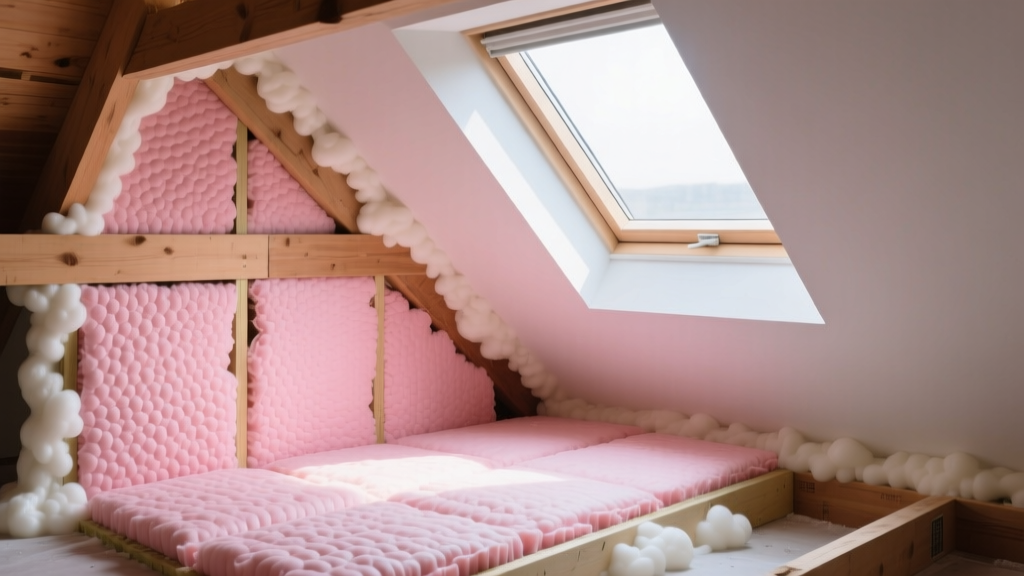
Decision Framework: Matching the Material to Your Climate Zone
Selecting the right heat insulation material requires aligning the product's vapor permeability and R-value with your specific International Energy Conservation Code (IECC) climate zone. The U.S. Department of Energy provides foundational guidelines, but advanced building science dictates the following 2026 best practices:
- Zones 1-3 (Hot-Humid / Marine): Prioritize vapor-permeable materials like open-cell spray foam or unfaced fiberglass/mineral wool. The goal is to allow the wall assembly to dry to the interior when air conditioning cools the interior drywall, which can cause condensation if an interior vapor barrier is present. Pair with a robust exterior rainscreen.
- Zones 4-5 (Mixed-Humid): These transitional zones experience both severe heating and cooling loads. A hybrid approach—often called a 'flash and batt' system—works best. Apply 1.5 to 2 inches of closed-cell spray foam against the exterior sheathing to warm it above the dew point, then fill the remainder of the cavity with cost-effective fiberglass or mineral wool.
- Zones 6-8 (Cold / Subarctic): Thermal bridging through wood framing accounts for up to 25% of heat loss in cold climates. You must incorporate continuous exterior insulation (rigid mineral wool or polyiso boards) over the wall sheathing. Inside the cavity, dense-pack cellulose or mineral wool provides high R-value while maintaining a degree of moisture buffering.
Expert Verdict
There is no single 'best' heat insulation material; there is only the right material for your specific assembly, budget, and climate. For budget-conscious wall cavities where meticulous air-sealing is guaranteed, modern fiberglass batts remain viable. For high-performance builds requiring fire safety, acoustic control, and moisture resilience, mineral wool is the undisputed champion of cavity insulation. Finally, for complex framing, rim joists, and achieving maximum air-tightness in a single step, closed-cell spray foam justifies its premium price tag. Evaluate your assembly's drying potential before making your final selection.
Written by
Elena RodriguezElena Rodriguez is a civil engineer and technical writer specializing in concrete technology, masonry systems, and ASTM/ACI compliance. She earned her B.S. in Civil Engineering from Texas A&M University and spent a decade at a materials testing laboratory, performing over 2,000 concrete compressive strength tests and masonry prism evaluations. Elena is an ACI-certified Field Testing Technician (Grade I) and a member of ASTM Committee C12 on Natural Building Stone. She currently consults on forensic engineering cases involving concrete failures and moisture intrusion. Based in San Antonio, TX, Elena is a proud member of the Society of Women Engineers (SWE) and coaches her daughter's FIRST Robotics team.
More from Elena Rodriguez
View all
Walls & Panels
Cost Analysis: Light Gauge Steel Framing Advantages and Disadvantages
Evaluate light gauge steel framing advantages and disadvantages through a strict cost analysis lens, comparing material, labor, and lifecycle expenses.
Aug 4, 2026

Walls & Panels
Gypsum Board Types: Exact Specifications, Thickness & Dimensions
Compare standard, Type X, and moisture-resistant gypsum board types. Get exact specifications, thicknesses, dimensions, and ASTM standards for your project.
Aug 4, 2026

Fire Resistance
Best Fire-Resistant Outdoor Decking Materials: 2026 Buyer Guide
Discover the best fire-resistant outdoor decking materials for 2026. Compare Class A PVC, aluminum, and hardwood options for WUI compliance and safety.
Aug 4, 2026