Insulated Drapery Material R-Value & Thermal Performance
Analyze the true R-value of insulated drapery material. Compare thermal linings, edge-sealing techniques, and condensation risks for maximum window performance.

The Building Science of Insulated Drapery Material
When evaluating window treatments for energy efficiency, building scientists and interior designers often clash over the actual thermal resistance of textiles. Insulated drapery material does not function like rigid foam or fiberglass batts; instead, it relies on trapped dead air spaces, reflective barriers, and convective looping prevention to reduce heat transfer. According to the U.S. Department of Energy, properly sealed window attachments can reduce heat loss through single-pane windows by up to 40% in winter and reduce solar heat gain by up to 60% in summer.
However, the stated R-value of the drapery fabric itself is only one variable in the thermal equation. The true performance of insulated drapery material depends heavily on the microclimate created between the fabric and the glass, the airtightness of the perimeter seals, and the dew point dynamics of the interior space. This guide breaks down the exact thermal metrics, material compositions, and installation protocols required to maximize the performance of insulated draperies in modern building envelopes.
R-Value Matrix: Comparing Insulated Drapery Materials
Not all thermal linings are created equal. The R-value of a drapery assembly is determined by its thickness, the density of the weave, and the inclusion of specialized backing layers. Below is a comparative matrix of the most common insulated drapery materials available on the market, with estimated 2026 pricing and thermal resistance metrics.
| Material Composition | Core Insulation Layer | Approx. R-Value | Cost per Sq Ft (2026) | Best Application |
|---|---|---|---|---|
| Standard Cotton/Poly Blend | None (Single Layer) | R-0.8 to R-1.0 | $4.00 - $8.00 | Light filtering, mild climates |
| Triple-Weave Blackout | Acrylic Foam Pass | R-1.5 to R-2.2 | $12.00 - $18.00 | Bedrooms, moderate climate zones |
| Thermaback Fleece | PVC / Polyurethane Foam | R-2.5 to R-3.2 | $16.00 - $26.00 | Cold climates, drafty historic windows |
| Honeycomb Fabric Liner | Trapped Air Cells (Mylar) | R-3.0 to R-4.0 | $22.00 - $35.00 | Large picture windows, high solar gain |
| Aerogel-Infused Liner | Silica Aerogel Blanket | R-4.5 to R-6.0 | $75.00 - $120.00 | Extreme cold, zero-alteration historic zones |
While standard triple-weave fabrics offer a respectable R-2.0, emerging technologies like silica aerogel-infused liners (originally developed for aerospace and extreme cold-weather gear) are pushing textile R-values past R-5.0. These aerogel drapes are exceptionally thin but command a premium price, making them ideal for historic preservation projects where adding storm windows or altering the window casement is prohibited by local building codes.
The Air Infiltration Factor: Why Material R-Value Lies
A critical mistake in specifying insulated drapery material is treating the fabric's R-value as a standalone metric. In building science, convective heat loss (air leakage) frequently dwarfs conductive heat loss (transfer through solid materials). If warm indoor air can freely circulate behind the drape, the R-value of the fabric becomes largely irrelevant.
When air leaks around the edges of the drape, it creates a convective loop: warm air rises, spills over the top of the curtain, cools against the glass, sinks, and is drawn back into the room at the floor level. To achieve the rated R-value of the material, the perimeter must be sealed.
Sealing the Perimeter for Maximum Performance
- Top Pelmets (Valances): Install a rigid, sealed pelmet at the ceiling or top of the window frame. This completely blocks the convective loop from drawing warm air over the top of the drape.
- Magnetic Side Tracks: Systems utilizing magnetic strips sewn into the leading edges of the drapery, which attach to steel-adhesive tracks on the window casing, reduce side-gap air infiltration by up to 85%.
- Weighted Hems and Sill Seals: For sill-length drapes, a weighted hem with a brush-seal or rubber gasket ensures the bottom edge sits flush against the window sill, preventing cold air from spilling onto the floor.
- Floor Pooling: If side tracks are aesthetically unfeasible, allowing the drapery to 'puddle' or pool 3 to 4 inches on the floor creates a physical barrier that disrupts the bottom convective return loop.
The Condensation Trap: Dew Point Management
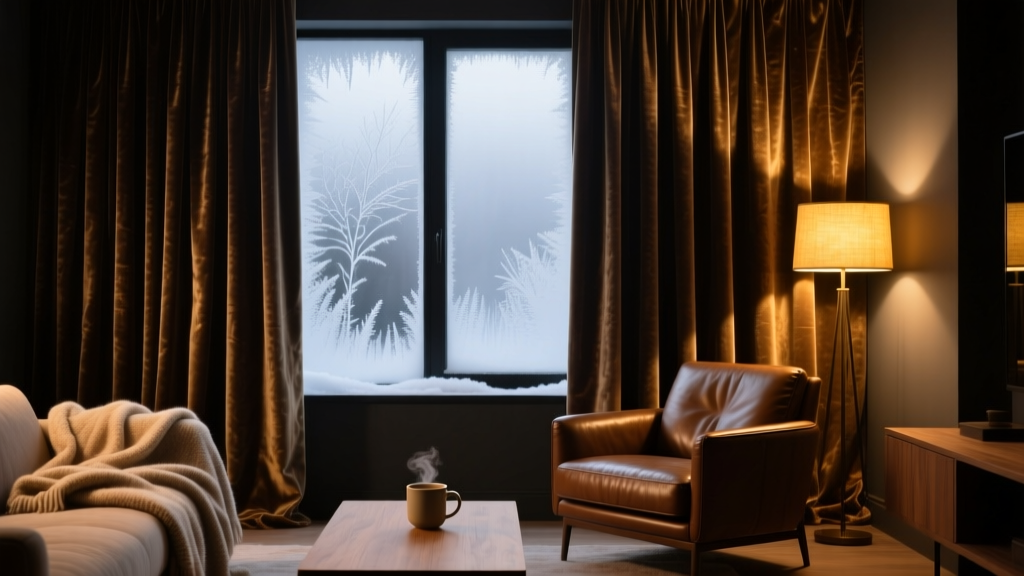
Highly insulated, tightly sealed draperies can inadvertently create a severe condensation problem. By isolating the window glass from the room's ambient heat, the interior surface temperature of the glass drops significantly. If indoor humidity is high, the air trapped between the drape and the glass will quickly fall below the dew point, resulting in heavy condensation, frost, and eventually black mold on the window sill and drywall returns.
To mitigate this, building envelope specialists recommend maintaining indoor relative humidity below 40% during winter months when utilizing heavily sealed insulated draperies. Additionally, incorporating a micro-perforated bottom hem allows a minimal, controlled exchange of air to keep the glass surface slightly warmer without sacrificing the overall thermal resistance of the window assembly. The National Fenestration Rating Council (NFRC) provides extensive data on how interior surface temperatures of various window assemblies interact with interior attachments, emphasizing the need for balanced humidity control.
Acoustic Performance and STC Ratings
Insulated drapery material frequently serves a dual purpose: thermal resistance and acoustic attenuation. The Sound Transmission Class (STC) rating measures a material's ability to block airborne sound. Standard single-pane windows typically carry an STC rating of 25 to 28, allowing significant street noise penetration.
Standard thermal blackout drapes (R-2.0) will only increase the assembly's STC by 1 to 2 points due to their relatively low mass. However, specialized acoustic-thermal hybrid draperies integrate a layer of Mass Loaded Vinyl (MLV) between the decorative face fabric and the thermal fleece backing. A 1 lb/sq ft MLV layer adds substantial density, capable of pushing the window-drape assembly to an STC of 35 to 38. This represents a noticeable reduction in low-frequency urban noise, such as traffic rumble and HVAC hum. When specifying these hybrid materials, ensure the drapery track is rated for the increased weight, as MLV-infused drapes can weigh upwards of 3.5 lbs per linear foot.
Cost vs. ROI Analysis
The return on investment for insulated drapery material is highly dependent on the baseline performance of the existing windows and the local climate zone. Upgrading from bare single-pane windows to R-3.0 sealed Thermaback draperies in a cold climate (e.g., IECC Climate Zone 5 or 6) can yield energy savings of $150 to $300 annually per average-sized home, resulting in a payback period of 3 to 5 years.
Conversely, installing aerogel-infused drapes (R-5.0+) over modern, double-pane Low-E windows yields marginal thermal gains—often less than $40 annually in heating savings. In these scenarios, the primary ROI shifts from energy savings to occupant comfort (eliminating cold radiant drafts near windows) and UV protection for interior furnishings. Always calculate the Heating Degree Days (HDD) of your specific region before investing in premium aerogel or MLV-hybrid textiles.
Key Specification Takeaways
- For Historic Homes: Specify aerogel-infused liners (R-4.5+) to maximize thermal resistance without altering original window casements.
- For Urban Noise: Require MLV-integrated hybrid drapes (STC 35+) and upgrade to heavy-duty architectural tracks.
- For Cold Climates: Material R-value is secondary to perimeter sealing. Always mandate top pelmets and magnetic side tracks to stop convective looping.
- Moisture Control: Pair tightly sealed draperies with active humidity management (HRV/ERV systems or dehumidifiers) to prevent interstitial condensation on the glass.
Written by
Priya KapoorPriya Kapoor is a real estate market analyst and construction economics researcher with expertise in housing affordability, development feasibility, and infrastructure investment. She holds a Master of Regional Planning from Cornell University and previously worked as a senior analyst at CBRE's Investment Properties group, where she modeled returns for $4B in mixed-use development pipelines. Priya now runs an independent research practice advising developers, municipalities, and REITs on construction cost forecasting and market timing. She publishes the quarterly "BuildMat Market Pulse" report tracking material price indices across 12 commodity categories. Based in Austin, TX, Priya serves on the board of Habitat for Humanity Austin and is a marathon runner.
More from Priya Kapoor
View all
Construction Cost
Cost to Build a 1600 Sq Ft Home in 2026: Full Breakdown
Accurate 2026 cost to build a 1600 sq ft home—material, labor, and regional pricing breakdowns included. Plan your budget with real-time estimates.
Aug 11, 2026

Wood & Lumber
Name the Types of Wood for Pressure Treatment and Preservation
Learn how to name the types of wood best suited for pressure treatment. Compare species treatability, chemical retention levels, and 2026 preservation costs.
Aug 4, 2026

Stone & Masonry
Stone Veneer Suppliers Lindenhurst: 2026 Cost Analysis
Analyze 2026 stone veneer costs in Lindenhurst, NY. Compare local supplier pricing, delivery fees, and Suffolk County installation labor rates.
Aug 4, 2026