The Ultimate Insulated Garage Door Maintenance and Cleaning Playbook
Extend the lifespan and thermal efficiency of your insulated garage door with this step-by-step maintenance and cleaning playbook for all seasons.
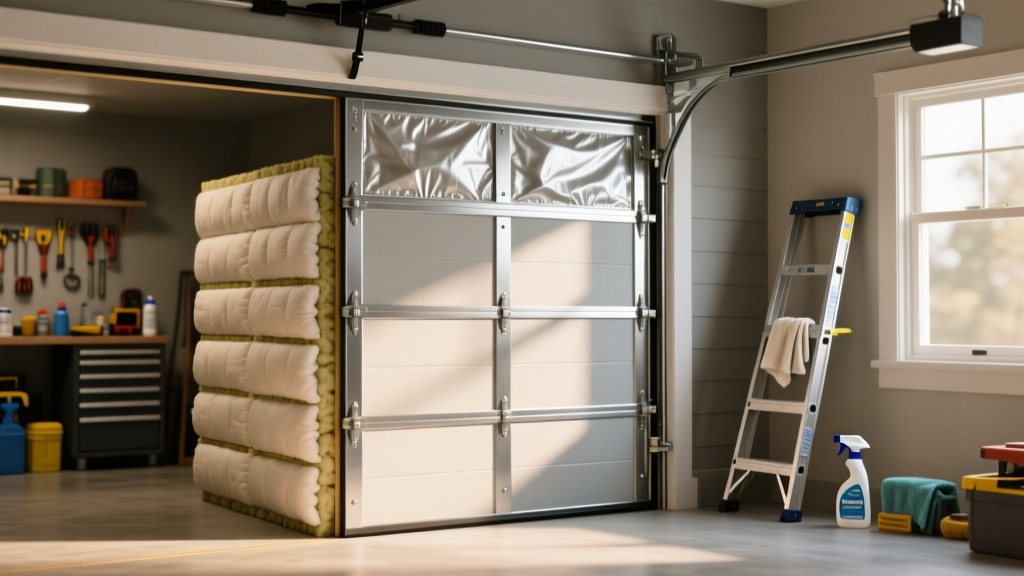
The Chemistry of Insulated Door Skins: Why Specialized Care Matters
An insulated garage door is not just a moving wall; it is a critical component of your home’s thermal envelope. Modern insulated doors typically feature an R-value between R-12 and R-18+, utilizing either expanded polystyrene (EPS) or injected polyurethane (PUR) foam cores. As of 2026, polyurethane-injected doors (such as those utilizing Intellicore or Safe-Guard technologies) are the industry standard for high-performance garages. The PUR foam expands during manufacturing, creating a structural, adhesive bond directly to the interior and exterior steel skins.
This chemical bond is what gives the door its rigidity and thermal resistance, but it also dictates how the door must be cleaned and maintained. Using harsh alkaline cleaners, abrasive scouring pads, or high-pressure water can degrade the factory-applied baked-on polyester primer, compromise the foam-to-steel adhesion at the panel seams, and force moisture into the core. According to the Door and Access Systems Manufacturers Association (DASMA), improper maintenance is the leading cause of premature panel delamination and thermal bridging in insulated units.
The Bi-Annual Exterior and Interior Cleaning Protocol
To maintain the reflectivity of the exterior finish and the integrity of the interior vapor barrier, execute this cleaning protocol twice a year (ideally in early spring and late autumn).
Step 1: Dry Dusting and Debris Removal
Before introducing moisture, use a soft-bristle push broom or a dry microfiber mop to remove loose dirt, cobwebs, and pollen from the panel grooves and track channels. Moistening dust creates a mild abrasive paste that can micro-scratch the steel finish during the wash phase.
Step 2: Formulating the Wash Solution
Never use trisodium phosphate (TSP), bleach, or degreasers on insulated garage doors. Mix a gentle cleaning solution:
- 1/3 cup of mild, non-detergent liquid dish soap (e.g., original blue Dawn)
- 1 gallon of warm water (maximum 100°F / 38°C to prevent thermal shock to the steel)
Step 3: The Top-Down Wash
Using a soft cellulose sponge or a high-pile microfiber wash mitt, wash the door from top to bottom. Pay special attention to the horizontal panel joints where road salt and exhaust soot accumulate. For the interior skin, wipe down the steel to remove airborne garage contaminants like tire dust and oil mist, which can degrade the interior paint over time.
Step 4: Low-Pressure Rinsing
Rinse thoroughly with a standard garden hose equipped with a wide-spray nozzle. Keep the water pressure below 40 PSI.
Never use a gas or electric pressure washer on an insulated garage door. The concentrated PSI will easily breach the weatherstripping at the panel joints, forcing water into the polyurethane or polystyrene core. Trapped moisture leads to internal rust, mold growth, and a total loss of the door's R-value. If water enters the core, the panel cannot be repaired and must be replaced.
Thermal Seal and Weatherstripping Inspection Matrix
The insulation core is only as effective as the seals that prevent air infiltration. Insulated doors are highly sensitive to drafts, which can negate their R-value and cause the garage temperature to fluctuate wildly. Inspect the following seals every six months and replace them immediately if failure symptoms are present.
| Seal Location | Material Type | Failure Symptom | Replacement Spec |
|---|---|---|---|
| Bottom Astragal | EPDM Rubber Bulb | Cracking, light gaps under door, freezing to concrete | 3-inch or 4-inch T-style or bead-style EPDM rubber |
| Perimeter Jamb | Vinyl with flexible flange | Brittleness, tearing, wind whistling at edges | 1.5-inch or 2-inch nail-on vinyl stop molding with fin |
| Top Header | Kerf-in or nail-on vinyl | Drafts at top panel, water ingress during storms | Adjustable top fixture bracket seal or 2-inch kerf seal |
| Panel Joints (Interlocks) | Integrated thermal break / tongue-and-groove | Visible light between panels when closed, condensation | Requires track realignment or hinge replacement (not a seal swap) |
Mechanical Maintenance for Heavy Insulated Panels
Insulated garage doors are significantly heavier than their uninsulated counterparts. While a standard single-layer steel door weighs between 90 and 120 lbs, a double-layer or triple-layer insulated door can weigh anywhere from 150 to over 250 lbs. This extra mass places immense kinetic stress on the hardware. The Clopay Owner's Manual and other manufacturer guidelines emphasize that heavy doors require stricter hardware maintenance schedules.
Roller Upgrades and Inspection
If your insulated door is still running on factory-installed steel rollers or cheap plastic rollers, upgrade them immediately. Steel rollers grind against the steel track, creating friction, heat, and noise. Replace them with 10-ball bearing nylon-coated steel rollers (such as those manufactured by Dura-Lift or Clopay). Nylon rollers operate silently, do not require lubrication, and can support the heavy load of insulated panels without deforming.
The Lubrication Playbook
Every 1,000 cycles (roughly every 6 months for an average household), lubricate the moving metal-on-metal components.
- Hinges and Pivot Points: Apply a silicone-based spray or white lithium grease.
- Torsion Springs: Lightly coat the stationary and winding cones, and the spring coils themselves, with a dedicated garage door spray lubricant (e.g., Clopay ProGlide).
- Lock Cylinders and Latches: Use dry graphite powder to prevent dust accumulation.
Critical Rule: Never use WD-40 or standard penetrating oils on garage door hardware. WD-40 is a solvent and water displacer, not a long-term lubricant. It will attract dust, create a grinding paste, and degrade any nylon components it touches.
Troubleshooting Condensation and Thermal Bridging
Homeowners often mistake interior condensation for a defective door. If you see water droplets forming on the interior steel skin of your insulated garage door during winter, the interior surface temperature has dropped below the dew point of the air inside the garage. According to the U.S. Department of Energy, managing the dew point is critical for maintaining the integrity of insulated building envelopes.
Diagnostic Checklist for Interior Condensation:
- Identify Moisture Sources: Are you parking a snow-covered or wet car inside? Is there an unvented gas heater, a working freezer, or a washing machine in the garage? These generate massive amounts of humidity.
- Check the Thermal Break: Run your hand along the horizontal panel joints on the interior. If you feel a distinct line of cold air or notice frost forming specifically along the seams, the tongue-and-groove thermal break is compromised. This usually indicates the tracks are too wide, preventing the panels from seating tightly together. A technician can adjust the track brackets inward by 1/8th of an inch to tighten the panel interlocks.
- Improve Air Circulation: Install a smart garage exhaust fan or a high-capacity dehumidifier to keep the garage relative humidity below 50% during freezing months.
Frequently Asked Questions
Can I paint my insulated garage door to refresh the exterior?
Yes, but you must use a high-quality exterior acrylic latex paint formulated for metal. Do not use oil-based alkyd paints, as they can absorb heat from the sun and cause the steel skin to expand and warp, potentially delaminating the polyurethane foam core. Always wash the door with a TSP substitute (like Krud Kutter) and apply a metal-bonding primer before painting.
How do I clean the tracks without ruining the door's operation?
Wipe the inside of the steel tracks with a dry, lint-free rag to remove dust and debris. Do not lubricate the tracks. The rollers should roll along a clean, dry steel surface. Lubricating the tracks attracts dirt and causes the rollers to slip or bind, which can throw the heavy insulated door off its alignment.