Insulated Material Fabric Cost Guide & Pricing Breakdown
Analyze the true cost of insulated material fabric for HVAC and architectural use, including pricing, labor, and ROI versus traditional insulation.

Defining the Scope: What is Insulated Material Fabric?
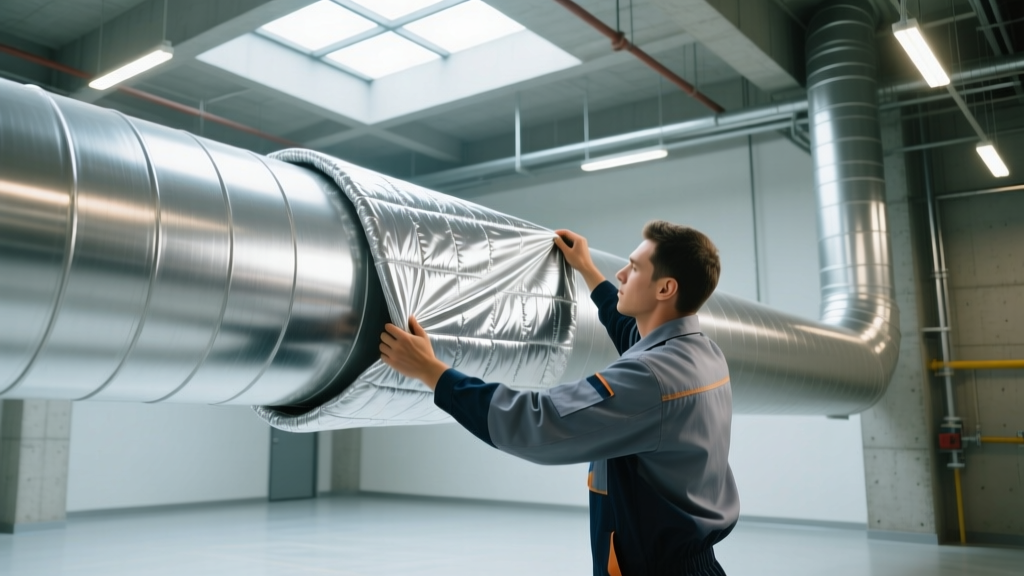
When evaluating thermal and acoustic management in commercial and industrial construction, insulated material fabric represents a highly specialized, flexible alternative to rigid boards and spray foams. Unlike traditional fiberglass batts or closed-cell polyurethane, fabric-based insulation systems utilize woven textiles—often coated in silicone, PTFE (Teflon), or infused with aerogel—to create removable, reusable, or architecturally tensile thermal barriers. These systems are predominantly deployed in complex mechanical rooms, high-temperature HVAC ductwork, industrial piping, and temporary construction enclosures where rigid materials fail due to vibration, irregular geometries, or the need for frequent maintenance access.
Understanding the cost dynamics of insulated material fabric requires looking beyond the raw price per square foot. The total financial outlay encompasses custom fabrication, specialized seaming labor, and the long-term lifecycle savings derived from reusability. This 2026 cost analysis breaks down the exact pricing tiers, installation variables, and return on investment (ROI) metrics for modern insulated fabric systems.
Core Material Types and Current Pricing Tiers
The term 'insulated material fabric' covers a broad spectrum of engineered textiles. The cost varies wildly depending on the thermal resistance (R-value) required and the environmental hazards present, such as moisture, UV exposure, or extreme heat.
| Fabric Type | Composition & Core | Max Temp Rating | Material Cost (per sq. ft.) | Primary Application |
|---|---|---|---|---|
| Standard Silicone-Coated Fiberglass | Woven fiberglass with 2-oz silicone coating, mineral wool core | 500°F (260°C) | $8.50 - $14.00 | Removable HVAC blankets, valve covers |
| PTFE-Coated Fiberglass (Teflon) | Fiberglass weave with PTFE dispersion, aerogel or ceramic core | 600°F (315°C) | $18.00 - $28.50 | Chemical plants, food processing, high-moisture |
| Aerogel-Infused Textile | Pyrogel/Silica aerogel laminated to aramid fabric | 1200°F (650°C) | $45.00 - $85.00 | Spatially constrained piping, exhaust stacks |
| Multi-Layer Reflective Woven | Aluminized polyester weave with trapped air pockets | 180°F (82°C) | $4.00 - $7.50 | Temporary construction enclosures, attic radiant barriers |
Labor, Fabrication, and Installation Costs
The raw material cost of insulated material fabric is only half the equation. Because these systems are typically custom-tailored to fit irregular valves, flanges, and turbine casings, fabrication and installation labor constitute a significant portion of the budget.
Custom Sewing vs. Field Welding
For removable reusable insulation blankets (RRIBs), the standard fabrication method involves industrial sewing with high-tenacity Kevlar or PTFE thread. Fabricators charge between $4.00 and $9.00 per square foot for the labor of measuring, patterning, and sewing the blankets. For large-scale architectural tensile membranes or permanent duct wraps, field welding using hot-air or RF (radio frequency) welders is required. Field welding labor rates average $85 to $125 per hour for certified technicians, translating to roughly $6.00 to $12.00 per square foot depending on seam complexity.
- Hardware & Fasteners: D-rings, lacing wire, and stainless steel buckles add $1.50 to $3.00 per square foot.
- On-Site Measurement: For complex mechanical rooms, 3D laser scanning and digital templating services cost $1,200 to $2,500 per day, ensuring zero material waste during fabrication.
- Fireproofing Treatments: Post-fabrication intumescent coatings to meet ASTM E84 Class A requirements add $2.50 per square foot.
ROI and Energy Payback Timelines
Why pay $20+ per square foot for PTFE-coated insulated material fabric when standard mineral wool costs less than $2.00? The answer lies in lifecycle costing and maintenance access. According to the U.S. Department of Energy, uninsulated or poorly insulated valves and flanges in commercial steam systems can lose up to 75% more heat than straight pipe runs. Because rigid insulation must be destroyed and replaced every time a valve requires maintenance, facilities often leave these critical junctions bare.
'Deploying removable insulated fabric blankets on bare valves and flanges typically yields a simple payback period of 6 to 14 months in continuously operating industrial facilities, driven by reduced boiler fuel consumption and lower ambient mechanical room temperatures.' — ASHRAE Technical Resource Guidelines on Industrial Piping Insulation (ASHRAE)
For a standard 50,000 sq. ft. commercial facility retrofitting its central plant with silicone-coated fiberglass RRIBs, the initial investment of approximately $65,000 (materials and labor) typically generates $42,000 in annual energy savings. Furthermore, the fabric blankets last 10 to 15 years, whereas traditional metal-jacketed mineral wool degrades in 5 to 7 years due to moisture intrusion and maintenance damage.
Comparative Cost Matrix: Fabric vs. Traditional Insulation
To contextualize the premium of insulated material fabric, we must compare it against conventional alternatives across a 15-year lifecycle in a high-maintenance mechanical environment.
| Metric | Insulated Fabric Blankets (RRIBs) | Mineral Wool w/ Aluminum Jacket | Closed-Cell Polyurethane Foam |
|---|---|---|---|
| Initial Material Cost (per sq. ft.) | $14.00 | $3.50 | $5.25 |
| Initial Installation Labor | $6.00 (Velcro/Lacing) | $8.50 (Cutting, fitting, riveting) | $7.00 (Spraying, curing, coating) |
| Maintenance Access Cost (per event) | $0 (Unlace and re-lace) | $45.00 (Destroy and replace section) | $65.00 (Grind off and re-spray) |
| Expected Lifespan | 12 - 15 Years | 5 - 8 Years (in high-traffic areas) | 10 - 12 Years (if UV protected) |
| 15-Year Total Cost of Ownership (Est.) | $20.00 / sq. ft. | $84.00 / sq. ft. | $95.00 / sq. ft. |
Procurement Specifications and Edge Cases
When drafting bid documents or purchasing orders for insulated material fabric, specifying the exact material properties is critical to avoiding project delays and code violations. Always mandate the following specifications based on the DOE Building Envelope guidelines and local fire codes:
- Fire Rating: Require ASTM E84 Class A (Flame Spread Index ≤ 25, Smoke Developed Index ≤ 50). Standard fiberglass meets this, but some cheaper PVC-coated polyester fabrics fail catastrophically in fire tests.
- Hydrophobicity: For outdoor or high-condensation environments, specify a hydrophobic aerogel core or a fully sealed PTFE outer shell with welded seams. Stitched seams in silicone fabrics will wick moisture into the core, destroying the R-value and causing corrosion under insulation (CUI) on carbon steel pipes.
- Air Permeability: Architectural tensile fabrics used for temporary enclosures must specify a low CFM (cubic feet per minute) air leakage rate to maintain negative pressure in containment zones, such as asbestos abatement or cleanroom construction.
Frequently Asked Questions
Can insulated material fabric be used for residential wall cavities?
No. While multi-layer reflective woven fabrics are occasionally used as radiant barriers in residential attics, the thick, heavy-duty insulated fabrics (like aerogel or silicone-coated RRIBs) are cost-prohibitive and structurally impractical for standard 2x4 or 2x6 wood-framed wall cavities. Standard fiberglass, mineral wool, or spray foam remain the economically viable choices for residential envelope insulation.
How do I clean and maintain reusable fabric insulation blankets?
Silicone and PTFE-coated outer shells are highly resistant to industrial grime. They can be wiped down with standard degreasers or lightly pressure-washed (under 1,500 PSI) while still installed. Never use abrasive wire brushes, as scoring the outer coating compromises the fabric's moisture barrier and voids most manufacturer warranties.
What is the lead time for custom-fabricated insulated fabric systems?
For standard silicone-fiberglass blankets, domestic fabricators typically require 3 to 5 weeks from the approval of final 3D field measurements. For specialized aerogel-infused textiles or imported PTFE architectural membranes, lead times frequently extend to 8 to 12 weeks due to raw material supply chain constraints. Plan your mechanical room commissioning schedules accordingly.
Written by
James ThorntonJames Thornton is a construction industry veteran with 25 years of hands-on experience in wood framing, lumber grading, and residential building codes. He started as a framing carpenter in rural Oregon, earned his ICC Residential Building Inspector certification, and eventually became a senior plan reviewer for the City of Portland Bureau of Development Services. James holds a B.S. in Wood Science & Technology from Oregon State University and is a certified lumber grader through the West Coast Lumber Inspection Bureau (WCLIB). He has inspected over 3,000 residential construction sites and authored the city's internal guide on advanced framing techniques (2x6 at 24" O.C.). James lives in Bend, OR, where he builds custom timber-frame cabins and competes in lumberjack sports.
More from James Thornton
View all
Insulation
Best Home Insulation Materials: Complete 2026 Guide
Compare top home insulation materials for 2026. Find R-values, installed costs per square foot, and best uses for fiberglass, spray foam, and mineral wool.
Aug 4, 2026

Sustainable Building
Certify Your Green Building Material for LEED and WELL
Step-by-step guide to certifying a green building material for LEED v5 and WELL v2. Master EPDs, HPDs, and VOC limits for 2026 project specifications.
Aug 4, 2026

Stone & Masonry
Veneer Stacked Stone Panels: Interior Design & Style Showcase
Discover how veneer stacked stone panels transform interiors. Explore modern design profiles, material pairings, and technical installation specs.
Aug 4, 2026