Best Wire Insulation Material for Building Electrical Systems Compared
Compare PVC, XLPE, and rubber wire insulation materials for building electrical systems. Find temperature ratings, costs, and NEC compliance.

The Core Chemistry of Building Wire Insulation
Selecting the correct wire insulation material dictates the thermal limits, moisture tolerance, and physical durability of a building's electrical infrastructure. While copper and aluminum conductors carry the current, the dielectric barrier prevents short circuits, ground faults, and catastrophic fires. Under the National Electrical Code (NEC) Article 310, the allowable ampacity of a conductor is strictly bound to the temperature rating of its insulation. Specifying the wrong polymer compound results in premature dielectric breakdown, excessive voltage drop, or failed municipal inspections.
For commercial and residential electrical rough-ins, the choice almost always narrows down to thermoplastic versus thermoset polymers. Understanding the molecular differences between these materials is critical for electrical engineers, general contractors, and procurement managers aiming to optimize both safety and project budgets in 2026.
The Big Four: Building Wire Insulation Materials Compared
PVC (Polyvinyl Chloride) with Nylon Jacket: The THHN Standard
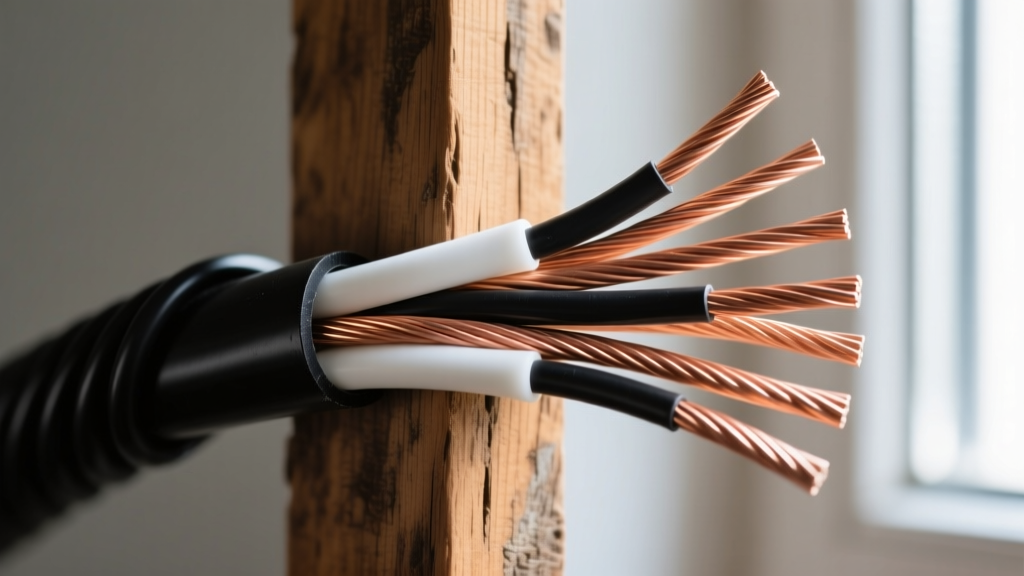
Polyvinyl Chloride (PVC) is the most widely deployed thermoplastic wire insulation material in North America. In standard building wire (designated as THHN or THWN-2), the PVC provides the primary dielectric insulation, while a secondary extruded nylon jacket offers mechanical protection. PVC is inherently flame retardant due to its chlorine content, which suppresses combustion. However, pure PVC is rigid and susceptible to cold-weather cracking, which is why plasticizers are added during compounding. The nylon jacket significantly reduces the coefficient of friction, allowing electricians to pull THHN wire through long, complex conduit runs with minimal lubricant.
XLPE (Cross-Linked Polyethylene): The XHHW Upgrade
Cross-Linked Polyethylene (XLPE) is a thermoset material created by introducing chemical or irradiation cross-links between polyethylene polymer chains. This process transforms the material from a meltable thermoplastic into a rigid, heat-resistant thermoset. Designated primarily as XHHW-2 in building construction, XLPE lacks the nylon jacket found on THHN. This makes the wire slightly more difficult to pull through conduit but vastly superior in wet environments. Because XLPE does not rely on plasticizers, it does not become brittle in freezing temperatures, making it the preferred wire insulation material for exterior feeds, underground vaults, and cold-storage facility construction.
EPR (Ethylene Propylene Rubber): Heavy-Duty & Wet Locations
EPR is a thermoset rubber compound known for exceptional flexibility, corona resistance, and high dielectric strength. While more common in medium-voltage industrial applications (5kV to 35kV), heavy-duty low-voltage EPR cables are specified in commercial buildings where extreme vibration, continuous moisture exposure, or high ambient heat is present. EPR maintains its physical properties across a massive temperature swing (-60°C to +105°C) and resists degradation from UV radiation and ozone.
PTFE and FEP (Fluoropolymers): High-Temp Specialty
Polytetrafluoroethylene (PTFE/Teflon) and Fluorinated Ethylene Propylene (FEP) are premium fluoropolymer wire insulation materials. They offer continuous temperature ratings up to 200°C and 250°C, respectively. In building construction, these are rarely used for general power distribution due to prohibitive costs. Instead, they are reserved for high-temperature plenum spaces, internal wiring of industrial HVAC control panels, and aerospace-grade fire alarm circuits where extreme heat tolerance and zero smoke emission are non-negotiable.
Head-to-Head Comparison Matrix
| Material | NEC Designation | Max Temp (Dry / Wet) | Insulation Thickness (12 AWG) | Moisture Resistance | Cold Weather Flexibility |
|---|---|---|---|---|---|
| PVC + Nylon | THHN / THWN-2 | 90°C / 75°C | 15 mils (PVC) + 4 mils (Nylon) | Moderate (Nylon degrades over time in water) | Poor (Cracks below 10°C) |
| XLPE | XHHW-2 | 90°C / 90°C | 30 mils | Excellent (Thermoset barrier) | Excellent (Remains flexible to -40°C) |
| EPR | RHW-2 / USE-2 | 90°C / 90°C | 45 mils | Excellent | Exceptional (Remains flexible to -60°C) |
| PTFE / FEP | Specialty Plenum | 200°C+ / N/A | 10-15 mils | Impervious | Moderate (Stiffens but rarely cracks) |
Installation Physics: Pulling Tension and Friction
The physical properties of the wire insulation material directly impact labor costs and installation feasibility. When pulling wire through EMT (Electrical Metallic Tubing) or PVC conduit, the coefficient of friction (COF) determines the maximum continuous pull length before the conductor stretches or the insulation tears.
- PVC/Nylon (THHN): The extruded nylon jacket yields a COF of approximately 0.15 to 0.20 when used with standard polyethylene-based wire pulling lubricants. This allows for longer continuous pulls, reducing the need for intermediate pull boxes.
- XLPE (XHHW-2): Without the slick nylon jacket, raw XLPE has a higher COF, typically between 0.30 and 0.45. Electricians must apply more generous amounts of pulling compound and may need to install additional junction boxes on runs exceeding 150 feet with multiple bends.
2026 Market Pricing and Cost Analysis
Material costs for building wire fluctuate with global copper and aluminum commodities, but the insulation premium remains relatively stable. Based on Q1 2026 wholesale pricing for 500-foot spools of 12 AWG solid copper building wire:
- THHN/THWN-2 (PVC/Nylon): $145 - $165 per 500 ft spool. This remains the most cost-effective option for standard interior, dry-location commercial framing.
- XHHW-2 (XLPE): $175 - $195 per 500 ft spool. The 20% premium is easily justified for exterior feeds, wet locations, and projects in northern climates where winter construction is standard.
- RHW-2 (EPR): $280 - $320 per 500 ft spool. Reserved for specialized heavy-duty applications; rarely used in standard branch circuit wiring due to cost and bulk.
When evaluating total installed cost, factor in the labor savings of THHN's easier pulling characteristics against the reduced material failure rate and higher wet-location ampacity of XHHW-2.
Failure Modes: What Happens When You Specify Incorrectly
Choosing the wrong wire insulation material for a specific environment leads to predictable, documented failure modes:
PVC Plasticizer Migration and Cold Cracking
When THHN wire is installed in unheated buildings during winter months (below 10°C / 50°F), the PVC insulation becomes highly rigid. Bending the wire around tight conduit sweeps can cause micro-fractures in the PVC. Over time, the plasticizers added to keep the PVC flexible at room temperature can migrate out of the compound, especially when in contact with certain types of rigid polystyrene foam insulation, leading to severe embrittlement and eventual dielectric failure.
XLPE Hydrocarbon Swelling
While XLPE is virtually immune to water absorption, it is highly susceptible to chemical attack from specific hydrocarbons. If XHHW-2 wire is routed through an industrial facility where it is exposed to petroleum-based solvents, cutting oils, or certain aggressive cleaning agents, the thermoset matrix will absorb the chemicals and swell. This swelling compromises the dielectric strength and can cause the insulation to split under thermal cycling.
'We see a high rate of THHN insulation degradation in agricultural facilities. The combination of high ammonia concentrations and moisture rapidly breaks down the nylon jacket, exposing the PVC to corrosive gases. XHHW-2 is mandatory in these environments.' — Senior Electrical Forensic Engineer, Industrial Safety Board
NEC Code Compliance and Ampacity Derating
The National Electrical Manufacturers Association (NEMA) establishes the baseline testing standards for these polymers, but the NEC dictates their application. A critical advantage of XLPE (XHHW-2) over PVC (THHN) lies in wet-location ampacity.
Under NEC Table 310.16, a 12 AWG THHN copper conductor is rated for 30 Amps in a dry location (90°C column). However, if that same conduit is exposed to moisture (a wet location), the ampacity must be downgraded to the 75°C column, dropping the allowable current to 25 Amps. Conversely, XHHW-2 maintains its 90°C rating in both dry and wet locations, allowing engineers to maximize conductor utilization in exterior or underground runs without upsizing the wire gauge.
Decision Framework: Which Wire Insulation Material to Specify
Use this practical framework during the procurement and design phase to select the optimal wire insulation material:
- Specify PVC/Nylon (THHN) when: The project involves standard interior commercial or residential branch circuits, the environment is strictly dry, conduit runs are long with multiple bends (requiring low friction), and minimizing upfront material cost is the primary driver.
- Specify XLPE (XHHW-2) when: The wiring will be installed in wet locations, underground conduit, exterior building feeds, or in regions where ambient temperatures during installation regularly drop below 50°F. It is also the superior choice for parallel conductor runs where the thinner insulation profile of THHN might seem advantageous, but the moisture resistance of XLPE provides better long-term lifecycle value.
- Specify EPR when: The application requires heavy-duty flexibility, extreme temperature tolerance, or resistance to continuous vibration (e.g., wiring heavy industrial machinery or mining equipment integrated into the building's power grid).
- Specify Fluoropolymers (PTFE/FEP) when: Routing through extreme-heat plenums, inside high-temperature control panels, or where strict zero-smoke, zero-halogen fire safety codes are enforced in specialized transit or aerospace facilities.
By aligning the chemical properties of the wire insulation material with the specific environmental and mechanical demands of the building, contractors can eliminate premature failures, pass inspections on the first attempt, and optimize the total installed cost of the electrical system.
Written by
James ThorntonJames Thornton is a construction industry veteran with 25 years of hands-on experience in wood framing, lumber grading, and residential building codes. He started as a framing carpenter in rural Oregon, earned his ICC Residential Building Inspector certification, and eventually became a senior plan reviewer for the City of Portland Bureau of Development Services. James holds a B.S. in Wood Science & Technology from Oregon State University and is a certified lumber grader through the West Coast Lumber Inspection Bureau (WCLIB). He has inspected over 3,000 residential construction sites and authored the city's internal guide on advanced framing techniques (2x6 at 24" O.C.). James lives in Bend, OR, where he builds custom timber-frame cabins and competes in lumberjack sports.
More from James Thornton
View all
Insulation
Best Home Insulation Materials: Complete 2026 Guide
Compare top home insulation materials for 2026. Find R-values, installed costs per square foot, and best uses for fiberglass, spray foam, and mineral wool.
Aug 4, 2026

Sustainable Building
Certify Your Green Building Material for LEED and WELL
Step-by-step guide to certifying a green building material for LEED v5 and WELL v2. Master EPDs, HPDs, and VOC limits for 2026 project specifications.
Aug 4, 2026

Stone & Masonry
Veneer Stacked Stone Panels: Interior Design & Style Showcase
Discover how veneer stacked stone panels transform interiors. Explore modern design profiles, material pairings, and technical installation specs.
Aug 4, 2026